My Classic Summer Pudding
There is surely no more iconic British dessert than the Summer Pudding, a true celebration of the season's bounty. This recipe ensures a perfectly set, vibrantly coloured pudding every single time.
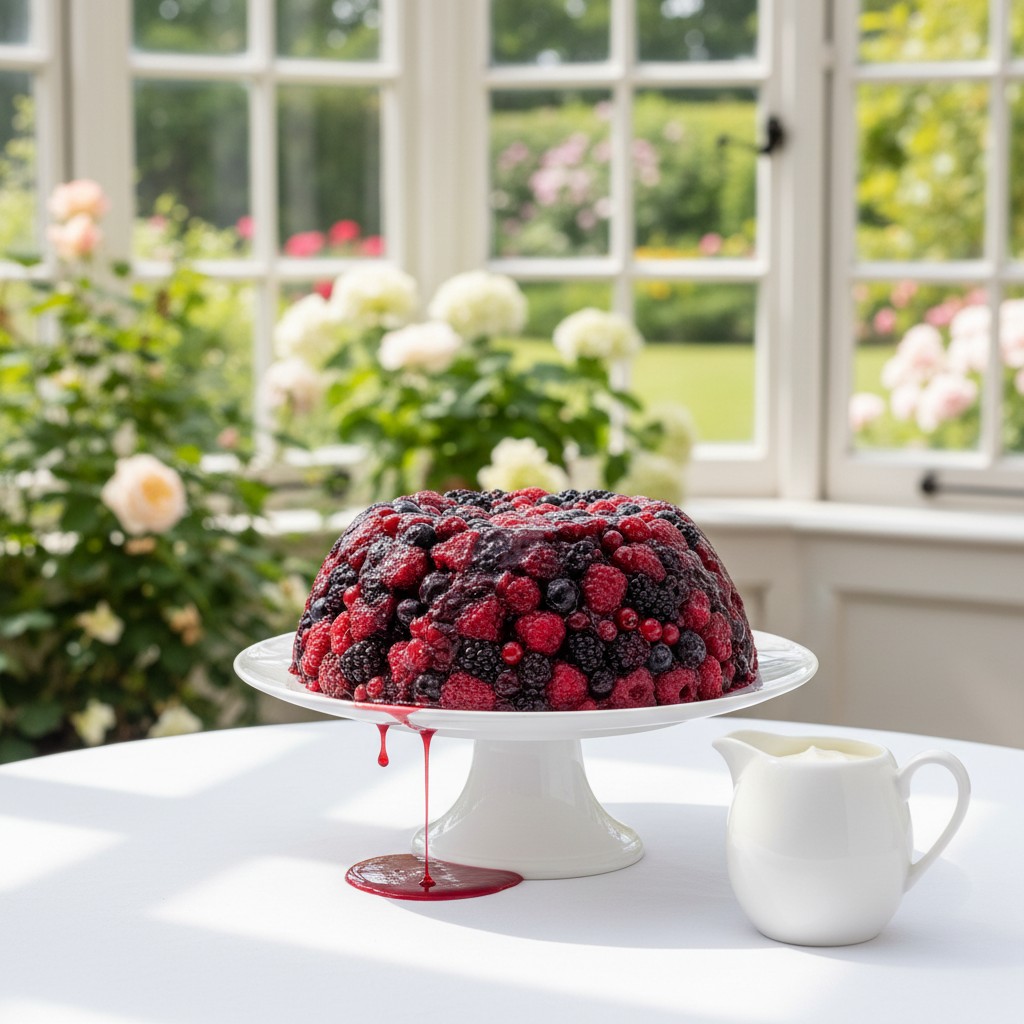
Some recipes are so deeply embedded in our culinary consciousness that they define a season, and for me, Summer Pudding is the absolute taste of a British summer. It's a marvel of thrift and ingenuity, transforming day-old bread and a glut of soft fruits into something truly spectacular. There is no baking, no complicated technique, just simple assembly and the magic of time.
The success of a Summer Pudding hinges entirely on the quality of the fruit. You need a good mixture, not just for flavour but for colour and structure. Redcurrants are, in my view, non-negotiable; they provide the essential tartness to cut through the sweetness and, crucially, the pectin that helps the juices to set to a soft jelly. Without them, you risk a pudding that is merely sweet, rather than one with the vibrant, sharp character it ought to have.
Then there is the bread, which acts as the vessel. It must be good-quality, medium-sliced white bread, and preferably a day or so old so it has lost some of its moisture. This allows it to act like a sponge, soaking up the jewel-toned juices without collapsing into a soggy mess. Don't be intimidated; this is one of the simplest and most rewarding desserts in the entire British repertoire.
Why You'll Love This Recipe
- The specific ratio of fruits, particularly the inclusion of redcurrants and blackcurrants, provides the perfect balance of sweet and tart, while their natural pectin helps the juices to set beautifully.
- Using slightly stale, good-quality white bread is critical. It has the structural integrity to absorb the vibrant juices without disintegrating, creating the classic stained-glass effect.
- The two-stage process of weighting and chilling is not to be rushed. It compacts the fruit and forces the juices into every corner of the bread, ensuring a firm set and deep, even colour throughout.
Ingredients
- 8-10 slices of good-quality medium-sliced white bread, a day or two old
- 450g raspberries
- 225g blackcurrants
- 225g redcurrants
- 150g caster sugar
- 3 tablespoons water
- A little butter, for greasing
Equipment Needed
1.2 litre (2 pint) pudding basin · Heavy-based saucepan · Sharp knife · Chopping board · Sieve (optional, for decanting juice) · Palette knife · Baking parchment
Step-by-Step Instructions
- First, select a 1.2 litre (2 pint) pudding basin. Grease it very lightly with a smear of butter. This just helps with the final turn-out.
- Now, prepare the bread. Cut the crusts off all the slices. Cut one slice into a round to fit the base of the basin. Cut another for the lid and set it aside. Then, cut the remaining slices into tapered strips, ready to line the sides.
- Next, the fruit. Pick over the currants, removing them from their stalks – a fork is good for this. Place the currants (red and black), sugar, and water into a wide, heavy-based saucepan.
- Cook the currants over a gentle heat for about 5-7 minutes, just until the skins have popped and the juices begin to run. You are not making jam. Turn off the heat and stir in the raspberries. The residual heat will soften them without turning them to mush.
- Now, quickly line the basin. Dip one side of your bread strips into the hot juice and place them, juice-side against the basin, overlapping them slightly to ensure there are no gaps. Do the same with the round for the base. It’s vital to have no holes.
- Spoon the fruit mixture carefully into the bread-lined basin, filling it right to the top. Make sure to get plenty of fruit, not just juice, into the pudding.
- Place the reserved bread round on top to form a lid. Spoon any remaining juice over the lid until it is completely saturated and red.
- Cover the basin with a piece of baking parchment, then a saucer or plate that fits just inside the rim. Place a weight on top – a couple of tins of beans are perfect for this. This is a crucial step.
- Place the weighted basin on a tray (to catch any drips) and chill in the refrigerator for at least 8 hours, but preferably overnight.
- To serve, run a palette knife around the edge of the pudding. Place your serving plate on top, and in one swift, confident movement, invert the basin and plate. Lift the basin away gently. The pudding should slide out, glistening and perfect.
- If any patches of bread are still white, you can spoon over a little of the reserved juice you might have saved from the pan.
Delia's Notes from the Kitchen
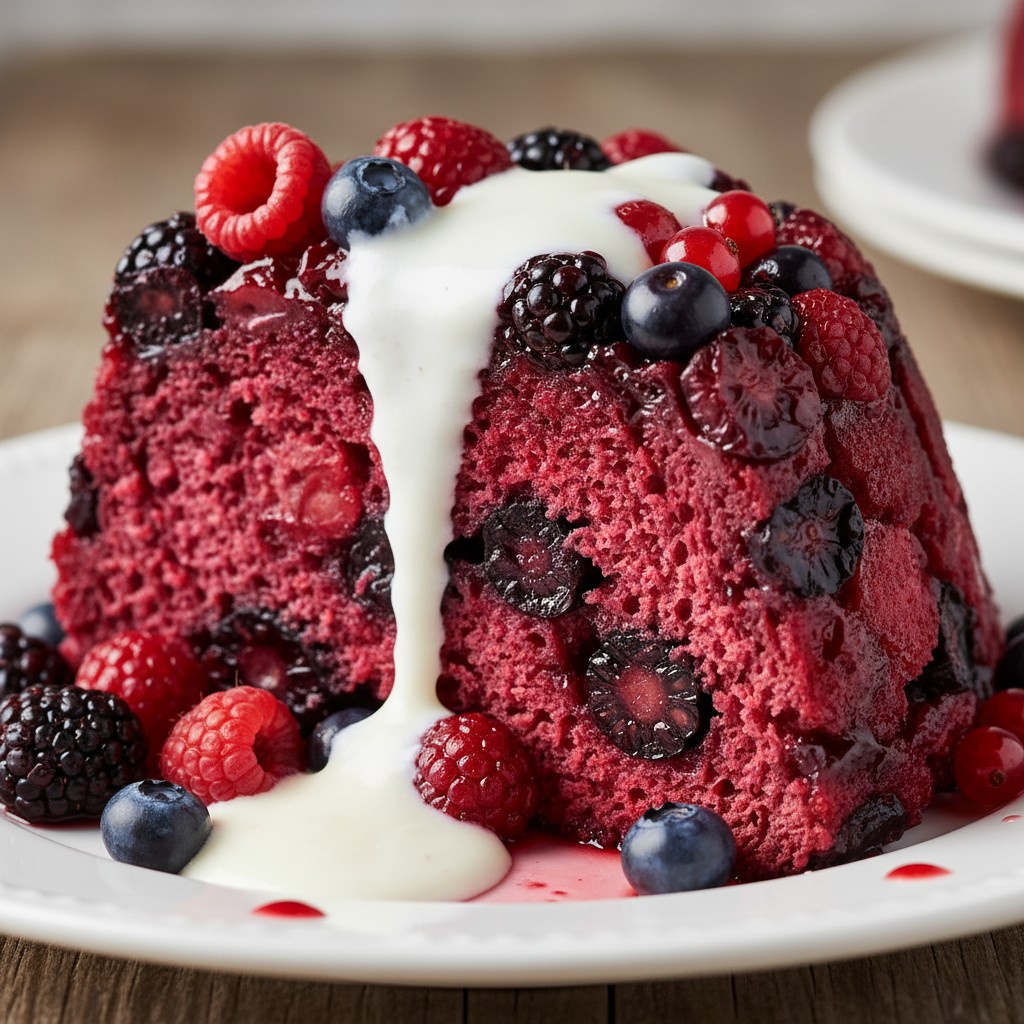
A final thought on serving: the 'reveal' is part of the drama of a Summer Pudding. Bring it to the table whole and slice it in front of your guests. The contrast between the deep, dark exterior and the bright, jewel-like fruit within is what makes this dessert so utterly captivating. It's a moment of pure kitchen theatre.
How to Store & Reheat
Summer Pudding is best eaten on the day it is turned out for the most vibrant colour and firmest texture. If you have leftovers, cover them with cling film and they will keep in the fridge for up to 2 days, though the bread will soften further. This dessert is served cold and should not be reheated.
Frequently Asked Questions
Why did my Summer Pudding fall apart when I turned it out?
This is usually due to one of three things: the bread was too fresh and soft, there were gaps in your bread lining allowing the contents to escape, or it wasn't weighted down firmly enough during chilling.
Can I use frozen fruit?
Yes, absolutely. Thaw the fruit first and drain away the liquid that's released. You can then use this liquid in place of the water when you cook the currants. This prevents the final pudding from being too watery.
My pudding has white patches. What did I do wrong?
This happens when the juice hasn't fully saturated the bread. It could be that the bread slices weren't overlapped enough, or there wasn't quite enough juice to go around. You can remedy this by spooning any reserved juice over the white spots just before serving.
What is the best kind of bread to use for Summer Pudding?
A good-quality, medium-sliced white loaf from a proper baker is best. It needs to be a day or two old, as this slight staleness gives it the strength to absorb the juice without collapsing.
Do I really need to use redcurrants?
I would urge you to. They provide an essential tartness that balances the other fruits, a beautiful ruby colour, and natural pectin which helps the pudding to set. If you absolutely cannot find them, use more raspberries and add a good squeeze of lemon juice to the fruit as it cooks.