Creamy Baked Rice Pudding, The Traditional Way
There is perhaps no dessert more comforting than a proper, slow-baked rice pudding with a golden skin. This is my definitive method for achieving that wonderfully creamy texture we all adore.
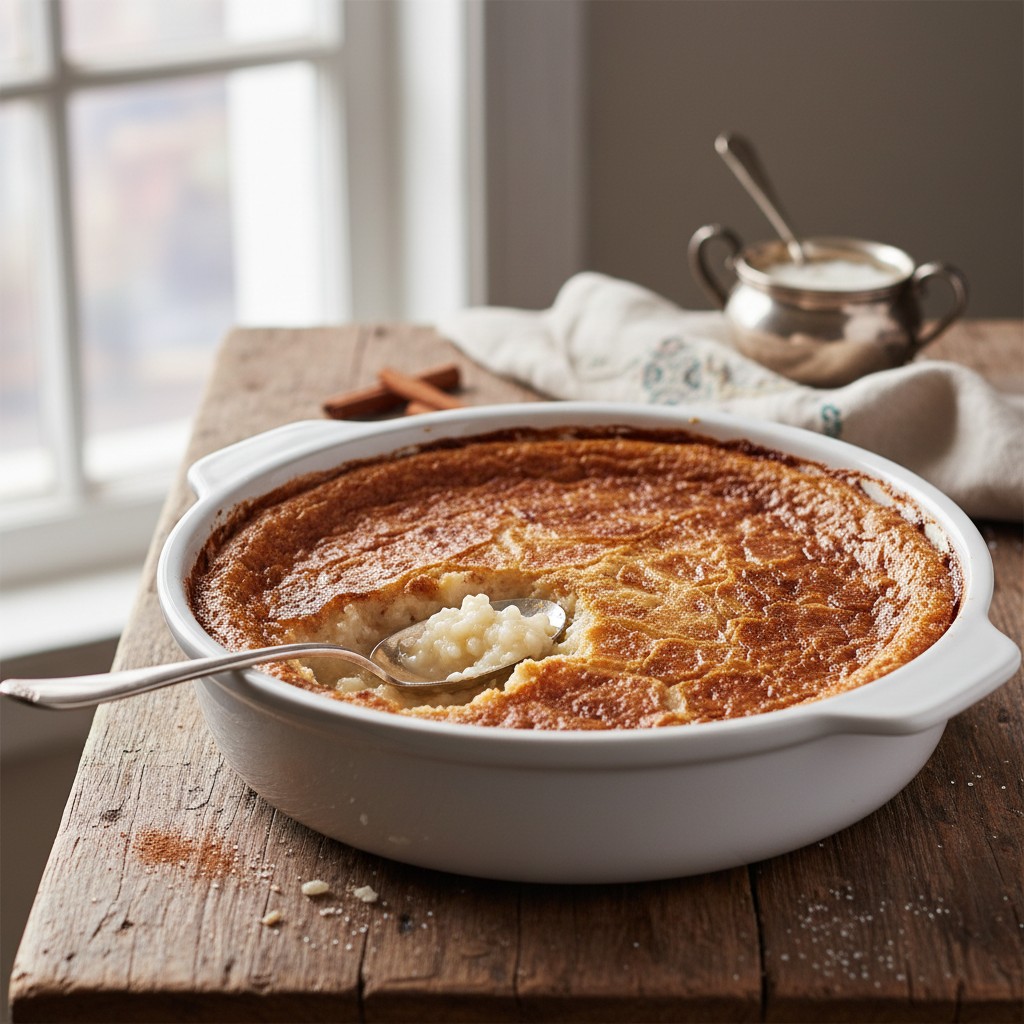
There's a certain magic to a slow-baked rice pudding, a culinary alchemy that transforms a few humble ingredients into the most comforting of nursery puddings. Many of us have memories of it, but getting it just right – creamy, soft, and with that all-important golden-brown skin – can feel elusive. The truth is, it's one of the simplest puddings in the cook's repertoire, provided you follow the rules.
This recipe is all about patience and using the correct ingredients. It is not a dish to be hurried. The long, slow cooking in a low oven is what allows the rice grains to swell gently, releasing their starch and creating a texture that is purely sublime. It’s a world away from the stove-top versions which require constant watching and stirring.
Here, the oven does all the work. Once assembled, you can leave it to its own devices, filling the kitchen with the most wonderful, nostalgic aroma of warm milk and nutmeg. This is more than just a recipe; it’s a lesson in the rewards of slow cooking and a taste of true British heritage.
Why You'll Love This Recipe
- Slow, gentle baking allows the rice grains to swell gradually, releasing their starch to create a naturally thick, creamy consistency without any stirring.
- Using whole milk and a knob of butter provides the necessary fat content, which is crucial for a rich flavour and a velvety mouthfeel.
- The 'skin' that forms on top isn't just traditional; it traps steam, helping to cook the pudding evenly while developing a delicious, caramelised flavour of its own.
Ingredients
- 50g (2 oz) unsalted butter, plus extra for greasing
- 75g (3 oz) short-grain pudding rice
- 50g (2 oz) caster sugar
- 1 litre (1¾ pints) whole milk
- Freshly grated nutmeg
Equipment Needed
1.2 litre (2 pint) ovenproof dish · Small saucepan · Baking tray · Nutmeg grater
Step-by-Step Instructions
- First, pre-heat your oven to 150°C, 300°F, or Gas Mark 2.
- Next, take a 1.2 litre (2 pint) ovenproof dish and grease it generously with butter. This is an important step as it prevents the pudding from sticking and adds to the overall richness.
- Sprinkle the pudding rice and the caster sugar into the base of the prepared dish and give it a gentle shake to distribute them evenly.
- Now, place the milk and the 50g of butter into a saucepan and heat it very gently, just until the butter has melted and the milk is warm to the touch. Do not allow it to boil.
- Carefully pour the warm milk mixture over the rice and sugar. Stir just once to combine everything.
- Grate a generous layer of fresh nutmeg over the entire surface of the milk. This is far superior to the ready-ground sort.
- Place the dish on a baking tray (to catch any potential spills) and bake on the middle shelf of the pre-heated oven for 2 to 2½ hours.
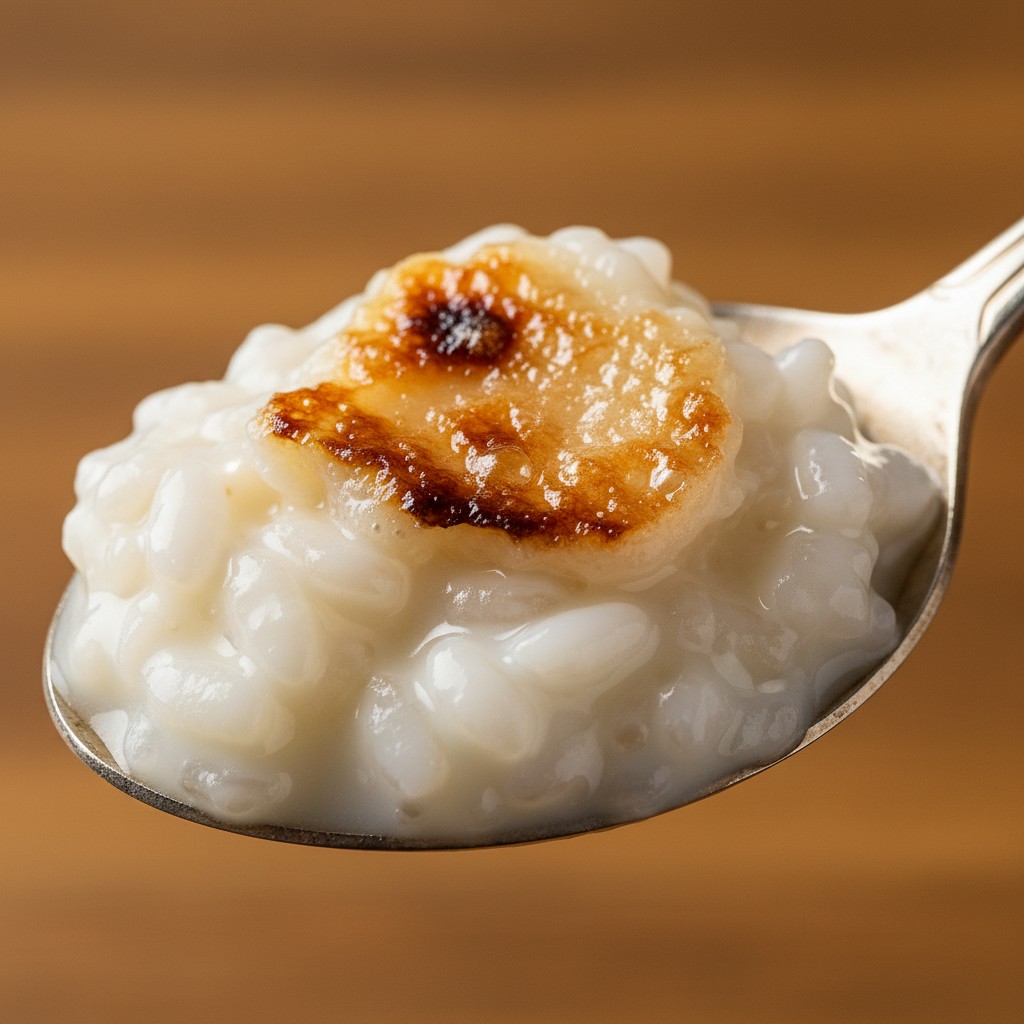
- Do not stir the pudding at any point during cooking. After about 30 minutes, a skin will begin to form, and this is exactly what you want. By the end of the cooking time, the pudding should have a beautiful golden-brown top and be creamy and tender underneath. It should still have a slight wobble; it will set further as it cools.
- Allow it to stand for about 10 minutes before serving.
Delia's Notes from the Kitchen
The secret to a truly magnificent rice pudding lies in patience. The low temperature and long cooking time are not to be rushed; this is what coaxes the starch from the rice, creating that sublime, creamy texture. Do not be tempted to turn up the oven to speed things along – you will simply end up with a boiled, separated pudding rather than a slow-baked, creamy one. Trust the process.
How to Store & Reheat
Leftover rice pudding can be stored in the refrigerator, covered, for up to 3 days. It will become quite solid when chilled. To reheat, spoon the pudding into a saucepan with a good splash of milk and warm gently over a low heat, stirring occasionally until it returns to a creamy consistency. It can also be reheated in a microwave.
Frequently Asked Questions
Why was my rice pudding watery?
This is usually because it hasn't been cooked for long enough, or the oven temperature was too low. A slow, two-hour bake is essential for the rice to absorb the liquid and release its starch. Be patient, it's worth it.
Can I use a different type of rice?
For the best results, you must use short-grain 'pudding rice'. It has a high starch content which is what creates the creamy texture. Arborio rice (used for risotto) is the next best alternative, but long-grain rice like basmati will not work as it won't break down in the same way.
I don't like the skin on top. How can I avoid it?
The skin is a prized part of a traditional baked rice pudding, adding flavour and texture. However, if you really must avoid it, you can cover the dish with foil for the duration of the cooking time. It will still be creamy, but you will miss out on that lovely caramelised top.
Can I add other flavourings?
Certainly. A vanilla pod (split and scraped) warmed with the milk is lovely, as is a cinnamon stick. You could also stir in some sultanas with the rice at the beginning if you wish.
Can this recipe be made on the hob?
Yes, but it becomes a different dish and requires a different method. Stove-top rice pudding needs frequent, almost constant, stirring to prevent it from catching on the bottom of the pan. The baked method is far simpler and, in my opinion, yields a far superior, creamier result.