Christmas-Spiced Pickled Red Cabbage
There is simply nothing that says Christmas quite like a jar of homemade spiced red cabbage. It's a tradition worth preserving, and this recipe makes it utterly foolproof.
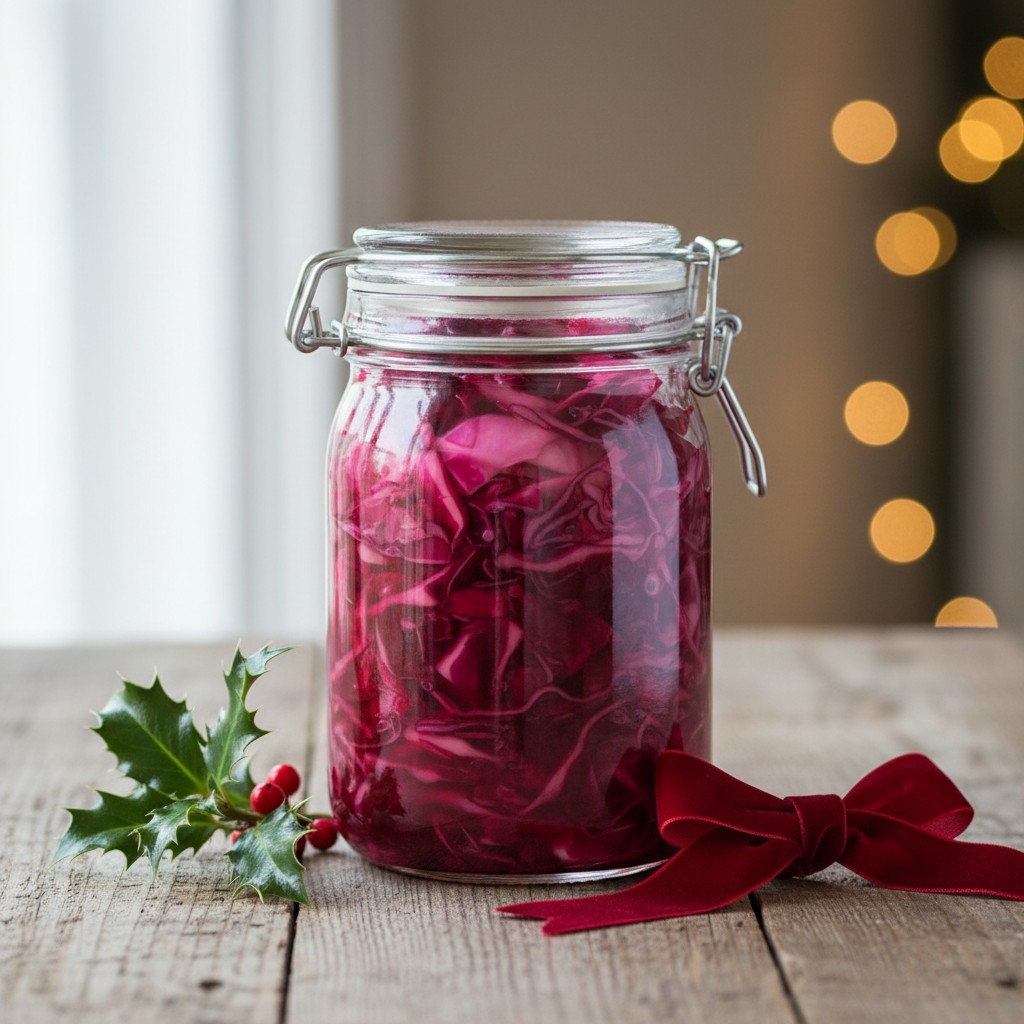
The art of preserving is one of the kitchen's oldest and most satisfying skills, turning the season's bounty into something that can be enjoyed weeks and months later. And when it comes to Christmas, a few jars of homemade pickles and preserves in the larder feel like a secret weapon, ready to elevate simple leftovers into a feast. Chief among these, for me, has always been a jewel-toned jar of pickled red cabbage.
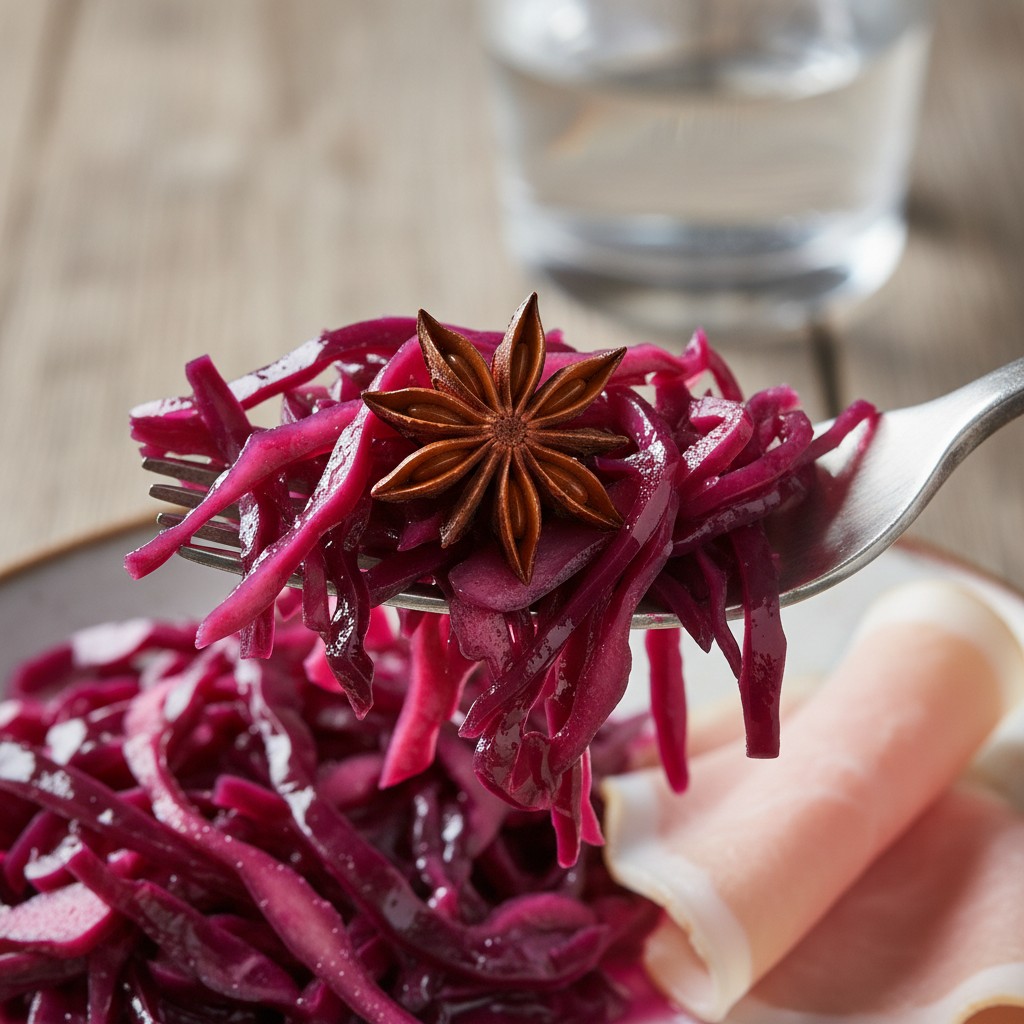
Its sharp, sweet, and spicy crunch is the perfect foil for the richness of Christmas fare. It cuts through the fattiness of roast goose or pork, provides a vibrant counterpoint to a creamy slice of Stilton, and is absolutely essential for the Boxing Day cold meat platter. The colour alone, a magnificent, shocking magenta, brings life and vibrancy to the table during the darkest days of winter. To be without it is, for me, unthinkable.
Now, I know that for some, pickling can seem like a daunting, mysterious process. But I want to assure you that it is one of the simplest and most rewarding things you can do. This recipe is straightforward and reliable, and the results are infinitely superior to any shop-bought version. With just a little effort now, you can have a row of beautiful jars ready for the festive season, perfect for your own table or for giving as a thoughtful, homemade gift.
Why You'll Love This Recipe
- Salting the cabbage first is a crucial step. It draws out excess water, ensuring the finished pickle remains crisp and crunchy rather than becoming soft and soggy.
- The use of a hot pickling liquid helps to gently cook the cabbage just enough to soften its raw edge, while also ensuring the spices infuse properly and the jar is safely preserved.
- Our specific ratio of vinegar to sugar creates a perfectly balanced pickling liquor – sharp enough to preserve, but with enough sweetness to round out the flavour and complement the spices.
Ingredients
- 1 medium red cabbage (about 900g-1kg)
- 50g sea salt flakes
- 700ml cider vinegar
- 300g soft light brown sugar
- 1 tablespoon black peppercorns
- 1 tablespoon allspice berries
- 10-12 cloves
- 2 cinnamon sticks
- 2 star anise
Equipment Needed
Large non-reactive bowl (glass or ceramic) · Colander · Large non-reactive saucepan (stainless steel or enamel) · Sharp knife or mandoline · Chopping board · 2 x 500g preserving jars with airtight lids (e.g., Kilner jars) · Ladle or heatproof jug · Funnel (optional but recommended)
Step-by-Step Instructions
- First, prepare the cabbage. Remove any tough or damaged outer leaves. Quarter the cabbage, cut out the hard white core, and then slice the leaves as thinly as you can. A mandoline is excellent for this, but a sharp knife and a steady hand work just as well.
- Place the shredded cabbage in a large, non-reactive bowl (glass or ceramic is ideal). Sprinkle over the sea salt and use your hands to toss it all together, massaging the salt into the leaves. Cover the bowl with a tea towel and leave it to stand on the countertop for 2-3 hours. You will see a surprising amount of liquid drawn from the cabbage.
- While the cabbage is salting, you can sterilise your jars. Wash two 500g preserving jars and their lids in hot, soapy water, rinse well, but do not dry them. Place them upside down on a baking tray and put them into a cold oven. Heat the oven to 140°C (120°C Fan, Gas Mark 1) and leave the jars for 15 minutes. This is the most reliable method.
- Once the salting time is up, tip the cabbage into a colander and rinse it very thoroughly under cold running water to remove all the salt. Pat it dry with a clean tea towel or give it a good spin in a salad spinner. It's important to get it as dry as possible.
- Now for the pickling liquor. Place the cider vinegar, brown sugar, and all the spices into a large, non-reactive saucepan. Heat it gently, stirring until the sugar has completely dissolved. Then, bring the mixture to a boil and let it simmer for 5 minutes to allow the spices to infuse.
- Pack the dry, shredded cabbage tightly into your warm, sterilised jars. You want to get as much in as you can without crushing it.
- Carefully pour the hot pickling liquor, including the spices, over the cabbage in the jars. Use a funnel if you have one. Make sure the cabbage is completely submerged in the liquid. Poke a skewer down the sides to release any trapped air bubbles.
- Seal the jars immediately with their sterilised lids while everything is still hot. As the jars cool, you should hear a 'pop' as the vacuum seal forms. Label the jars with the date and store them in a cool, dark cupboard.
- For the best flavour, allow the pickle to mature for at least two weeks before opening. Four weeks is even better.
Delia's Notes from the Kitchen
A note on pans: When you are making anything with vinegar, it is absolutely crucial to use a non-reactive pan. This means stainless steel, glass, or enamel-coated cast iron. Pans made from aluminium or copper will react with the acid, tainting the flavour of your pickle and potentially leaching metal into your food. Giving a jar of this as a gift is one of life's small pleasures; tie a piece of festive ribbon around the neck, add a handwritten label, and you have something far more personal than a bottle of wine.
How to Store & Reheat
Store sealed jars in a cool, dark place for up to 6 months. The flavour will only improve with time. Once a jar is opened, it must be kept in the refrigerator and is best consumed within one month. This pickle is served cold and does not require any reheating.
Frequently Asked Questions
Why did my pickled cabbage turn blue?
This can sometimes happen due to a chemical reaction between the pigments in the cabbage and an alkaline environment. Using a strongly acidic vinegar like the one in this recipe prevents this. It can also happen if you use a reactive pan, like aluminium, so always use stainless steel or enamel.
How do I know my jars are properly sealed?
A properly sealed jar will have a concave lid that doesn't move or 'pop' when you press it. You'll often hear a satisfying pop as the jars cool down after sealing. If a lid doesn't seal, store that jar in the fridge and use it first.
My pickling liquid is cloudy. Is it safe to eat?
A little cloudiness can be normal, often from the spices or if you didn't rinse the salt off thoroughly enough. However, if it develops a strange smell or signs of mould, you must discard it. Proper sterilisation is the key to preventing spoilage.
Can I use less sugar?
The sugar plays a role in both the flavour balance and the preserving process. You can reduce it slightly, but I wouldn't recommend cutting it by more than a quarter, as it will affect the final taste and could impact its keeping qualities.
How long do I really need to wait before eating it?
You could technically eat it the next day, but it would be quite harsh and raw-tasting. The magic happens during the maturing period. After two weeks, the flavours will have softened and mingled beautifully. Patience is a virtue here!