My Classic Lemon Sponge Cake
There is something utterly dependable about a good lemon sponge. My all-in-one method ensures a light, zesty cake that is quite simply foolproof.
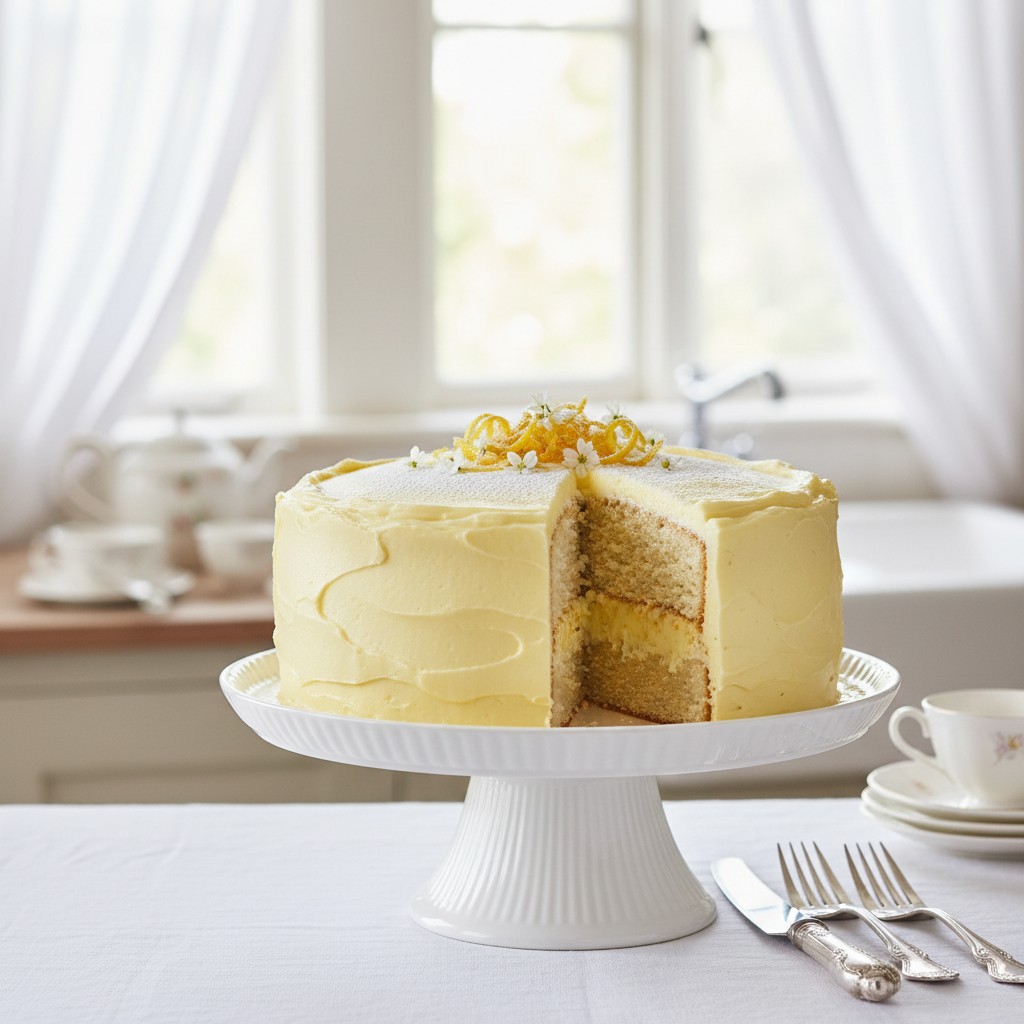
The Definitive Guide to My Classic Delia Smith Lemon Sponge Cake Recipe
This Delia Smith Lemon Sponge Cake Recipe is, I believe, one of the most reliable cakes in any baker's repertoire. There is an unassuming honesty to a simple sponge cake, and when it’s perfumed with the bright, sharp scent of fresh lemons, it becomes something truly special. It’s the sort of cake that feels right for any occasion, from a simple cup of tea in the afternoon to the centrepiece of a celebratory tea party. It requires no grand gestures, just good ingredients and a little bit of care.
For years, I have championed the 'all-in-one' method for sponge cakes. It demystifies the process, removing the fear many home bakers have of ending up with a flat, heavy cake. By placing all the ingredients in the bowl at once, we create a beautifully light, tender crumb with minimal fuss. It is a technique that proves that brilliant baking doesn't need to be complicated; it just needs to be understood.
So, before you begin, take a moment to read the recipe through. Make sure your butter is properly soft and your tins are correctly prepared. These small details are the foundation of all good baking. Follow the steps, trust the method, and you will be rewarded with a truly superb lemon sponge cake that you can be proud of.
Why You'll Love This Recipe
- The All-in-One Method: This technique simplifies the process by combining all ingredients at once, ensuring a consistent, light, and airy crumb without the risk of overworking the batter.
- Weighing the Eggs: Using the weight of the eggs to determine the quantity of flour, sugar, and fat creates a perfectly balanced ratio, which is the secret to a foolproof sponge every time.
- Very Soft Butter: Using butter that is extremely soft (but not melted) allows it to emulsify instantly with the other ingredients, creating a smooth batter and a tender final texture.
Ingredients
- For the Cake:
- 2 large eggs (in their shells)
- Self-raising flour (same weight as the eggs)
- Caster sugar (same weight as the eggs)
- Very soft butter or baking spread (same weight as the eggs)
- 1 level teaspoon baking powder
- Finely grated zest of 1 large, unwaxed lemon
- 1 tablespoon milk
- For the Lemon Buttercream:
- 100g very soft unsalted butter
- 225g icing sugar, sifted
- Finely grated zest of 1 large, unwaxed lemon
- 1-2 tablespoons lemon juice
- A light dusting of caster or icing sugar to finish
Equipment Needed
Two 18cm (7-inch) sandwich tins · Baking parchment · Kitchen scales · Large mixing bowl · Electric hand whisk or stand mixer · Sieve · Fine grater (for zest) · Palette knife · Wire cooling rack
Step-by-Step Instructions
- First, pre-heat your oven to 170°C (160°C for fan ovens), Gas Mark 3. Grease and line the bases of two 18cm (7-inch) sandwich tins with baking parchment.
- Begin by weighing your eggs in their shells. Then, weigh out the exact same quantity of self-raising flour, caster sugar, and very soft butter. This is the golden rule for a perfect sponge.
- Place the weighed-out butter, sugar, flour, baking powder, eggs, milk, and lemon zest into a large mixing bowl. Now, using an electric hand whisk, mix everything together on a low speed to start, then increase to a medium speed. Continue to whisk for about one minute, or until you have a smooth, well-combined batter. Be careful not to overmix; stop as soon as everything is incorporated.
- Divide the mixture evenly between the two prepared tins and level the surfaces with the back of a spoon or a small palette knife.
- Bake on the centre shelf of the pre-heated oven for 25-30 minutes. The cakes are cooked when they are golden brown, have shrunk slightly from the sides of the tin, and a skewer inserted into the centre comes out clean.
- Leave the cakes to cool in their tins for about 5 minutes before carefully turning them out onto a wire rack. Peel off the baking parchment and leave them to cool completely.
- While the cakes are cooling, make the buttercream. Place the very soft butter in a bowl and beat it with an electric hand whisk until it is smooth and creamy. Gradually add the sifted icing sugar, beating well after each addition. Finally, add the lemon zest and 1 tablespoon of lemon juice, and whisk again until light and fluffy. If it seems too stiff, add a little more lemon juice, but do so cautiously.
- To assemble, place one sponge, top-side down, onto a serving plate. Spread the buttercream evenly over the surface, right to the edges. Place the second sponge on top (top-side up) and press down gently. Finish with a light dusting of caster or icing sugar.
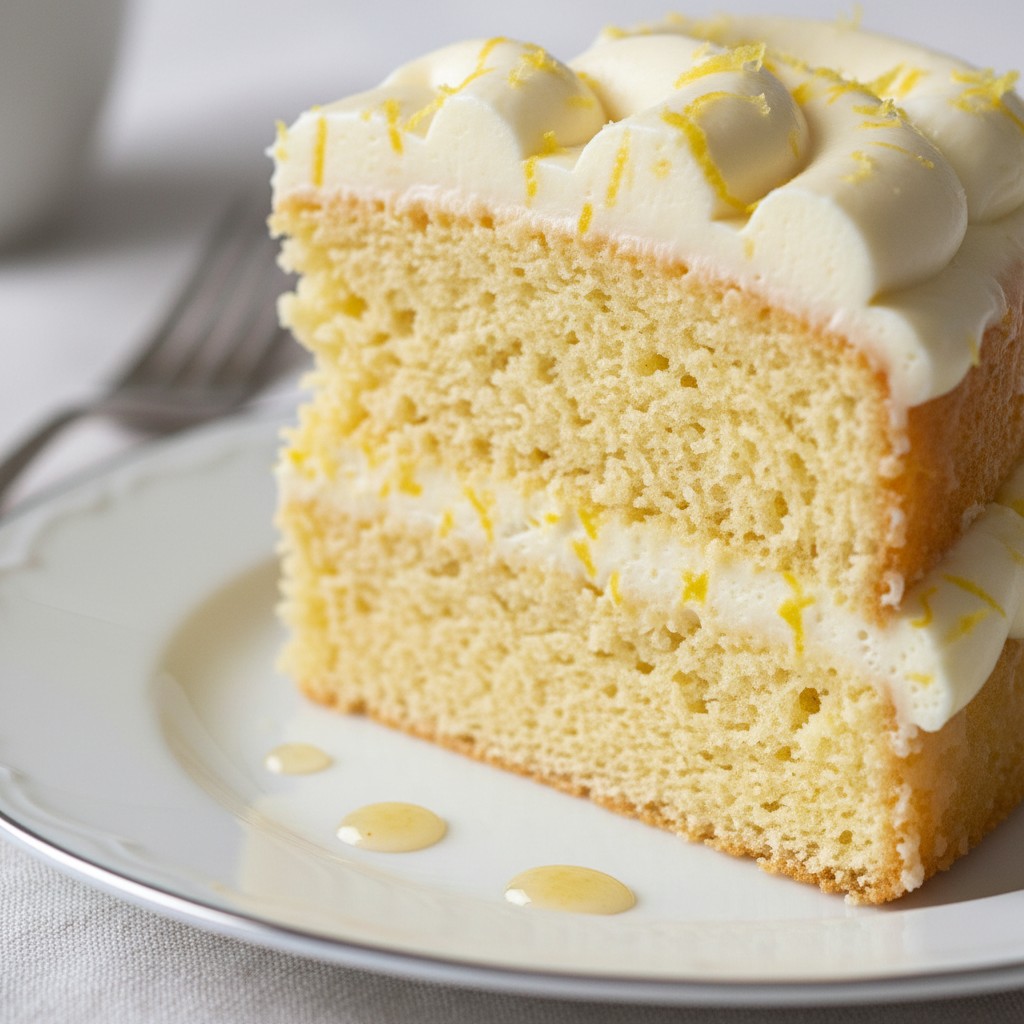
Delia's Notes from the Kitchen
The real secret to this all-in-one method is the temperature of the butter. When I say 'very soft', I mean it. It should be soft enough to spread with no resistance at all. I often take it out of the fridge several hours before I plan to bake. Do not be tempted to soften it in the microwave, as this can create oily patches. Patience is key. Also, when you add the ingredients to the bowl, make a small hollow in the flour for the eggs; it's an old habit of mine that I find helps everything combine just that little bit better.
How to Store & Reheat
The cake is best eaten on the day it is made. However, it will keep well for up to 2 days stored in an airtight container at room temperature. I do not recommend refrigerating it, as this can dry out the sponge. This cake is not suitable for reheating.
Frequently Asked Questions
Why did my sponge cake sink in the middle?
This is a common problem with a few possible causes. The most likely is that the oven door was opened too early, causing the delicate structure to collapse. It can also be caused by over-mixing the batter, which incorporates too much air, or an oven that is not at the correct temperature.
Can I use plain flour instead of self-raising?
Yes, you can. For every 150g of plain flour, you will need to add 2 level teaspoons of baking powder. Sift them together before adding to the bowl to ensure the raising agent is evenly distributed.
Can I bake this in one deep tin instead of two sandwich tins?
You can, but you must adjust the baking time accordingly. A single deep 18cm cake will need approximately 45-55 minutes. Keep a close eye on it and use the skewer test to check for doneness. The texture may be slightly denser than the two-layer version.
My buttercream is too runny. How can I fix it?
This usually happens if the butter was too soft (i.e., melting) or if you've added too much liquid. To fix it, try beating in a little more sifted icing sugar until it reaches the right consistency. You can also chill it in the refrigerator for 15-20 minutes, then whisk it again.
Can I freeze this lemon sponge cake?
Yes, the sponges freeze beautifully. Once completely cool, wrap each sponge individually and tightly in a double layer of cling film, then a layer of foil. They can be frozen for up to 2 months. Defrost at room temperature before filling and serving.