My Fail-Safe Crumble Topping
There is nothing quite so comforting as a proper fruit crumble with a genuinely crunchy, buttery topping. Here is my definitive method to achieve just that, every time.
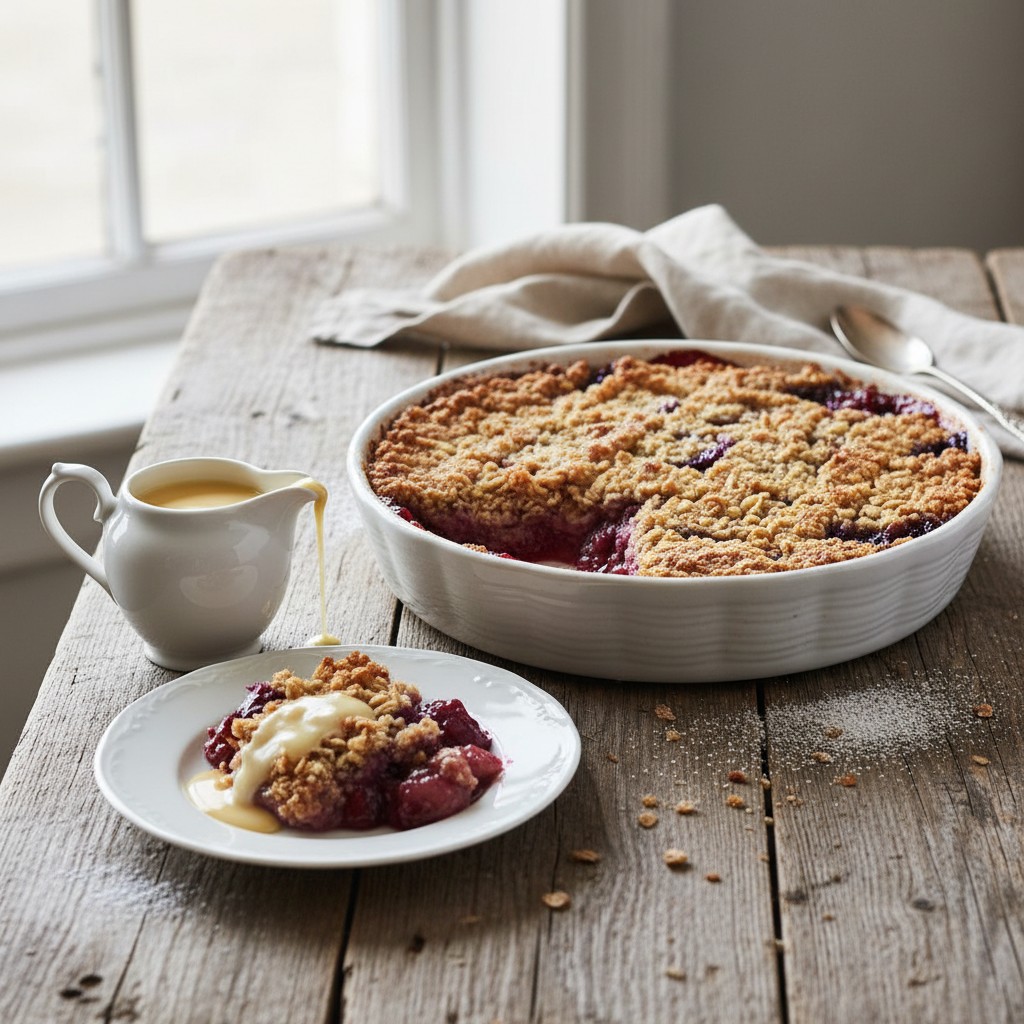
The humble crumble is, without a doubt, one of the cornerstones of British home cooking. It's the pudding we turn to for comfort, for nostalgia, and for making the very best of seasonal fruit. But for all its simplicity, the success of a crumble hinges entirely on its topping. A soggy, claggy lid is a deep disappointment, while a truly great one – crunchy, pebbly, and deeply buttery – can elevate the simplest fruit into something sublime.
Over the years, I've seen many variations, some with oats, some with nuts, but what I want to give you here is the classic, unadulterated version. This is the foundation, the recipe you will come back to time and time again. The secret, as is so often the case in cooking, lies not in a long list of ingredients but in the quality of them and, most importantly, in the technique.
Mastering the 'rubbing in' method is a skill that will serve you well far beyond this recipe. It's a beautifully tactile process that connects you to the food you are making. So please, resist the temptation to rush. Follow these steps with care, and I promise you will be rewarded with a perfect crumble topping that will make you feel like a true baker.
Why You'll Love This Recipe
- Using very cold, cubed butter is essential. As it bakes, the small pieces of butter melt and create steam, which results in a lighter, crispier texture rather than a greasy one.
- The 'rubbing in' method, using just the fingertips, keeps the butter cool and coats the flour particles. This creates the classic sandy, breadcrumb-like texture and prevents a paste from forming.
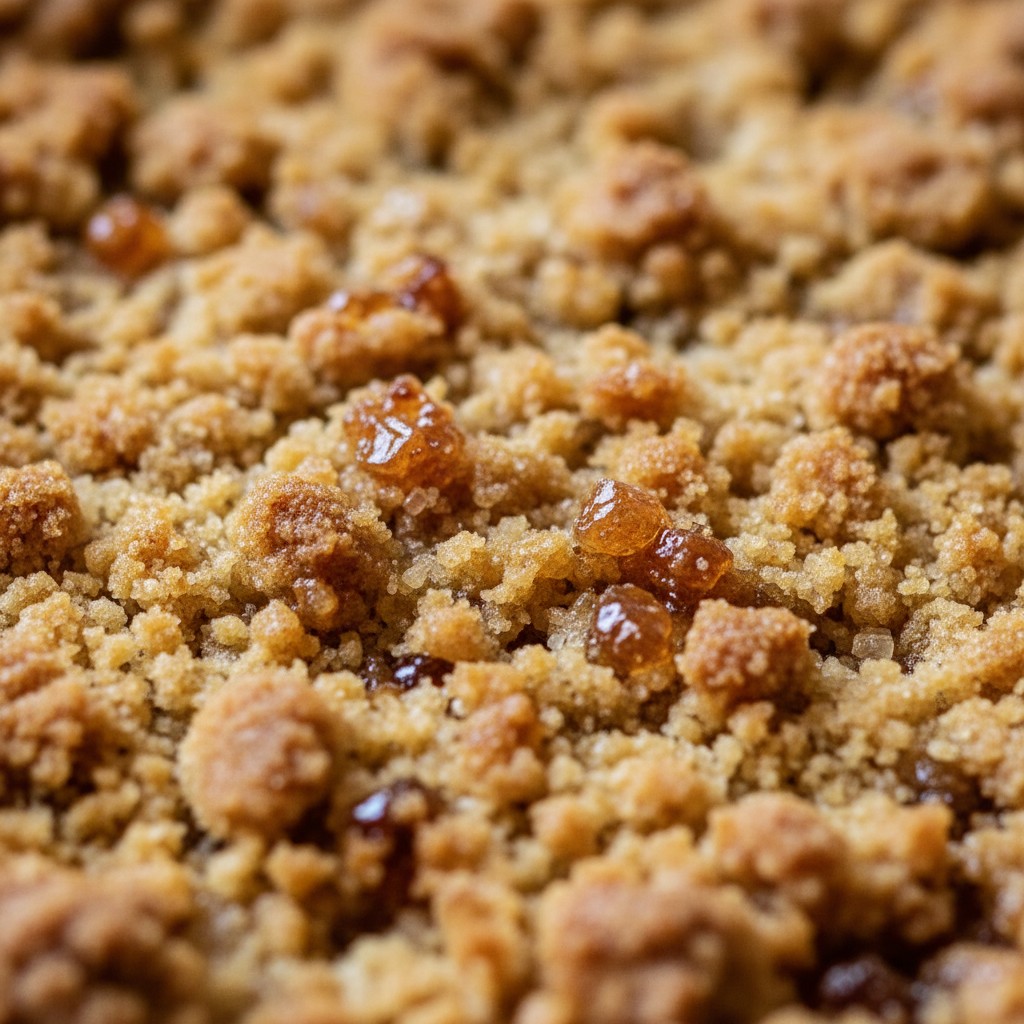
- Adding the sugar after the rubbing in is complete, and mixing it lightly with a knife, ensures the mixture stays light and airy. Using demerara sugar on top provides a final, non-negotiable crunch and a lovely caramelised finish.
Ingredients
- 175g (6 oz) plain flour
- 110g (4 oz) cold unsalted butter, cut into small cubes (approx. 1cm)
- 50g (2 oz) caster sugar
- 50g (2 oz) demerara sugar
Equipment Needed
Large mixing bowl · Flour sifter · Kitchen scales · Cutlery knife
Step-by-Step Instructions
- Begin by sifting the flour from a height into a large, cool mixing bowl. Sifting incorporates air, which is the first step towards a light topping.
- Add the cubes of cold butter to the flour. Now, using only your fingertips (the coolest part of your hands), begin to rub the butter into the flour.
- To do this properly, pick up a small amount of the flour and butter, rub it lightly between your fingertips, and then let it fall back into the bowl. As you do this, lift your hands high above the bowl to incorporate as much air as possible.
- Continue this process until the mixture resembles coarse, sandy breadcrumbs. You should still see some small, pea-sized flecks of butter; this is perfectly fine and contributes to the final texture. Do not overwork it.
- Now, add the caster sugar and use a cutlery knife to gently stir it through the mixture. Using a knife, rather than a spoon or your hands, helps to keep the mixture light and prevents you from compacting it.
- Your crumble topping is now ready. Sprinkle it loosely and evenly over your prepared fruit filling in its dish. Do not press it down, as this will result in a dense, cakey topping.
- Finally, for that essential crunchy finish, sprinkle the demerara sugar evenly all over the surface.
- Bake in a pre-heated oven according to your fruit crumble recipe, usually at 180°C (350°F, Gas Mark 4) for 35-45 minutes, until the topping is golden brown and the fruit juices are bubbling up at the sides.
Delia's Notes from the Kitchen
The 'rubbing in' method is a fundamental skill in British baking. It might seem a little old-fashioned, but it is the best way to achieve the correct texture. Once you've mastered it for this crumble, you'll find that making shortcrust pastry and scones becomes far less daunting. Think of it as a technique, not just a step in a recipe.
How to Store & Reheat
To store the uncooked topping, place it in a sealed freezer bag or airtight container. It will keep in the refrigerator for up to 3 days or can be frozen for up to 3 months. You can use it directly from frozen. A cooked crumble can be covered and stored in the refrigerator for up to 3 days. To reheat, place it in an oven preheated to 160°C (325°F, Gas Mark 3) for 15-20 minutes until warmed through.
Frequently Asked Questions
Why did my crumble topping turn out soggy?
This usually happens for two reasons. Either the butter was too soft when you started, causing it to melt into the flour, or the topping was packed down too firmly on the fruit, preventing steam from escaping.
Can I make the crumble topping in a food processor?
You can, but you must be extremely careful. Use the pulse button in very short bursts, just until the mixture resembles breadcrumbs. It is very easy to over-process, which creates a paste and will ruin the final texture.
How do I get a really crunchy top?
The secret to a truly crunchy top lies in two things: not compacting the mixture when you put it on the fruit, and a generous, even sprinkling of demerara sugar just before baking. The large crystals of demerara caramelise and provide that signature crunch.
Can I make a larger batch of the topping?
Absolutely. This recipe can be easily doubled or tripled. It's an excellent idea to make a large batch and freeze it in portions for a quick and easy dessert whenever you need one.
Should I use salted or unsalted butter?
I prefer to use unsalted butter as it gives me complete control over the seasoning. However, if you only have salted butter, it will work perfectly well. Just be aware that it will add a slight savoury note, which can be quite pleasant.