A Proper Vegetable Lasagne
There are few dishes more comforting than a really good, homemade vegetable lasagne. This recipe will show you how to get every layer just right, from the rich sauce to the creamy béchamel.
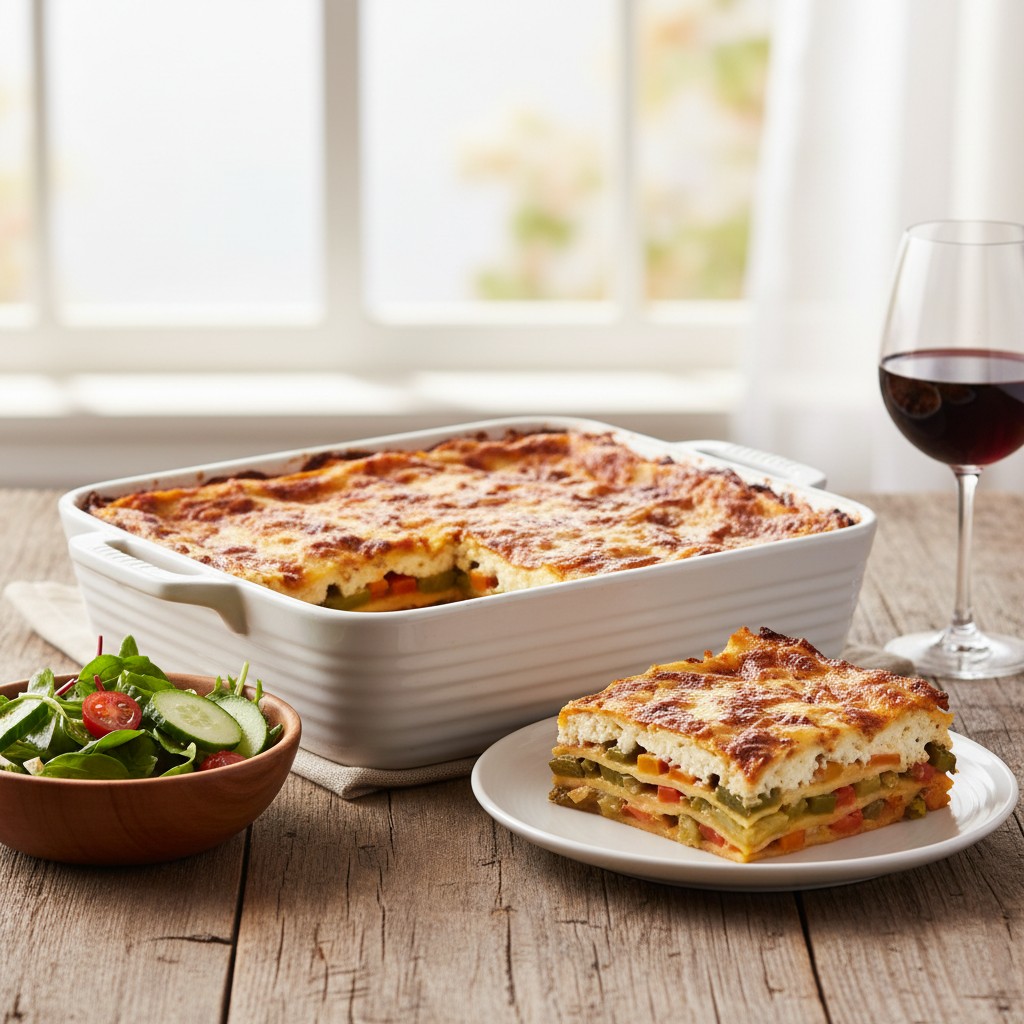
There is a great deal of talk about vegetable lasagne, but all too often it can be a rather disappointing, watery affair. The secret to a truly great one, I believe, is to treat it not as a substitute for the meaty original, but as a magnificent dish in its own right. This means paying proper attention to each component: a deeply savoury vegetable sauce, a genuinely creamy béchamel, and the right kind of pasta to bring it all together.
What we are aiming for is depth of flavour. By taking the time to build the sauce slowly, allowing the vegetables to soften and release their natural sweetness, we create a base that is both rich and robust. Then comes the béchamel, the classic white sauce that provides the essential creamy structure. This is not a place for short cuts; a proper roux-based sauce is what gives the finished dish its luxurious texture and stability.
This recipe is something of a weekend project, I grant you, but it is one of the most rewarding you can undertake in the kitchen. It can be prepared well in advance, it freezes beautifully, and the final result is a wonderfully comforting and substantial meal that will have everyone asking for the recipe. So, let’s begin.
Why You'll Love This Recipe
- Building the vegetable sauce slowly and allowing it to simmer creates a deep, concentrated flavour and prevents the final dish from being watery.
- A classic béchamel sauce, made with a butter and flour roux, provides a creamy, stable structure that a simple cheese sauce cannot replicate.
- Resting the finished lasagne for at least 10 minutes before serving is crucial; it allows the layers to set, making it easier to slice and ensuring the flavours have a chance to meld together perfectly.
Ingredients
- For the Vegetable Sauce:
- 2 tbsp olive oil
- 2 medium onions, finely chopped
- 2 cloves garlic, crushed
- 2 medium carrots, finely diced
- 2 sticks celery, finely diced
- 1 large courgette, diced
- 1 red pepper, deseeded and diced
- 250g chestnut mushrooms, sliced
- 2 x 400g tins of good-quality chopped tomatoes
- 2 tbsp tomato purée
- 1 tsp dried oregano
- 1 tsp sugar
- Salt and freshly ground black pepper
- For the Béchamel Sauce:
- 75g butter
- 75g plain flour
- 1 litre whole milk
- 1 bay leaf
- A good grating of fresh nutmeg
- 50g Parmesan cheese, freshly grated
- For Assembly:
- 250g fresh egg lasagne sheets (or 12 dried sheets)
- 50g Parmesan cheese, freshly grated, for the topping
Equipment Needed
Large heavy-based saucepan or casserole dish · Medium saucepan · Whisk · Sharp knife and chopping board · Rectangular ovenproof dish (approx. 20 x 30cm) · Baking tray · Cheese grater
Step-by-Step Instructions
- First, make the vegetable sauce. Place a large, heavy-based saucepan or casserole dish over a medium heat and add the olive oil. Add the onions, carrots, and celery, and cook gently for 10-12 minutes, stirring occasionally, until softened and lightly golden. This slow cooking is important for developing flavour.
- Add the crushed garlic and cook for another minute, then add the courgette, red pepper, and mushrooms. Increase the heat slightly and cook for 5-7 minutes until the vegetables have softened and released their liquid.
- Stir in the tomato purée and cook for a minute before adding the tinned tomatoes, dried oregano, and sugar. Season well with salt and freshly ground black pepper. Bring to a simmer, then reduce the heat to low, cover partially, and let it cook gently for at least 30 minutes, or until the sauce has thickened and is rich in flavour. Remove from the heat and set aside.
- Next, make the béchamel sauce. In a separate, medium-sized saucepan, melt the butter over a low heat. Stir in the flour to form a thick paste (a roux) and cook for 1-2 minutes, stirring constantly. This cooks out the raw flour taste.
- Remove the pan from the heat and begin to add the milk, a little at a time, whisking vigorously after each addition to ensure there are no lumps. Once all the milk is incorporated and the sauce is smooth, return it to a medium-low heat. Add the bay leaf and a good grating of nutmeg.
- Bring the sauce to a gentle simmer, stirring continuously, and cook for 8-10 minutes until it has thickened to the consistency of double cream. It should coat the back of a spoon. Remove from the heat, discard the bay leaf, and stir in the 50g of grated Parmesan. Season to taste with salt and pepper.
- To assemble the lasagne, preheat your oven to 180°C (Fan) / 200°C / Gas Mark 6. Lightly grease a rectangular ovenproof dish, approximately 20 x 30cm.
- Spread a thin layer of the vegetable sauce over the base of the dish. Follow with a layer of lasagne sheets, trimming them to fit if necessary. Then, spread over a third of the remaining vegetable sauce, followed by a quarter of the béchamel sauce.
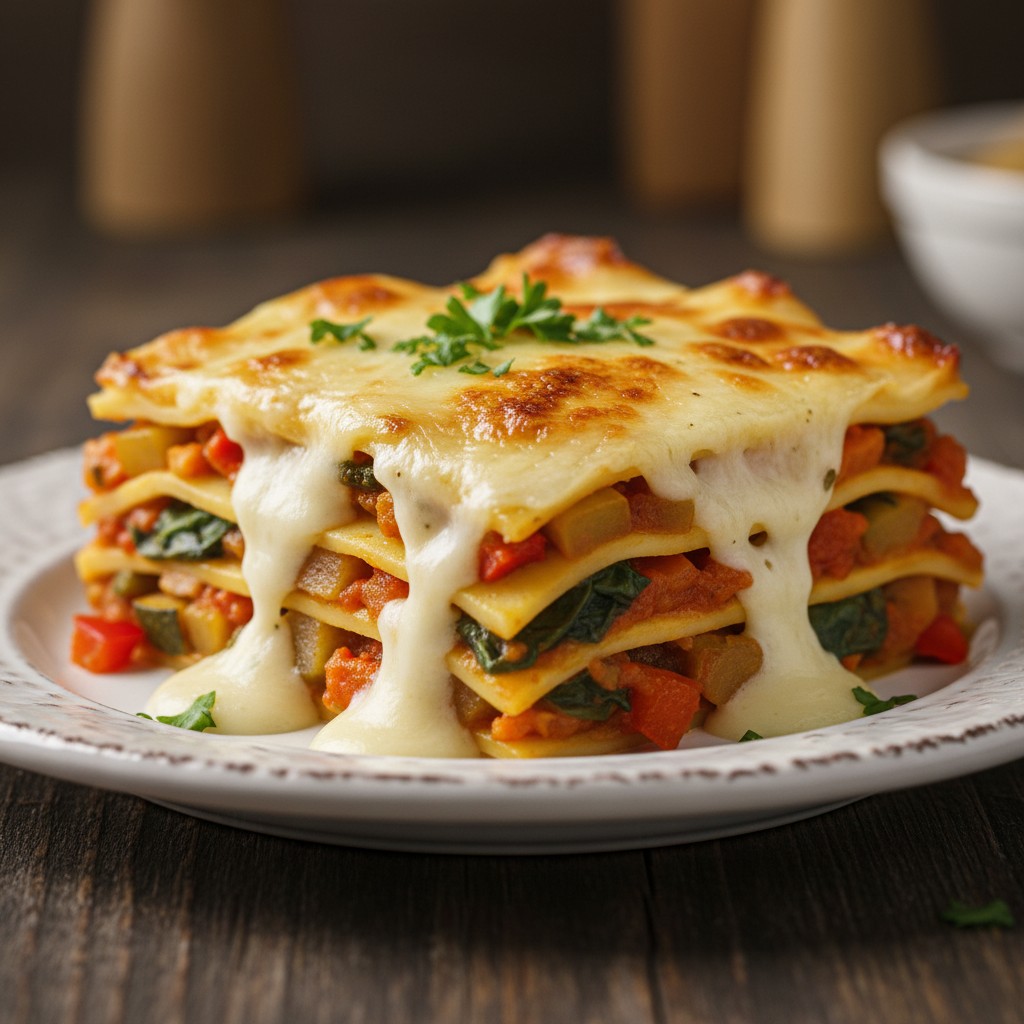
- Repeat these layers twice more: pasta, vegetable sauce, béchamel sauce. Finish with a final layer of pasta sheets, then pour over the remaining béchamel sauce, making sure to cover the pasta completely right to the edges.
- Sprinkle the remaining 50g of Parmesan cheese evenly over the top. Place the dish on a baking tray (to catch any spills) and bake for 35-45 minutes, or until the top is golden and bubbling and the pasta is cooked through. You can check by inserting a skewer into the centre – it should meet no resistance.
- Once cooked, it is absolutely essential to let the lasagne rest for 10-15 minutes before serving. This allows the layers to settle, making it much easier to cut into neat portions. Serve with a simple green salad.
Delia's Notes from the Kitchen
A final word of advice: don't be tempted to skip making a proper béchamel sauce from scratch. It is the heart and soul of a good lasagne, providing the creamy counterpoint to the acidity of the tomatoes that you simply cannot replicate with a jar or a packet mix. And when seasoning your vegetable sauce, be bold – vegetables require a confident hand with salt and pepper to truly sing.
How to Store & Reheat
Leftovers can be stored in an airtight container in the fridge for up to 3 days. Reheat individual portions in the microwave, or place the entire dish, covered with foil, in an oven preheated to 180°C/Gas Mark 4 for 20-25 minutes, until piping hot throughout. This lasagne also freezes exceptionally well. Assemble but do not bake, then cool completely, wrap thoroughly in cling film and foil, and freeze for up to 3 months. Defrost fully in the fridge overnight before baking as per the original instructions.
Frequently Asked Questions
Why is my vegetable lasagne often watery?
This is a common problem, usually caused by excess moisture from the vegetables. To avoid this, ensure you cook the vegetable sauce for long enough to reduce and thicken it properly. Some vegetables, like courgettes and mushrooms, release a lot of water, so cooking them well at the start is key.
My béchamel sauce is lumpy. How can I fix it?
Lumps are usually caused by adding the milk too quickly or not whisking enough. If you find your sauce is lumpy, take it off the heat and whisk it very vigorously. If that doesn't work, you can pass the sauce through a fine-mesh sieve for a perfectly smooth result.
Can I use dried pasta sheets instead of fresh?
Yes, you certainly can. Some 'no pre-cook' dried sheets can be used directly, but they absorb a lot of liquid, so ensure your sauces are slightly runnier. For other dried sheets, it's best to blanch them in boiling salted water for 2-3 minutes before using. Always check the packet instructions for guidance.
Can I make this recipe gluten-free?
Yes. Use your preferred brand of gluten-free lasagne sheets. For the béchamel sauce, simply substitute the plain flour with a good-quality gluten-free plain flour blend, using the exact same method.
Is it really necessary to rest the lasagne after baking?
Yes, I'm afraid it is absolutely crucial. A lasagne straight from the oven is a molten mass. Allowing it to rest for 10-15 minutes gives the sauces and pasta time to settle and firm up, which means you can cut clean, beautiful slices that hold their layers.