My Classic Baked Lemon Cheesecake with Frosted Grapes
There is something utterly satisfying about baking a classic lemon cheesecake from scratch. This recipe provides a perfectly creamy filling and a crisp, buttery base, finished with the sparkle of frosted grapes.
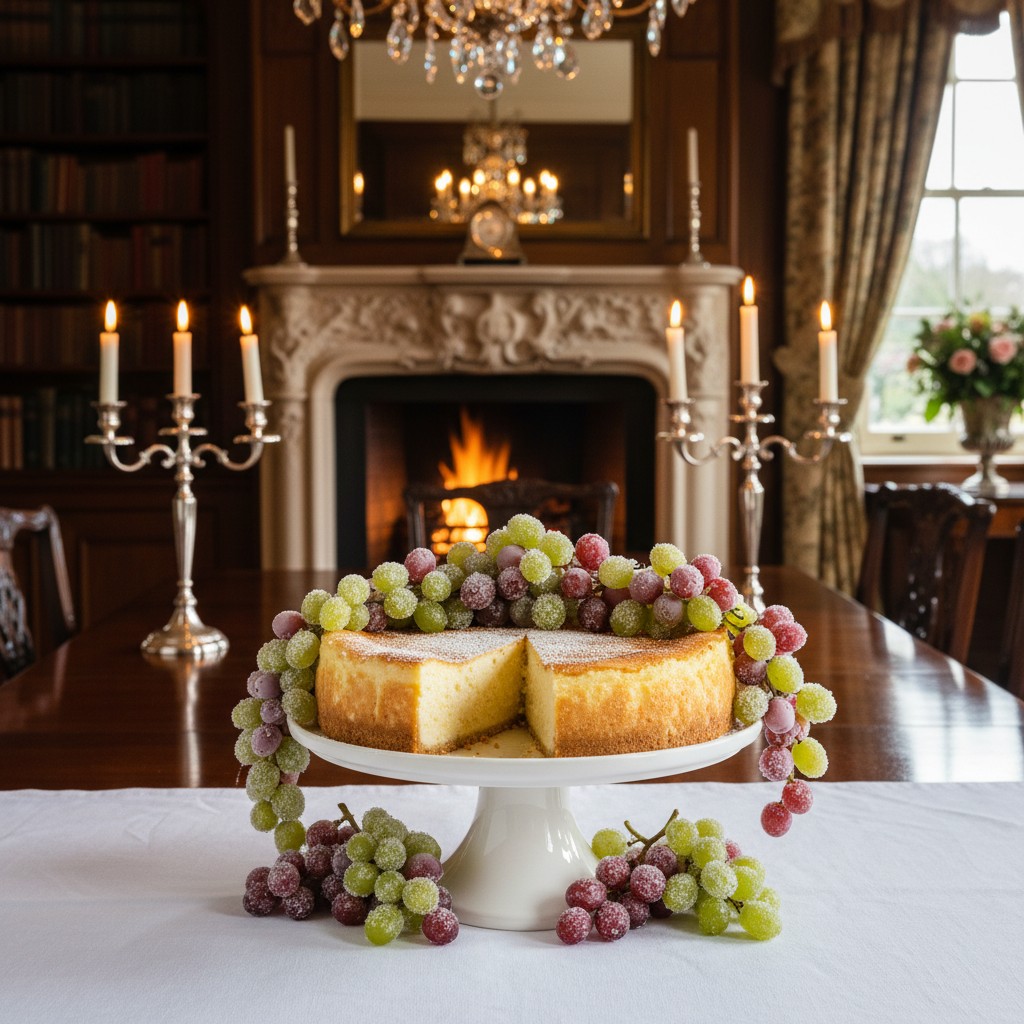
For me, a proper baked cheesecake is one of the kitchen's great triumphs. It is a world away from its uncooked, gelatine-set cousins; baking the filling transforms the cream cheese into something altogether more sophisticated, with a light, velvety texture and a rich, complex flavour that is simply second to none.
This recipe is one I have relied on for years. It is about balance: the crisp, buttery rubble of a digestive biscuit base against the silken, creamy filling, which itself is a careful harmony of sweet sugar and the sharp, fragrant zing of fresh lemon. We will use a water bath for baking – and please don't be put off by the term – it is a simple technique that guarantees a perfectly even bake and, crucially, prevents the dreaded crack from forming on the surface.
What truly elevates this dessert from a family favourite to a show-stopping centrepiece is the final flourish of frosted grapes. It's a wonderfully simple, almost magical, trick that turns a humble bunch of grapes into a sparkling, jewel-like decoration. They provide a lovely, crisp textural contrast and a burst of sweetness that makes this cheesecake perfect for any celebration.
Why You'll Love This Recipe
- The water bath (bain-marie) creates a humid environment in the oven, ensuring the cheesecake cooks gently and evenly, which is the secret to a creamy texture and a crack-free top.
- Using full-fat, room temperature ingredients is non-negotiable. It allows the cream cheese, eggs, and soured cream to emulsify perfectly, resulting in a smooth, homogenous filling without lumps.
- Cooling the cheesecake slowly in the turned-off oven prevents a sudden temperature shock, which can cause the centre to sink and crack as it contracts.
Ingredients
- For the Base:
- 225g digestive biscuits
- 110g unsalted butter, melted
- For the Filling:
- 900g full-fat cream cheese, at room temperature (I use Philadelphia)
- 250g caster sugar
- 4 large free-range eggs, at room temperature
- 2 large lemons, finely grated zest and juice (about 60ml)
- 1 tsp vanilla extract
- 150ml soured cream, at room temperature
- For the Frosted Grapes:
- 1 small bunch of seedless grapes (red or green)
- 1 large free-range egg white, lightly beaten
- 100g caster sugar
Equipment Needed
23cm springform cake tin · Heavy-duty aluminium foil · Large deep roasting tray · Food processor or rolling pin · Large mixing bowl · Electric hand mixer · Spatula · Wire rack · Pastry brush
Step-by-Step Instructions
- Step 1: Begin by preparing your tin and oven. Preheat the oven to 160°C (140°C Fan, Gas Mark 3). You will need a 23cm springform cake tin. To create the water bath, take two large pieces of heavy-duty foil and place them on your work surface in a cross shape. Place the springform tin in the centre and wrap the foil securely up the outside of the tin to make it watertight. This is very important!
- Step 2: Now for the base. Place the digestive biscuits into a food processor and pulse until they form fine crumbs. Alternatively, place them in a strong plastic bag and crush them with a rolling pin. Tip the crumbs into a bowl, pour over the melted butter and mix thoroughly until it resembles damp sand.
- Step 3: Tip the buttery crumbs into the prepared tin and press down firmly and evenly using the back of a spoon or the base of a glass. Make sure you create a compact layer. Place the tin in the fridge to chill while you make the filling.
- Step 4: For the filling, in a large bowl, using an electric hand mixer on a low speed, beat the room-temperature cream cheese until it is smooth and creamy. This should only take a minute; be careful not to over-beat. Add the caster sugar and beat again until just combined.
- Step 5: Add the eggs one at a time, beating lightly after each addition until just incorporated. Scrape down the sides of the bowl as you go. Now, gently mix in the lemon zest, lemon juice, vanilla extract, and soured cream until you have a smooth, homogenous batter. Do not be tempted to whisk vigorously, as this incorporates too much air.
- Step 6: Pour the filling over the chilled biscuit base in the tin. Place the wrapped tin into a large, deep roasting tray. Carefully pour freshly boiled water from a kettle into the roasting tray, so that it comes about 2-3cm up the sides of the cake tin. Be very careful not to splash water into the cheesecake.
- Step 7: Bake in the centre of the preheated oven for 1 hour. The cheesecake should be set at the edges but still have a slight wobble in the very centre when you gently nudge the tin. Turn the oven off, prop the oven door open slightly with a wooden spoon, and leave the cheesecake to cool completely in the oven. This gradual cooling process is key.
- Step 8: Once completely cool, remove the cheesecake from the water bath, unwrap the foil, and chill in the fridge for at least 6 hours, or preferably overnight, until firm.
- Step 9: For the frosted grapes, ensure they are clean and completely dry. Lightly brush a grape with the beaten egg white, then roll it in the caster sugar until evenly coated. Place it on a wire rack to dry. Repeat with the remaining grapes. This can be done a few hours before serving.
- Step 10: To serve, carefully release the cheesecake from the springform tin and place it on a serving plate. Arrange the sparkling frosted grapes on top. Serve chilled.
Delia's Notes from the Kitchen
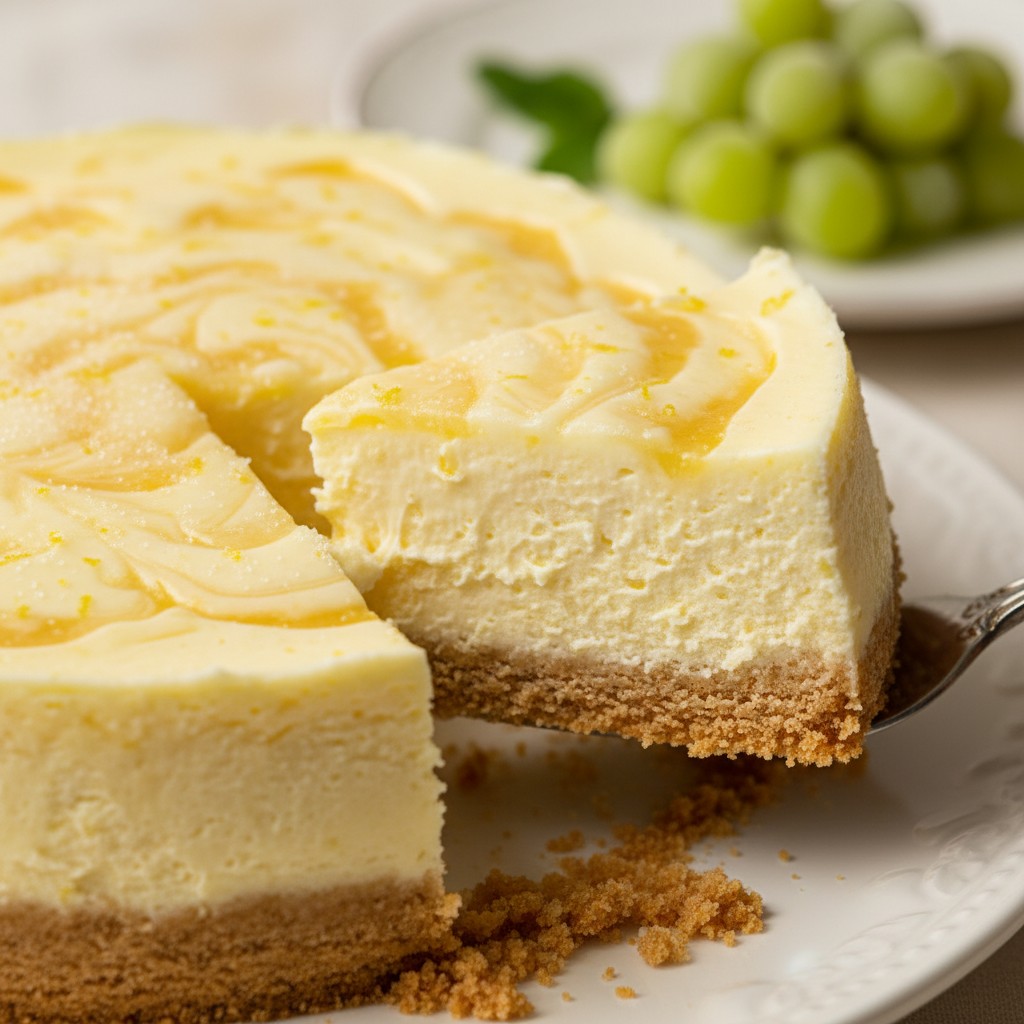
The secret to a truly sublime cheesecake lies not in fancy ingredients but in technique. Allowing the cream cheese and eggs to come to room temperature is not a mere suggestion; it is the absolute key to a silky-smooth, lump-free filling. Rushing this step by using ingredients straight from the fridge is the number one cause of lumpy batter. Please, be patient – it is well worth the wait.
How to Store & Reheat
The cheesecake must be stored in the refrigerator. Cover it loosely with cling film or store it in an airtight container. It will keep well for up to 3-4 days. The frosted grapes are best added just before serving for maximum sparkle, but the cheesecake itself benefits from being made a day in advance. Do not freeze.
Frequently Asked Questions
Why did my cheesecake crack?
A crack is usually caused by one of three things: over-mixing the batter (which incorporates too much air), over-baking, or cooling it too quickly. My water bath and slow cooling method are specifically designed to prevent this very problem.
Can I use low-fat cream cheese?
I really must advise against it. Full-fat cream cheese is essential for the rich flavour and, most importantly, the firm, creamy texture. Low-fat versions contain more water and will not set properly, leading to a disappointing, often runny, result.
How do I know for sure when the cheesecake is cooked?
The visual cue is key. The outer 2-3 inches of the cheesecake will look set and matte, while the very centre (a circle about the size of a 50p coin) should still have a distinct wobble, like a jelly. It will continue to set as it cools.
Can I make this without a water bath?
You can, but you risk a less-creamy texture and are more likely to get cracks. If you must, place a tray of hot water on the shelf below the cheesecake to create some steam. Bake at a slightly lower temperature (around 150°C) and watch it very carefully.
How far in advance can I make the frosted grapes?
They are at their most beautiful and crisp when made on the day of serving. You can prepare them up to 4-5 hours in advance and leave them to dry on a wire rack at room temperature. Don't refrigerate them, as the condensation will dissolve the sugar.