How to Make a Truly Perfect Couscous Salad
So many people are disappointed by couscous, but the secret is all in the technique. Follow my simple method for a light, fluffy, and beautifully flavoured salad every time.
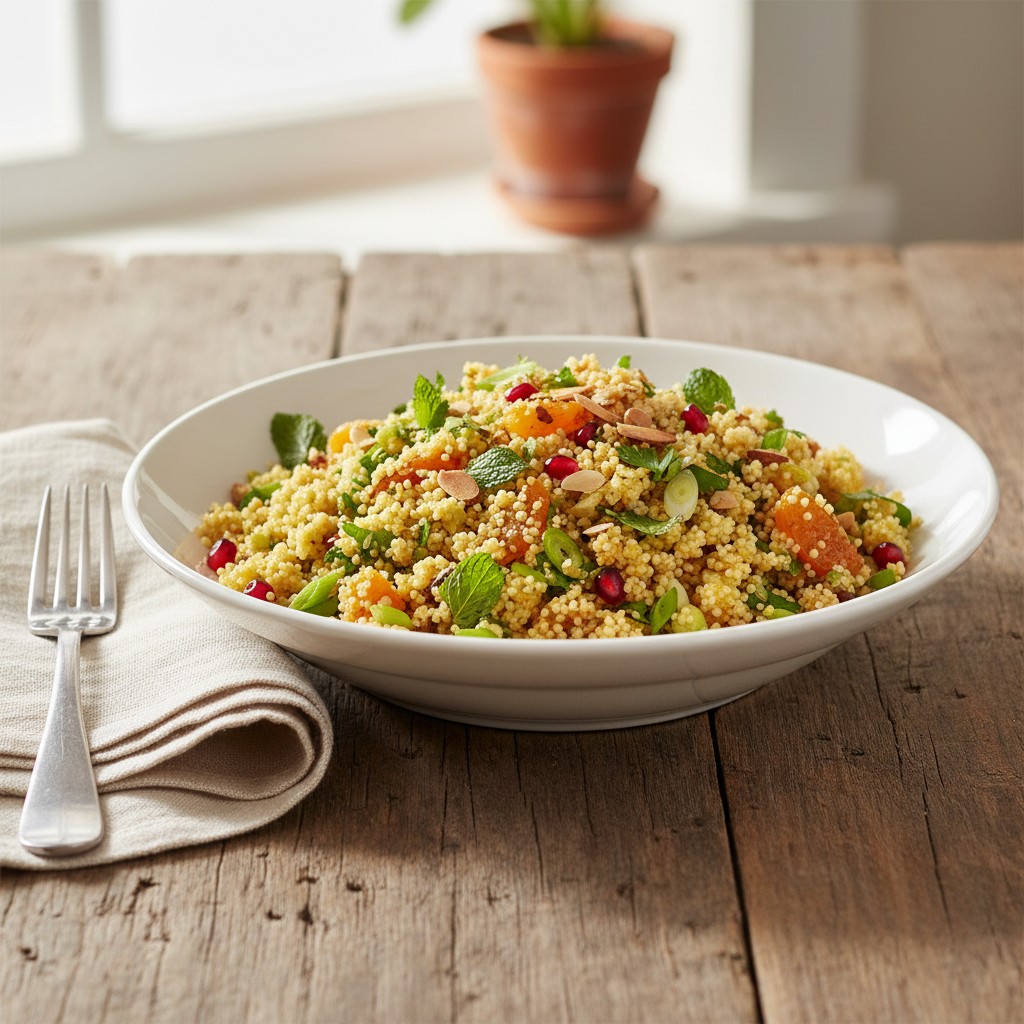
There's a prevailing myth that couscous is a rather dull and uninspiring ingredient, often resulting in a clumpy, stodgy mess. I'm here to tell you that this simply isn't true. The fault lies not with the grain itself, but almost always with the method. When treated with a little understanding, couscous transforms into the most wonderfully light, fluffy, and absorbent base for a whole host of flavours.
This recipe is my definitive guide to getting it right. We aren't just tipping ingredients into a bowl; we are carefully building layers of flavour and texture. We begin with a well-seasoned stock to plump up the grains from the inside out, then we add the vital components: a little sweetness from apricots, a nutty crunch from toasted almonds, and a burst of freshness from lemon and herbs. It is a study in balance and simplicity.
Once you have mastered this basic technique, the possibilities are endless. Think of this not just as a single recipe, but as a foundation for countless variations. It’s the perfect accompaniment to grilled meats or fish, a superb light lunch on its own, and an absolute stalwart of the summer picnic or buffet table. This is one of those recipes you will return to again and again.
Why You'll Love This Recipe
- The 1:1.5 ratio of couscous to boiling stock by volume is the absolute key to achieving perfectly cooked, separate grains without any sogginess.
- Fluffing the couscous with a fork, first with a little olive oil and then again after cooling, is a non-negotiable step to prevent clumping and ensure a light texture.
- The combination of sweet (apricots), savoury (stock), tangy (lemon), and fresh (herbs) creates a perfectly balanced flavour profile that is vibrant and satisfying.
Ingredients
- 250g couscous
- 375ml good-quality hot vegetable or chicken stock
- 2 tbsp extra virgin olive oil, plus a little extra
- 50g flaked almonds
- 75g ready-to-eat dried apricots, finely chopped
- 4 spring onions, trimmed and finely sliced
- 1 large bunch of fresh mint (about 25g), leaves finely chopped
- 1 large bunch of fresh coriander (about 25g), leaves and tender stalks finely chopped
- Zest and juice of 1 unwaxed lemon
- Salt and freshly ground black pepper
Equipment Needed
Large shallow bowl · Measuring jug · Kettle · Fork · Small dry frying pan · Sharp knife · Chopping board · Small bowl or jug for the dressing
Step-by-Step Instructions
- First, prepare the couscous. Place the dry couscous in a large, shallow bowl. Pour the hot stock all over it. Don't be tempted to stir; simply cover the bowl tightly with a plate or cling film and leave it to stand for 5-10 minutes, or until all the liquid has been completely absorbed.
- While the couscous is standing, toast the almonds. Place a small, dry frying pan over a medium heat. Add the flaked almonds and toast them for 2-3 minutes, tossing them frequently until they are fragrant and lightly golden. Tip them immediately onto a plate to cool – they can burn quickly if left in the hot pan.
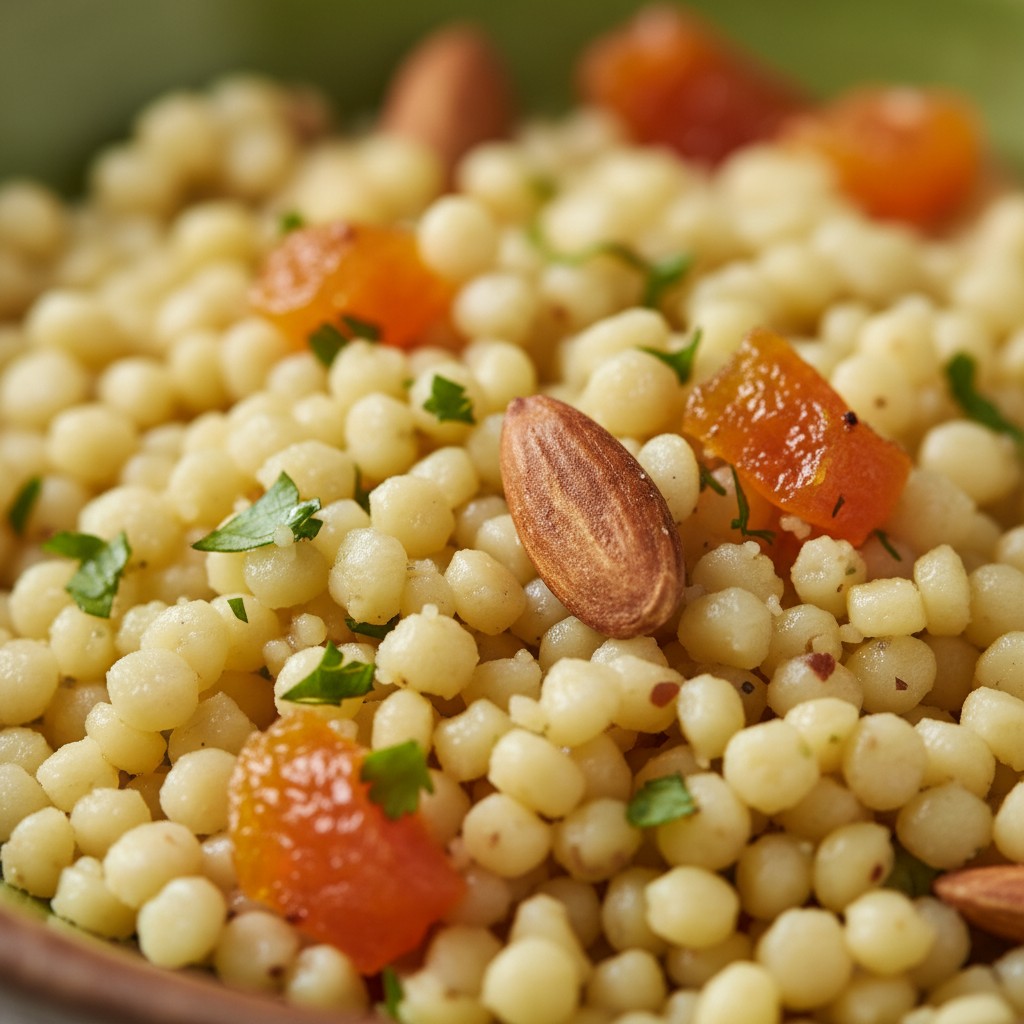
- Now, back to the couscous. Uncover the bowl. The grains should have swollen up. Drizzle over 1 tablespoon of the olive oil. Take a fork and begin to gently fluff up the grains, breaking up any large clumps. Your aim is to separate each grain. Once done, leave it to cool down to room temperature.
- Once the couscous is cool, add the chopped apricots, sliced spring onions, the cooled toasted almonds, and the chopped mint and coriander.
- In a small bowl or jug, whisk together the remaining 1 tablespoon of olive oil, the lemon zest, and the lemon juice. Season it well with salt and freshly ground black pepper.
- Pour the dressing over the couscous mixture. Use the fork to toss everything together gently, ensuring all the ingredients are evenly distributed. Have a taste and add a little more salt, pepper, or lemon juice if you feel it needs it.
- For the best flavour, cover the salad and let it sit for at least 30 minutes at room temperature before serving. This allows the flavours to meld together beautifully.
Delia's Notes from the Kitchen
A final thought: don't be shy with the herbs. It might seem like a lot, but they are essential for giving the salad its characteristic freshness and lift. Use the freshest, brightest herbs you can find – they are not just a garnish here, but a star ingredient.
How to Store & Reheat
Store any leftovers in an airtight container in the fridge for up to 3 days. The flavours will continue to develop. It is best served at room temperature rather than straight from the cold, so take it out of the fridge about 30 minutes before you plan to eat it. This salad should not be reheated.
Frequently Asked Questions
My couscous is always clumpy. What am I doing wrong?
Clumping is almost always caused by one of two things: an incorrect ratio of liquid to couscous, or stirring it while it absorbs the liquid. Use a measuring jug for precision, pour the stock over, cover, and walk away. The fluffing with a fork afterwards is the final, crucial step to separate the grains.
Can I use water instead of stock?
You can, but I wouldn't recommend it. Using a good-quality, well-seasoned stock is the first and most important step in flavouring the couscous itself. Water will produce a much blander result.
How long will this salad keep in the fridge?
It keeps very well. Stored in a sealed container, it will be delicious for up to 3 days. The herbs may lose a little of their vibrancy, but the overall flavour will be excellent.
Can I add other vegetables to this salad?
Absolutely. Finely diced cucumber, cherry tomatoes (halved), or roasted peppers are all lovely additions. Just be mindful of adding anything too watery, which might make the salad soggy.
Is it better to serve this warm or cold?
I find it's at its absolute best served at room temperature. This allows all the individual flavours of the herbs, lemon, and olive oil to shine. It's perfectly nice cold from the fridge, but letting it sit out for 30 minutes makes a real difference.