My Definitive Braised Red Cabbage
This is my definitive recipe for braised red cabbage, a truly wonderful accompaniment to roast meats. It’s simple to prepare and can be made well in advance, improving beautifully with time.
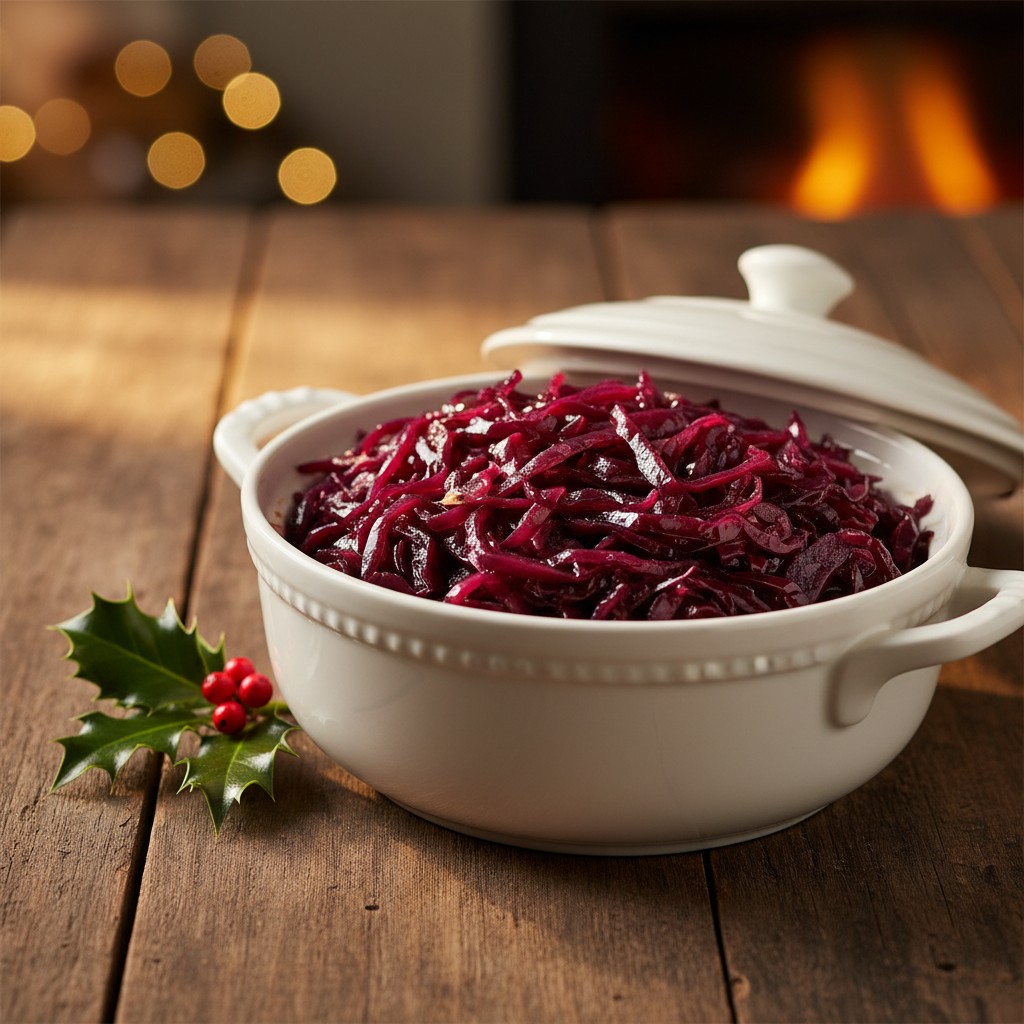
There are some dishes that are simply non-negotiable when it comes to a proper roast dinner, and for me, braised red cabbage is right at the top of that list. Its glorious, jewel-like colour and perfect balance of sweet and sharp flavours provide a wonderful counterpoint to rich meats like goose, duck, or a festive gammon. It is, quite simply, Christmas in a casserole dish.
What I adore most about this recipe is its accommodating nature. It can, and in fact should, be made at least a day or two in advance, as the flavours have a chance to settle and deepen, making it even more delicious. This is an enormous help when you're juggling oven timings for a big family meal. The slow, gentle braise transforms the humble cabbage from a crunchy vegetable into something meltingly tender and deeply flavourful.
Don't be daunted by the long cooking time; the actual hands-on work is minimal. It's a simple matter of layering ingredients in a pot and letting the oven do all the hard work. This recipe is one I have relied on for decades, and it has never, ever let me down. It is, in my opinion, the only way to cook red cabbage.
Why You'll Love This Recipe
- The slow, moist cooking method (braising) breaks down the tough cellulose in the cabbage, resulting in a meltingly soft and tender texture that cannot be achieved with quick cooking.
- The inclusion of acid, specifically the red wine vinegar and the malic acid from the Bramley apples, is crucial. It stabilises the anthocyanin pigments in the cabbage, ensuring it retains its vibrant red-purple hue instead of turning an unappetising blue.
- Layering the ingredients rather than mixing them allows for a gentle, even distribution of heat and flavour. The butter and sugar on top melt down through the cabbage, creating a rich, self-basting sauce as it cooks.
Ingredients
- 1 medium red cabbage, about 900g (2 lb)
- 2 medium Bramley apples, or other sharp cooking apples
- 1 large onion, peeled and roughly chopped
- 50g (2 oz) butter
- 2 tablespoons soft dark brown sugar
- 3 tablespoons red wine vinegar
- 1/2 teaspoon ground mixed spice
- 1/4 teaspoon ground cloves
- A good pinch of salt and freshly milled black pepper
Equipment Needed
Large heavy-based casserole dish with a tight-fitting lid · Sharp chef's knife · Chopping board · Vegetable peeler · Apple corer (optional)
Step-by-Step Instructions
- First, pre-heat your oven to 150°C (Gas Mark 2). You will need a large, flameproof casserole dish with a very well-fitting lid.
- Prepare the cabbage. Discard any tough or damaged outer leaves. Quarter the cabbage, cut out the hard central core, and then slice the leaves as finely as you can. A sharp knife is your best friend here.
- Next, prepare the apples. Peel them, quarter them, and remove the cores. Then, slice them fairly thickly. Don't worry about them being too neat.
- Now for the assembly, which is a simple layering process. Start by placing half of the sliced cabbage in the base of your casserole dish. Follow this with all the chopped onion and all the sliced apple. Sprinkle over the spices, salt, and pepper.
- Top with the remaining half of the sliced cabbage. Now, sprinkle the soft dark brown sugar evenly over the top layer of cabbage. Finally, dot the butter all over the surface.
- Pour the red wine vinegar over everything. Do not stir the contents – just let everything sit in its layers.
- Place the lid on the casserole. It's very important that it fits snugly to trap the steam. If your lid is a little loose, you can place a layer of foil over the pot before putting the lid on to create a tighter seal.
- Place the casserole in the pre-heated oven and leave it to cook for 1½ to 2 hours. By the end, the cabbage should be completely tender and surrounded by a rich, glossy syrup.
- Give it a good stir before serving to combine all the layers and juices. It can be served immediately or cooled and stored for later.
Delia's Notes from the Kitchen
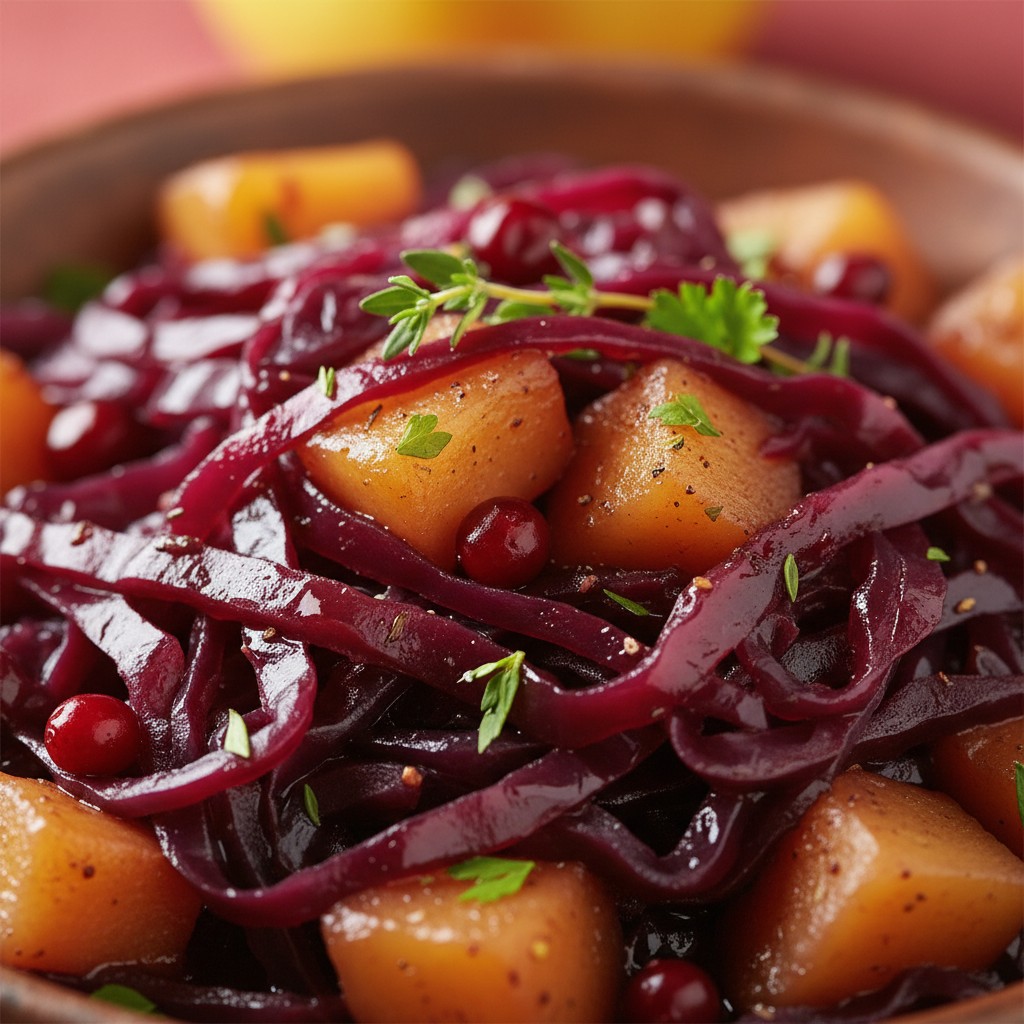
The real secret here is patience. This is not a dish to be rushed. That long, slow braise is where the magic happens, transforming the cabbage into something truly special. The other key is a really good, heavy casserole with a lid that fits like a glove. This traps all the steam and flavour, allowing the cabbage to cook in its own aromatic juices. It's one of my favourite things to have waiting in the fridge during the festive season, ready to be gently reheated.
How to Store & Reheat
This dish improves with age. Cool it completely, then store in an airtight container in the refrigerator for up to 3 days. To reheat, place it in a saucepan over a low heat with a splash of water, stirring occasionally until piping hot. It can also be reheated in the microwave. It also freezes exceptionally well for up to 3 months. Defrost thoroughly before reheating as described.
Frequently Asked Questions
Why did my red cabbage turn blue?
This happens when the cabbage is cooked without enough acid. The natural pigments, called anthocyanins, are pH sensitive. The acid from the vinegar and apples is essential to 'fix' the colour and keep it a vibrant red-purple. Always ensure you include the vinegar.
Can I cook this in a slow cooker?
Yes, absolutely. It works very well. Simply layer the ingredients as instructed in the slow cooker pot, then cook on a low setting for 4-5 hours until the cabbage is perfectly tender. You may find the sauce is slightly more liquid, in which case you can remove the lid for the final 30 minutes of cooking.
My cabbage seems a bit dry. What went wrong?
This is almost always due to the lid not being tight enough, which allows the steam to escape. The cabbage should create its own cooking liquid. Next time, try sealing the pot with a layer of foil under the lid to ensure no moisture is lost.
Can I use a different type of onion?
Yes, a standard brown onion is what I recommend, but a red onion would also work perfectly well and complement the colour of the dish.
Is it possible to add wine to the recipe?
You can, though I find it doesn't strictly need it. If you wish, you could add a small glass of a robust red wine, such as a Merlot, along with the vinegar. It will add another layer of depth to the flavour.