How to Make a Classic Christmas Cake
A truly magnificent, traditional fruit cake that is the cornerstone of any British Christmas. Follow this time-honoured recipe for a perfectly rich and moist result every year.
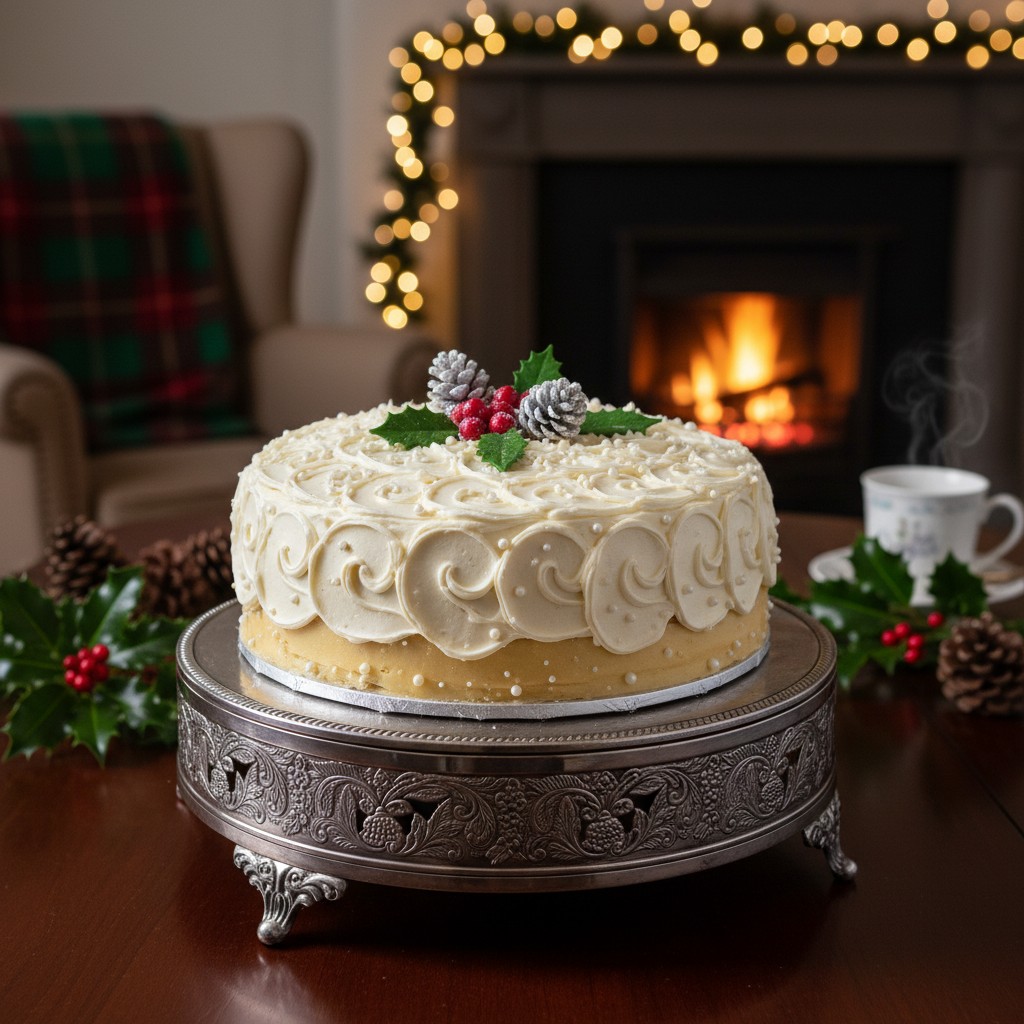
The Definitive Guide to My Traditional Delia Smith Christmas Cake Recipe
Making my classic Delia Smith Christmas Cake Recipe is, for me, the official start of Christmas. It’s a ritual that begins in November, filling the kitchen with the most wonderful, festive aromas of spice and brandy-soaked fruit. This isn't just any cake; it is the culmination of tradition, a centrepiece that has graced British tables for generations, and making your own is one of the most satisfying things a home cook can do.
There is no need to be daunted by the process. My method is precise, tested over decades, and designed to give you complete confidence. We will take it step by step, from soaking the fruit to achieve that essential plumpness and flavour, to the slow, gentle bake that ensures a perfectly moist crumb from edge to centre. This is a cake that improves with age, and the simple act of 'feeding' it over the weeks becomes a lovely, quiet moment of anticipation for the festivities ahead.
So, roll up your sleeves, put on your apron, and let's begin. By following these instructions carefully, you will not just bake a cake, but create a future heirloom for your family's Christmas celebration. I promise you, the result will be a cake of great character and depth, something to be truly proud of.
Why You'll Love This Recipe
- Soaking the fruit overnight in brandy not only infuses it with flavour but also hydrates it, preventing the fruit from drawing moisture from the cake batter during baking, resulting in a perfectly moist cake.
- The double-lining method, using both baking parchment and brown paper, insulates the cake, allowing for a long, slow bake without the edges burning, which is crucial for a dense fruit cake.
- Using a specific combination of dark brown sugar and black treacle provides the classic rich colour and deep, caramelised flavour that is the hallmark of a traditional Christmas cake.
- A precise, low oven temperature is key. It ensures the cake cooks evenly right through to the middle without the top forming a hard crust too early.
Ingredients
- 450g currants
- 175g sultanas
- 175g raisins
- 50g chopped glacé cherries
- 50g chopped mixed peel
- 5 tablespoons brandy, plus extra for feeding
- 225g plain flour
- ½ teaspoon salt
- ½ level teaspoon ground nutmeg
- ½ level teaspoon ground cinnamon
- ¼ level teaspoon ground cloves
- 225g unsalted butter, softened
- 225g dark soft brown sugar
- 4 large free-range eggs, at room temperature
- 1 tablespoon black treacle
- 50g chopped almonds
Equipment Needed
20cm (8-inch) round, deep cake tin · Baking parchment · Brown paper and string · Large mixing bowl · Electric mixer or wooden spoon · Sieve · Fine skewer
Step-by-Step Instructions
- First, the night before you bake, place all the dried fruits (currants, sultanas, raisins, cherries, and mixed peel) into a large bowl. Pour over the 5 tablespoons of brandy, stir well, cover the bowl with a tea towel, and leave to soak overnight.
- The next day, preheat your oven to 140°C (120°C Fan, Gas Mark 1). Now, prepare the tin, which is a vital step. Using a deep 20cm (8-inch) round cake tin, double-line the base and sides with baking parchment. Then, wrap a double layer of brown paper or newspaper around the outside of the tin, securing it with string. This protects the cake during its long bake.
- In a separate bowl, sift together the flour, salt, and all the ground spices. This ensures they are evenly distributed.
- In a very large mixing bowl, cream the softened butter and dark brown sugar together using an electric mixer or a wooden spoon until pale and fluffy. This incorporates air, which helps with the cake's texture.
- Beat the eggs lightly in a small bowl. Then, add them to the creamed mixture a little at a time, beating well after each addition. If it looks like it might curdle, add a tablespoon of the sifted flour.
- Gently stir in the tablespoon of black treacle. Now, using a large metal spoon, fold in the sifted flour and spice mixture in two batches. Be gentle; you don't want to knock out the air.
- Finally, fold in the brandy-soaked fruit and the chopped almonds until everything is evenly combined. The mixture will be quite stiff.
- Spoon the mixture into your prepared tin and level the surface with the back of a spoon, making a slight dip in the centre. This helps to prevent the cake from doming as it bakes.
- Place the tin in the centre of the preheated oven and bake for 4 hours and 30 minutes. Do not be tempted to open the oven door for the first 3 hours. After 4 hours, check the cake by inserting a fine skewer into the centre. If it comes out clean, the cake is cooked. If not, give it another 15-20 minutes and check again.
- Once cooked, leave the cake to cool completely in its tin. When it's cold, pierce the top all over with a fine skewer and 'feed' it with a couple of tablespoons of brandy. Wrap the cooled cake, still in its lining paper, in a double layer of fresh baking parchment and then in foil. Store it in a cool, dark place (an airtight container is ideal) until you're ready to marzipan and ice it. You can feed it with more brandy every fortnight if you wish.
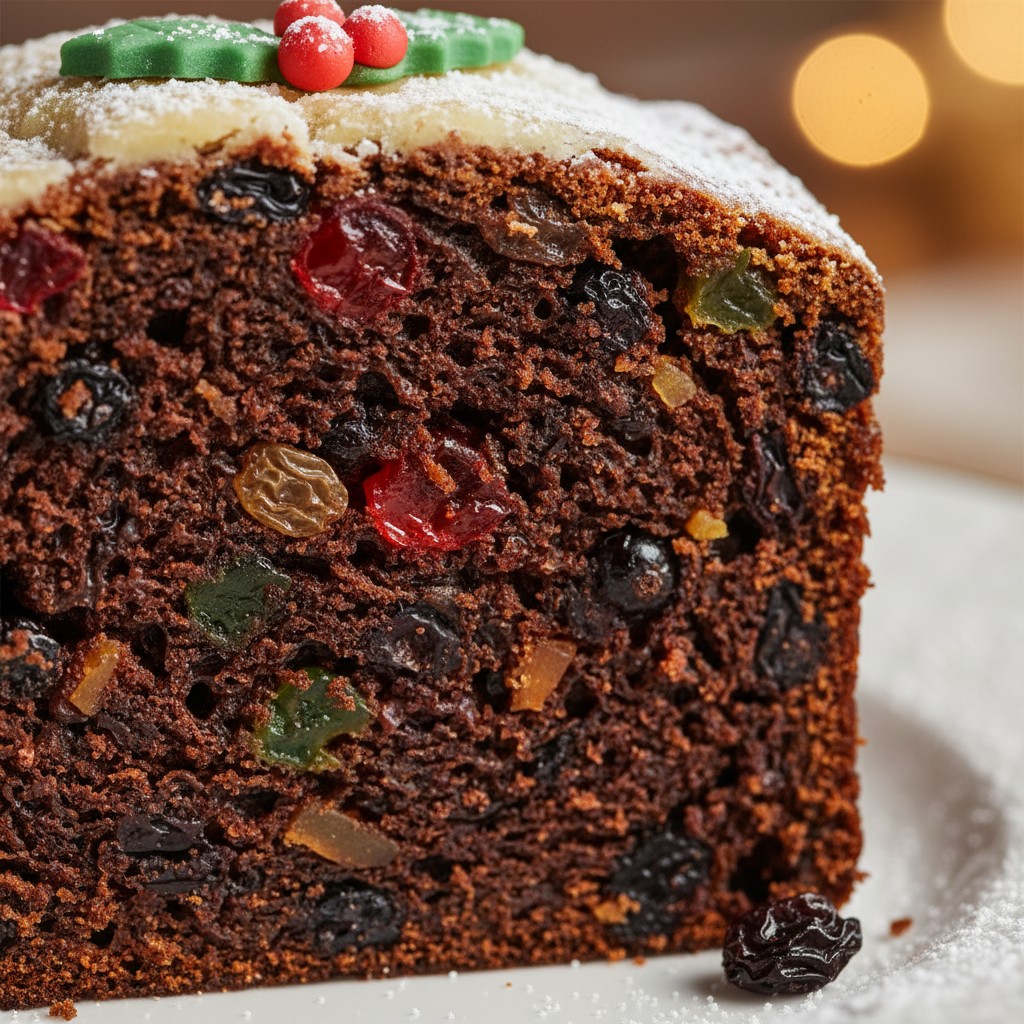
Delia's Notes from the Kitchen
A note on success: The secret to a perfect Christmas cake lies in two things: patience and preparation. Do not rush the creaming of the butter and sugar, and do not be tempted to open the oven door for the first three hours. The long, slow bake is what creates the magic. When you line the tin, take your time to do it properly – it is your insurance policy against a burnt cake. This cake is a marathon, not a sprint, and the rewards are well worth the effort.
How to Store & Reheat
The cake must be stored correctly to mature. After the initial cooling and feeding, wrap the cake (still in its parchment liner) in a fresh double layer of baking parchment, then a layer of foil. Store in an airtight tin in a cool, dark place for at least 3-4 weeks, or up to 3 months. Every two weeks, you can unwrap it and 'feed' it with 1-2 tablespoons of brandy to build flavour and keep it moist. Do not store it in the refrigerator, as this can cause it to dry out.
Frequently Asked Questions
When is the best time to make a Christmas cake?
For the best flavour, the cake needs time to mature. I always recommend making it in late October or early November. This gives it at least 6-8 weeks to develop its rich, deep flavour, especially if you are 'feeding' it with brandy.
My cake is very dark on top but not cooked inside. What went wrong?
This is almost always due to the oven being too hot, or the cake not being properly protected. The double lining and external brown paper are not optional; they are essential to insulate the cake for its long, slow bake. Also, check your oven temperature with an oven thermometer as many domestic ovens can run hot.
Can I make this Christmas cake without alcohol?
Yes, certainly. For the initial soaking, you can use the same quantity of freshly squeezed orange juice or even cold tea. The cake won't have the same keeping qualities as one made with alcohol, so I would advise making it closer to Christmas, perhaps 2-3 weeks before, and storing it in the freezer once completely cool.
Why did all the fruit sink to the bottom of my cake?
This can happen for a couple of reasons. The batter may have been too wet or over-mixed. It's also sometimes recommended to lightly coat the fruit in a tablespoon of the measured flour before adding it to the batter, as this can help suspend it more evenly.
How do I know for certain when the cake is cooked?
The skewer test is the most reliable method. Insert a fine metal or bamboo skewer into the very centre of the cake. When you pull it out, it should be completely clean and dry. If there is any wet batter on it, the cake needs more time in the oven. Check again in 15-minute intervals.