A Truly Classic Baked Chocolate Cheesecake
For a truly show-stopping dessert, a baked chocolate cheesecake is hard to beat. This recipe guarantees a perfectly rich and creamy result, teaching you the essential techniques for success.
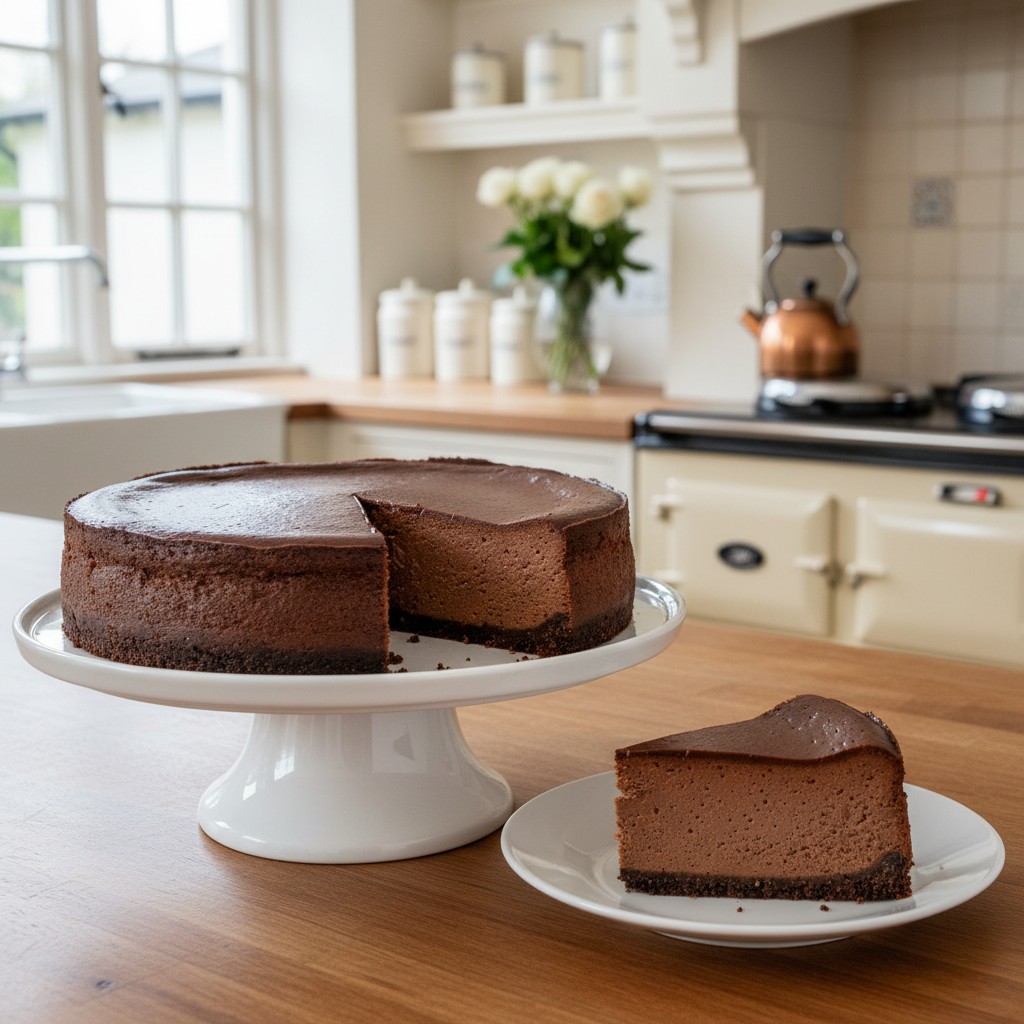
There is something deeply satisfying about producing a perfect baked cheesecake. While its no-bake cousin has its place, the baked version offers a sublime, velvety texture and a richness of flavour that is simply in another league. This is a dessert for special occasions, a true centrepiece that speaks of care and attention to detail.
The secret to success here is not in complicated steps, but in following the method with precision. We will be using a water bath, or 'bain-marie', which might sound daunting, but it is the single most important technique for achieving that flawless, creamy texture and a top that is smooth and unblemished. It gently insulates the cheesecake, allowing it to cook slowly and evenly, more like a custard than a cake.
Do use the best ingredients you can afford, particularly the chocolate. A good quality dark chocolate with at least 70% cocoa solids will provide the depth of flavour this dessert deserves. Likewise, full-fat cream cheese is not a place for compromise; it is essential for the structure and creamy mouthfeel. Trust the process, follow the instructions, and you will be rewarded with a truly magnificent dessert.
Why You'll Love This Recipe
- The water bath (bain-marie) is not optional; it is the secret to gentle, even heat that prevents cracks and ensures a silky, custard-like texture.
- Using full-fat cream cheese and double cream is essential for the rich flavour and stable structure that defines a classic cheesecake.
- Cooling the cheesecake slowly in the turned-off oven is a crucial step to prevent the surface from sinking or cracking as it adjusts to room temperature.
Ingredients
- For the base:
- 250g digestive biscuits
- 125g unsalted butter, melted
- For the filling:
- 200g good-quality dark chocolate (70% cocoa solids), broken into small pieces
- 900g full-fat cream cheese (Philadelphia is excellent), at room temperature
- 250g caster sugar
- 4 large free-range eggs, at room temperature
- 2 tsp vanilla extract
- 284ml carton soured cream or double cream, at room temperature
Equipment Needed
23cm (9-inch) springform cake tin · Heavy-duty tin foil · Large, deep roasting tin · Food processor or rolling pin · Large mixing bowl · Electric hand whisk or stand mixer · Heatproof bowl and small saucepan (for a bain-marie)
Step-by-Step Instructions
- First, preheat your oven to 160°C (140°C fan, Gas Mark 3). You will need a 23cm (9-inch) springform cake tin. To prepare it for the water bath, take two large sheets of heavy-duty tin foil and place them on your work surface in a cross shape. Place the tin in the centre and carefully wrap the foil up the outside of the tin, ensuring there are no gaps for water to seep in.
- Now for the base. Crush the digestive biscuits to fine crumbs. The easiest way is in a food processor, but you can also place them in a sealed bag and crush them with a rolling pin. Tip the crumbs into a bowl and pour over the melted butter. Mix thoroughly until it looks like damp sand.
- Tip the buttery crumbs into the prepared tin and press down firmly and evenly over the base using the back of a spoon or the bottom of a glass. Place the tin in the fridge to chill while you make the filling.
- To make the filling, first melt the chocolate. Place it in a heatproof bowl set over a small saucepan of barely simmering water (a bain-marie). Make sure the bottom of the bowl does not touch the water. Stir occasionally until smooth, then remove from the heat and set aside to cool slightly.
- In a large bowl, using an electric hand whisk or a stand mixer with the paddle attachment, beat the room-temperature cream cheese on a low speed until it is completely smooth and free of lumps. This is an important step, so take your time.
- Add the caster sugar and beat again, just until combined. Then, add the eggs one at a time, beating on a low speed after each addition and scraping down the sides of the bowl to ensure everything is incorporated. Do not overbeat, as this incorporates too much air which can cause cracks.
- Gently fold in the vanilla extract, the soured or double cream, and finally the slightly cooled melted chocolate. Mix until the batter is smooth and uniform in colour, but again, be careful not to over-mix.
- Pour the filling over the chilled biscuit base in the prepared tin. Place the tin into a large, deep roasting tray. Boil a kettle.
- Carefully place the roasting tray into the preheated oven. Pour the hot water from the kettle into the roasting tray to come about halfway up the sides of the cake tin. This is your water bath.
- Bake for 1 hour to 1 hour and 15 minutes. The cheesecake is ready when the edges are set, but the centre still has a distinct wobble when you gently shake the tin. It should look like a just-set jelly in the middle.
- Turn off the oven, but do not open the door. Leave the cheesecake to cool completely in the oven with the door closed for at least 2 hours. This slow cooling process is crucial for preventing cracks.
- Once completely cool, remove the cheesecake from the oven and the water bath. Carefully remove the foil. Cover loosely with cling film and transfer to the refrigerator to chill for at least 6 hours, or preferably overnight, before serving.
Delia's Notes from the Kitchen
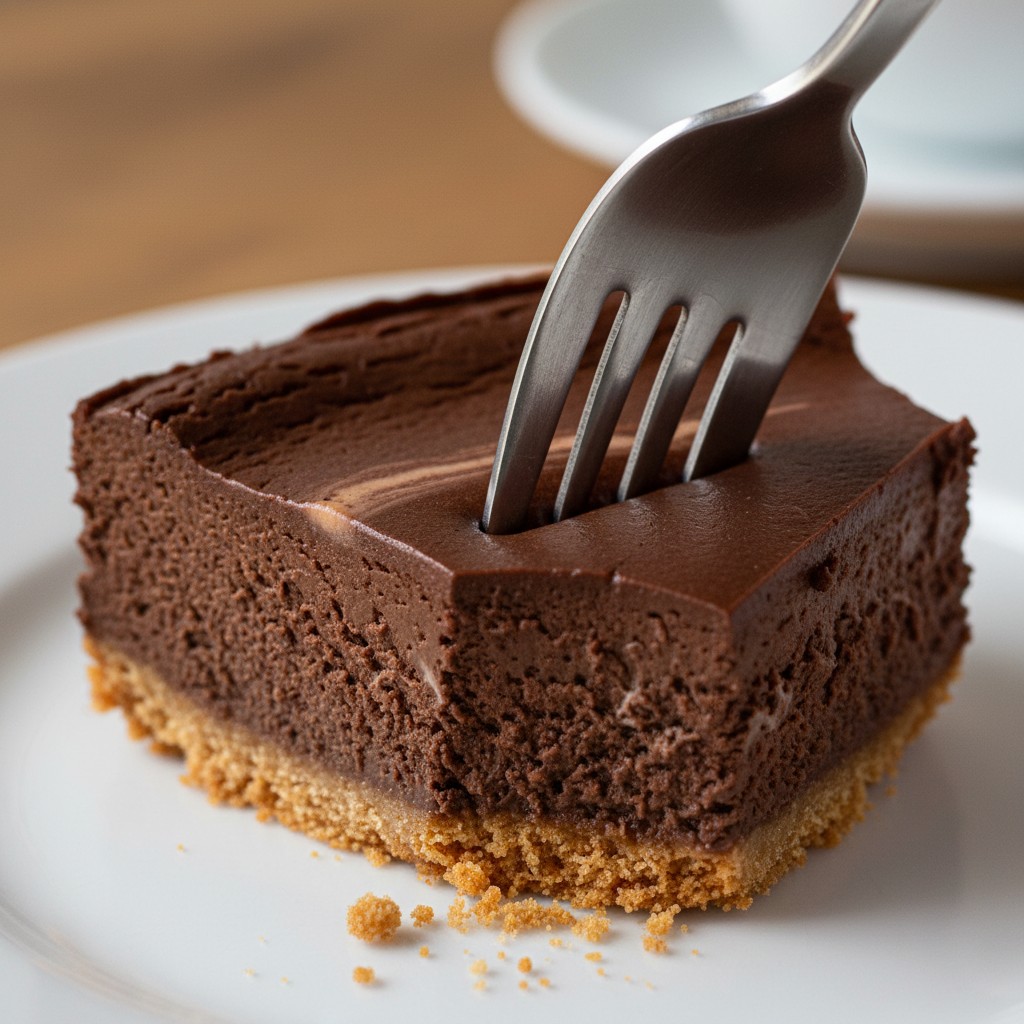
A vital secret to a smooth, lump-free cheesecake filling is to ensure your cream cheese and eggs are at room temperature before you begin. Cold cream cheese simply will not beat smoothly and you will be left with small lumps. Do take them out of the refrigerator a good hour or two beforehand – it makes all the difference.
How to Store & Reheat
The cheesecake must be stored in the refrigerator. Before serving, run a thin, sharp knife around the edge and release the springform tin. To store leftovers, cover the cheesecake loosely with cling film or keep it in a cake container. It will keep beautifully for up to 4 days; in fact, the flavour and texture often improve after the first day.
Frequently Asked Questions
Why did my cheesecake crack?
Cracking is the most common cheesecake problem and is usually caused by one of three things: over-mixing the batter, which incorporates too much air; cooking at too high a temperature or without a water bath; or cooling it too quickly. This recipe is designed to prevent all three, so follow the slow cooling instructions precisely.
Can I use low-fat cream cheese?
I'm afraid not. For a baked cheesecake, full-fat block cream cheese is absolutely essential. Low-fat or spreadable versions contain more water and stabilisers, which will result in a poor texture and may cause the cheesecake to weep or fail to set correctly.
How do I know for certain when the cheesecake is cooked?
The 'wobble test' is the most reliable indicator. The outer 2-3 inches of the cheesecake should look set and matte, but the very centre should still jiggle like a soft jelly when the tin is gently nudged. It will continue to cook and set fully as it cools in the residual heat of the oven.
Can I freeze this cheesecake?
Yes, this cheesecake freezes very well. Once completely chilled, you can freeze it whole or in individual slices. Wrap it well in a double layer of cling film and then a layer of foil. It will keep for up to 2 months. To defrost, place it in the refrigerator overnight.
My biscuit base is too crumbly and doesn't hold together. What went wrong?
This usually means either the ratio of butter to crumbs was slightly off, or the base wasn't pressed down firmly enough. Ensure you mix the melted butter in thoroughly until all the crumbs are moistened, and use the back of a metal spoon or a flat-bottomed glass to compact it very firmly into the tin before chilling.