A Truly Comforting Chocolate Bread and Butter Pudding
This is not just any bread and butter pudding; it's a deeply comforting version enriched with dark chocolate. A simple, classic dessert made utterly irresistible.
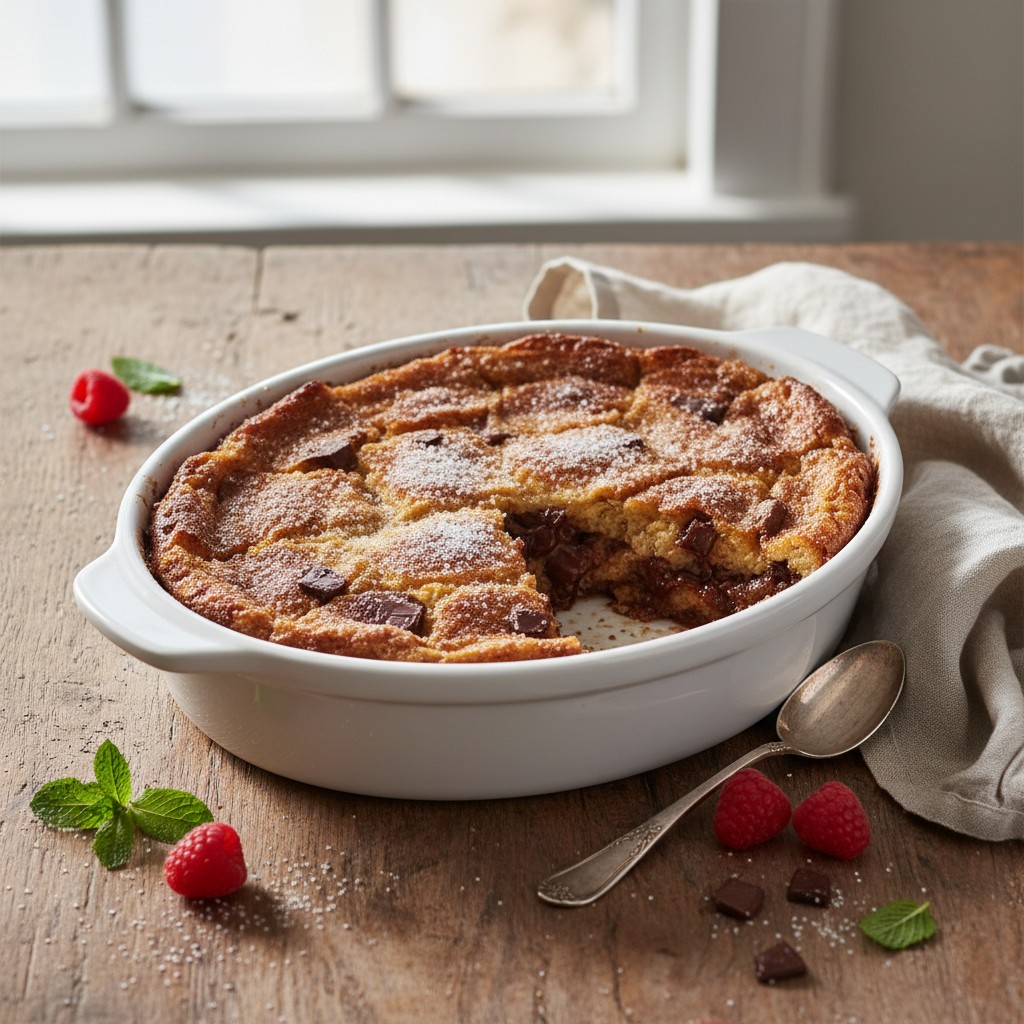
There are some puddings that are so deeply ingrained in our collective memory, they feel like a warm hug in a bowl. Bread and butter pudding is certainly one of them, but I've always felt it has the potential for a touch more decadence, a little more grown-up sophistication.
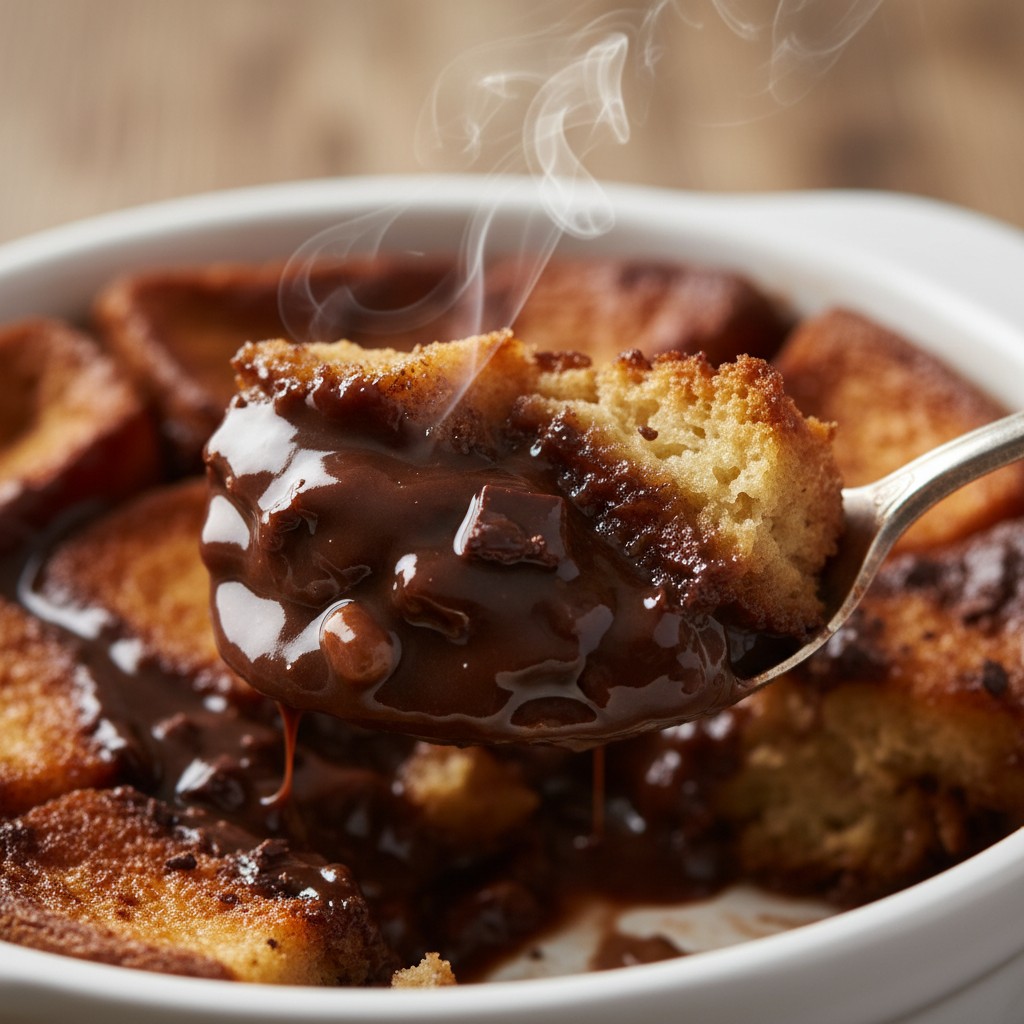
Here, we're introducing good-quality dark chocolate, not just as a flavouring, but as an integral part of the custard itself. It melts into the hot cream and milk, creating a sauce of unparalleled richness that soaks into the buttery bread, transforming it from a humble nursery pudding into something altogether more special. The chocolate adds a wonderful depth and a slight, pleasing bitterness that cuts through the sweetness.
This isn't a complicated recipe, but it does rely on good ingredients and a little bit of care. Follow the steps precisely, and you will be rewarded with a pudding that is crisp and golden on top, and wonderfully soft, wobbly, and intensely chocolatey beneath. It is, quite simply, the definitive version for any chocolate lover.
Why You'll Love This Recipe
- Using slightly stale bread is crucial; it has a firmer structure that absorbs the custard beautifully without collapsing into a mushy texture.
- Melting the chocolate directly into the hot cream and milk creates a smooth, intensely flavoured custard base without the risk of seizing.
- Baking the pudding in a bain-marie (a water bath) is non-negotiable. It ensures the custard cooks gently and evenly, resulting in a silky, set texture rather than a rubbery or scrambled one.
Ingredients
- 8-10 slices of slightly stale white bread, crusts removed (about 250g)
- 50g softened unsalted butter
- 100g good-quality dark chocolate (70% cocoa solids), finely chopped
- 300ml double cream
- 300ml whole milk
- 4 large free-range eggs
- 75g caster sugar
- 1 tsp vanilla extract
- 2 tbsp demerara sugar, for sprinkling
- A little grated nutmeg (optional)
Equipment Needed
2 pint (1.2 litre) ovenproof pie or gratin dish · Deep-sided roasting tin (for the bain-marie) · Medium heavy-based saucepan · Large heatproof bowl · Whisk · Measuring jug · Kitchen scales
Step-by-Step Instructions
- First, pre-heat your oven to Gas Mark 4, 180°C (160°C Fan). You will also need a deep-sided baking tin or roasting tray that is large enough to hold your pudding dish.
- Next, prepare the bread. Butter each slice generously on one side, right to the edges. Cut the slices into triangles.
- Arrange the buttered bread triangles in a 2 pint (1.2 litre) ovenproof dish, overlapping them slightly. You can arrange them in neat rows or more rustically, as you prefer. Tuck any smaller pieces in to fill the gaps.
- Now for the custard. Place the finely chopped dark chocolate in a heatproof bowl. In a medium, heavy-based saucepan, gently heat the double cream and whole milk together until it just reaches the 'scalding point' – you will see small bubbles appearing at the edge of the pan. Do not let it boil.
- Pour the hot milk and cream mixture over the chopped chocolate and leave it to stand for a minute. Then, whisk gently until the chocolate has completely melted and the mixture is smooth and glossy.
- In a separate, large bowl, whisk the eggs, caster sugar, and vanilla extract together until they are pale and well combined. There is no need for vigorous whisking here, just enough to break up the eggs.
- Slowly, and in a thin, steady stream, pour the warm chocolate-milk mixture into the egg mixture, whisking continuously. This tempers the eggs and prevents them from scrambling.
- Carefully pour the finished custard over the bread in the dish. Gently press the bread down with the back of a spoon to ensure it is all submerged. Now, leave it to stand for 30 minutes. This is a vital step as it allows the bread to properly absorb the custard.
- After standing, sprinkle the top of the pudding evenly with the demerara sugar and a light grating of nutmeg, if using. The sugar will create a lovely crisp crust.
- Place the dish into the larger baking tin. Pour boiling water from a kettle into the outer tin until it comes halfway up the sides of the pudding dish. This is your bain-marie.
- Carefully transfer the whole assembly to the pre-heated oven and bake for 40-45 minutes. The pudding is ready when the top is golden and crisp, and the custard has just set but still has a slight wobble in the centre.
- Remove from the oven and very carefully lift the pudding dish out of the water bath. Allow it to stand for 5-10 minutes before serving.
Delia's Notes from the Kitchen
The real secret to a superlative bread and butter pudding lies in allowing the assembled pudding to stand for at least 30 minutes before it goes into the oven. This may seem like an inconvenience, but it is this resting period that gives the bread ample time to soak up that glorious chocolate custard, ensuring every single mouthful is moist and flavourful right to the centre. Do not be tempted to skip this step; patience is a virtue in the kitchen, and here it pays delicious dividends.
How to Store & Reheat
This pudding is at its absolute best served warm from the oven. Should you have any leftovers, they can be covered with foil or cling film and stored in the refrigerator for up to 2 days. To reheat, cover with foil and place in a moderate oven (Gas Mark 3, 160°C) for 15-20 minutes, or until warmed through. Reheating in a microwave is not recommended as it can make the custard rubbery.
Frequently Asked Questions
Can I use fresh bread instead of stale?
It is not ideal. Fresh bread is much softer and tends to turn to mush when it soaks up the custard. If you only have fresh bread, you can lay the slices on a baking tray and bake them in a very low oven (120°C) for 10-15 minutes to dry them out slightly first.
Why do I need to use a bain-marie (water bath)?
The bain-marie is absolutely essential for any baked custard. It surrounds the dish with gentle, moist heat, which allows the custard to cook slowly and evenly. Without it, the direct heat of the oven would cook the outside too quickly, resulting in a curdled, scrambled texture rather than a smooth, silky one.
My custard looks a bit grainy. What went wrong?
This usually happens for one of two reasons. Either the milk and cream mixture was too hot when poured over the chocolate, causing it to 'seize', or the chocolate-milk mixture was poured too quickly into the eggs, causing them to scramble slightly. Always heat the milk gently and pour the liquid into the eggs slowly while whisking constantly.
Can I prepare this pudding in advance?
Yes, you can assemble the pudding up to the point before baking. Cover the dish with cling film and store it in the refrigerator for up to 4 hours. When you are ready, remove the cling film, sprinkle with demerara sugar, and bake as directed, adding an extra 5-10 minutes to the cooking time as it will be starting from cold.
What is the best type of chocolate to use?
For the best flavour, I insist on a good-quality dark chocolate with at least 70% cocoa solids. This provides a deep, rich chocolate taste that balances the sweetness of the custard. Cheaper chocolate can be overly sweet and waxy, and will not produce the same luxurious result.