Thai Salmon Filo Parcels
Discover how to make these wonderfully crisp and fragrant Thai salmon parcels using delicate filo pastry. It's a truly simple yet impressive dish for a weekday supper or a special occasion.
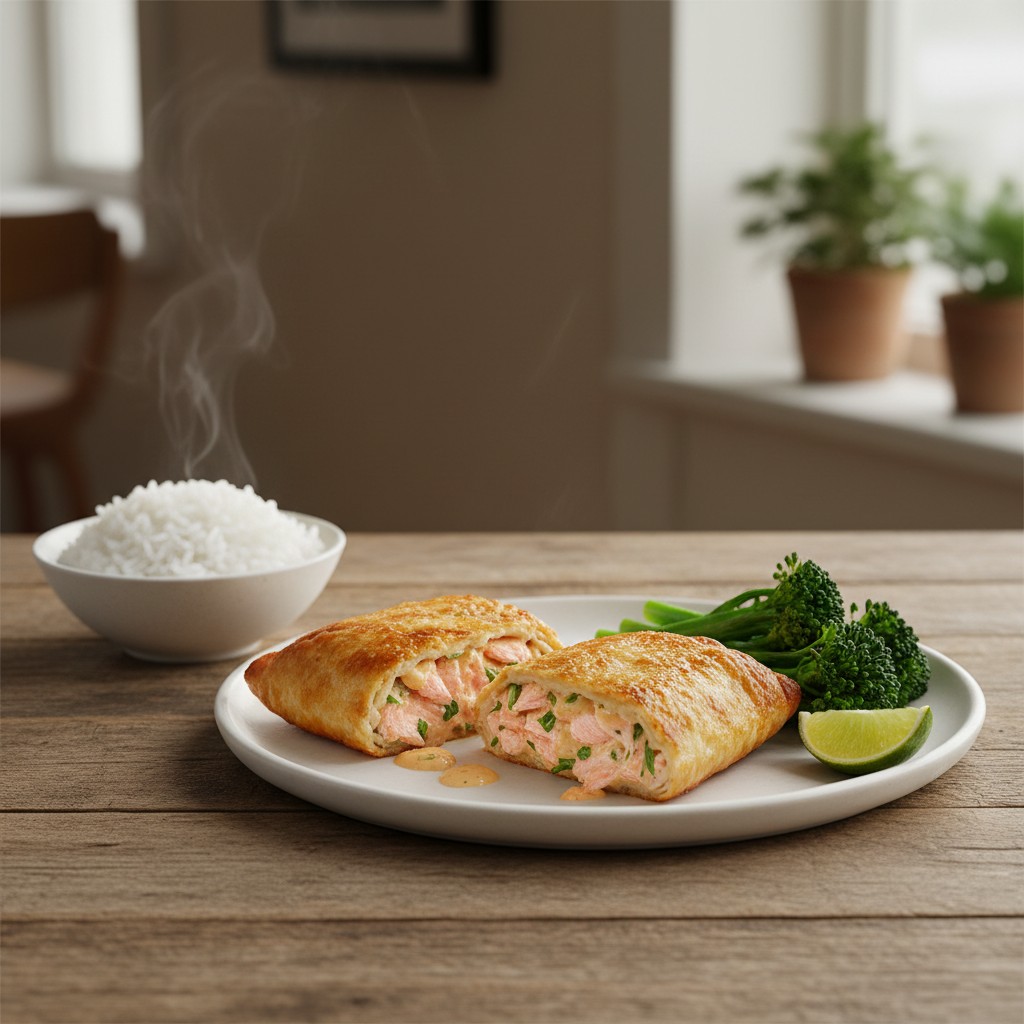
There is something deeply satisfying about the contrast of textures, and these little parcels deliver that in spades. You have the wonderfully crisp, shatteringly light filo pastry on the outside, which gives way to perfectly tender, moist salmon bathed in a fragrant, creamy Thai-spiced sauce. It’s a dish that feels rather special and sophisticated, yet it is surprisingly straightforward to assemble.
Many people feel a little intimidated by the idea of bringing Asian flavours into their own kitchen, assuming it requires a long list of obscure ingredients. Here, however, we rely on a very good quality, ready-made Thai green curry paste, which is a perfectly sensible and brilliant shortcut. It provides all the complex, aromatic notes of lemongrass, galangal, and kaffir lime, which we then soften and enrich with coconut milk, fresh lime, and coriander. It’s about using good ingredients intelligently.
And then there is the filo pastry. Please don’t be put off by its delicate reputation. The key is simply to work methodically and keep the sheets you aren’t using covered with a damp tea towel to prevent them from drying out. Once you’ve made these parcels once, you will realise how simple they are, and I suspect they will become a firm favourite for those times when you want to serve something impressive without spending hours in the kitchen.
Why You'll Love This Recipe
- The filo pastry acts as a self-contained oven, steaming the salmon from the inside while the exterior bakes to a perfect, golden crisp.
- Using the thick cream from the top of a can of coconut milk creates a rich, unctuous sauce that won't make the pastry soggy.
- Assembling the parcels can be done several hours in advance, making this an ideal, stress-free recipe for entertaining guests.
- The balance of flavours—rich salmon, fragrant spice, sharp lime, and fresh herbs—is perfectly contained and delivered in every bite.
Ingredients
- 1 x 400ml tin full-fat coconut milk, chilled in the fridge for at least 2 hours
- 2 level tablespoons Thai green curry paste
- 1 tablespoon Thai fish sauce (nam pla)
- 1 level teaspoon soft light brown sugar
- 4 x 150g skinless, boneless salmon fillets, from the thick end
- 2 spring onions, trimmed and finely sliced
- A small handful of fresh coriander, roughly chopped
- Grated zest and juice of 1 lime
- 6-8 sheets of standard filo pastry (approx. 270g pack)
- 75g butter, melted
- Salt and freshly milled black pepper
Equipment Needed
Large baking sheet · Baking parchment · Small bowl · Pastry brush · A clean, damp tea towel · Sharp knife
Step-by-Step Instructions
- First, preheat your oven to 200°C (180°C Fan, Gas Mark 6). Line a large baking sheet with baking parchment.
- Open the chilled tin of coconut milk without shaking it. Carefully spoon out 4 tablespoons of the thick, solid cream from the top into a small bowl. (The remaining watery liquid can be saved for a smoothie or another curry).
- To this coconut cream, add the Thai green curry paste, fish sauce, and brown sugar. Mix it all together thoroughly until you have a smooth, fragrant paste.
- Now, prepare the salmon. Pat the fillets dry with kitchen paper and season them lightly with salt and pepper. Place them on a plate.
- In another small bowl, combine the sliced spring onions, chopped coriander, and the lime zest and juice. Mix well.
- Now for the assembly. Unroll your filo pastry and immediately cover the stack with a clean, damp tea towel to prevent it from drying out. Take one sheet and lay it on your work surface (keep the rest covered). Brush it all over with some of the melted butter.
- Place a second sheet directly on top of the first and brush that with butter too. Using a sharp knife, cut the layered pastry in half to create two rectangles.
- Take one salmon fillet and spread a quarter of the curry paste mixture over the top surface. Now place it, paste-side down, in the centre of one of the pastry rectangles.
- Spread another quarter of the curry paste mixture over the now-top side of the salmon. Finally, top with a quarter of the spring onion and coriander mixture.
- To fold the parcel, bring the two long sides of the pastry into the middle, overlapping them slightly over the salmon. Then, fold the two shorter ends in to create a neat, sealed parcel. Press the seams gently.
- Carefully transfer the parcel, seam-side down, onto the prepared baking sheet. Brush the top and sides generously with more melted butter. Repeat this entire process with the remaining three salmon fillets.
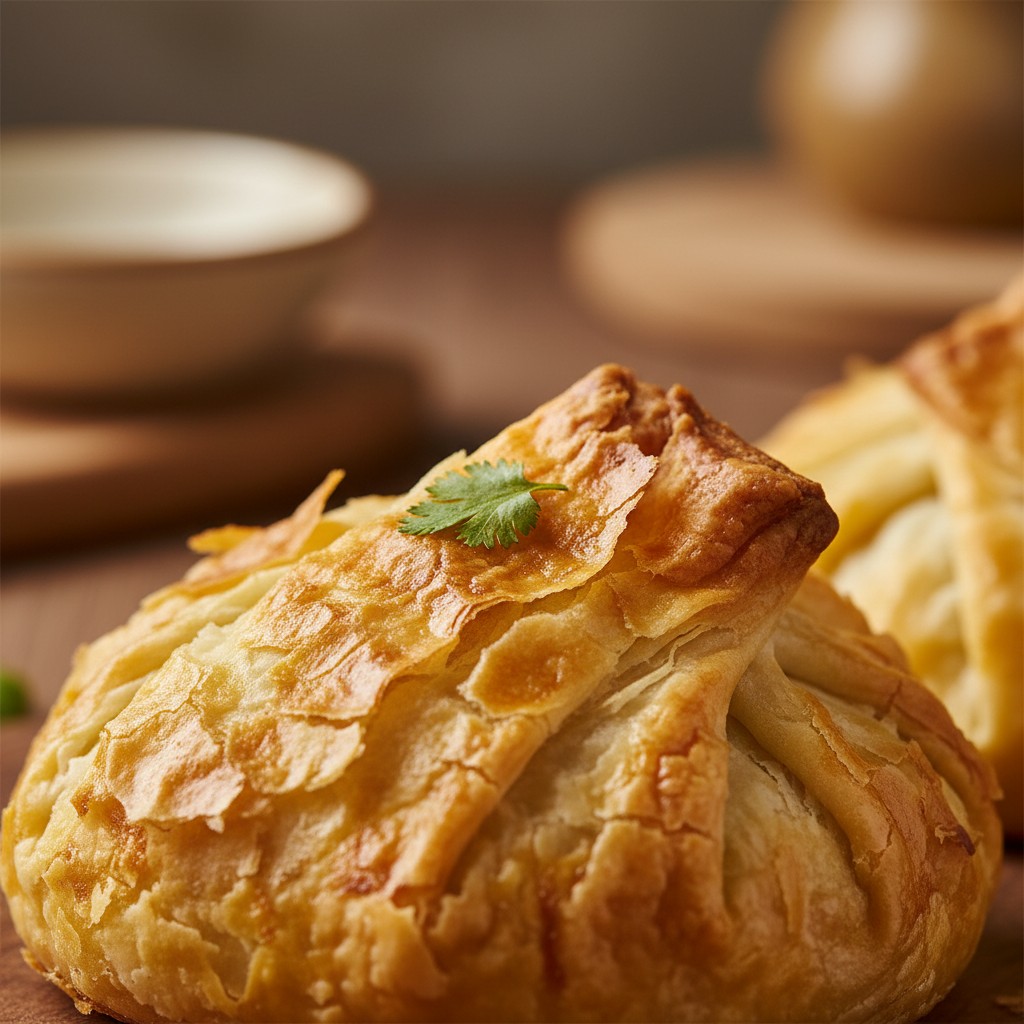
- Bake on the middle shelf of the preheated oven for 20-25 minutes, or until the pastry is deep golden-brown and crisp, and the salmon is cooked through.
- Allow the parcels to rest for a minute or two before serving, as the filling will be very hot.
Delia's Notes from the Kitchen
The real secret to success here is preparation. Have all your components—the melted butter, the curry paste mixture, the herb mixture—ready before you even think about unrolling the pastry. This allows you to work quickly and confidently once the delicate filo is exposed to the air. It turns the whole process from a potential flap into a calm, methodical assembly job. The result is a truly reliable and elegant supper.
How to Store & Reheat
These are truly at their best when eaten fresh from the oven. However, if you have leftovers, they can be stored in an airtight container in the refrigerator for up to one day. To reheat, place on a baking sheet in an oven preheated to 180°C (160°C Fan) for 10-12 minutes. This will help to re-crisp the pastry. I would strongly advise against using a microwave, as it will render the pastry soft and soggy.
Frequently Asked Questions
Can I make these salmon parcels ahead of time?
Yes, you can. You can assemble the parcels completely, place them on the baking sheet, cover them tightly with cling film, and refrigerate for up to 4 hours before baking. Just remember to brush them with melted butter right before they go into the oven.
My filo pastry kept tearing while I was working with it. What did I do wrong?
This is the most common problem with filo, and it's almost always because the pastry has dried out. It is absolutely crucial to keep the sheets you are not immediately using covered with a clean, damp (not wet) tea towel. Work swiftly but calmly, and don't worry about minor tears; they can usually be patched or folded away.
Can I freeze these parcels?
Yes, they freeze very well uncooked. Assemble the parcels but do not brush with the final layer of butter. Open-freeze them on a baking sheet until solid, then transfer to a freezer bag or airtight container. They can be baked directly from frozen; just add an extra 10-15 minutes to the cooking time and brush with butter before baking.
Why did my parcels leak sauce while baking?
This can happen for two reasons. Either the parcels were not sealed securely enough, or the sauce was too thin. Using only the thick coconut cream is key to preventing a watery filling. When folding, ensure all the edges are tucked in and the parcel is placed seam-side down on the baking sheet.
Is full-fat coconut milk necessary?
For this recipe, I would say yes. The richness and, most importantly, the thick, spoonable cream you get from chilling a full-fat tin is what creates the sauce. Light coconut milk will not separate in the same way and will result in a much thinner filling, which is more likely to make the pastry soggy.