My Classic Steak and Kidney Pudding
There is nothing quite so comforting as a perfectly steamed steak and kidney pudding. My method ensures a light, fluffy suet crust and a rich, deeply savoury filling every time.
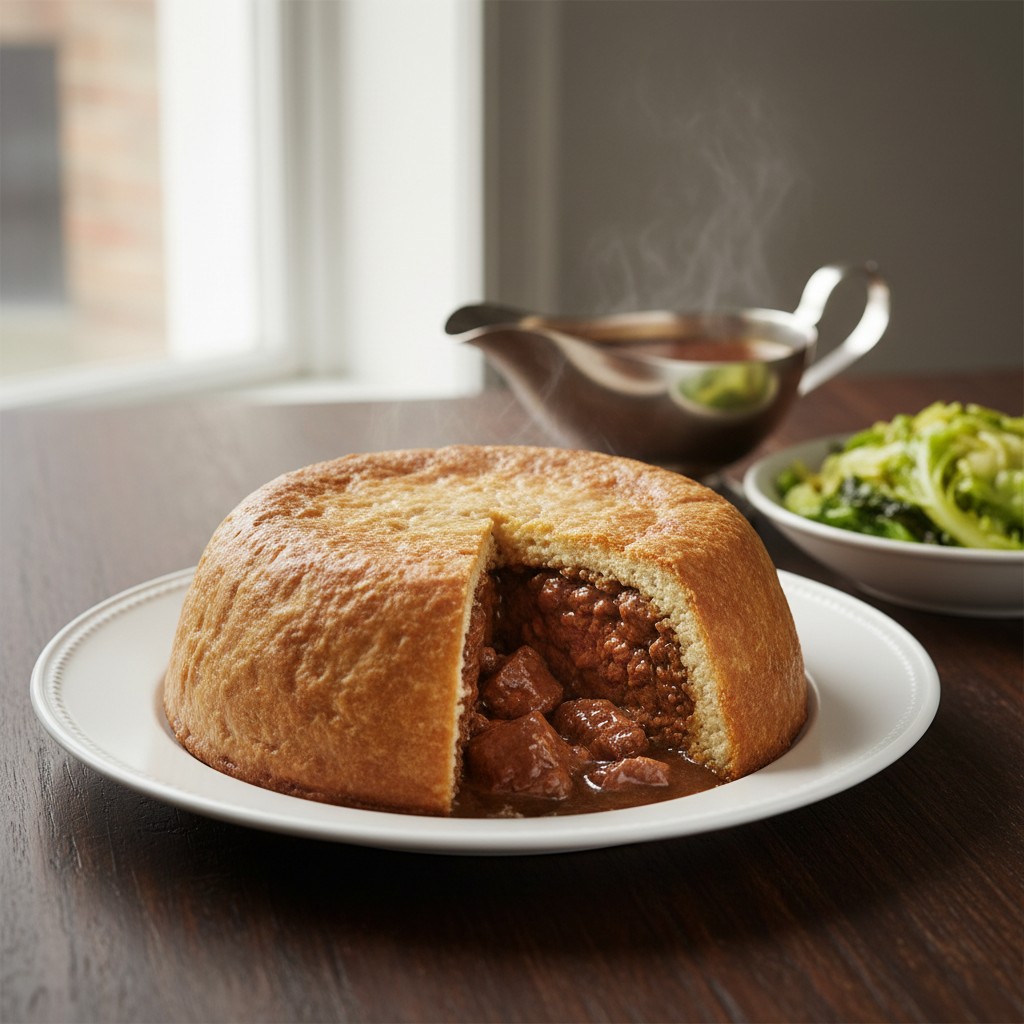
A proper, well-made steak and kidney pudding is one of the great cornerstones of British cookery. It’s a dish that seems to hold within its steamy, suet-pastry walls the very essence of comfort and tradition. For generations, the sight of a pudding basin, snugly wrapped and gently steaming on the hob, has been a promise of something truly wonderful to come.
Now, I know that for some, the idea of making a suet pastry pudding from scratch can feel a little daunting. People worry about a heavy crust or are perhaps unsure about preparing kidney. But that is precisely why I am here: to take you by the hand and show you just how straightforward and rewarding it is. There are no mysterious arts involved, only good ingredients and a reliable method.
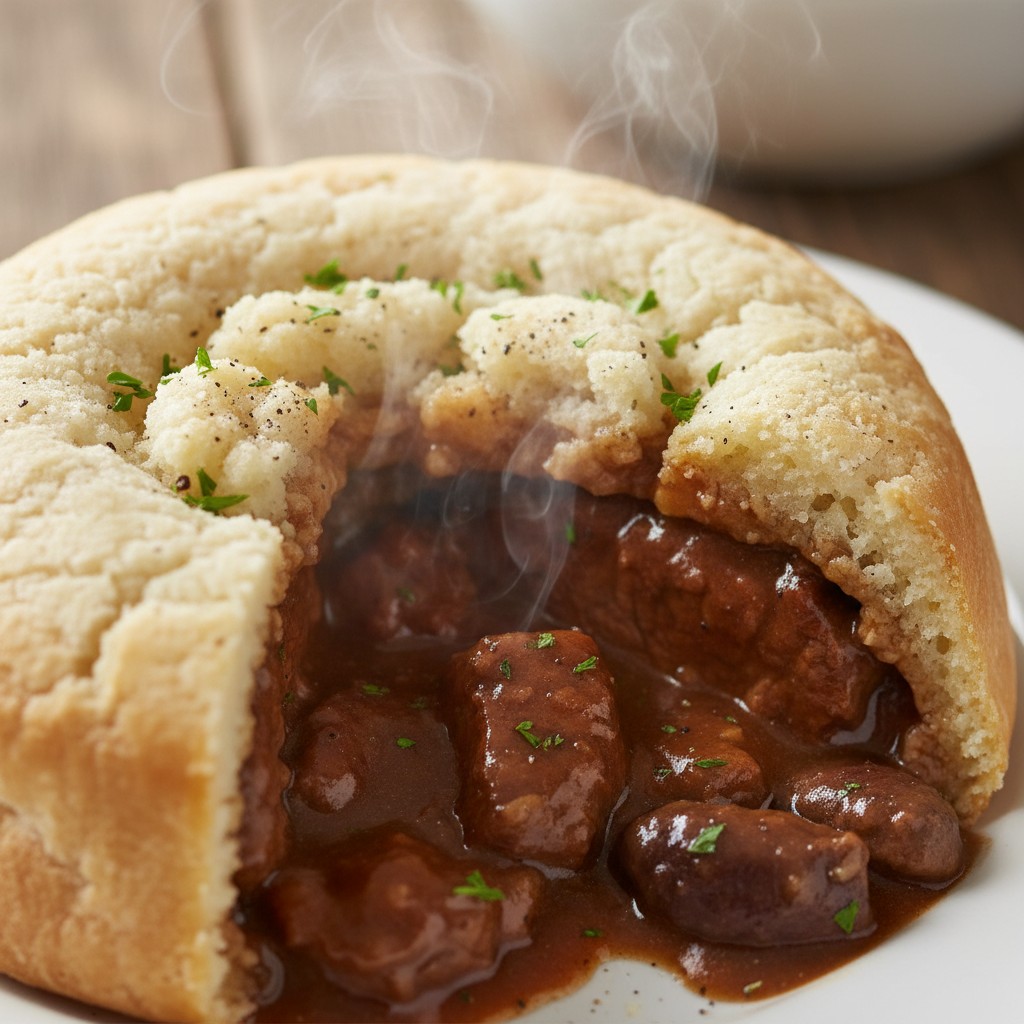
What we are aiming for is a perfect contrast: a light, fluffy, and flavourful pastry encasing a rich, dark, and meltingly tender filling. The long, slow steaming is the magic-maker here, transforming humble ingredients into a spectacular meal. So, roll up your sleeves, and let’s get a real pudding on the go.
Why You'll Love This Recipe
- Using self-raising flour mixed with suet creates a chemical reaction with the steam, making the pastry incredibly light and fluffy, rather than dense.
- Browning the steak properly before it goes into the pudding is non-negotiable. This Maillard reaction is what builds the deep, savoury flavour base for the entire filling.
- The long, slow, and gentle steaming process is crucial. It not only cooks the pastry to perfection but also braises the chuck steak until it is completely tender and allows all the flavours in the filling to meld beautifully.
- Creating a foil lid with a central pleat allows the pudding to rise and expand during steaming, preventing a compressed, heavy result and ensuring a perfect dome.
Ingredients
- For the filling:
- 700g good-quality chuck steak or braising steak, cut into 2.5cm cubes
- 225g ox kidney (or lamb's kidney), membranes removed and cut into 1cm pieces
- 2 tbsp plain flour, seasoned with salt and freshly ground black pepper
- 2 tbsp beef dripping or vegetable oil
- 1 large onion, peeled and roughly chopped
- 1 tbsp Worcestershire sauce
- 1 beef stock cube, crumbled
- About 450ml boiling water
- For the suet pastry:
- 350g self-raising flour
- 175g shredded beef suet
- 1 tsp salt
- A good grinding of black pepper
- About 200-240ml cold water
- A little butter, for greasing
Equipment Needed
1.2 litre pudding basin · Large, deep saucepan with a tight-fitting lid · Heatproof trivet or saucer · Large mixing bowl · Heavy-based frying pan · Kitchen string · Foil and baking parchment · Rolling pin
Step-by-Step Instructions
- First, prepare the filling. Pat the steak cubes dry with kitchen paper. In a bowl, mix the seasoned plain flour and toss the steak cubes in it until lightly coated.
- Heat the dripping or oil in a heavy-based frying pan over a medium-high heat. Brown the steak in batches, ensuring you don't overcrowd the pan. As each batch is browned, transfer it to a plate.
- Reduce the heat, add the chopped onion to the pan and cook gently for about 5 minutes until softened. Return the steak to the pan, add the prepared kidney, Worcestershire sauce, and the crumbled stock cube.
- Pour in enough boiling water to just cover the meat. Bring to a simmer, stirring to combine everything. Then turn off the heat and allow it to cool completely. This is very important – a hot filling will melt the suet pastry.
- Now for the pastry. In a large mixing bowl, combine the self-raising flour, suet, salt, and pepper. Use a knife to stir, then gradually add the cold water, mixing until you have a soft, elastic, but not sticky, dough. Bring it together with your hands on a lightly floured surface.
- Generously grease a 1.2 litre pudding basin with butter. Cut off about a quarter of the pastry for the lid and set it aside. Roll the larger piece of pastry into a circle large enough to line the basin, about 0.5cm thick.
- Carefully lift the pastry and press it into the greased basin, ensuring there are no air bubbles. Trim the edges neatly.
- Spoon the cooled steak and kidney filling into the pastry-lined basin. Roll out the remaining quarter of pastry to form a lid.
- Dampen the rim of the pastry in the basin with a little water and place the lid on top. Press the edges together firmly to seal. Trim any excess.
- Take a large piece of foil and a piece of baking parchment of the same size. Place the parchment on top of the foil. Make a 2.5cm pleat in the centre of both. This allows the pudding to expand.
- Cover the pudding with the foil and parchment (parchment-side down), and secure it tightly around the rim of the basin with string. Create a string handle across the top for easy lifting.
- Place a trivet or an old saucer in the base of a large, deep saucepan. Stand the pudding basin on top. Pour in boiling water from a kettle to come halfway up the side of the basin.
- Put the lid on the pan, bring to a simmer, then reduce the heat to maintain a gentle simmer. Steam the pudding for 3 hours, checking the water level every hour and topping up with boiling water as needed. Do not let it boil dry.
- When the time is up, carefully lift the pudding out of the pan. Let it stand for 5 minutes before removing the foil and parchment. Place a large, warmed serving plate over the basin and, with a confident movement, invert the pudding. It should slide out perfectly.
- Serve immediately with creamy mashed potatoes and some steamed greens.
Delia's Notes from the Kitchen
The real secret to a light suet crust is a light hand and cold water. Do not be tempted to knead or overwork the dough; you simply want to bring it together until it forms a soft ball. And please, be absolutely certain your pudding basin is well-greased with butter – there is nothing more disheartening than a beautiful pudding that refuses to turn out cleanly onto the plate.
How to Store & Reheat
The pudding is best enjoyed freshly steamed. However, should you have leftovers, they can be cooled, wrapped well in clingfilm and refrigerated for up to 2 days. To reheat, the best method is to steam the pudding again for about 45-60 minutes until piping hot throughout. Microwaving is not recommended as it can make the suet pastry tough.
Frequently Asked Questions
My suet pastry was heavy and dense. What did I do wrong?
This can happen for a few reasons. The most common is overworking the dough; it should be brought together very lightly. Another possibility is that water from the steamer got under the foil, or the filling was still warm when you added it, which can melt the suet prematurely.
Is it absolutely necessary to brown the meat first?
Yes, I would say it is essential. This first step is not about cooking the meat, but about building flavour. The browning process, or Maillard reaction, creates a deep, savoury richness in the meat and the pan juices that forms the foundation of your gravy. Skipping it will result in a much blander filling.
Why do I need to make a pleat in the foil lid?
The pleat is crucial as it gives the pudding room to expand upwards as it steams and the self-raising flour does its work. Without this space, the pastry would be compressed, leading to a dense, heavy texture rather than the light, fluffy crust we are aiming for.
How do I stop the pan from boiling dry during the long steam?
You must use a large enough pan to begin with and start with enough boiling water to come halfway up the basin. Keep a kettle of boiled water at the ready, and check the level every hour or so, topping it up as needed. A gentle, steady simmer uses less water than a furious boil.
Can I prepare the filling the day before?
Yes, absolutely. In fact, it's an excellent idea. Preparing the filling the day before and letting it cool completely in the fridge not only saves time but also allows the flavours to develop further. Just be sure it's thoroughly chilled before you spoon it into the pastry case.