Simple Pesto-Crusted Salmon
A wonderfully simple yet elegant way to prepare salmon for a midweek supper. Our method ensures a perfectly cooked, flaky fillet with a vibrant, herby crust.
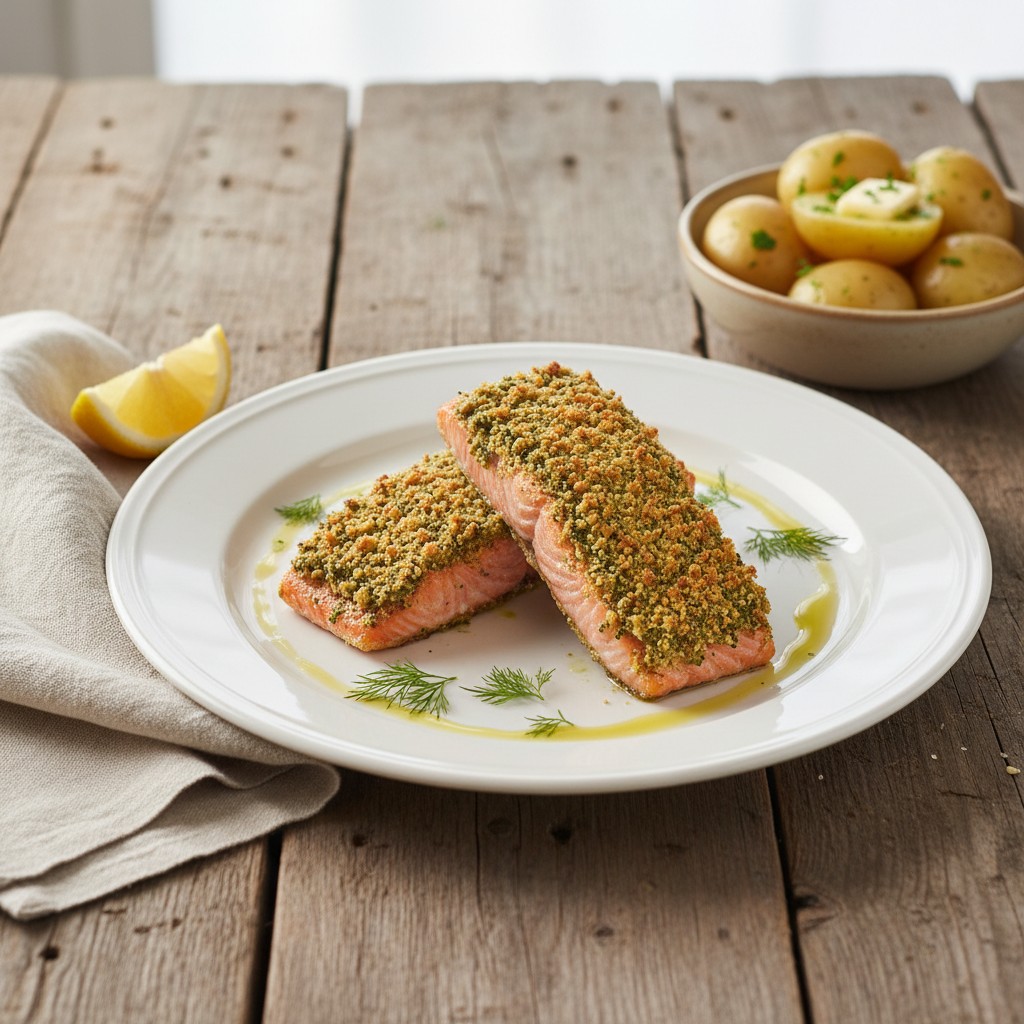
There are times when what's needed is a supper that is both utterly simple and reliably elegant. This, for me, is where a beautiful piece of salmon comes into its own, especially when paired with the vibrant, punchy flavours of a classic pesto. It's a partnership that seems almost designed by nature: the rich, oily fish is perfectly cut through by the fresh basil, sharp cheese, and garlic.
This recipe isn't about culinary gymnastics; it's about confidence and understanding a few key principles to get a perfect result every single time. The pesto acts not just as a flavouring but as a protective blanket, keeping the salmon wonderfully moist as it bakes. It transforms a simple fillet into something rather special, with very little effort required from the cook.
Whether you make your own pesto—and I do urge you to try, as the flavour is in another league—or use a good-quality one from a jar for a truly swift meal, this is a recipe to keep in your repertoire. It is dependable, delicious, and suitable for a quiet Tuesday evening or for when you have guests you wish to impress without fuss.
Why You'll Love This Recipe
- The pesto crust locks in moisture, preventing the salmon from drying out in the oven and ensuring a succulent, flaky texture.
- Baking at a moderate temperature of 180°C Fan allows the salmon to cook through evenly without the pesto's surface burning before the fish is done.
- The combination of rich salmon with the fresh, sharp flavours of basil, garlic, and Parmesan creates a perfectly balanced and deeply satisfying dish.
Ingredients
- 2 salmon fillets, about 150g each, skin on or off, and pin-boned
- For the Pesto:
- 50g fresh basil leaves
- 25g pine nuts
- 1 small clove of garlic, peeled and crushed
- 40g Parmesan cheese, freshly grated
- 75ml extra virgin olive oil
- A squeeze of fresh lemon juice
- Salt and freshly milled black pepper
Equipment Needed
Food processor · Baking tray · Baking parchment · Spatula · Cheese grater
Step-by-Step Instructions
- First, let's pre-heat the oven. Set it to 200°C/180°C Fan/Gas Mark 6. Line a small baking tray with a piece of baking parchment – this will stop the salmon from sticking.
- Now for the pesto, if you are making it from scratch. Place the basil, toasted pine nuts (see my note below), crushed garlic, and grated Parmesan into a food processor. Give it a few short pulses to begin breaking everything down.
- With the processor motor running, slowly pour in the extra virgin olive oil in a steady stream until you have a thick, textured paste. You don't want it perfectly smooth; a little bit of texture is what we're after. Finally, add a small squeeze of lemon juice and season with salt and pepper to your taste. Give it one last pulse to combine.
- Next, prepare the salmon. Pat the fillets dry with a little kitchen paper and place them on the prepared baking tray. If they have skin on, place them skin-side down.
- Using a spoon or a spatula, spread the pesto generously over the top surface of each salmon fillet, creating an even, thick crust.
- Place the baking tray in the centre of the pre-heated oven and bake for 15-20 minutes. The exact time will depend on the thickness of your fillets.
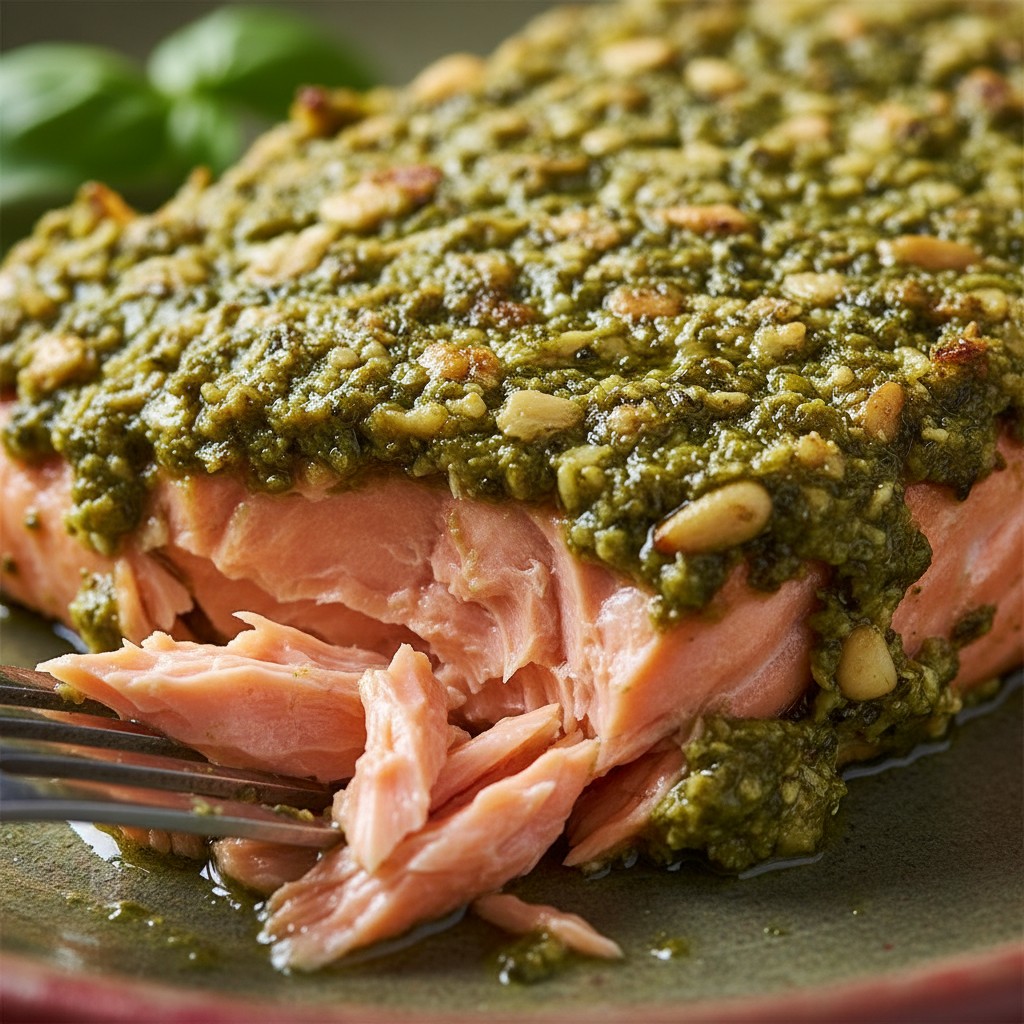
- To check if it's cooked, take a fork and gently press the thickest part of one fillet. The salmon should be opaque and flake away easily. If it's still quite translucent in the centre, give it another 2-3 minutes and check again.
- Serve immediately, perhaps with an extra squeeze of lemon over the top.
Delia's Notes from the Kitchen
A small but crucial point: toasting your pine nuts before you begin will reward you with a much deeper, nuttier flavour. Simply place them in a dry frying pan over a medium heat for a minute or two until they turn a pale gold and you can smell their wonderful aroma. Do watch them like a hawk, as they can catch in a heartbeat!
How to Store & Reheat
Leftover cooked salmon can be stored in an airtight container in the refrigerator for up to 2 days. It is delicious flaked cold into a salad or pasta. I would advise against reheating it in a microwave as it can become tough. If you must reheat it, do so gently in a low oven (around 140°C) for 10 minutes until just warmed through.
Frequently Asked Questions
Can I use shop-bought pesto?
Absolutely, for convenience it is perfectly acceptable. Do try to buy the best quality you can find, preferably a fresh one from the chilled aisle, as it will have a much more vibrant flavour than the long-life jarred varieties.
How do I know for certain when the salmon is cooked?
The best way is the 'flake test'. Insert a fork into the thickest part of the fillet and give it a gentle twist. If the flesh separates easily into flakes, it's ready. If it resists, it needs a few more minutes. The centre should be opaque, not translucent.
My pesto crust burned before the salmon was cooked. What went wrong?
This is usually because the oven temperature was too high, or the salmon was placed too close to the top heating element. Ensure you are using the centre rack of the oven. If you find your oven runs hot, you can loosely cover the salmon with a piece of foil for the first 10 minutes of baking, then remove it for the final 5-10 minutes.
Can I prepare this dish in advance?
You can certainly make the pesto up to 2 days in advance. Store it in a jar in the refrigerator with a thin layer of olive oil on top to prevent it from discolouring. You can also spread the pesto on the raw salmon a few hours before baking; just keep it covered in the fridge until you're ready to cook.
Is it necessary to use salmon with the skin on?
No, it's a matter of personal preference. Skin-on fillets can be a little more forgiving as the skin helps to protect the flesh from drying out. However, skinless fillets work just as well in this recipe, as the pesto provides that protective layer.