Classic Chicken Basque
This is my definitive recipe for a classic Chicken Basque, a vibrant and flavourful one-pan meal. It’s a wonderful way to bring the sunny flavours of the French Pyrenees to your own kitchen table.
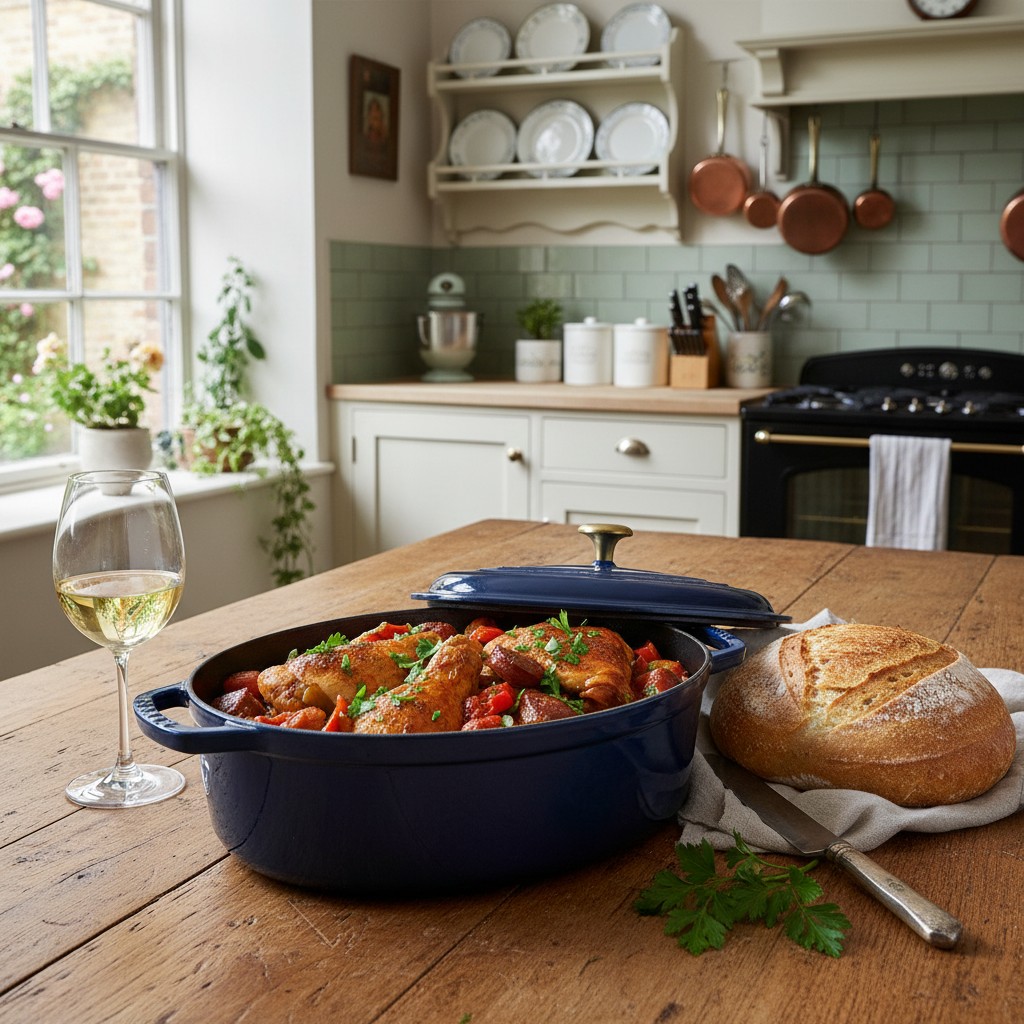
There are some dishes that possess the remarkable ability to transport you directly to a place, and for me, Chicken Basque is one of them. It is the very essence of the French Basque country captured in a single pan – vibrant, generous, and full of sunshine. The colours alone, a brilliant tapestry of red and green peppers against the rich tomato sauce, are enough to lift the spirits before you’ve even taken a bite.
At its heart, this is a simple, rustic dish built on a foundation of classic French technique. It begins with a 'piperade', a slow-cooked medley of peppers, onions, and tomatoes, which forms the flavourful base for tender, bone-in chicken pieces. The addition of authentic Bayonne ham and a whisper of Piment d'Espelette, the region's signature spice, elevates it from a simple chicken stew to something truly special and memorable.
What I've always loved about Chicken Basque, apart from its magnificent flavour, is its sheer practicality. It is a true 'one-pan' recipe, which means less time spent washing up and more time enjoying the meal with family and friends. It can be prepared in advance, and in fact, its flavours often deepen and improve overnight, making it a perfect, stress-free choice for a relaxed supper.
Why You'll Love This Recipe
- Browning the chicken pieces first is essential. This step creates a deep, savoury crust through the Maillard reaction, which forms the flavour foundation for the entire sauce.
- Cooking the peppers and onions slowly and gently ('sweating' them) is crucial. This coaxes out their natural sweetness, preventing any harshness and creating the classic, soft 'piperade' base.
- Simmering all the components together in one covered pan allows the chicken to become incredibly moist and tender while absorbing all the beautiful flavours of the sauce.
Ingredients
- 8 medium-sized bone-in chicken thighs, skin on
- 2 tablespoons plain flour
- 1 teaspoon salt
- ½ teaspoon freshly milled black pepper
- 2 tablespoons olive oil
- 100g Bayonne ham (or prosciutto), cut into strips
- 2 medium onions, peeled and thinly sliced
- 2 red peppers, deseeded and sliced
- 1 green pepper, deseeded and sliced
- 2 cloves garlic, peeled and finely chopped
- 150ml dry white wine
- 400g can chopped tomatoes
- 1 tablespoon tomato purée
- 1 bay leaf
- 2 sprigs fresh thyme
- 1 teaspoon Piment d'Espelette (or ½ tsp sweet paprika and a pinch of cayenne)
- A small handful of fresh flat-leaf parsley, chopped, to garnish
Equipment Needed
Large, heavy-based casserole dish or sauté pan with a lid · Tongs · Wooden spoon · Chef's knife · Chopping board · Shallow bowl
Step-by-Step Instructions
- First, begin by preparing the chicken. In a shallow bowl or on a plate, mix the flour with the salt and pepper. Pat the chicken thighs dry with kitchen paper, then toss them in the seasoned flour until they are lightly and evenly coated. Shake off any excess.
- Now, place a large, heavy-based casserole dish or sauté pan over a medium-high heat and add the olive oil. Once the oil is shimmering, add the chicken pieces, skin-side down. Don't overcrowd the pan; do this in two batches if you must. Brown the chicken for about 3-4 minutes on each side until golden and crisp. Remove the chicken to a plate and set aside.
- Reduce the heat to medium and add the strips of ham to the pan. Sauté for a minute or two until they release their fat and begin to crisp slightly. Add the sliced onions and peppers to the pan. Cook gently for 10-12 minutes, stirring occasionally, until they have softened and are beginning to turn sweet. Then, add the chopped garlic and cook for another minute until fragrant.
- Turn the heat up and pour in the white wine to deglaze the pan, scraping up any browned bits from the bottom with a wooden spoon. Allow the wine to bubble and reduce by about half.
- Next, stir in the chopped tomatoes, tomato purée, bay leaf, thyme, and the Piment d'Espelette. Bring the sauce to a gentle simmer.
- Return the browned chicken pieces to the pan, nestling them into the sauce. Make sure the skin side is facing up as much as possible. Reduce the heat to its lowest setting, cover the pan with a lid, and let it simmer very gently for 40-45 minutes, or until the chicken is cooked through and tender.
- To finish, remove the lid and check the seasoning, adding a little more salt and pepper if needed. Discard the bay leaf and thyme sprigs. Serve the chicken hot, spooning plenty of the piperade sauce over the top, and garnished with the chopped fresh parsley.
Delia's Notes from the Kitchen
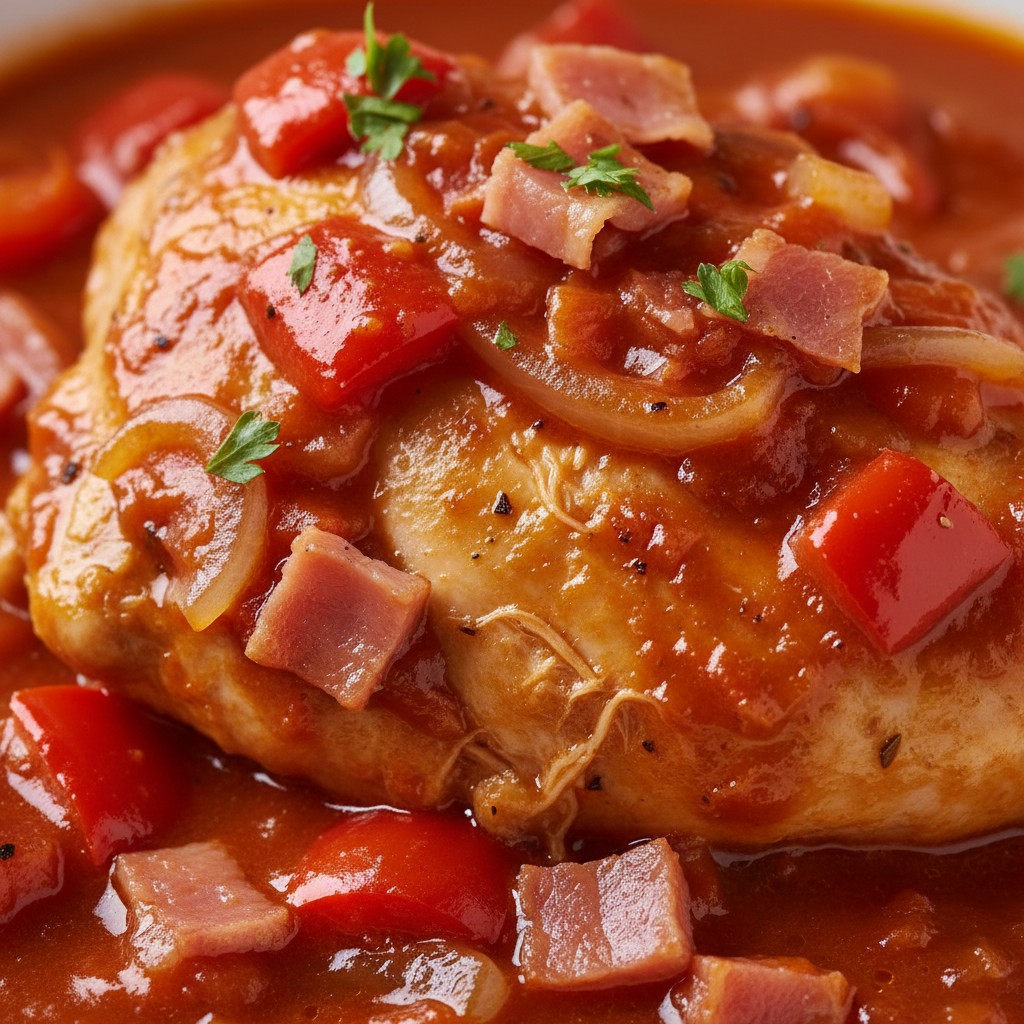
A note on the peppers: The absolute key here is not to rush the initial cooking of the peppers and onions. You are not looking to fry them, but to 'sweat' them slowly over a gentle heat. This process coaxes out their inherent sweetness and creates that soft, luscious texture that defines a true piperade. Be patient, and you will be rewarded with a sauce of incredible depth and flavour.
How to Store & Reheat
Chicken Basque stores beautifully. Allow it to cool completely before transferring to an airtight container. It will keep in the refrigerator for up to 3 days. In fact, the flavours often meld and improve by the second day. To reheat, place it in a saucepan over a low heat, adding a splash of water or chicken stock if the sauce has thickened too much, and warm through gently until piping hot.
Frequently Asked Questions
Can I use chicken breasts instead of thighs?
Yes, you can, but bone-in, skin-on thighs provide much more flavour and moisture. If using skinless, boneless breasts, brown them as instructed but reduce the final simmering time to around 20-25 minutes to ensure they do not become dry.
What is Piment d'Espelette and is it essential?
It is a mildly spicy chilli pepper from the Espelette region in the French Basque country, with a unique, warm flavour. While it provides authenticity, you can achieve a similar effect by using a good-quality sweet paprika with a tiny pinch of cayenne pepper.
Can I make this dish ahead of time?
Absolutely. Chicken Basque is an excellent dish to make in advance. The flavours actually deepen and improve overnight. Simply cool, store in the fridge, and reheat gently on the hob when you are ready to serve.
My sauce seems a bit thin, what should I do?
If your sauce is too thin towards the end of cooking, simply remove the chicken pieces to a warm plate, increase the heat under the pan, and allow the sauce to bubble and reduce for 5-10 minutes until it has reached your desired consistency. Then return the chicken to the pan.
Can I freeze Chicken Basque?
Yes, it freezes very well. Allow the dish to cool completely, then transfer it to a freezer-safe container. It can be frozen for up to 3 months. Defrost thoroughly in the refrigerator overnight before reheating gently on the hob.