My Classic Smoked Salmon and Dill Quiche
This is my definitive recipe for a classic smoked salmon and dill quiche. It features a wonderfully crisp, homemade shortcrust pastry and a rich, wobbly, perfectly set custard.
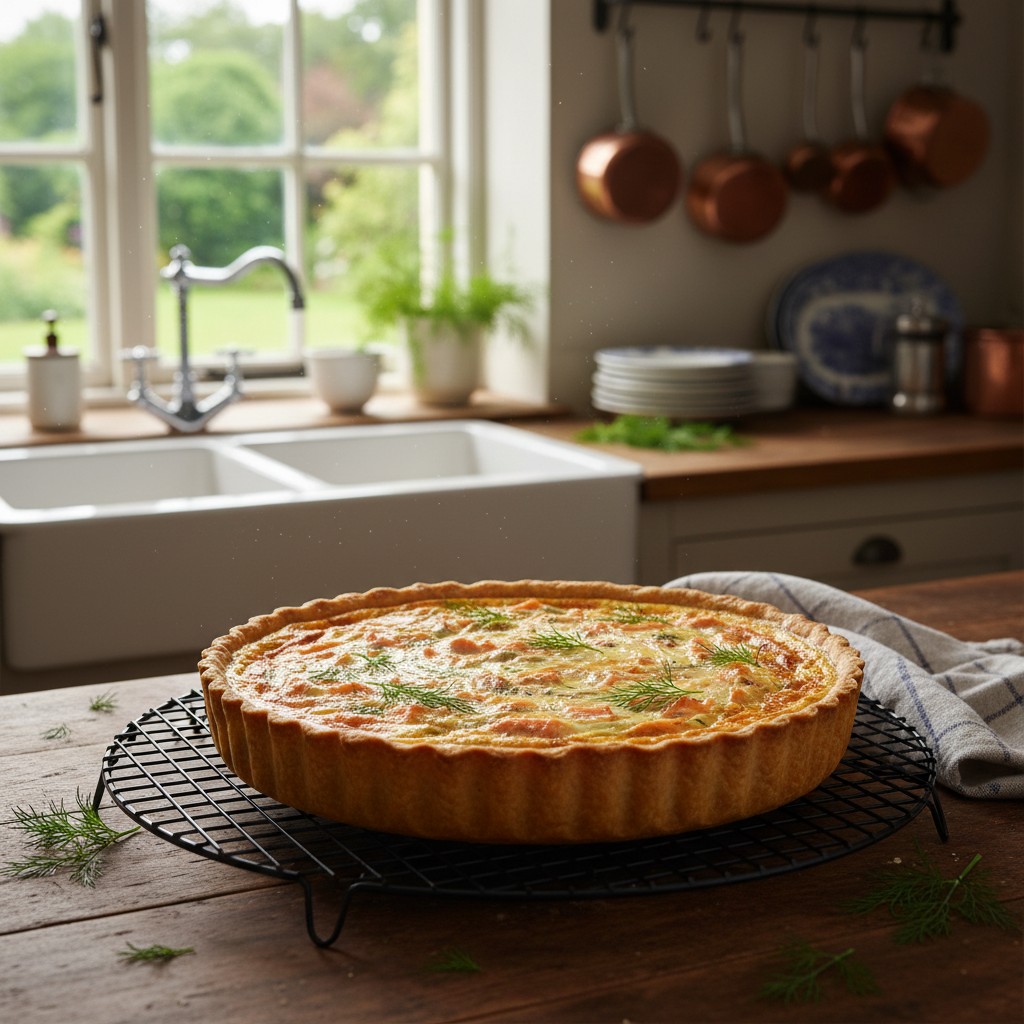
There is something deeply satisfying about serving a proper, homemade quiche. Not the sad, flabby sort one often finds in shops, but one with a genuinely crisp, buttery pastry case and a filling that is soft, luscious, and just set. It’s a cornerstone of home cooking, perfect for a simple lunch with a green salad or as the centrepiece of a summer buffet.
The pairing of smoked salmon and dill is, of course, a classic for very good reason. The gentle saltiness of the salmon is beautifully complemented by the fresh, almost aniseed-like notes of the dill, all brought together in a rich, creamy custard. Using good quality ingredients here is paramount; it truly makes all the difference between a pleasant quiche and a truly memorable one.
Now, I know many people feel a certain trepidation when it comes to making pastry from scratch, but please don't. I will guide you through every stage. With a little care and by following the method precisely, you will achieve a perfect result and gain the confidence that comes from mastering such a fundamental kitchen skill.
Why You'll Love This Recipe
- Baking the pastry case 'blind' is the non-negotiable secret to a crisp, golden base, preventing the dreaded 'soggy bottom'.
- Using a combination of whole eggs and an extra yolk creates a richer, more luxurious custard that sets beautifully without being rubbery.
- Resting the pastry dough properly in the refrigerator allows the gluten to relax, which is crucial for preventing shrinkage during baking and achieving a tender crust.
Ingredients
- For the Shortcrust Pastry:
- 175g plain flour, plus extra for dusting
- A pinch of salt
- 40g chilled block margarine or lard, cut into small cubes
- 40g chilled butter, cut into small cubes
- 2-3 tablespoons very cold water
- For the Filling:
- 150g good-quality smoked salmon, torn into bite-sized pieces
- 2 tablespoons freshly chopped dill
- 2 large free-range eggs
- 1 large free-range egg yolk
- 150ml double cream
- 150ml single cream or whole milk
- A good grating of fresh nutmeg
- Salt and freshly milled black pepper
Equipment Needed
20cm loose-bottomed flan tin, 3-4cm deep · Large mixing bowl · Palette knife · Rolling pin · Baking parchment · Ceramic baking beans
Step-by-Step Instructions
- First, make the pastry. Sift the flour and salt into a large, cool bowl. Add the margarine and butter. Using just your fingertips, rub the fats into the flour until the mixture resembles fine breadcrumbs. Add 2 tablespoons of cold water all at once, and using a palette knife, begin to bring the mixture together. If it's too dry, add the final tablespoon of water. Then, gather it into a smooth ball, wrap it in cling film, and let it rest in the refrigerator for 30 minutes.
- Pre-heat your oven to 200°C (180°C Fan, Gas Mark 6). Lightly flour a work surface and roll the chilled pastry out until it is large enough to line a 20cm loose-bottomed flan tin, about 3-4mm thick. Carefully line the tin, pressing the pastry gently into the corners. Trim the excess pastry from the rim with a sharp knife. Prick the base all over with a fork and place the tin in the refrigerator to chill for another 15 minutes.
- To bake the pastry case blind, line it with a crumpled sheet of baking parchment and fill it with ceramic baking beans or dried pulses. Place it on a baking sheet and bake on the middle shelf for 15 minutes.
- Remove the tin from the oven. Carefully lift out the parchment and beans. Return the pastry case to the oven for a further 5-7 minutes, until it looks dry and has a pale golden colour. This step is crucial for a crisp base. Remove from the oven and reduce the temperature to 180°C (160°C Fan, Gas Mark 4).
- While the pastry case is baking, prepare the filling. In a medium bowl or jug, whisk together the whole eggs, egg yolk, double cream, and single cream. Season with a little salt (remember the salmon is salty), plenty of freshly milled black pepper, and a good grating of nutmeg.
- Arrange the pieces of smoked salmon evenly over the base of the cooked pastry case. Sprinkle over the chopped dill.
- Carefully pour the egg and cream mixture over the salmon and dill. It's best to do this once the flan tin is back on the oven shelf to avoid spillage.
- Bake for 25-30 minutes, or until the filling is just set but still has a slight wobble in the very centre. It will continue to cook in the residual heat.
- Allow the quiche to cool in the tin for at least 15 minutes before carefully removing it. It is delicious served warm or at room temperature.
Delia's Notes from the Kitchen
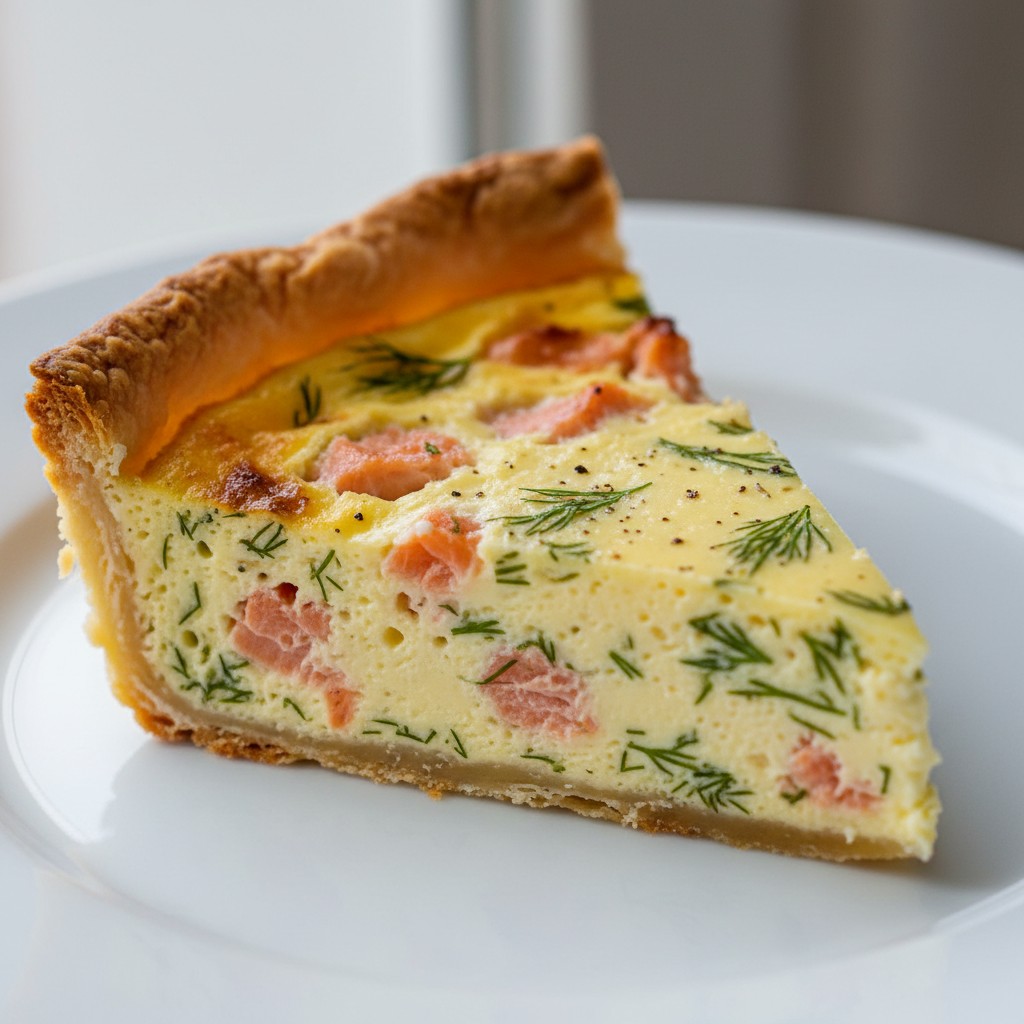
The real secret to a good quiche lies in its texture. We're aiming for a custard that is just set – wobbly and delicate, never firm or rubbery. The key is to take it out of the oven when the very centre still has a slight tremble. It will continue to cook and set in the residual heat of the tin as it cools. Have courage; this is how you achieve perfection.
How to Store & Reheat
The quiche can be stored, covered, in the refrigerator for up to 3 days. It is lovely cold, but to reheat, place slices on a baking tray and warm in a preheated oven at 160°C (140°C Fan) for 10-15 minutes until heated through. I would advise against using a microwave, as it will make the pastry soft.
Frequently Asked Questions
Why did my quiche have a 'soggy bottom'?
This is a very common problem, almost always caused by not baking the pastry case 'blind' before adding the wet filling. The two-stage blind baking process I've described—first with beans, then without—dries out the pastry, creating a waterproof seal that keeps the base crisp.
Can I use a pre-made pastry case?
You can, of course, use a good-quality, all-butter ready-made shortcrust pastry case to save time. Ensure you buy a pre-baked one. If it's just a raw case, you must still bake it blind as per the instructions before adding the filling.
My filling was watery and split. What went wrong?
This usually happens for two reasons. Either the quiche was over-baked, which causes the eggs to curdle and separate, or too much watery liquid was used. Stick to the cream and egg ratios given, and take the quiche out of the oven when it still has that slight wobble in the centre.
Can I freeze this quiche?
Yes, it freezes very well. Allow it to cool completely, then wrap it well in cling film and then a layer of foil. You can freeze it whole or in individual slices. To reheat, unwrap it and place it on a baking tray in a hot oven (180°C/160°C Fan) from frozen for about 20-25 minutes until hot all the way through.
How do I know when the quiche is perfectly cooked?
The key is the 'wobble test'. When you gently shake the tin, the outer edges of the filling should be set, but the very centre (an area about the size of a 50p coin) should still have a distinct jiggle or tremble. It will set fully as it stands. If it's completely firm when you take it out, it will be slightly overcooked and less delicate.