A Truly Classic Salmon Lasagne
This is a wonderfully elegant alternative to the classic meat lasagne, perfect for a special family supper. My recipe ensures a perfectly creamy, flavourful result every time.
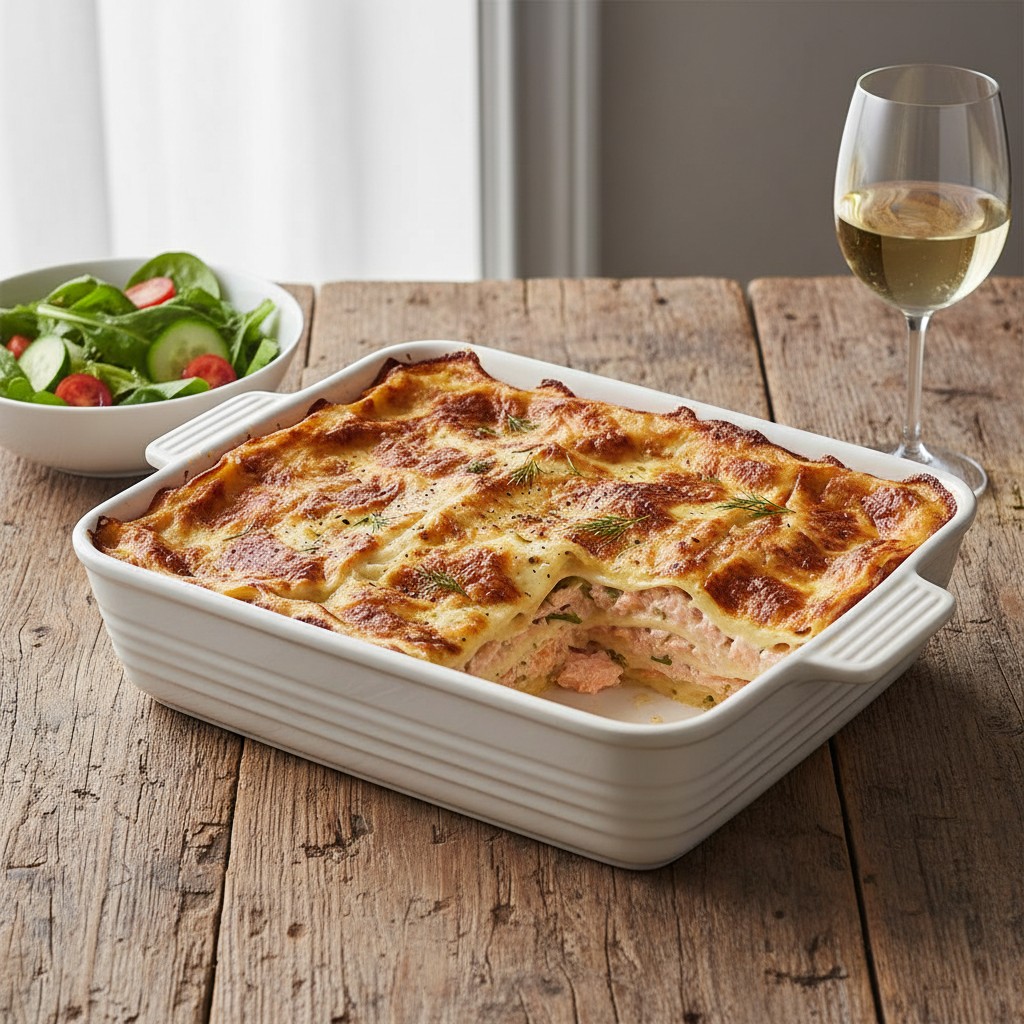
There is something deeply satisfying about assembling a lasagne, a sort of culinary architecture that promises comfort and generosity. While the classic meat-based ragù has its firm place in our hearts, this version, with beautiful fresh salmon, offers a lighter yet equally rewarding experience. It transforms a midweek supper or a casual lunch with friends into something rather special, without any unnecessary fuss.
The secret, as is so often the case, lies in getting the basics absolutely right. That means a properly made, beautifully smooth béchamel sauce, which forms the creamy backbone of the dish. We will flavour it simply with a little lemon and some fresh dill to complement the fish, allowing the quality of the salmon to shine through.
Don't be daunted by the layers; it's a straightforward process of construction. Follow these steps carefully, and you will be rewarded with a golden, bubbling dish of pure comfort that is a genuine pleasure to serve and to eat. This is one of those dishes that proves that simple, good ingredients, treated with respect, are the foundation of all good cooking.
Why You'll Love This Recipe
- A classic, properly made Béchamel sauce is the key. Using whole milk and cooking out the flour properly guarantees a smooth, creamy texture without any hint of a floury taste.
- Layering fresh, uncooked salmon directly into the lasagne allows it to steam-cook gently in the sauce, resulting in incredibly moist, tender flakes of fish.
- The simple, classic flavour combination of salmon, dill, and lemon is perfectly balanced, ensuring the dish is rich and satisfying but not overwhelmingly heavy.
Ingredients
- 50g butter, plus extra for greasing
- 50g plain flour
- 850ml whole milk
- 1 whole nutmeg, for grating
- 1 bay leaf
- Zest of 1 lemon
- 500g skinless salmon fillet, cut into 2.5cm chunks
- 250g fresh lasagne sheets (or 9-12 dried sheets)
- 3 tbsp fresh dill, finely chopped
- 75g Parmesan cheese, freshly grated
- Sea salt and freshly milled black pepper
Equipment Needed
Large heavy-based saucepan · Balloon whisk · Wooden spoon · Rectangular ovenproof dish (approx. 20cm x 30cm) · Grater
Step-by-Step Instructions
- First, let's make the béchamel sauce. Melt the butter in a heavy-based saucepan over a medium-low heat. Once melted, add the flour and stir continuously with a wooden spoon for 1-2 minutes to cook the flour. This is your roux.
- Remove the pan from the heat and gradually add the milk, a little at a time, whisking vigorously after each addition to prevent lumps. A balloon whisk is best for this. Once all the milk is incorporated and the sauce is smooth, return it to a gentle heat.
- Add the bay leaf and a generous grating of fresh nutmeg. Continue to stir as the sauce comes up to a gentle simmer. Let it bubble very gently for 5-8 minutes, stirring often, until it has thickened to the consistency of double cream. Season well with salt and pepper, then remove from the heat, take out the bay leaf, and stir in the lemon zest and chopped dill.
- Pre-heat your oven to 180°C Fan (200°C/Gas Mark 6). Lightly butter a rectangular ovenproof dish, approximately 20cm x 30cm.
- Now, to assemble. Spoon a thin layer of the béchamel sauce over the base of the prepared dish. This prevents the pasta from sticking. Arrange a single layer of lasagne sheets on top.
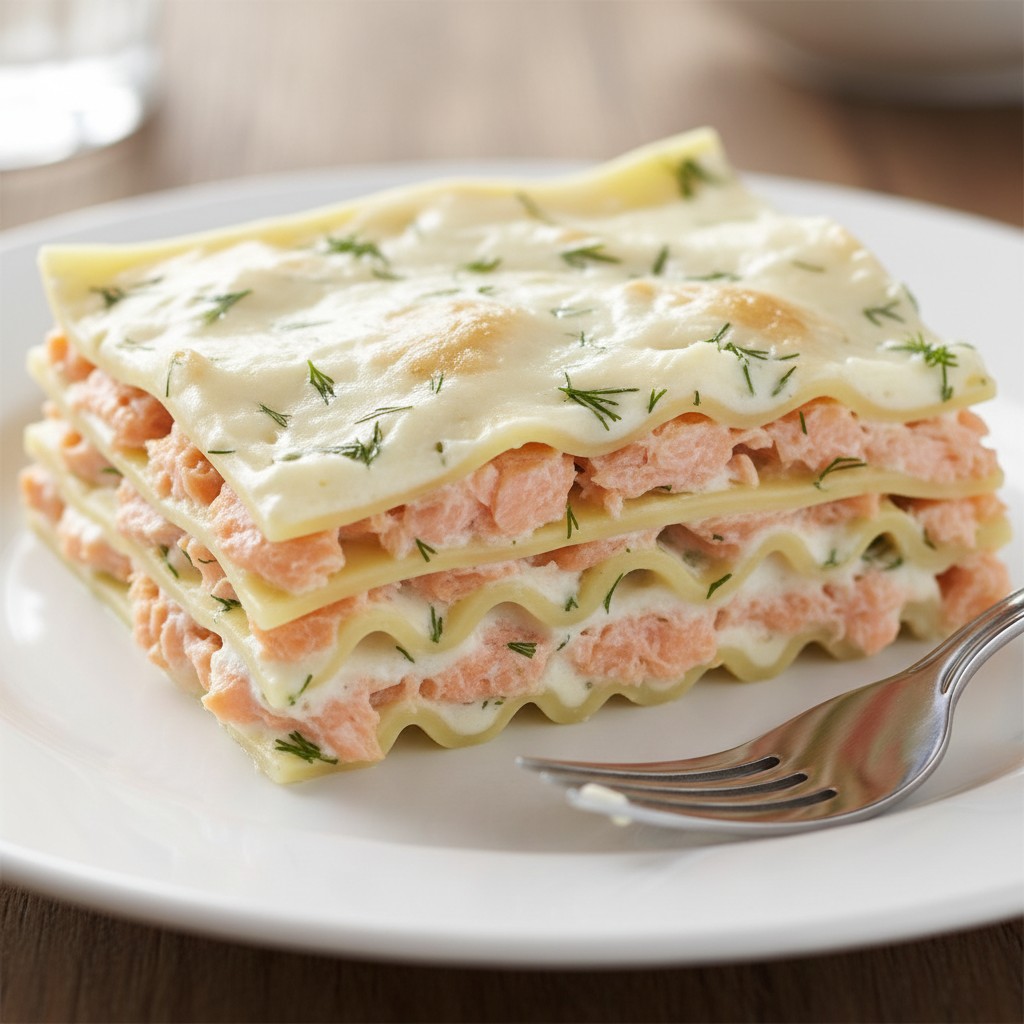
- Follow with another layer of sauce, then scatter over about a third of the fresh salmon chunks. Season the salmon lightly with salt and pepper. Repeat the layers – pasta, sauce, salmon – twice more, ending with a final layer of pasta.
- Pour the remaining béchamel sauce over the top layer of pasta, ensuring it is completely covered right to the edges.
- Sprinkle the freshly grated Parmesan cheese evenly over the top.
- Bake in the pre-heated oven for 35-40 minutes, or until the top is golden and bubbling and the pasta is tender. You can check the pasta is cooked by inserting a skewer or sharp knife into the centre.
- Allow the lasagne to rest for at least 10 minutes before serving. This is crucial, as it allows the layers to settle, making it much easier to cut and serve neat portions.
Delia's Notes from the Kitchen
A final word on the sauce. The consistency is paramount. It needs to be thick enough to hold its own between the layers but fluid enough to cook the pasta and salmon. Think of the consistency of a good, thick, pouring custard. Taking the time to cook the sauce gently for the full 5-8 minutes after it comes to a simmer is what develops the flavour and achieves this perfect texture.
How to Store & Reheat
Store any leftovers in an airtight container in the refrigerator for up to 2 days. To reheat, place a portion in an ovenproof dish, cover with foil, and bake at 160°C Fan for 15-20 minutes until piping hot. You can also reheat it in the microwave.
Frequently Asked Questions
Can I use frozen salmon?
Yes, you can. However, you must ensure it is thoroughly defrosted and patted very dry with kitchen paper before you use it. Any excess water will make the sauce thin and the final dish watery.
My béchamel sauce is lumpy. What did I do wrong?
Lumps are usually caused by adding the milk too quickly or when the roux is too hot. The key is to take the pan off the heat and add the milk gradually, whisking constantly until each addition is fully incorporated before adding more. If you do get lumps, you can often save it by passing the sauce through a fine sieve.
Do I need to pre-cook the lasagne sheets?
If you are using fresh lasagne sheets, there is no need to pre-cook them. For dried sheets, most modern varieties are 'no pre-cook', but it's always best to check the packet instructions. My recipe works well with no-cook dried sheets as there is enough liquid in the sauce to cook them through.
Can I assemble this lasagne ahead of time?
Yes, you can assemble the entire dish up to 24 hours in advance. Cover it tightly with cling film and store it in the refrigerator. When you're ready to bake, remove it from the fridge for 30 minutes to come to room temperature, then bake as directed, perhaps adding 5-10 minutes to the cooking time.
Why is my lasagne sometimes watery?
A watery lasagne is often due to the sauce being too thin or using ingredients with high water content (like undrained spinach or frozen fish that wasn't properly dried). Ensure your béchamel is cooked until it properly coats the back of a spoon and that all other ingredients are as dry as possible.