Salmon Baked in a Foil Parcel
Cooking salmon in a foil parcel is one of the most reliable methods for achieving perfectly moist, flaky fish. This simple technique steams the salmon in its own juices for a truly foolproof meal.
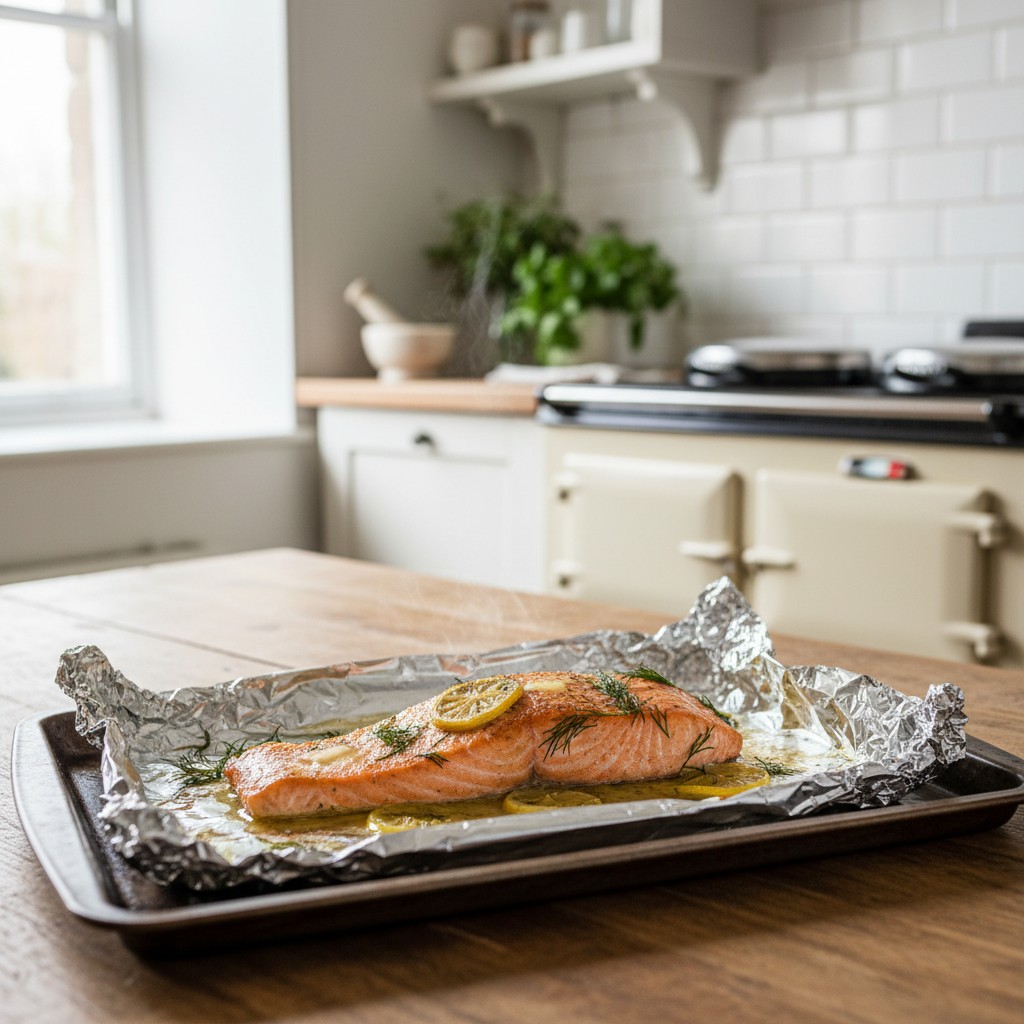
There are some methods in cooking that, once mastered, become steadfast friends in the kitchen, and baking fish in a parcel is certainly one of them. The French call it 'en papillote' when using parchment, but I find good-quality kitchen foil does the job just as beautifully and is perhaps a little more forgiving for the home cook. It is, quite simply, a near-foolproof way to guarantee succulent, flavourful fish, banishing all fears of the dreaded dry, overcooked salmon.
The principle is wonderfully straightforward: you are creating a sealed environment, a small steam-room for the fillet. The fish cooks gently in its own juices, mingling with the aromatics you've added – a knob of butter for richness, a slice of lemon for sharpness, and a sprig of dill for that classic partnership. All the flavour is trapped inside, infusing the fish as it cooks.
This isn't just a recipe; it's a technique to add to your repertoire. It’s quick enough for a weeknight supper, yet elegant enough for when you have people round. It also has the added, and not insignificant, advantage of creating very little washing up. That, in my book, is always a cause for celebration.
Why You'll Love This Recipe
- The tightly sealed foil parcel traps steam, gently cooking the salmon with moist heat and preventing it from drying out.
- Cooking is contained, so all the flavours from the butter, lemon, and herbs infuse directly into the fish, resulting in a more flavourful outcome.
- This method is incredibly forgiving. The gentle, even heat inside the parcel provides a buffer against overcooking, making it ideal for cooks of all levels.
- It's an 'all-in-one' method. You can add thinly sliced vegetables to the parcel to cook alongside the fish, creating a complete meal with minimal fuss and washing up.
Ingredients
- 2 salmon fillets, about 150-175g each, skin on or off as you prefer
- 2 generous knobs of unsalted butter
- 1 small lemon
- A handful of fresh dill sprigs
- 2 tablespoons dry white wine or Noilly Prat (optional, but recommended)
- Sea salt and freshly milled black pepper
Equipment Needed
Good-quality kitchen foil · A baking sheet · A sharp knife · A chopping board
Step-by-Step Instructions
- First, pre-heat your oven to 200°C (180°C Fan, Gas Mark 6). Then, tear off two large rectangles of kitchen foil, each about 30cm long. You need enough to enclose the salmon completely.
- Place a salmon fillet in the centre of each piece of foil. Season each fillet generously with sea salt and freshly milled black pepper.
- Now, place a knob of butter on top of each fillet. Lay a couple of sprigs of dill over the butter.
- Slice the lemon. Place two thin slices of lemon on top of the dill on each fillet. Squeeze the juice from the remaining lemon ends over the fish.
- If you're using it, pour one tablespoon of white wine or vermouth over each fillet. This adds a little extra moisture and flavour for the steaming process.
- To seal the parcel, bring the two long sides of the foil together above the fish. Fold them over together two or three times to create a tight seam. Then, fold and crimp the two shorter ends inwards, ensuring the parcel is completely sealed. You want no gaps for the steam to escape.
- Place the finished parcels on a baking sheet. This makes them easier to handle and catches any potential leaks, though a well-sealed parcel shouldn't have any.
- Bake on a high shelf in the pre-heated oven for 15-20 minutes. The exact time will depend on the thickness of your fillets. A 150g fillet will likely take 15 minutes.
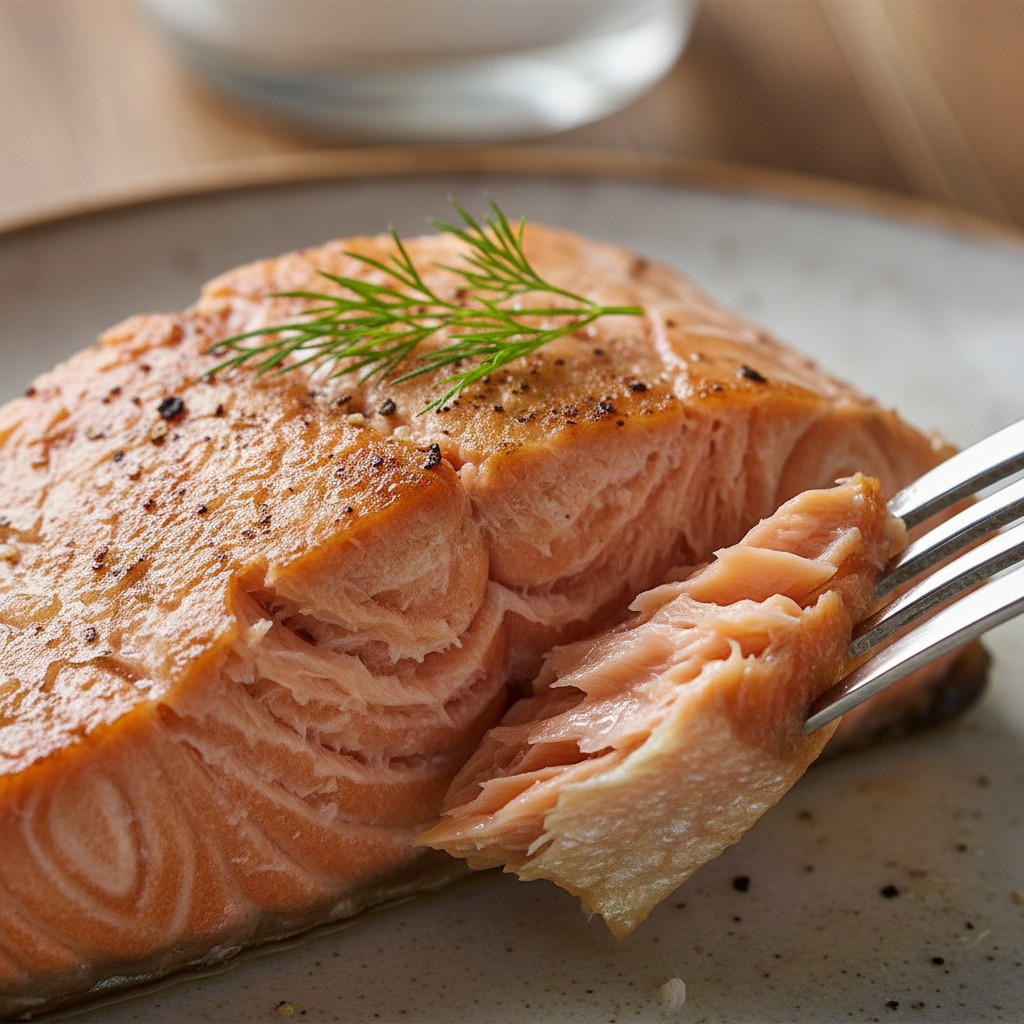
- To check for doneness, you can carefully open one parcel (be wary of the hot steam) and gently press a fork into the thickest part. The fish should be opaque and flake easily. If not, reseal and return to the oven for another 2-3 minutes.
- Serve the salmon immediately, either in the open parcel to retain all the lovely juices, or transferred to a warm plate.
Delia's Notes from the Kitchen
The absolute secret to success here is the seal. Do not rush this part. Take a moment to fold and crimp the edges of the foil together firmly, as if you were sealing a pasty. You are aiming for a completely airtight package. It is this trapped, aromatic steam that will cook the fish to perfection and keep it wonderfully succulent. A leaky parcel is a sad parcel!
How to Store & Reheat
Salmon is always best eaten fresh from the oven. If you do have leftovers, allow them to cool completely before storing in an airtight container in the refrigerator for up to 2 days. I would advise against reheating the fillet, as it can become dry. Instead, flake the cold salmon into a salad, mix it with crème fraîche for a sandwich filler, or stir it through pasta with a squeeze of lemon.
Frequently Asked Questions
Can I use baking parchment instead of foil?
Yes, absolutely. Using parchment is the traditional French 'en papillote' method. You'll need to be just as diligent with sealing the edges, often by folding and crimping them very tightly. The result is just as delicious.
How do I know for certain when the salmon is cooked?
The most reliable way is to check it. Carefully open the parcel and insert a fork into the thickest part of the fillet. If it flakes away easily and the flesh is opaque and pale pink, it is ready. If it's still dark pink and translucent in the centre, it needs a few more minutes.
Can I add vegetables to the foil parcel?
Yes, this works wonderfully. I'd recommend using quick-cooking vegetables sliced very thinly. Courgette ribbons, fine asparagus spears, thinly sliced fennel, or spring onions are all excellent choices. Place them underneath the salmon fillet before cooking.
Can I prepare the parcels in advance?
You can. The parcels can be fully assembled, sealed, and kept on a tray in the refrigerator for up to 4 hours before you plan to bake them. Just take them out of the fridge about 15 minutes before they go into the oven.
Why was my salmon dry?
There are two likely culprits. Firstly, the parcel may not have been sealed tightly enough, allowing the essential steam to escape. Secondly, it may simply have been in the oven for too long. Fish cooks very quickly, so always check it at the lower end of the recommended cooking time.