A Truly Classic Salmon en Croûte
A magnificent centrepiece for any special occasion. My method ensures perfectly cooked salmon wrapped in golden, flaky pastry every single time.
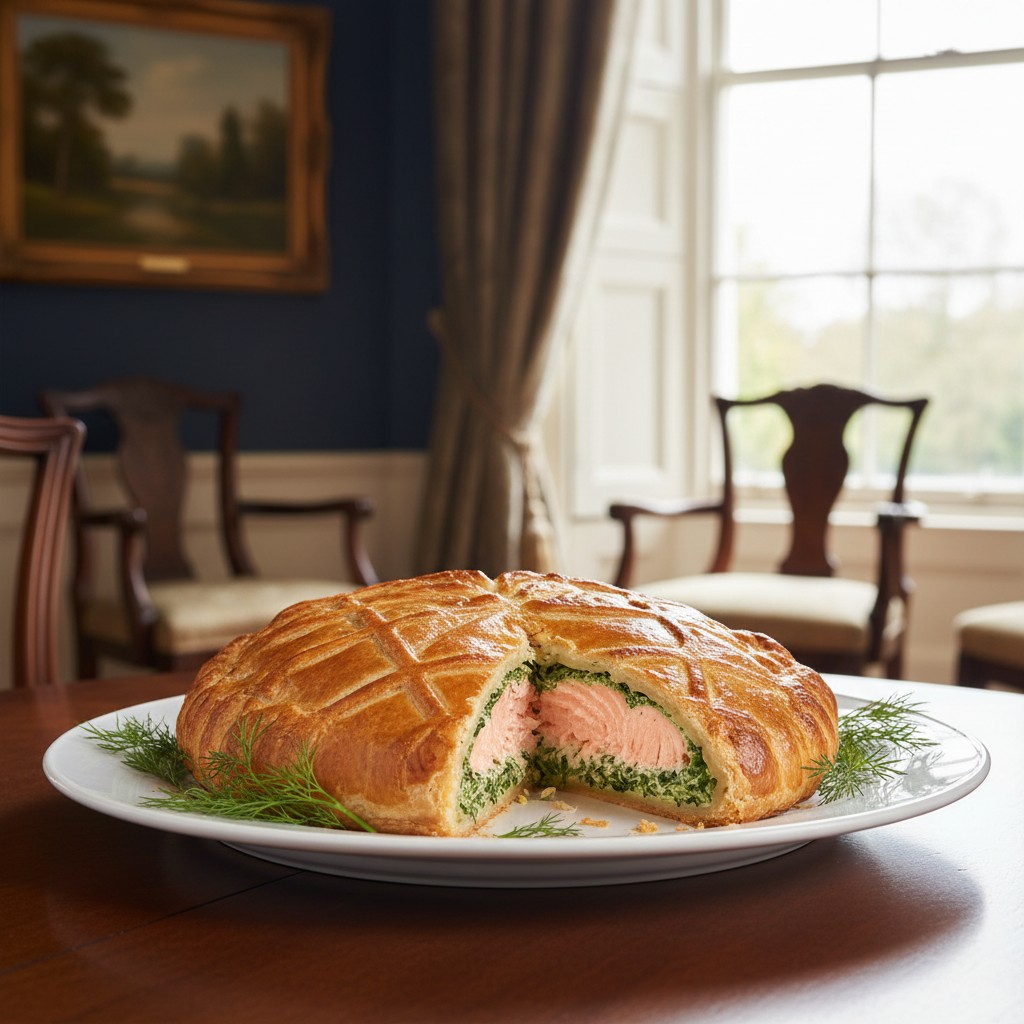
There are some dishes that seem to exist purely for celebration, and Salmon en Croûte is undoubtedly one of them. Its arrival at the table, a golden, glistening parcel, promises something truly special. For many, however, the very thought of making it induces a slight panic – a fear of the dreaded 'soggy bottom' or overcooked fish. I am here to assure you that with a little care and the right method, it is one of the most rewarding and straightforward centrepieces you can make.
This recipe is the result of much testing and refinement, designed to eliminate guesswork and guarantee success. The key is in the details: creating a flavourful, but not overly wet, filling, ensuring the salmon is perfectly prepped, and, most crucially, giving the assembled parcel a proper chill before it sees the heat of the oven. This isn't just a suggestion; it is the absolute secret to crisp, flaky pastry.
So, put aside any apprehension. We are not just wrapping a piece of fish in pastry; we are creating a complete, harmonious dish where every element works to support the others. Follow these steps precisely, and you will have a Salmon en Croûte so perfect, you will wonder why you ever thought it was difficult.
Why You'll Love This Recipe
- Chilling the assembled parcel is non-negotiable; it firms the butter in the pastry and prevents it from becoming soggy during baking, ensuring a crisp, golden finish.
- A layer of cooled spinach and cream cheese filling acts as a flavourful barrier, protecting the salmon from the direct heat of the pastry and preventing it from overcooking.
- Using an all-butter puff pastry provides the best possible flavour and a superior, flaky texture that is simply incomparable to versions made with vegetable fats.
- Squeezing the spinach completely dry after wilting is a critical step to remove excess water, which is the primary cause of a soggy pastry base.
Ingredients
- 500g block or ready-rolled sheet of all-butter puff pastry
- 600g side of salmon, skinless and pin-boned, from the centre of the fish
- 200g bag of fresh spinach
- 150g full-fat cream cheese
- 1 lemon, zested and 1 tbsp juice
- 3 tbsp fresh dill, finely chopped
- 1 medium egg, beaten
- Plain flour, for dusting
- Salt and freshly milled black pepper
Equipment Needed
Baking sheet · Baking parchment · Rolling pin · Large colander · Mixing bowl · Sharp knife · Pastry brush · Fish slice or spatula
Step-by-Step Instructions
- First, prepare the filling. Place the spinach in a large colander and pour over a kettle of boiling water to wilt it. Once cool enough to handle, squeeze out every last drop of water. This is vital. Chop the very dry spinach and place it in a bowl.
- Add the cream cheese, lemon zest, chopped dill, and a good seasoning of salt and pepper to the spinach. Mix everything together thoroughly until well combined. Set aside to cool completely.
- Now, prepare the salmon. Pat the fillet dry with kitchen paper and check for any stray bones. Season it lightly on both sides with salt and pepper.
- Lightly flour your work surface and roll out the pastry (if using a block) to a rectangle about 35cm x 30cm, large enough to envelop the salmon. If using a ready-rolled sheet, unroll it. Place the pastry on a sheet of baking parchment.
- Spread half of the cooled spinach mixture down the centre of the pastry, making it roughly the same size as the salmon fillet. Place the salmon on top. Spread the remaining spinach mixture evenly over the top of the salmon.
- Brush the exposed pastry edges with a little of the beaten egg. Now, bring one long side of the pastry over the salmon, then the other, overlapping them slightly. Press to seal. Trim the ends, leaving a 2cm border, and fold them underneath or tuck them in like a parcel, sealing with more beaten egg.
- Carefully turn the whole parcel over so the smooth side is on top. You can use the baking parchment to help you do this. Crimp the edges with a fork if you like. You can use the pastry trimmings to decorate the top, creating leaves or a lattice pattern. Brush the entire surface with the beaten egg.
- Now for the most important step: slide the parchment with the salmon onto a baking sheet and place it in the refrigerator to chill for at least 1 hour, or up to 4 hours. This firms up the pastry and helps prevent a soggy bottom.
- When you are ready to bake, preheat your oven to 200°C (180°C Fan, Gas Mark 6). Brush the chilled parcel with another layer of beaten egg. Using the back of a small knife, score a pattern on the top, being careful not to cut all the way through.
- Bake for 25-30 minutes, until the pastry is a deep golden brown, puffed, and crisp. To check the salmon is cooked, you can insert a thin skewer into the thickest part for 5 seconds – it should feel warm when you remove it.
- Allow the Salmon en Croûte to rest for 5-10 minutes before slicing with a serrated knife and serving.

Delia's Notes from the Kitchen
The secret to success here is not to rush. Give the parcel its proper chilling time, and the oven will do the rest of the work for you. A little patience yields a truly spectacular result that is far less daunting than it appears. When you bring this to the table, you'll see it's worth every moment.
How to Store & Reheat
Salmon en Croûte is undoubtedly best eaten fresh from the oven. However, leftovers can be stored. Allow it to cool completely, then wrap tightly in foil and refrigerate for up to 2 days. To reheat, place the wrapped slices on a baking tray in a preheated oven at 180°C (160°C Fan) for 10-15 minutes, or until warmed through. Do not use a microwave, as it will make the pastry soft and rubbery.
Frequently Asked Questions
How do I absolutely guarantee I won't have a soggy bottom?
There are three golden rules. One: your spinach filling must be as dry as you can possibly get it. Squeeze it, then squeeze it again. Two: the filling must be completely cold when it goes on the pastry. Three: you must chill the assembled parcel for at least an hour before baking. This solidifies the butter in the pastry, creating a barrier that steam struggles to penetrate.
Can I use frozen salmon?
Yes, you can, but it is absolutely imperative that it is defrosted completely. Once defrosted, you must pat it extremely dry with kitchen paper to remove all excess moisture before you begin.
Can I assemble this in advance for a dinner party?
Yes, this is an excellent dish to prepare ahead. You can assemble it completely, right up to the final egg wash, and keep it covered on its baking tray in the fridge for up to 4 hours before baking. Any longer and the pastry may start to become damp.
What kind of puff pastry is best?
For the best flavour and texture, always choose an all-butter puff pastry. It really does make a world of difference. A ready-rolled sheet is a brilliant time-saver, but a block is also excellent if you prefer to roll it yourself.
My salmon was overcooked. What went wrong?
This can happen if your salmon fillet was particularly thin, or if your oven runs hot. The filling should protect the fish, but it's always good to be mindful. Next time, you could try reducing the cooking time by 5 minutes, and use the skewer test to check for doneness. The fish will continue to cook as it rests, so it's better to be slightly under than over.