How to Cook a Perfect Glazed Gammon Ham
Discover the secrets to a perfectly cooked glazed gammon ham, a true centrepiece for any special occasion. My method ensures it's moist, tender, and utterly delicious every time.
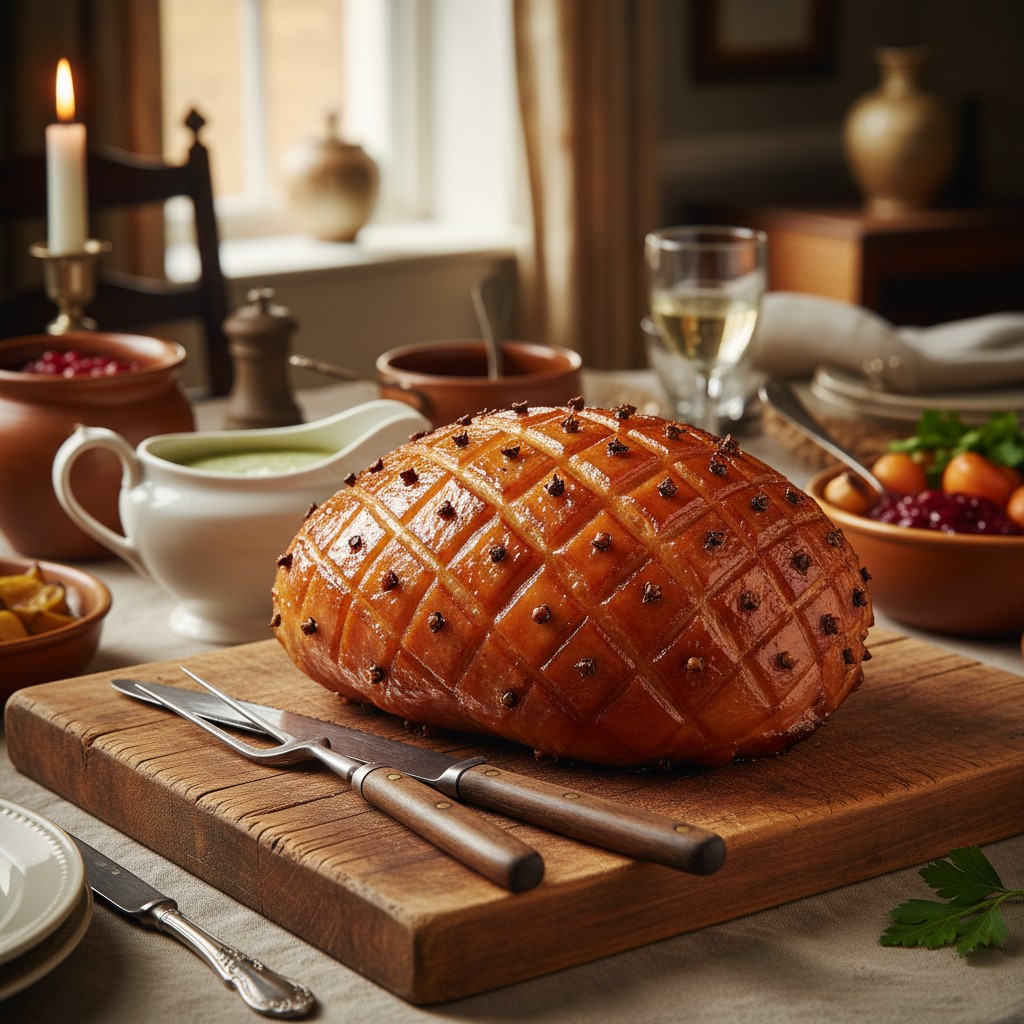
There is something deeply satisfying about presenting a whole glazed ham at the table. It’s a true kitchen classic, a centrepiece that speaks of celebration and generosity, yet it’s far more versatile than just for Christmas. The greatest shame is that so many people have only ever experienced dry, overly salty ham. This is easily avoided, and my method, a traditional two-stage process, guarantees a succulent, flavourful result every single time.
The secret lies in giving the gammon the time and respect it deserves. We begin by gently simmering the joint with a few aromatics. This isn't just about cooking it through; it's about tenderising the meat and drawing out any excess salt, infusing it with a subtle, savoury background flavour. Rushing this stage is the primary cause of tough ham. Only after this gentle poaching do we move on to the oven, where a sharp, sweet glaze is applied to create that beautiful, burnished, and sticky crust.
This recipe produces a ham that is as wonderful served warm with all the trimmings as it is sliced cold the next day. In fact, the leftovers are one of its greatest assets – perfect for magnificent sandwiches, salads, or flaking into pasta dishes. It is, in short, one of the most useful and rewarding joints of meat you can learn to cook properly.
Why You'll Love This Recipe
- The initial simmering stage gently cooks the joint in water, ensuring it remains incredibly moist and tender throughout.
- Soaking the gammon beforehand is a crucial step that removes excess saltiness, resulting in a perfectly seasoned, balanced flavour.
- Removing the rind but leaving a layer of fat allows the glaze to penetrate and creates a wonderfully crisp, caramelised surface during roasting.
- The classic glaze, a simple combination of sweet brown sugar and sharp English mustard, provides the perfect counterpoint to the savoury ham.
Ingredients
- 1 unsmoked middle gammon joint, about 2.25kg, on the bone if possible
- 2 large onions, peeled and halved
- 2 carrots, roughly chopped
- 2 celery sticks, roughly chopped
- 1 tablespoon black peppercorns
- 2 bay leaves
- A handful of whole cloves, for studding
- For the glaze:
- 2 tablespoons English mustard powder
- 4 tablespoons dark soft brown sugar
- 2 tablespoons runny honey or golden syrup
Equipment Needed
A very large, deep saucepan or stockpot · A large roasting tin · Aluminium foil · A sharp knife for scoring · A carving knife and fork · A small bowl for the glaze
Step-by-Step Instructions
- First, you must prepare the gammon. Place the joint in a large saucepan or clean bucket, cover it generously with cold water, and leave it to soak for at least 12 hours, or overnight. This is vital to draw out the excess salt. If you're short on time, change the water every couple of hours over a 6-hour period.
- When you're ready to cook, discard the soaking water. Place the gammon joint in a very large, deep saucepan or stockpot. Add the onions, carrots, celery, peppercorns, and bay leaves. Cover with fresh cold water, ensuring the joint is fully submerged.
- Place the pan over a high heat and bring it slowly to the boil. As it heats, some white scum will rise to the surface; skim this off with a large spoon. Once it reaches a boil, immediately turn the heat down to the barest simmer. The water should be barely moving. Put a lid on, slightly ajar.
- Allow the gammon to simmer very gently for 20 minutes per 450g. For a 2.25kg joint, this will be approximately 1 hour and 40 minutes. Do not be tempted to boil it, as this will toughen the meat.
- Preheat your oven to 200°C (180°C Fan, Gas Mark 6).
- Once the simmering time is up, carefully lift the gammon out of the water. You can reserve this cooking liquid – it makes a superb stock for soup. Let the gammon cool for about 15 minutes, just until you can handle it.
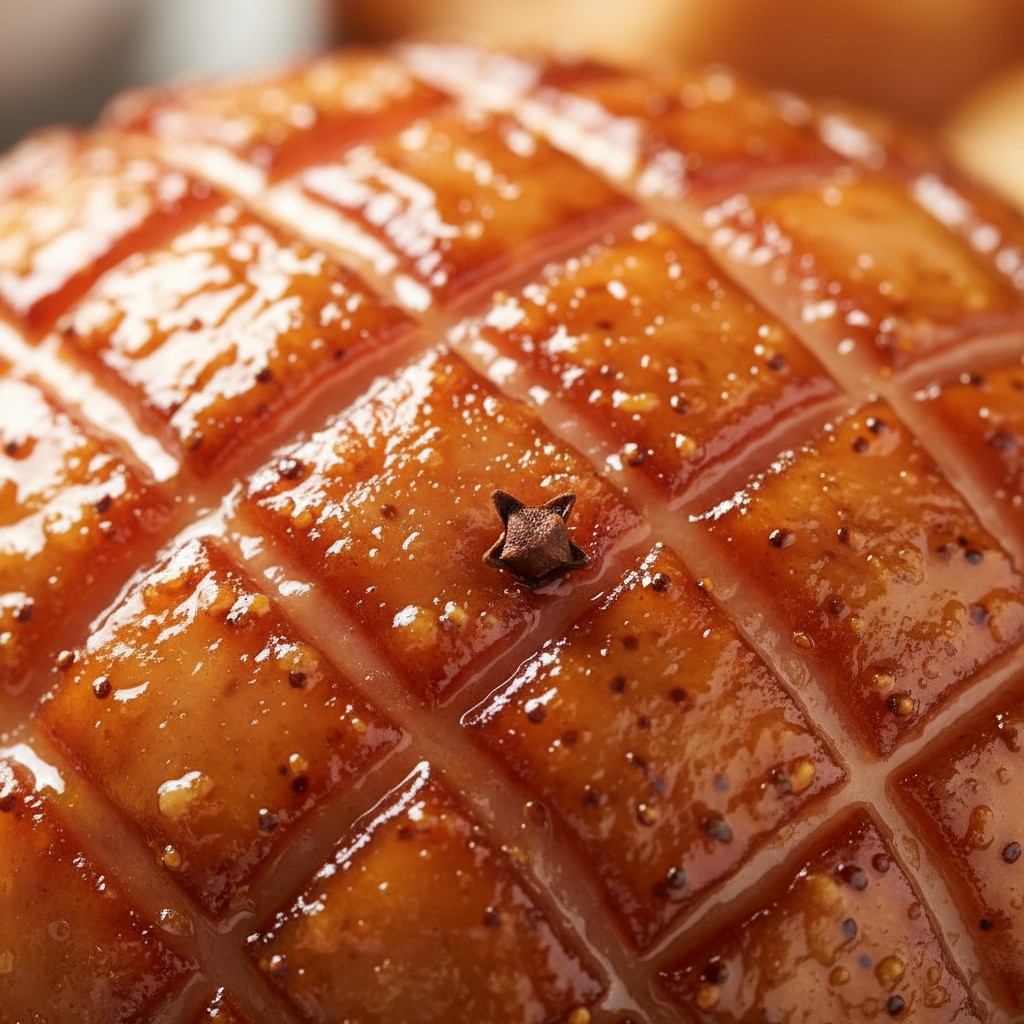
- Using a small, sharp knife, carefully remove the rind from the gammon, leaving a good, even layer of fat behind. Score this fat layer in a diamond pattern, cutting about 1cm deep. Be careful not to cut all the way through to the meat.
- In a small bowl, mix the mustard powder, brown sugar, and honey to form a thick paste. Spread this glaze all over the scored fat, pushing it into the cuts.
- Place the ham in a large roasting tin lined with foil (this will save you a lot of washing up). Stud the centre of each diamond with a whole clove.
- Roast for 20-30 minutes, or until the glaze is dark, bubbling, and sticky. Keep a close eye on it to ensure the sugar doesn't burn.
- Remove the ham from the oven and let it rest on a board for at least 20 minutes before carving. This is essential for a juicy result. Carve into slices and serve.
Delia's Notes from the Kitchen
The most important secret to a truly succulent ham lies in the gentle simmer – never, ever allow it to boil furiously. A lazy, barely perceptible 'smile' on the surface of the water is what you're after. And please, do not skip the resting time after roasting; it is not an optional step. It allows the juices, which have been driven to the centre, to redistribute throughout the meat, ensuring every single slice is perfectly moist.
How to Store & Reheat
Once completely cool, wrap the ham tightly in foil or place it in an airtight container and store it in the refrigerator for up to 5 days. The bone will help to keep it moist. It is best served cold. If you must reheat slices, do so gently in a pan with a splash of stock or water to prevent them from drying out.
Frequently Asked Questions
Do I really need to soak the gammon overnight?
Yes, I strongly advise it. Modern curing methods are less harsh than they once were, but almost all gammon joints benefit from soaking to remove excess salt. It's the first step to ensuring your final ham is pleasantly seasoned, not overwhelmingly salty.
What can I do with the leftover cooking liquid?
Do not throw it away! Once cooled and strained, this is a beautiful, flavourful ham stock. It's the perfect base for a classic split pea and ham soup, lentil soup, or for cooking beans and pulses.
How do I know when the gammon is properly cooked?
The initial simmering time is what cooks the ham through. By calculating 20 minutes per 450g, you can be confident it is cooked. The final stage in the oven is purely to apply and caramelise the glaze, not to cook the meat further.
My glaze has burned, what did I do wrong?
This usually happens if the oven is too hot or the ham is placed too high up. The high sugar content in the glaze means it can catch and burn quite quickly. Keep a very close eye on it during the last 10 minutes of roasting and turn the heat down if it's colouring too fast.
Can I use a boneless gammon joint?
Yes, you certainly can, and the cooking times remain the same based on weight. However, I find that cooking meat on the bone always results in a more succulent and flavourful result, and the bone itself is wonderful for adding to a stockpot later.