The Definitive Moussaka
A truly definitive guide to making a classic Greek Moussaka. Follow these precise steps for perfectly cooked aubergine, a rich lamb ragù, and a flawless béchamel topping.
How to Master the Authentic Delia Smith Moussaka Recipe
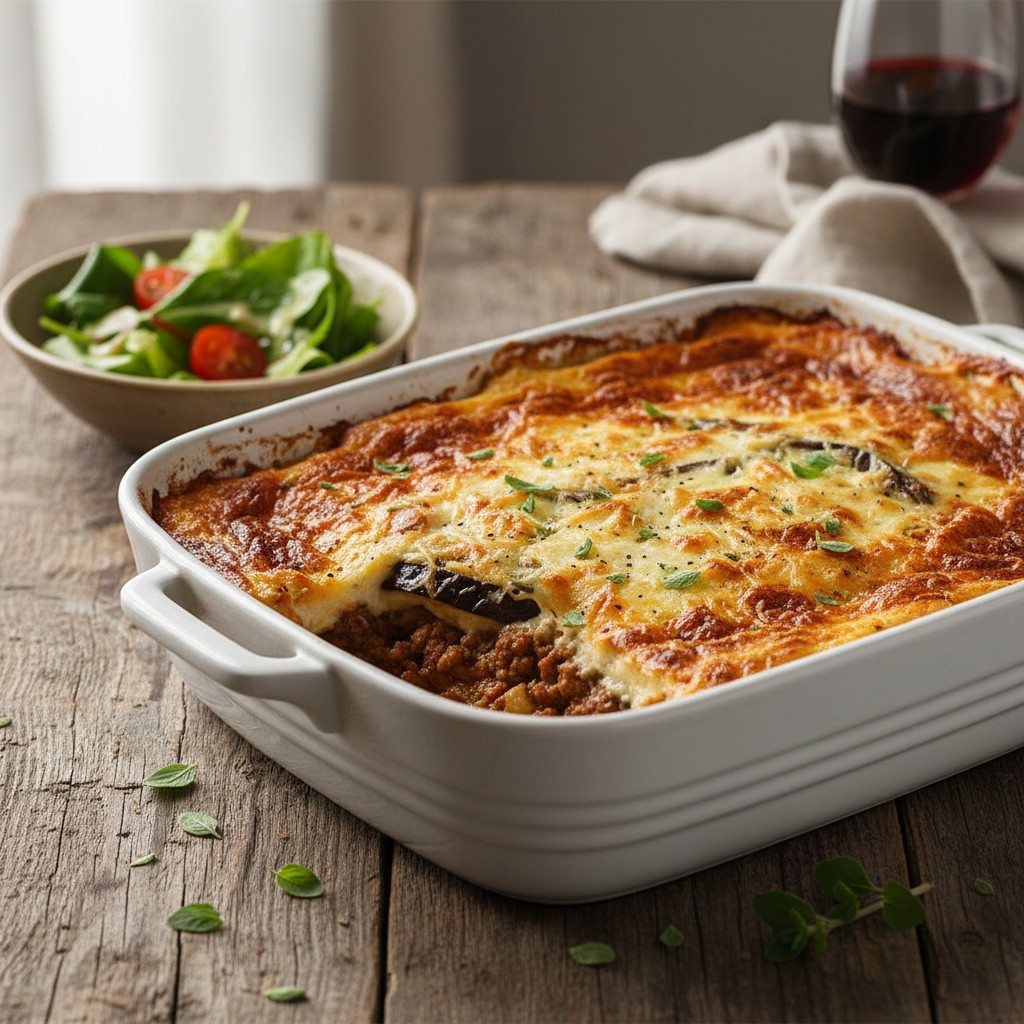
There are few dishes as satisfying to make and serve as this classic Delia Smith Moussaka Recipe. It is a true labour of love, certainly, but one that rewards your efforts tenfold with its deep, comforting flavours and wonderful textures. Moussaka is the epitome of Greek home cooking, a glorious layered casserole of sliced aubergine, a richly spiced lamb and tomato sauce, all crowned with a thick, creamy béchamel topping that browns to perfection in the oven.
Many people are put off by the number of steps, but I want to reassure you that each stage is straightforward if you approach it methodically. The secret lies in the preparation: properly salting the aubergines to draw out bitterness and water, allowing the meat sauce to simmer and develop its flavour, and making a béchamel sauce that is smooth, creamy, and seasoned with a whisper of nutmeg. It's about building layers of flavour, one component at a time.
This recipe is the result of much testing and refinement to ensure a perfect result every time. It doesn’t cut corners, because the traditional methods are there for a reason. Follow it closely, and you will have a moussaka that is not watery or greasy, but perfectly structured, deeply savoury, and utterly delicious. It's a wonderful dish for a weekend family meal or for entertaining guests who will undoubtedly ask for the recipe.
Why You'll Love This Recipe
- Salting the aubergines is a crucial, non-negotiable step. It draws out excess water, preventing a soggy moussaka, and removes any hint of bitterness.
- Frying the aubergine slices until golden develops a deeper, sweeter flavour and creates the perfect texture for the layers.
- A long, slow simmer for the meat sauce allows the flavours of the lamb, tomatoes, wine, and spices to meld into a rich, cohesive whole.
- The béchamel sauce is made with care, using a hot-milk method to ensure it is perfectly smooth and lump-free, providing a luxurious, creamy topping.
Ingredients
- 2 large aubergines (about 1kg total)
- Salt and freshly milled black pepper
- 100ml olive oil, for frying
- For the meat sauce:
- 2 tbsp olive oil
- 2 medium onions, finely chopped
- 2 cloves garlic, crushed
- 700g good-quality lean lamb mince
- 150ml dry red wine
- 400g can chopped tomatoes
- 2 tbsp tomato purée
- 1 tsp dried oregano
- 1/2 tsp ground cinnamon
- A good pinch of grated nutmeg
- 1 bay leaf
- 1 tsp sugar
- For the béchamel sauce:
- 75g butter
- 75g plain flour
- 900ml full-fat milk
- A pinch of freshly grated nutmeg
- 75g Parmesan cheese, freshly grated
- 2 large egg yolks
Equipment Needed
Large colander · Large heavy-based frying pan · Large saucepan for meat sauce · Medium saucepan for béchamel · Whisk · Large ovenproof dish (approx. 30x20cm)
Step-by-Step Instructions
- First, prepare the aubergines. Slice them lengthways into 1cm thick slices. Lay them in a colander, sprinkling each layer generously with salt. Place the colander in the sink and leave for 30-45 minutes to allow the bitter juices to be drawn out. Afterwards, rinse the slices thoroughly under cold running water and pat them completely dry with a clean tea towel or kitchen paper. This is a vital step.
- Now, heat the 100ml of olive oil in a large, heavy-based frying pan over a medium-high heat. Fry the aubergine slices in batches until they are golden brown on both sides – be careful not to overcrowd the pan. As they are cooked, remove them with a slotted spoon and let them drain on kitchen paper.
- For the meat sauce, use the same frying pan (wipe it clean if needed). Heat 2 tbsp of olive oil over a medium heat, add the chopped onions and cook gently for about 10 minutes until soft and translucent. Add the crushed garlic and cook for another minute.
- Turn up the heat, add the lamb mince to the pan and cook, breaking it up with a wooden spoon, until it has browned all over. Pour in the red wine and let it bubble away, scraping any browned bits from the bottom of the pan, until it has almost completely evaporated.
- Stir in the chopped tomatoes, tomato purée, oregano, cinnamon, nutmeg, bay leaf, and sugar. Season well with salt and pepper. Bring to a simmer, then reduce the heat to low, cover the pan, and let it cook very gently for at least 45 minutes, or until the sauce is thick and rich. Remove the bay leaf before assembling.
- While the meat sauce simmers, make the béchamel. Heat the milk in a small saucepan until it's just below boiling point (you'll see small bubbles at the edge). In a separate, larger saucepan, melt the butter over a low heat. Stir in the flour to form a paste (a roux) and cook for 1-2 minutes.
- Remove the roux from the heat and gradually pour in the hot milk, whisking continuously and vigorously to prevent any lumps from forming. Once all the milk is incorporated, return the pan to a medium heat and continue to whisk until the sauce comes to a boil and thickens considerably. Simmer for 2 minutes, still whisking.
- Remove the sauce from the heat. Season with salt, pepper, and the grated nutmeg. Allow it to cool for a few minutes before whisking in the egg yolks and half of the grated Parmesan cheese. This enriches the sauce and helps it brown.
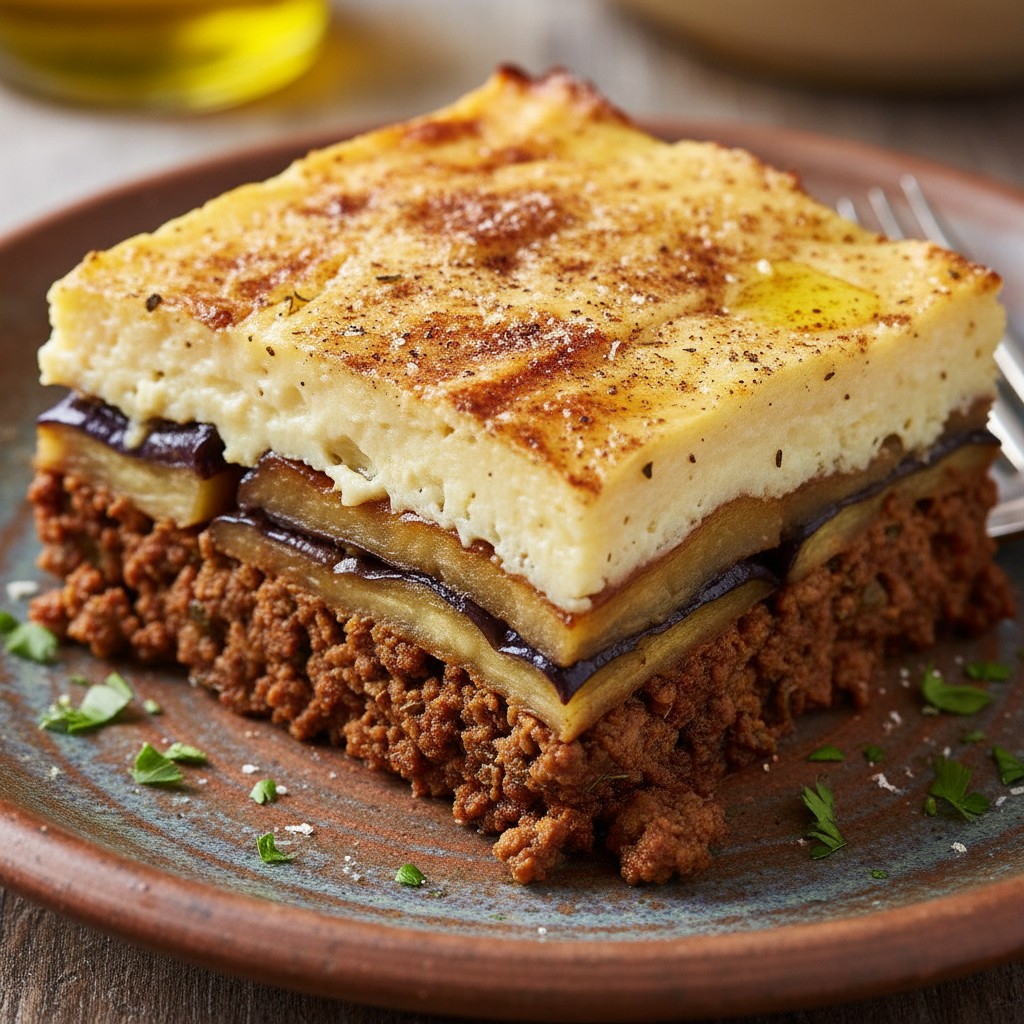
- Preheat your oven to 180°C (160°C Fan, Gas Mark 4). To assemble, spread half of the meat sauce in the bottom of a large, deep ovenproof dish (approx. 30x20cm). Arrange a layer of the fried aubergine slices on top. Spoon the remaining meat sauce over the aubergines, and finish with a final, neat layer of aubergine slices.
- Carefully pour the béchamel sauce over the top, spreading it evenly to cover the entire surface. Sprinkle the remaining Parmesan cheese over the top.
- Bake in the preheated oven for 40-50 minutes, or until the topping is golden brown and bubbling. Let the moussaka stand for at least 15-20 minutes before serving. This is crucial as it allows the layers to set, making it much easier to slice and serve.
Delia's Notes from the Kitchen
A note on the cheese. While Parmesan is widely available and works beautifully, if you can find a Greek Kefalotyri cheese, do use it for the topping. It has a salty, sharp flavour that is wonderfully authentic. And please, do not skip the resting time after baking. A moussaka served straight from the oven will collapse into a heap on the plate; a short rest allows it to settle, firm up, and become the beautifully layered slice it's meant to be.
How to Store & Reheat
Store any leftover moussaka covered in the refrigerator for up to 3 days. It can also be frozen, either whole or in portions, for up to 3 months. To reheat, allow it to defrost completely in the refrigerator, then cover with foil and bake in a preheated oven at 170°C for 25-30 minutes, or until piping hot throughout. Remove the foil for the last 5 minutes to crisp up the top.
Frequently Asked Questions
Why did my moussaka turn out watery?
This is almost always because the aubergines were not salted and drained properly. Salting draws out a significant amount of water, which would otherwise be released during baking, creating a soggy base. Also, ensure your meat sauce is simmered until it is very thick.
Can I use beef mince instead of lamb?
Yes, absolutely. While lamb provides the traditional, authentic Greek flavour, a good quality beef mince will also work very well. The cooking method remains exactly the same.
Is it essential to fry the aubergine slices first?
Yes, I believe it is. Frying develops their flavour and ensures they have a lovely, soft texture. Some recipes suggest baking or grilling them, which you can do (brush with oil first), but I find frying gives the most reliable and traditional result.
My béchamel sauce was lumpy. What did I do wrong?
Lumps usually form when cold milk is added to a hot roux, or if it isn't whisked enough. The key is to add hot milk gradually to the roux (off the heat) and to whisk vigorously and constantly until every drop is incorporated before returning it to the heat.
Can I assemble the moussaka ahead of time?
Yes, you can assemble the entire dish, let it cool, then cover and refrigerate it for up to 24 hours before baking. You may need to add an extra 10-15 minutes to the baking time if cooking from chilled.