A Classic Minestrone Soup
There is nothing quite like a proper, hearty Minestrone, brimming with seasonal vegetables, beans, and pasta. It is a complete and truly satisfying meal in a bowl, perfect for any season.
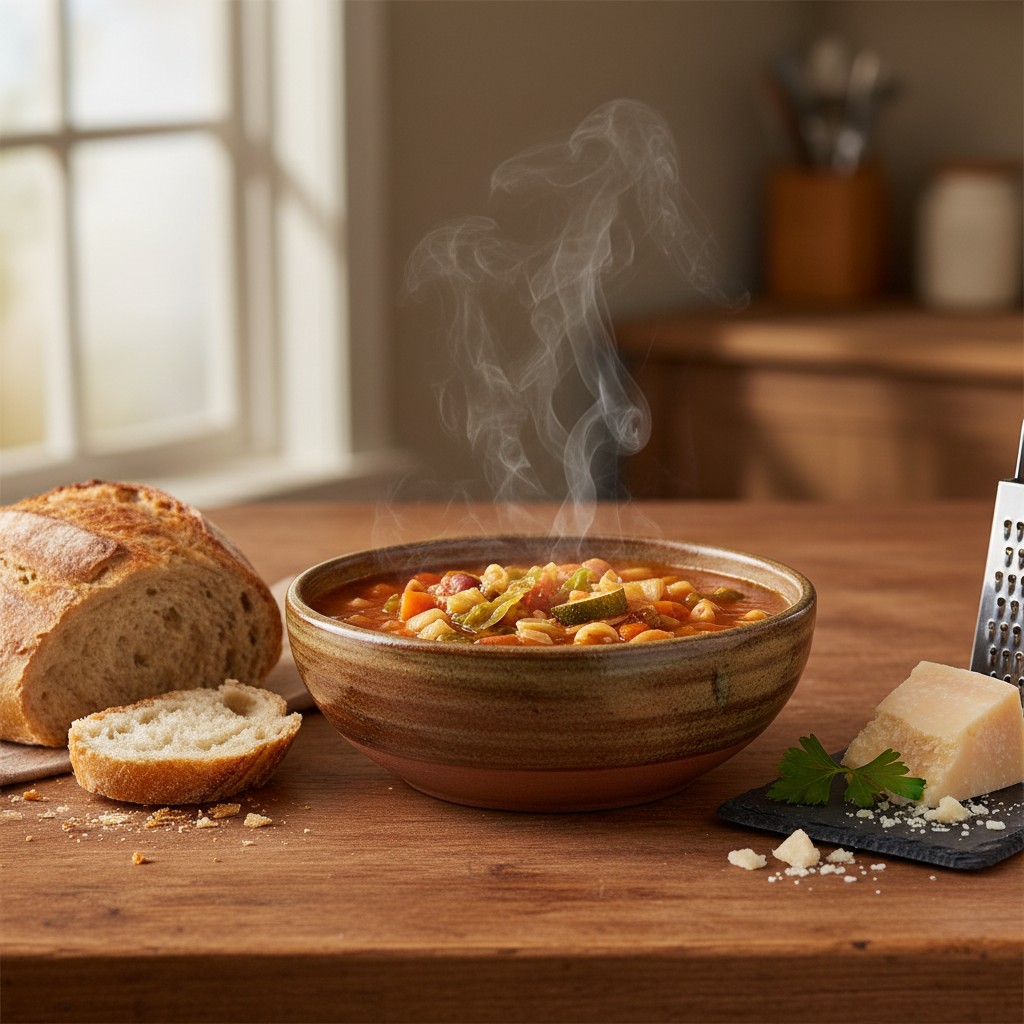
The Definitive Guide to a Truly Comforting Delia Smith Minestrone Soup Recipe
There are few things as comforting as this classic Delia Smith Minestrone Soup Recipe. It is the sort of dish that speaks of generosity and good, honest cooking. The word ‘Minestrone’ simply means ‘big soup’ in Italian, and that is precisely what it is: a substantial, thick soup packed with a wonderful jumble of vegetables, beans, and often a little pasta or rice. It is not a recipe to be slavishly followed to the letter; rather, it’s a blueprint for using up the very best of what is in season, or indeed, what you have in your vegetable drawer.
What I love most about Minestrone is its sheer versatility. A summer version might be lighter, filled with courgettes, peas, and green beans, while a winter one, like the version we are making today, is more robust, leaning on root vegetables, cabbage, and potatoes to create something truly fortifying against the cold. The key to a really good Minestrone, however, lies in building the layers of flavour right from the very start, which is exactly what I am going to teach you here.
So, before you begin, have a good look at the ingredients and feel free to make your own adjustments. This is your soup. My role is simply to provide you with the reliable method that will guarantee a deeply savoury and satisfying result every single time. It’s a wonderful recipe to have in your repertoire, and once you’ve made it, you’ll find yourself returning to it again and again.
Why You'll Love This Recipe
- Building a 'soffritto' of onion, carrot, celery, and pancetta creates an intensely savoury base that is the secret to the soup's depth of flavour.
- Simmering a Parmesan rind in the broth imparts a wonderful, nutty 'umami' taste that you simply cannot get any other way.
- Adding the pasta only for the final 10-12 minutes of cooking ensures it is perfectly 'al dente' and doesn't become mushy or absorb too much liquid.
Ingredients
- 2 tablespoons olive oil
- 100g unsmoked pancetta cubes or thick-cut bacon, finely diced
- 1 large onion, finely chopped
- 2 medium carrots, peeled and diced
- 2 celery sticks, trimmed and diced
- 2 cloves garlic, crushed
- 1 medium potato (about 200g), peeled and diced
- 1/4 head of Savoy cabbage, finely shredded
- 400g can of chopped tomatoes
- 1.5 litres good-quality chicken or vegetable stock
- A Parmesan rind (optional, but highly recommended)
- 400g can of cannellini beans, drained and rinsed
- 100g small pasta shapes, such as ditalini, tubetti, or broken spaghetti
- A large handful of fresh flat-leaf parsley, chopped
- Salt and freshly ground black pepper
- Freshly grated Parmesan cheese, to serve
Equipment Needed
Large heavy-based casserole or saucepan with a lid · Sharp knife · Chopping board · Wooden spoon · Ladle
Step-by-Step Instructions
- First, place a large, heavy-based casserole or saucepan over a medium heat and add the olive oil. When it’s warm, add the pancetta and cook for 5-7 minutes, stirring occasionally, until it has rendered its fat and is becoming crisp and golden. This is the first layer of flavour.
- Next, add the chopped onion, carrots, and celery to the pan. This combination is the Italian 'soffritto'. Turn the heat down a little and let the vegetables cook gently for about 10 minutes, stirring now and then, until they are soft and fragrant but not browned.
- Add the crushed garlic and cook for one minute more, then add the diced potato and the shredded cabbage. Give everything a good stir to coat in the oil and pancetta fat.
- Now, pour in the canned tomatoes and the stock. Add the Parmesan rind, if you're using one. Bring the soup up to a gentle simmer, then season with a little salt and a good grinding of black pepper. Be cautious with the salt, as the pancetta and stock are already salty.
- Partially cover the pan with a lid and let the soup simmer gently for 20 minutes. This allows the flavours to meld together and the vegetables to become tender.
- After 20 minutes, stir in the rinsed cannellini beans and the small pasta. Increase the heat slightly to bring it back to a simmer, then cook for a further 10-12 minutes, or until the pasta is cooked 'al dente'. You may need to add a splash more hot water or stock if the soup becomes too thick.
- Finally, remove the pan from the heat and fish out the Parmesan rind. Stir in the chopped fresh parsley. Taste the soup and adjust the seasoning if needed. Let it rest for a few minutes before serving.
- Ladle the hot soup into warm bowls and serve with a generous grating of fresh Parmesan cheese and some good, crusty bread on the side.
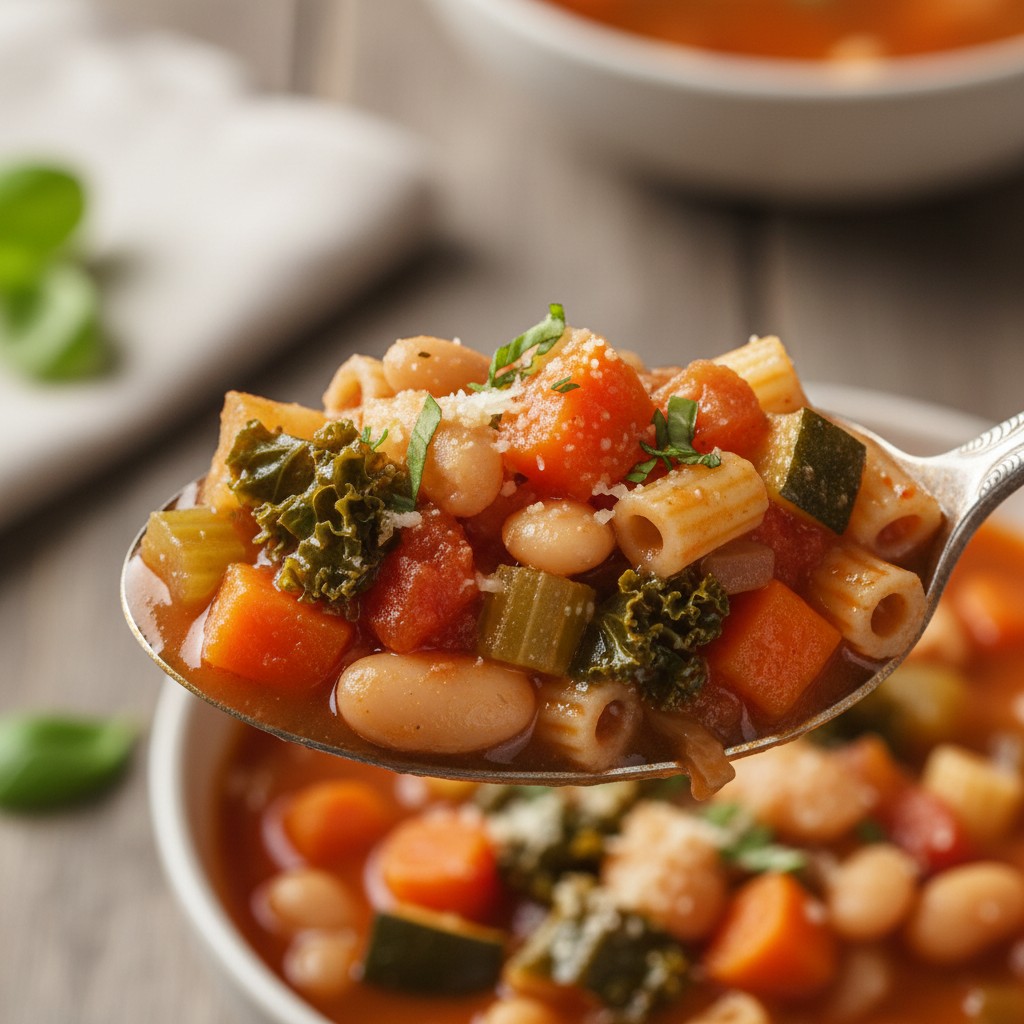
Delia's Notes from the Kitchen
A true success secret for Minestrone is to never rush the soffritto. Allowing the onion, carrot, and celery to cook slowly and gently until they are truly soft is what builds the foundation of flavour for the entire soup. Also, always keep your Parmesan rinds in the freezer. They are like little flavour bombs, ready to be dropped into any soup, stew, or stock. It’s a wonderfully frugal and delicious habit to get into.
How to Store & Reheat
Minestrone soup stores wonderfully and its flavour often improves overnight. Allow it to cool completely before transferring to an airtight container and refrigerating for up to 3 days. To reheat, warm it gently in a saucepan over a medium-low heat until piping hot. Be aware that the pasta will continue to absorb liquid, so you may need to add a splash of water or stock to return it to the right consistency. It also freezes well for up to 3 months, though it's best to freeze it before adding the pasta, which you can then cook and add during reheating.
Frequently Asked Questions
Can I make this soup vegetarian?
Yes, absolutely. Simply omit the pancetta and use a good-quality vegetable stock. You might want to add a little extra olive oil at the beginning and perhaps a teaspoon of smoked paprika with the vegetables to add a little depth.
Why did my pasta become mushy?
This usually happens for two reasons: either it was cooked for too long, or it sat in the hot soup for an extended period after cooking. It's important to add the pasta only for the last 10-12 minutes and to serve the soup shortly after it's ready.
What is the purpose of the Parmesan rind?
The rind is the hard, waxy part of the cheese that is usually thrown away. However, when simmered in a soup or stew, it slowly melts and releases an incredible, savoury, nutty flavour known as umami. It's a traditional Italian trick for adding depth without any extra effort. Just remember to remove it before serving!
Can I use different vegetables?
Yes, Minestrone is designed for adaptation. Use what is in season or what you have on hand. Leeks, courgettes, peas, green beans, or even butternut squash can be used. Just be mindful of cooking times; add harder vegetables earlier and softer ones towards the end.
Can I make this ahead of time?
Yes, it's an excellent soup to make ahead. The flavours will develop beautifully. If you're planning to serve it a day or two later, I recommend making the soup base without the pasta, then reheating it and cooking the pasta in the soup just before serving for the best texture.