Classic Seville Orange Marmalade
Making your own marmalade is one of the kitchen's great pleasures. This traditional, reliable recipe ensures a perfect, glistening set and a wonderfully tangy flavour.
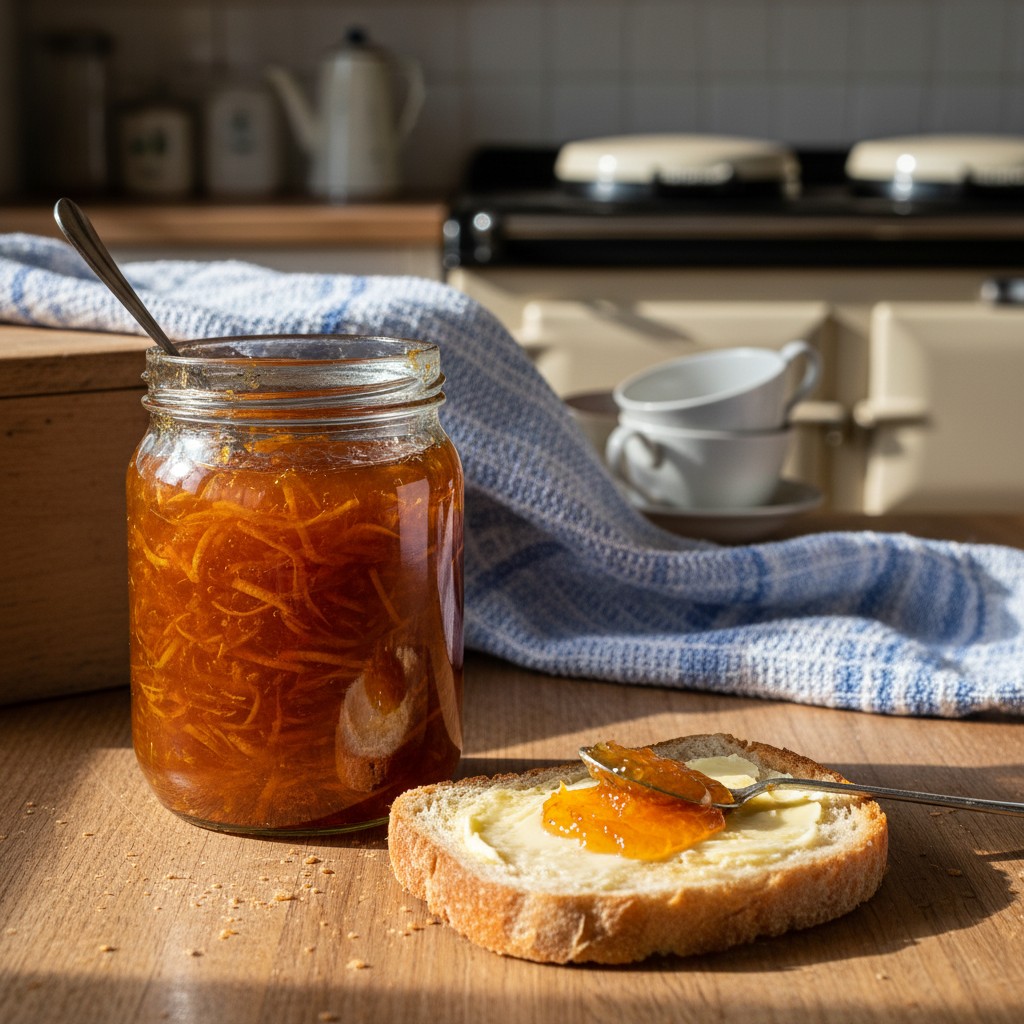
The Definitive Method for a Perfect Delia Smith Marmalade Recipe
There is a special kind of magic in making this Delia Smith Marmalade Recipe during the short, sharp Seville orange season. From late December to February, these bitter, knobbly-skinned fruits appear, and their arrival is a call to arms for the keen cook. To capture their unique, tangy essence in a jar is one of the most satisfying of all kitchen rituals.
Many people are daunted by marmalade making, fearing a non-setting disaster or a sticky mess. But I am here to tell you that it is perfectly straightforward if you follow the method carefully. It is a process that requires a little patience, yes, but the rewards are immeasurable: jewel-like jars of the finest marmalade, far superior to anything you can buy.
This recipe is the one I have relied on for years. It uses the whole fruit to extract every last bit of natural pectin, which is the secret to a good set. We will walk through each stage together, from preparing the fruit to testing for that all-important setting point, ensuring you have complete confidence and a wonderful result.
Why You'll Love This Recipe
- Utilising the entire Seville orange, including the pith and pips wrapped in muslin, provides a high level of natural pectin, which is essential for achieving a reliable, firm set without artificial additives.
- The two-stage cooking process—first, a long, slow simmer to soften the peel completely, followed by a rapid, rolling boil with the sugar—is crucial for the perfect texture and set.
- Precise instructions for testing the setting point using the 'wrinkle test' on a cold saucer remove all guesswork, guaranteeing your marmalade is neither too runny nor too firm.
Ingredients
- 1kg Seville oranges
- 2 large lemons
- 2kg preserving sugar
- 2.5 litres water
Equipment Needed
Large preserving pan or heavy-based stockpot (at least 6-litre capacity) · 6 x 450g jam jars with lids · Muslin cloth and kitchen string · Sharp knife and chopping board · Juicer · Ladle and jam funnel · Small saucers (for testing the set)
Step-by-Step Instructions
- Begin by sterilising your jars and lids. Wash them in hot, soapy water, rinse well, and place them on a baking tray in an oven preheated to 140°C (120°C fan) for at least 20 minutes while you prepare the marmalade. Place a couple of small saucers in the freezer for testing the set later.
- Scrub the oranges and lemons thoroughly under cold water. Cut the fruits in half and squeeze the juice into a very large, heavy-based preserving pan or stockpot. Set the squeezed fruit halves aside.
- Now, scoop out all the pips, pith and inner membranes from the squeezed orange and lemon halves using a spoon. Place all of this onto a large square of muslin cloth. Collect any pips from the juice in the pan and add them too. Tie the muslin securely with kitchen string to form a tight bag – this contains all the natural pectin.
- Next, shred the orange and lemon peel. You can do this by hand with a sharp knife, cutting it into fine, medium or thick strips according to your preference. Add the shredded peel to the juice in the preserving pan.
- Drop the muslin bag into the pan and add the 2.5 litres of water. Tie the string of the bag to the pan handle to make it easy to retrieve later. Bring the contents to a simmer, then partially cover the pan and let it cook gently for about 2 hours, or until the peel is completely and utterly soft. You can test this by squashing a piece between your thumb and forefinger.
- Remove the pan from the heat. Carefully lift out the muslin bag, allowing it to cool slightly in a bowl. Once cool enough to handle, begin to squeeze the bag firmly over the pan. You want to extract as much of the thick, jelly-like substance (the pectin) as possible. This is vital for a good set. Keep squeezing until you can get no more out.
- Now add the preserving sugar to the pan. Stir over a low heat until every last crystal of sugar has completely dissolved. This is another critical step; if you boil it before the sugar has dissolved, the marmalade will be grainy.
- Once the sugar is dissolved, turn up the heat and bring the marmalade to a rapid, rolling boil. Boil it hard for 15-20 minutes. It will foam up, so don't leave it unattended. After 15 minutes, begin testing for a set.
- To test the set, remove the pan from the heat. Take one of your cold saucers from the freezer and spoon a small amount of marmalade onto it. Let it cool for a minute, then push it gently with your fingertip. If the surface wrinkles, the setting point has been reached. If it is still liquid, return the pan to the boil for another 5 minutes and test again.
- Once the setting point is reached, turn off the heat and skim any scum from the surface with a slotted spoon. Let the marmalade stand in the pan for 15-20 minutes. This allows the peel to settle and distribute evenly throughout the jars.
- Using a sterilised jam funnel and ladle, carefully pour the hot marmalade into your warm, sterilised jars. Fill them right to the top. Immediately seal with sterilised lids. The marmalade will thicken further as it cools. Label when cold and store in a cool, dark place.
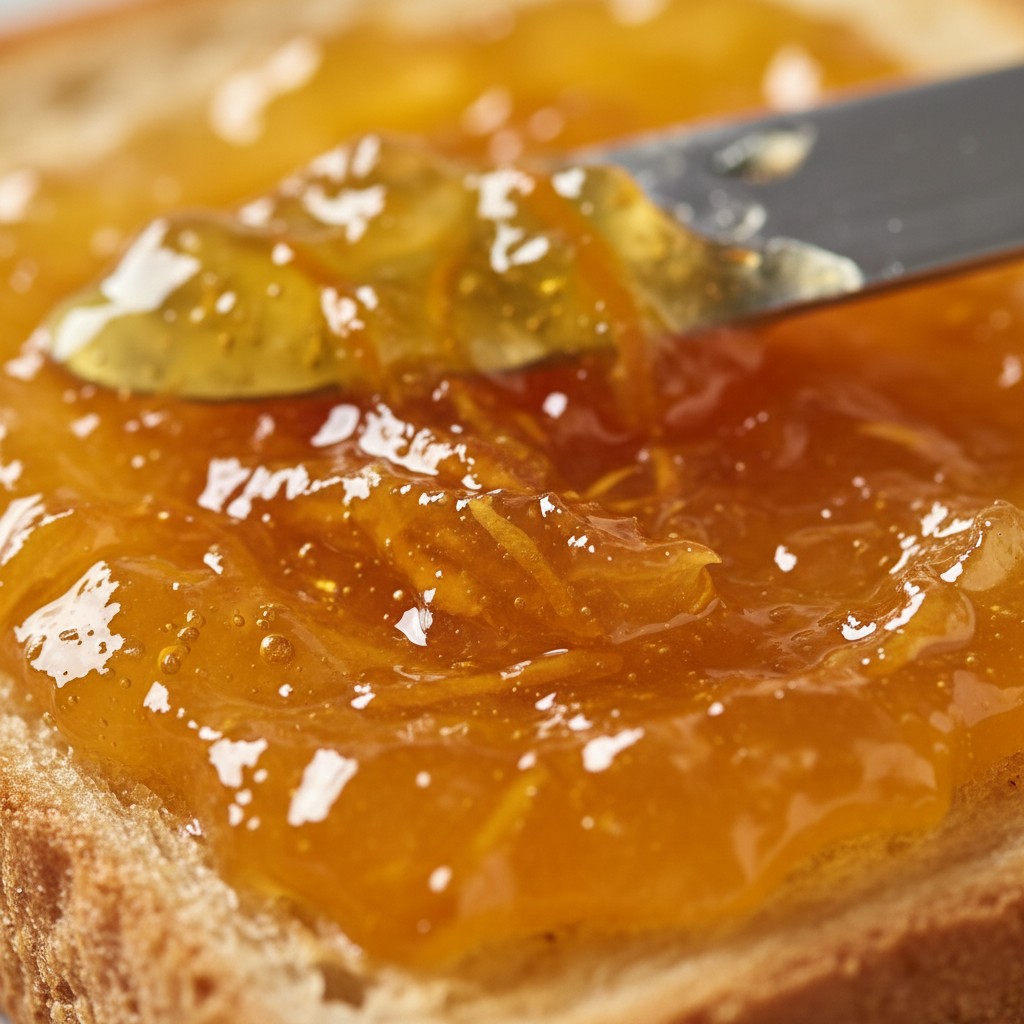
Delia's Notes from the Kitchen
The most important advice I can give is not to rush. Marmalade making is a two-part process, and the initial, long, slow simmer of the peel is where the foundation for success is laid. Put some music on, enjoy the wonderful citrus aroma filling your kitchen, and trust the process. That moment when you push the cooled liquid on the saucer and it wrinkles beautifully is pure kitchen alchemy and deeply satisfying.
How to Store & Reheat
When correctly sealed in sterilised jars, the marmalade will keep for at least a year in a cool, dark cupboard. Once a jar is opened, it should be stored in the refrigerator and consumed within 4-6 weeks.
Frequently Asked Questions
Why didn't my marmalade set?
There are usually two culprits. Either the peel was not simmered for long enough to release the pectin, or the marmalade was not boiled rapidly for long enough after adding the sugar. It's crucial to achieve that 'rolling boil' to activate the pectin and evaporate excess water.
Can I use sweet oranges instead of Seville oranges?
You can, but the result will be very different. Seville oranges are prized for their bitterness, which balances the sugar, and their incredibly high pectin content, which ensures a good set. If using sweet oranges, you will need to add more lemon juice and possibly commercial pectin.
My marmalade is cloudy, what did I do wrong?
Cloudiness is often caused by boiling the fruit too rapidly during the initial softening stage, or by squeezing the muslin bag of pips too hard, which can force out starchy material. A gentle simmer and a firm but not brutal squeeze are best.
Can I reduce the amount of sugar in the recipe?
I would strongly advise against it. The sugar is not just for sweetness; it is a crucial preserving agent and is vital for achieving the correct set. The 1:2 ratio of fruit to sugar is a time-honoured formula for a reason.
How do I know the peel is soft enough?
This is a very important stage. After simmering for around 2 hours, take a piece of peel out of the pan and press it between your thumb and forefinger (be careful, it's hot!). It should squash to a complete mush with very little resistance. If it's still firm, it needs more time.