Classic Liver and Bacon Casserole with Onion Gravy
A true British classic, this comforting casserole brings together tender liver and salty bacon in a rich onion gravy. It’s a wonderfully economical and deeply satisfying meal for a chilly evening.
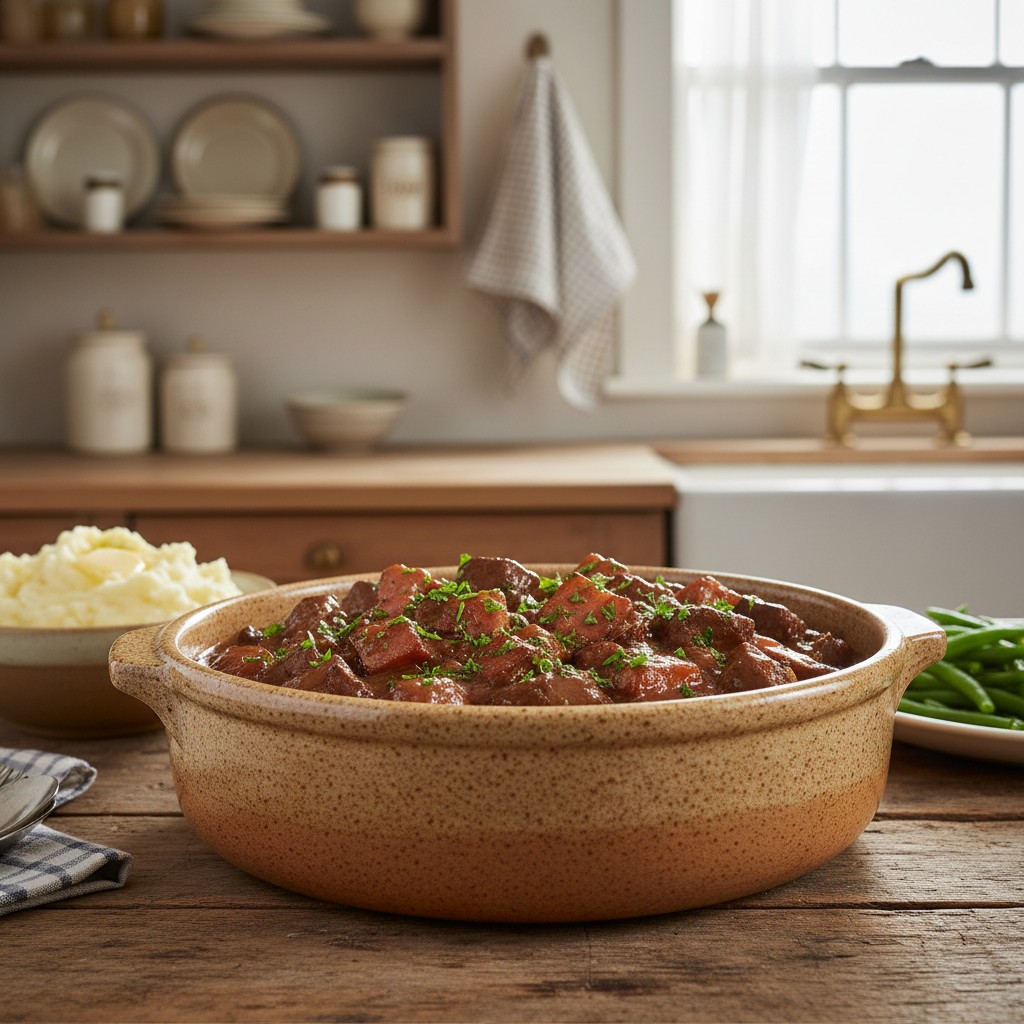
The Definitive Guide to a Perfect Delia Smith Liver And Bacon Casserole Recipe
This Delia Smith Liver And Bacon Casserole Recipe is something of a culinary rescue mission for a truly wonderful, but often misunderstood, ingredient. Liver has, for some, become associated with school dinners and tough, leathery mouthfuls. But I am here to tell you that when treated with a little respect and cooked correctly, it is one of the most delicious, tender, and nourishing meats you can put on your table.
The secret, as is so often the case, lies in the method. It’s not about boiling it for hours on end, but about a quick sear to create flavour, followed by a gentle simmer in a truly rich and savoury gravy. The sweetness of the slow-cooked onions and the salty tang of the bacon provide the perfect foil for the earthy depth of the liver.
This is a dish that speaks of warmth, comfort, and thrift. It’s a proper, old-fashioned supper that costs very little to make but delivers an immense amount of flavour and satisfaction. So, let’s banish those old memories and learn how to cook liver and bacon as it should be: a true British classic.
Why You'll Love This Recipe
- Searing the liver briefly before it goes into the casserole is crucial. This creates a flavoursome crust and locks in the juices, preventing it from becoming tough during the slow cook.
- Cooking the onions slowly until they are deeply caramelised, not just softened, provides the foundational sweetness and depth for the rich gravy.
- Using a good quality beef or chicken stock is non-negotiable. It forms the backbone of the sauce, providing a savoury richness that water simply cannot.
Ingredients
- 500g lamb's liver, sliced about 1cm thick
- 6 rashers of smoked streaky bacon, cut into small pieces
- 2 medium onions, peeled and thinly sliced
- 25g plain flour, plus a little extra for dusting
- 1 tbsp sunflower oil
- 25g butter
- 600ml good quality beef stock
- 1 tbsp Worcestershire sauce
- 1 bay leaf
- 1 tsp fresh thyme leaves (or ½ tsp dried)
- Freshly milled black pepper
- Salt
Equipment Needed
Large, heavy-based casserole dish with a lid · Sharp knife · Chopping board · Slotted spoon · Wooden spoon or spatula · Kitchen paper
Step-by-Step Instructions
- First, prepare the liver. If the butcher hasn't done so, you may need to snip away any fine membranes or tubes with kitchen scissors. Pat the slices dry with kitchen paper. Season the extra flour with plenty of freshly milled black pepper and a little salt, then lightly dust each slice of liver, shaking off any excess.
- Place a large, heavy-based casserole dish or a deep frying pan over a medium heat. Add the bacon pieces and cook for 5-7 minutes until they are golden and crisp and have rendered their fat. Remove the bacon with a slotted spoon and set aside, leaving the fat in the pan.
- Add the butter and oil to the pan with the bacon fat. Add the sliced onions and cook them gently over a low-medium heat for about 10 minutes, stirring occasionally, until they are soft, golden, and sweet. Don't rush this stage.
- Turn up the heat slightly, add the floured liver slices to the pan, and cook for about 1 minute on each side. You only want to brown them, not cook them through. Do this in two batches if necessary to avoid overcrowding the pan. Remove the liver and set it aside with the bacon.
- Turn the heat down again, add the 25g of plain flour to the pan and stir it into the onions and fat. Cook for 1 minute, stirring continuously, to cook out the raw flour taste.
- Gradually add the beef stock, a little at a time, stirring and scraping the base of the pan to incorporate all the flavourful brown bits. Once all the stock is added, you should have a smooth, slightly thickened gravy.
- Stir in the Worcestershire sauce, bay leaf, and thyme. Bring the sauce to a gentle simmer.
- Return the cooked bacon and the seared liver to the casserole dish. Gently stir everything together, ensuring the liver is submerged in the gravy.
- Place a lid on the dish, turn the heat down to its lowest setting, and let it simmer very gently for 45 minutes. Alternatively, you can transfer it to a preheated oven at 160°C (140°C Fan, Gas Mark 3) for the same amount of time. The key is a very gentle heat to keep the liver tender.
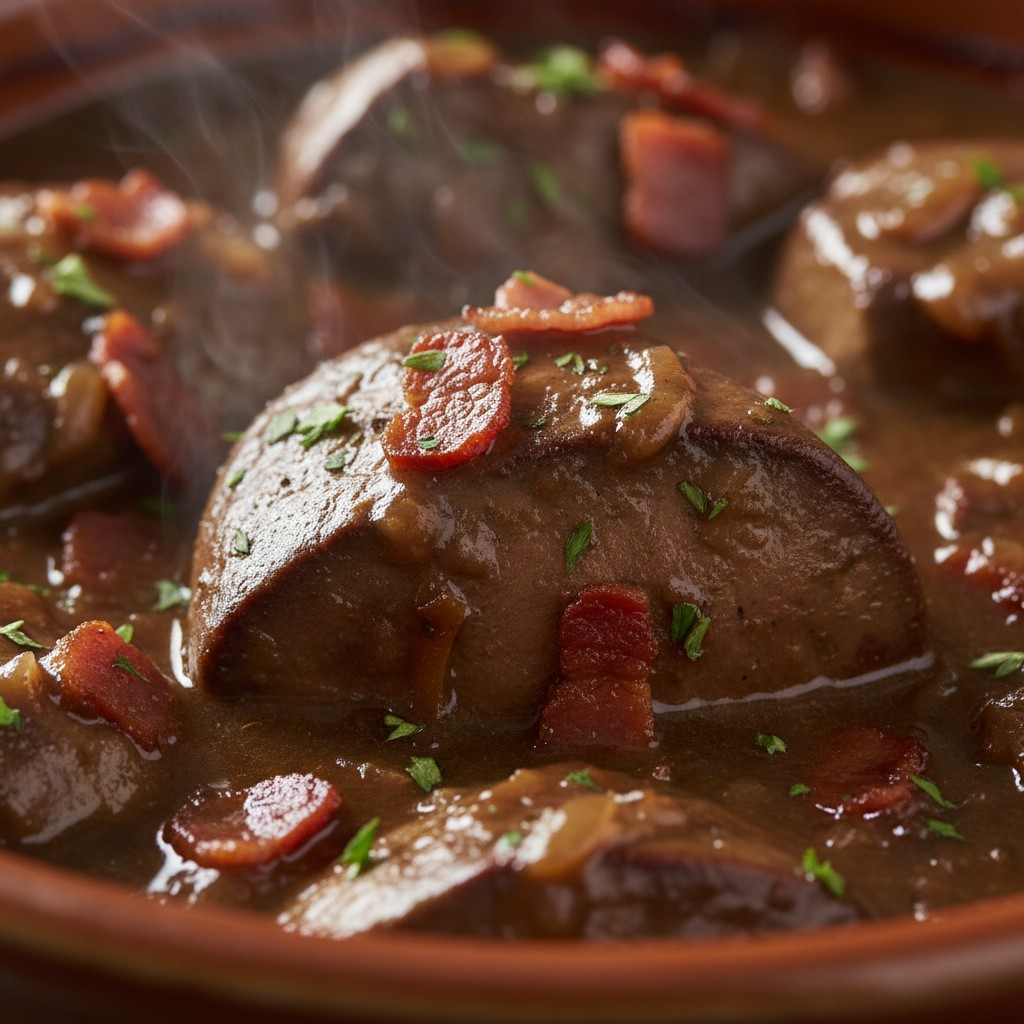
- After 45 minutes, check the seasoning and add salt and pepper to taste. Remove the bay leaf before serving. The gravy should be rich and the liver perfectly tender.
Delia's Notes from the Kitchen
The real secret here is in building the layers of flavour for the gravy. Don't rush the onions; allowing them to soften and turn a lovely golden brown is what creates the sweet foundation. When you add the flour, let it sizzle in the fat for a full minute to cook away any raw taste. And finally, when you add the stock, scrape all those caramelised bits from the bottom of the pan – that's where the deepest flavour lies.
How to Store & Reheat
Allow the casserole to cool completely before storing. It can be kept in an airtight container in the refrigerator for up to 2 days – the flavour often improves overnight. To reheat, place it in a saucepan over a low heat and stir gently until piping hot throughout. You may need to add a splash of water or stock if the gravy has thickened too much.
Frequently Asked Questions
Why did my liver turn out tough and rubbery?
Overcooking is almost always the culprit. Liver is a lean meat that cooks very quickly. That's why this recipe calls for a very brief sear just to brown the outside, followed by a gentle simmer. High heat or prolonged cooking will cause the proteins to seize up, resulting in a tough texture.
Do I need to soak the liver in milk first?
This is a traditional step that some people swear by to mellow the flavour of the liver. With good quality, fresh lamb's liver, I don't find it essential. However, if you are using a stronger-flavoured liver like ox or are simply wary of the taste, soaking it in milk for 30 minutes before patting dry can help.
Can I freeze this casserole?
Yes, it freezes beautifully. Once cooked, allow it to cool completely. Transfer it to a freezer-safe container, ensuring the liver is covered by the gravy. It can be frozen for up to 3 months. Thaw it thoroughly overnight in the refrigerator before reheating gently on the hob.
What's the best type of liver to use?
For this casserole, I prefer lamb's liver. It has a wonderful flavour that isn't overpowering and a tender texture when cooked correctly. Calf's liver is more delicate and considered a luxury, while pig's and ox liver are much stronger and better suited for those who already love a pronounced liver flavour.
My gravy is too thin. How can I fix it?
If your gravy isn't as thick as you'd like at the end of cooking, you can easily fix it. Mix one teaspoon of cornflour with two teaspoons of cold water to form a smooth paste (this is called a slurry). Stir this into the simmering casserole and cook for another minute or two until the gravy thickens.