My Failsafe Last-Minute Christmas Cake
For those who thought they'd missed the boat, this is your saviour. A wonderfully rich and moist Christmas cake that can be made just a week or two before the big day.
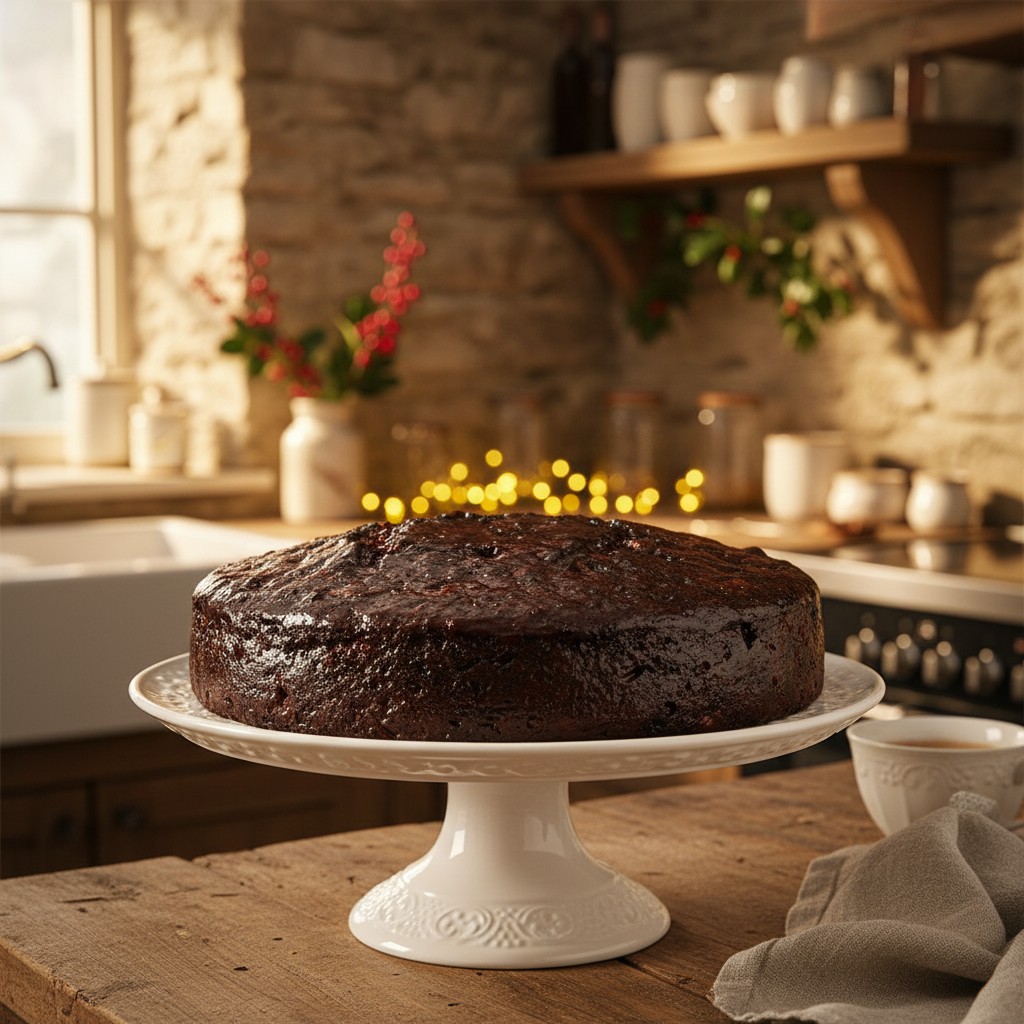
A Guide to the Perfect Delia Smith Last Minute Christmas Cake Recipe
This Delia Smith Last Minute Christmas Cake Recipe is my answer to the yearly panic that can set in around early December. So many people believe that if you haven't 'fed' a cake since Stir-up Sunday, you've simply missed your chance. Well, I am here to tell you that is absolutely not the case. This recipe is specifically designed for those of us who need a truly magnificent cake without the weeks of preparation.
The method we use here is what makes it all possible. It’s what’s known as a ‘boiled’ fruitcake, where the fruit is first simmered with the butter, sugar, and liquid. This single step works wonders, plumping up the fruit to juicy perfection and melting the sugar to create a dark, treacly syrup. It effectively mimics the effects of long maturation in a fraction of the time, guaranteeing a moist and flavourful cake from the moment it leaves the oven.
Rest assured, this is not a compromise. It is a thoroughly splendid cake in its own right – dark, sticky, packed with flavour, and with a beautifully dense, yet tender crumb. It’s a reliable, trustworthy recipe for a very busy time of year, and one that will have your family and guests believing you’ve been planning it for months. Now, let's get our aprons on and begin.
Why You'll Love This Recipe
- Simmering the fruit with the liquids plumps them instantly, creating a moistness that usually takes weeks of 'feeding'.
- Using dark muscovado sugar and black treacle provides instant depth, richness, and that classic dark colour without long maturation.
- A lower, slower bake, protected by a double-lined tin, ensures the dense fruitcake cooks through evenly without the edges burning.
- A final 'feed' of brandy while the cake is still warm allows the spirit to permeate the crumb, adding flavour and helping to preserve it.
Ingredients
- 225g (8oz) currants
- 175g (6oz) raisins
- 175g (6oz) sultanas
- 50g (2oz) glacé cherries, halved
- 50g (2oz) chopped mixed peel
- 175g (6oz) unsalted butter, cubed
- 175g (6oz) dark muscovado sugar
- 1 tbsp black treacle
- 150ml (5 fl oz) brandy or sherry, plus extra for feeding
- Zest of 1 orange
- Zest of 1 lemon
- 2 large eggs, at room temperature, lightly beaten
- 225g (8oz) plain flour
- 1/2 tsp salt
- 1 tsp mixed spice
- 1/2 tsp freshly grated nutmeg
- 50g (2oz) whole blanched almonds (optional)
Equipment Needed
20cm (8 inch) round, deep cake tin · Large, heavy-based saucepan · Baking parchment · Brown paper or newspaper and string · Fine skewer · Large mixing bowl · Wooden spoon · Sieve · Wire rack
Step-by-Step Instructions
- First, you must prepare the tin. This is not a step to be skipped. Grease a 20cm (8 inch) round, deep cake tin. Line the base and sides with a double layer of baking parchment, ensuring the parchment stands about 5cm (2 inches) above the rim of the tin. For extra protection, wrap the outside of the tin with a double layer of newspaper or brown paper and secure it with string.
- Pre-heat your oven to 150°C / 130°C Fan / Gas Mark 2.
- Place all the dried fruits, cherries, peel, butter, sugar, treacle, brandy (or sherry), and citrus zests into a large, heavy-based saucepan.
- Place the pan over a medium heat and bring the mixture slowly to a simmer, stirring occasionally as the butter melts. Let it bubble gently for 10 minutes. This plumps the fruit beautifully.
- Remove the pan from the heat and leave it to cool for 30 minutes. The mixture must be cool, not hot, before you add the eggs, or they will scramble.
- While the fruit is cooling, sift the flour, salt, and spices into a large bowl.
- After 30 minutes, check the fruit mixture is lukewarm. Gradually add the beaten eggs, stirring them in well with a wooden spoon.
- Now, fold the sifted dry ingredients into the fruit mixture, a third at a time, until everything is well combined. If you're using the almonds, stir them in now.
- Spoon the mixture into your prepared tin and level the surface with the back of a spoon, making a slight dip in the centre to prevent it from doming too much.
- Bake on the lowest shelf of the pre-heated oven for 1 hour and 45 minutes to 2 hours. After 1 hour 45 minutes, test the cake by inserting a fine skewer into the centre. If it comes out clean, the cake is cooked. If not, give it another 10-15 minutes and test again.
- Leave the cake to cool completely in the tin, resting on a wire rack. Once cool, you can 'feed' it by poking holes in the top with a skewer and spooning over 1-2 tablespoons of extra brandy. Do not remove it from the tin until it is completely cold.
- Once cold, remove the cake from the tin, peel off the baking parchment, and wrap for storage.
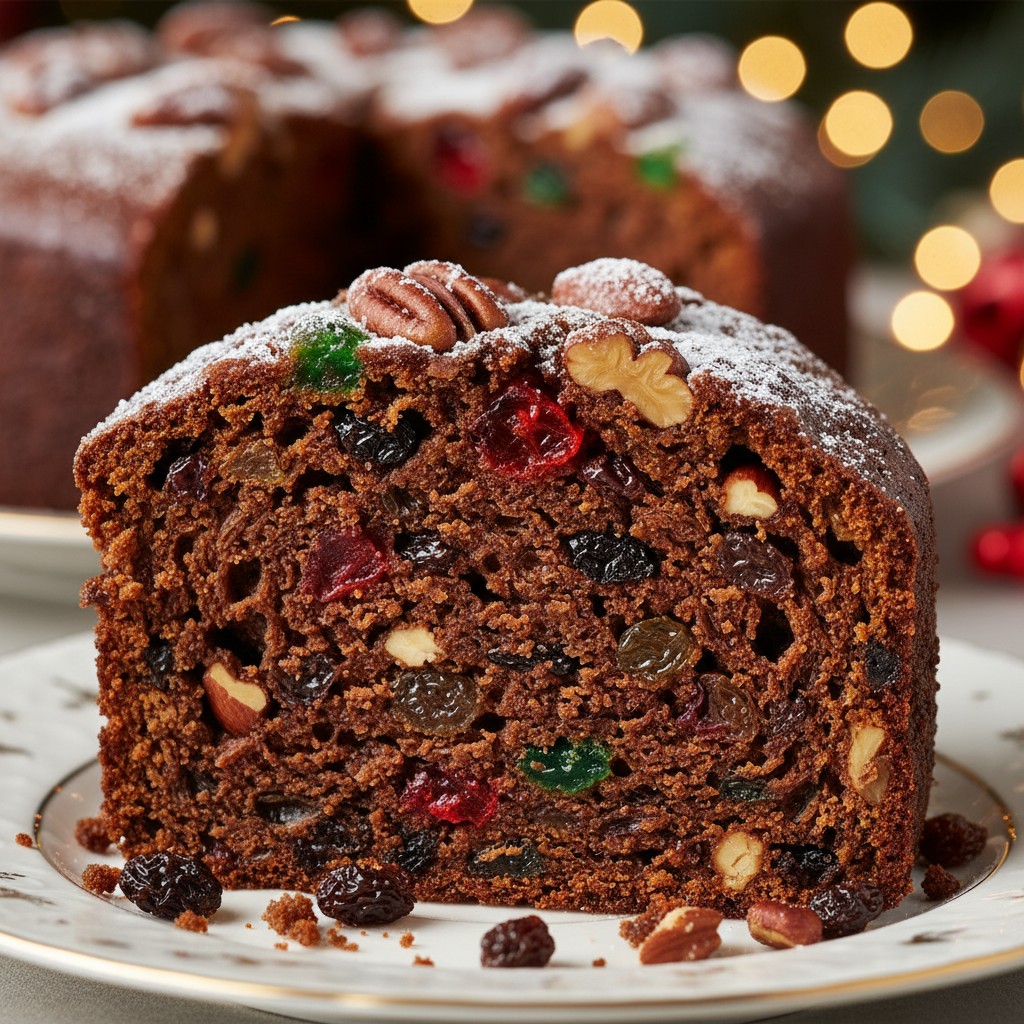
Delia's Notes from the Kitchen
The secret to this cake's success is the initial simmering of the fruit. This one step does the work of weeks of maturing, plumping the fruit and creating a wonderfully moist, syrupy base. Don't be tempted to rush the cooling stage before adding the eggs; it's crucial for the cake's structure. And please, do take the time to prepare the tin properly – it's your insurance policy against a burnt exterior. A little patience at the start guarantees a perfect result.
How to Store & Reheat
To store, wrap the completely cooled cake first in a double layer of clean baking parchment, then tightly in a layer of foil. Place it in an airtight container and store in a cool, dark cupboard. It will keep beautifully for up to a month, with the flavours continuing to develop. This cake is always served at room temperature; there is no need for reheating.
Frequently Asked Questions
Do I really need to double-line and wrap the tin?
Yes, absolutely. A rich fruitcake has a long, slow cooking time, and this protective barrier is your insurance against the outside and bottom of the cake becoming dry or burnt before the centre is cooked through. It is a crucial step.
Can I use different dried fruits?
Certainly. The key is to keep the total weight of the fruit the same. You could add dried figs or cranberries, for instance, but be mindful that this will alter the flavour profile slightly. The classic combination given is a tried and tested one.
My fruit sank to the bottom. What went wrong?
This usually happens for one of two reasons. Either the fruit mixture was too warm when you added the eggs and flour, making the batter too loose, or the mixture was not folded together thoroughly enough. Ensure the mixture has cooled for the full 30 minutes.
Can I make this cake alcohol-free?
Yes, you can substitute the brandy or sherry with the same quantity of fresh orange juice. The cake will be slightly less rich and won't keep for quite as long, but it will still be perfectly delicious.
How soon can I decorate it?
You can cover the cake with marzipan and icing as soon as it is completely cool, even the next day. However, allowing it to mature for at least 3-4 days wrapped in foil will allow the flavours to settle and deepen before you seal it.