Classic British Kedgeree
A truly definitive recipe for the classic British breakfast and brunch dish. Learn the secrets to perfectly flaked smoked haddock, fluffy rice, and a gentle, warming spice.
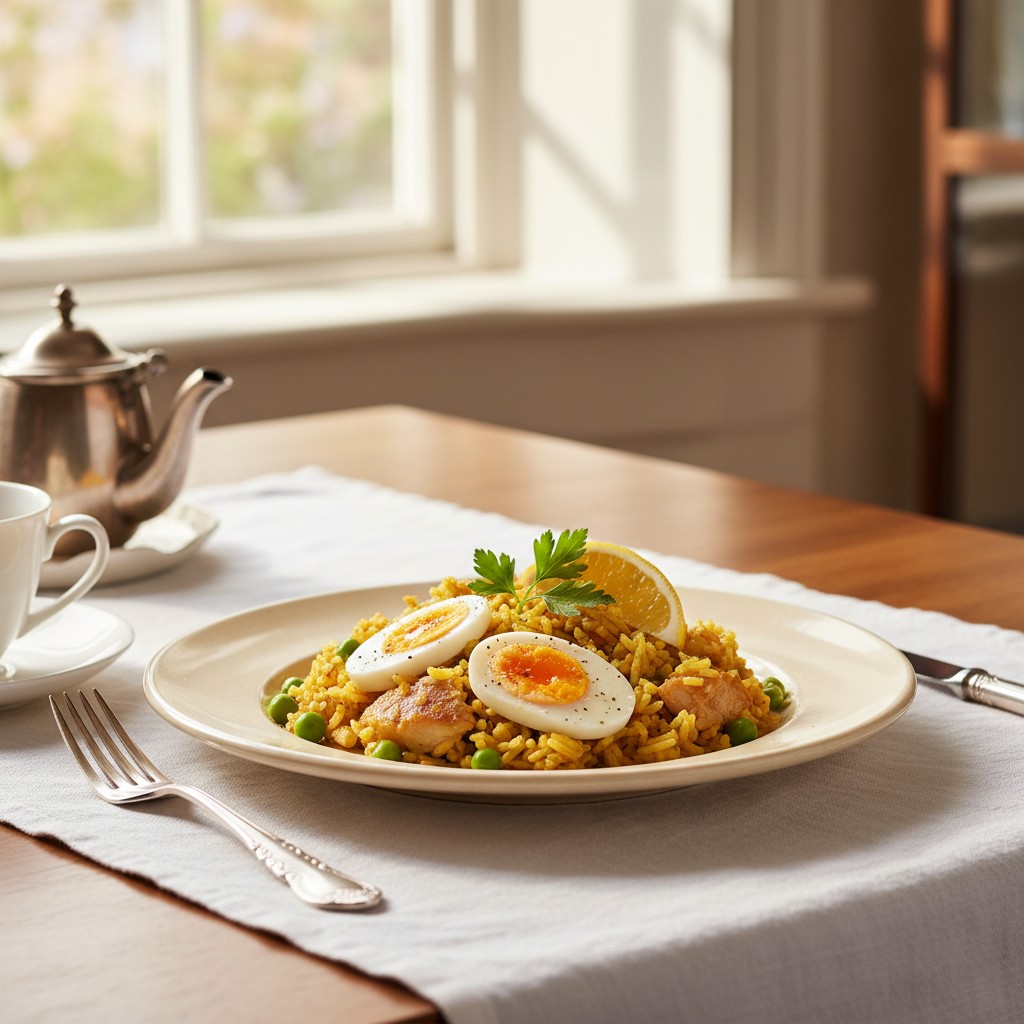
The Definitive Guide to a Truly Perfect Delia Smith Kedgeree Recipe
There are few dishes quite as comforting as this classic Delia Smith Kedgeree Recipe. It is a true British institution, a glorious remnant of our Anglo-Indian past that has rightfully earned its place on the breakfast and brunch table. What began as 'khichari', a simple dish of rice and lentils, was adapted by the Victorians in India, who introduced the smoked fish and boiled eggs, transforming it into the magnificent dish we cherish today.
Getting Kedgeree right is all about balance. It should not be a fiery curry, but rather a gentle, warming, and buttery dish where each component is allowed to shine. The smokiness of the haddock, the fluffiness of the rice, the richness of the eggs, and the freshness of the parsley must all be in harmony. It requires a little care, but absolutely no special genius is needed to get it right.
This recipe will guide you through each stage with precision. We will poach the fish to perfection, cook the rice so that every grain is separate, and bring it all together in a way that preserves the wonderful texture of the flaked haddock. It is, quite simply, Kedgeree as it is meant to be.
Why You'll Love This Recipe
- Poaching the haddock in milk not only cooks it gently but also creates a beautifully flavoured base for the sauce, ensuring no flavour is lost.
- Using long-grain basmati rice and cooking it by the absorption method guarantees light, fluffy, and separate grains – the essential foundation of a good Kedgeree.
- Gently folding, rather than stirring, the ingredients together with a large metal spoon is crucial for keeping the large flakes of haddock intact.
- Finishing with a generous knob of butter and fresh parsley adds richness and a vibrant freshness that cuts through the creamy sauce.
Ingredients
- 450g undyed smoked haddock fillet
- 300ml full-fat milk
- 1 small bay leaf
- 50g butter
- 1 medium onion, finely chopped
- 1-2 tsp medium curry powder (to your taste)
- 225g basmati rice, rinsed
- 4 large eggs
- 2 tbsp double cream (optional)
- 3 tbsp chopped fresh flat-leaf parsley
- 1 lemon, cut into wedges, to serve
- Salt and freshly milled black pepper
Equipment Needed
Wide, shallow pan with a lid · Large, heavy-based saucepan with a tight-fitting lid · Small saucepan for eggs · Sieve · Measuring jug · Large metal spoon · Fork
Step-by-Step Instructions
- First, prepare the eggs. Place them in a small saucepan of cold water, bring to the boil and simmer for exactly 7 minutes for a slightly soft yolk, or 10 minutes for hard-boiled. Drain and refresh under cold running water until cool enough to handle, then peel and set aside.
- Next, poach the fish. Place the haddock fillet in a wide, shallow pan and pour over the milk. Add the bay leaf. Bring it gently up to a simmer, then immediately reduce the heat to its lowest setting, cover with a lid, and let it poach very gently for 8-10 minutes, or until the fish is opaque and beginning to flake. Do not allow it to boil.
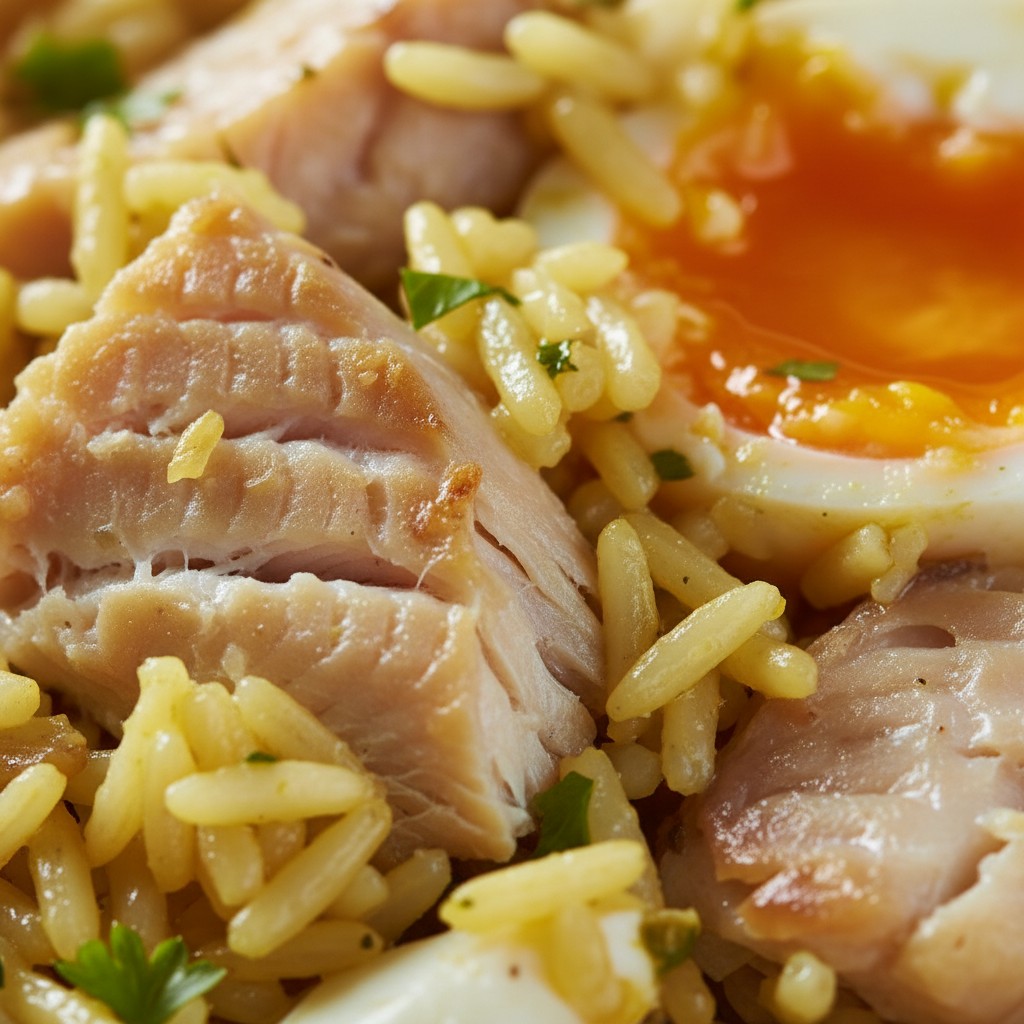
- Using a fish slice, carefully lift the haddock out onto a plate. Strain the poaching milk through a sieve into a jug and reserve it. When the fish is cool enough to handle, remove the skin and flake the flesh into large, chunky pieces, discarding any bones.
- Now for the rice. In a large, heavy-based saucepan with a tight-fitting lid, melt half the butter (25g) over a medium-low heat. Add the finely chopped onion and cook gently for about 5 minutes until softened but not browned.
- Stir in the curry powder and cook for another minute until it smells fragrant. Add the rinsed basmati rice to the pan and stir for a minute to coat the grains in the buttery spices.
- Pour in 450ml of the reserved poaching milk (if you don't have enough, top it up with water or more milk). Season with a little salt and plenty of black pepper. Bring to the boil, then give it one final stir, clamp the lid on, and turn the heat down to the absolute minimum. Leave it to cook undisturbed for 15 minutes.
- After 15 minutes, turn off the heat and leave the pan to stand, still with the lid on, for a further 5 minutes. This allows the steam to finish cooking the rice perfectly.
- Finally, assemble the Kedgeree. Remove the lid from the rice and fluff the grains with a fork. Add the remaining 25g of butter, the flaked haddock, the chopped parsley, and the double cream, if using. Quarter your boiled eggs and add three-quarters of them to the pan.
- Using a large metal spoon, gently fold everything together. Be careful not to stir vigorously, as this will break up the fish. You want to keep those lovely large flakes. Have a taste and adjust the seasoning if needed.
- Serve immediately, piled onto warm plates, with the remaining egg quarters arranged on top and a wedge of lemon on the side for squeezing over.
Delia's Notes from the Kitchen
The real secret to a first-class Kedgeree lies in the quality of your ingredients and the gentleness of your technique. Do seek out a good fishmonger for your smoked haddock. The difference is palpable. When it comes to folding the final dish, think of a figure-of-eight motion with your spoon, lifting from the bottom of the pan and turning it over. This keeps everything light and stops the rice from becoming compacted and the fish from disintegrating. It’s a small detail, but it makes all the difference.
How to Store & Reheat
Kedgeree is best eaten freshly made. If you must store it, allow it to cool completely, then place it in an airtight container in the refrigerator for up to one day. To reheat, place it in a saucepan with a splash of milk or water over a low heat, stirring gently until piping hot. Be aware that the texture of the fish and rice will not be as good as when fresh.
Frequently Asked Questions
Can I use dyed smoked haddock?
You can, but I strongly advise against it. The yellow dye is purely cosmetic and adds an artificial colour to the dish. Undyed, traditionally smoked haddock has a far superior flavour and texture.
Why did my rice become mushy?
This usually happens for two reasons: either the rice was stirred during cooking, or the heat was too high. It's vital to bring it to a boil, give it one last stir, then reduce the heat to the bare minimum and leave it completely undisturbed with the lid on.
Can I make Kedgeree ahead of time?
While it's best fresh, you can perform some preparation in advance. The eggs can be boiled and peeled, and the fish can be poached and flaked. Store them separately in the fridge, then you can assemble the dish relatively quickly when ready to serve.
Is Kedgeree supposed to be very spicy?
No, not at all. Traditional Kedgeree is about a gentle, warming background spice, not fiery heat. The curry powder should complement the smoked fish, not overpower it. I suggest starting with 1 teaspoon and adding more only if you're sure you want a stronger flavour.
Can I use brown rice instead?
You could, but it would change the character of the dish significantly. Brown rice requires a great deal more water and a much longer cooking time, and its nutty flavour and firmer texture are quite different from the light, fluffy basmati traditionally used.