A Proper Hungarian Goulash
There is something deeply comforting about a slow-cooked stew, and this Hungarian Goulash is the king of them all. Let me show you how to develop those deep, rich flavours for a truly memorable meal.
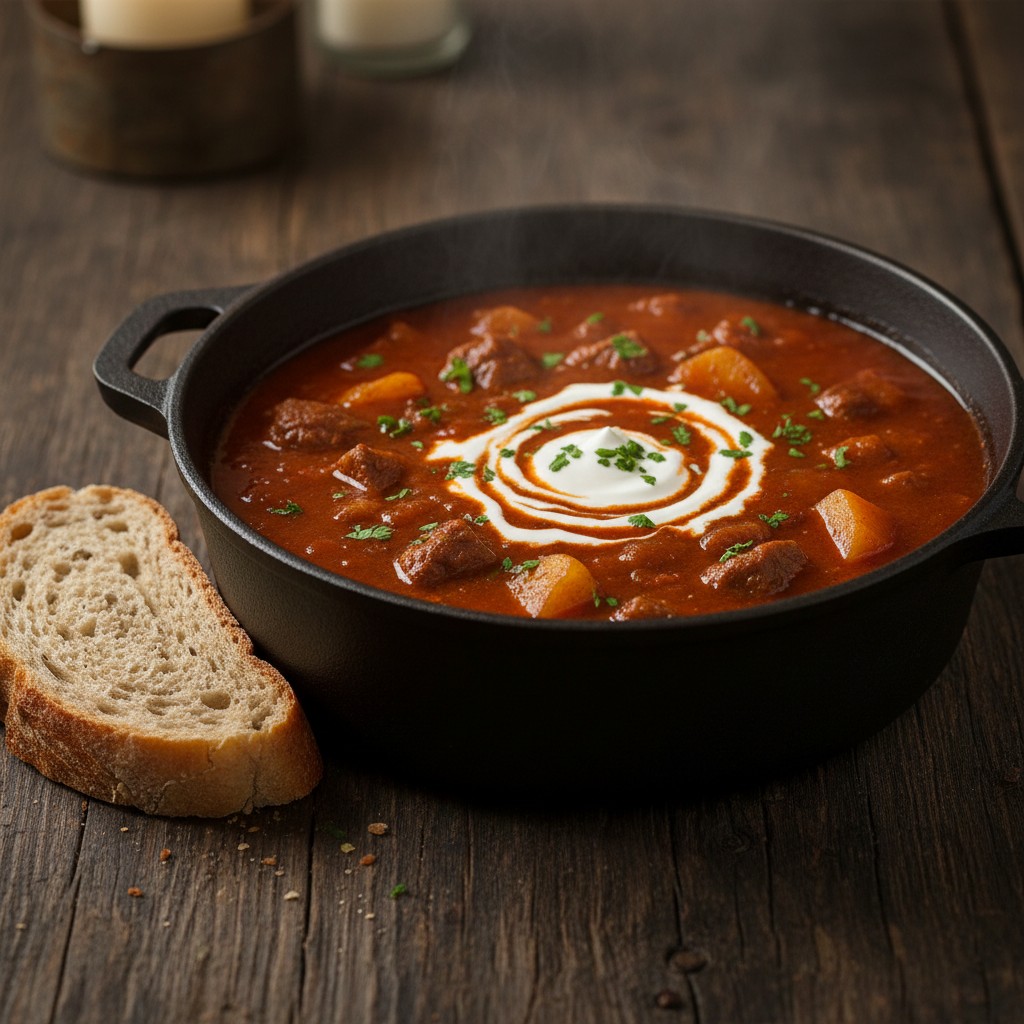
More than just a simple beef stew, a true Hungarian Goulash is a journey into the heart of Central European cooking. It began as a humble, rustic dish cooked in a cauldron over an open fire by Magyar herdsmen, or 'gulyás'. Over centuries, it has evolved into a national symbol, a dish of both immense comfort and surprising complexity, all centred around one key ingredient: paprika.
Now, we must talk about paprika. It is not merely a colouring agent here; it is the very soul of the dish. To make a proper goulash, you must seek out good-quality Hungarian sweet paprika. It has a depth, sweetness, and vibrant colour that generic paprika simply cannot match. We will treat it with the respect it deserves, allowing it to bloom gently in the warmth of the pan to release its full, glorious flavour without a hint of bitterness.
Don't be intimidated by its famous name. At its core, this is a straightforward, forgiving stew that relies on the magic of slow cooking. It asks for a little patience, but the reward is a pan full of meltingly tender beef in a rich, deeply savoury and aromatic sauce that is nothing short of spectacular. This is the sort of cooking that fills the house with the most wonderful aromas, a promise of the magnificent meal to come.
Why You'll Love This Recipe
- Slow cooking transforms tougher, flavourful cuts of beef into meltingly tender morsels, a process that simply cannot be rushed.
- Cooking the onions until deeply softened and sweet creates the essential flavour base upon which the entire dish is built.
- Using high-quality Hungarian paprika is non-negotiable; its flavour is the very soul of the goulash, providing colour, sweetness, and depth.
- Browning the meat in batches creates the Maillard reaction, developing a deep, savoury crust that translates into a richer, more complex sauce.
Ingredients
- 900g (2 lb) braising steak or beef chuck, cut into 1.5-inch cubes
- 2 tbsp plain flour
- 1 tsp salt
- ½ tsp freshly ground black pepper
- 3 tbsp vegetable oil or beef dripping
- 2 large onions, peeled and finely chopped
- 2 cloves garlic, peeled and crushed
- 3 tbsp Hungarian sweet paprika
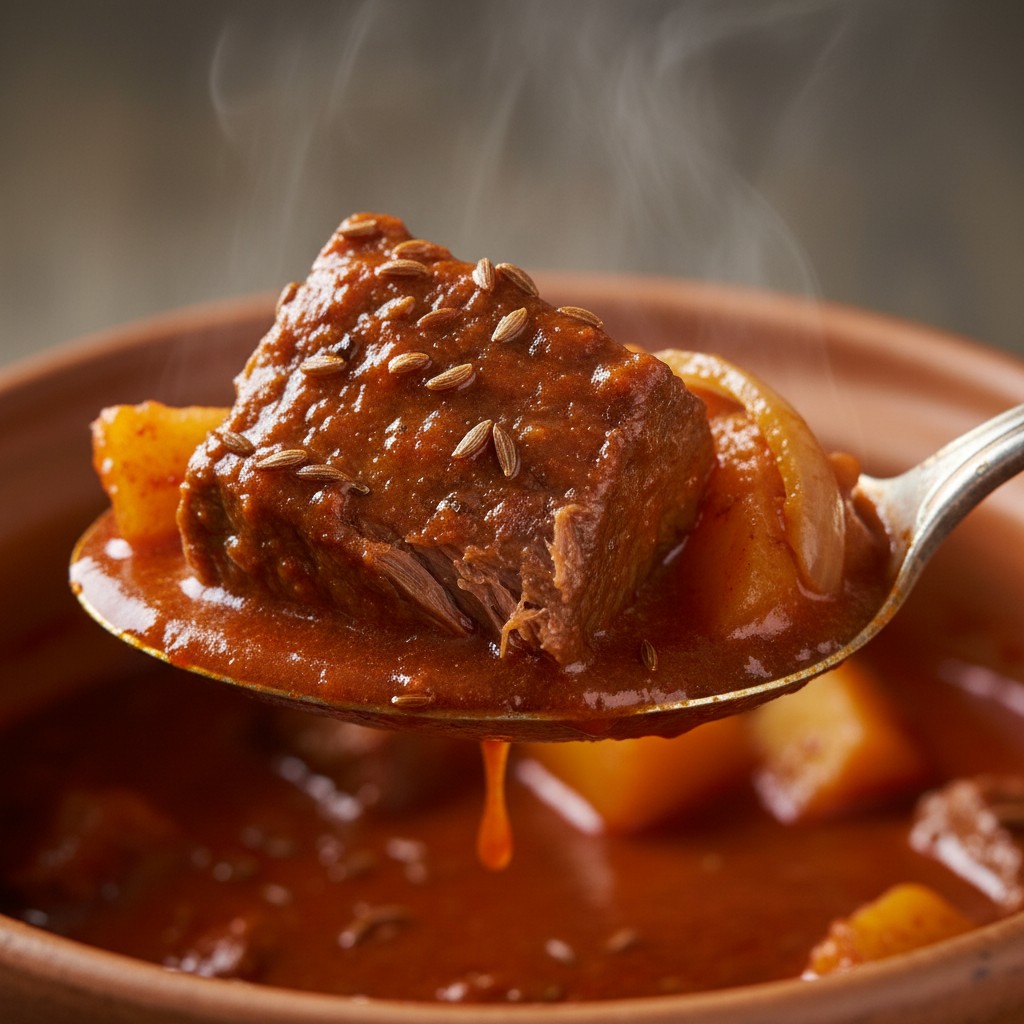
- 1 tsp caraway seeds, lightly crushed
- 1 x 400g tin chopped tomatoes
- 2 tbsp tomato purée
- 900ml (1½ pints) good-quality beef stock
- 1 bay leaf
- 2 red or yellow bell peppers, deseeded and cut into chunks
- Sour cream and chopped fresh parsley, to serve
Equipment Needed
A large, heavy-based flameproof casserole dish or Dutch oven (around 5-litre capacity) with a tight-fitting lid · Large mixing bowl · Sharp knife · Chopping board · Wooden spoon or spatula
Step-by-Step Instructions
- First, pre-heat your oven to 160°C (140°C fan), Gas Mark 3. Then, prepare the beef. In a large bowl, mix the flour with the salt and pepper. Add the beef cubes and toss them well until they are all lightly coated.
- Next, heat 2 tablespoons of the oil or dripping in a large, heavy-based flameproof casserole dish over a medium-high heat. Brown the beef in two or three batches, being careful not to overcrowd the pan. As each batch is browned, remove it to a plate and set aside. This browning stage is crucial for flavour.
- Reduce the heat to low-medium, add the remaining tablespoon of oil if needed, and add the chopped onions to the casserole. Cook them very gently for about 15 minutes, stirring occasionally, until they are soft, golden, and sweet. Do not rush this part. Then, add the crushed garlic and cook for another minute until fragrant.
- Now, a critical step: remove the pan from the heat. This is to prevent the paprika from burning. Add the paprika and the crushed caraway seeds, and stir for a minute to coat the onions. The residual heat will be enough to release their aromas.
- Return the pan to a medium heat. Stir in the tomato purée and cook for a minute, then pour in the tinned tomatoes and the beef stock. Bring it all to a simmer, stirring to scrape any caramelised bits from the bottom of the pan – that's pure flavour.
- Return the browned beef and any collected juices to the casserole, and add the bay leaf. Give it all a good stir. Once it reaches a gentle simmer, place a tight-fitting lid on top and transfer the casserole to the pre-heated oven. Leave it to cook for 1 hour and 30 minutes.
- After this time, remove the casserole from the oven. Stir in the chunks of bell pepper. Replace the lid and return it to the oven for a further 45 minutes to 1 hour, or until the beef is completely tender and the sauce has thickened and is a deep, rich red.
- Finally, remove the bay leaf. Taste and adjust the seasoning with more salt and pepper if you feel it needs it. Let it stand for 10 minutes before serving. Serve in warm bowls with a generous dollop of sour cream and a scattering of fresh parsley.
Delia's Notes from the Kitchen
The secret to a truly authentic Goulash lies in two things: patience and paprika. Do not be tempted to rush the slow cooking process; it is this gentle heat over time that breaks down the beef into tender submission. And please, seek out proper Hungarian sweet paprika. It is the heart and soul of the dish, providing a deep, rounded sweetness that a generic supermarket version simply cannot replicate. Treat it with respect – adding it off the heat prevents it from scorching and turning bitter, a common pitfall that can ruin the entire dish.
How to Store & Reheat
Like many stews, Goulash often tastes even better the next day. Allow the dish to cool completely before transferring to an airtight container. It will keep in the refrigerator for up to 3 days. To reheat, place it in a saucepan over a gentle heat, stirring occasionally until piping hot throughout. You may need to add a splash of water or stock to loosen the sauce as it will have thickened.
Frequently Asked Questions
My goulash tastes bitter. What went wrong?
This is almost always because the paprika has been scorched. Paprika has a high sugar content and burns very quickly over direct heat, which turns it bitter. It is absolutely vital to add it to the pan off the heat, allowing the residual warmth to bloom the spice without burning it.
What is the best cut of beef for goulash?
You need a cut that benefits from long, slow cooking. Braising steak, chuck steak, or beef shin are all ideal. These cuts have a good amount of fat and connective tissue (collagen) which breaks down during the long cooking time to make the meat incredibly tender and the sauce rich and unctuous.
Can I cook this on the hob instead of in the oven?
Yes, you can. After bringing it to a simmer, turn the heat down to the lowest possible setting, cover with the lid, and let it bubble very, very gently. You will need to stir it more frequently (perhaps every 20-30 minutes) to prevent it from catching on the bottom of the pan.
Can I freeze Hungarian Goulash?
Absolutely. It freezes beautifully. Allow it to cool completely, then portion it into freezer-safe containers or bags. It can be frozen for up to 3 months. To serve, thaw it overnight in the refrigerator and reheat gently on the hob until piping hot.
Why shouldn't I overcrowd the pan when browning the beef?
If you put too much meat in the pan at once, the temperature of the pan drops and the meat will steam rather than sear. You won't get that lovely brown crust, which is where a huge amount of the dish's flavour comes from. Browning in batches ensures the pan stays hot enough to do its job properly.