How to Make Perfect Crab Apple Jelly
Discover the joy of turning a glut of crab apples into a shimmering, ruby-red jelly. My method is simple, reliable, and produces the most exquisite results for your larder.
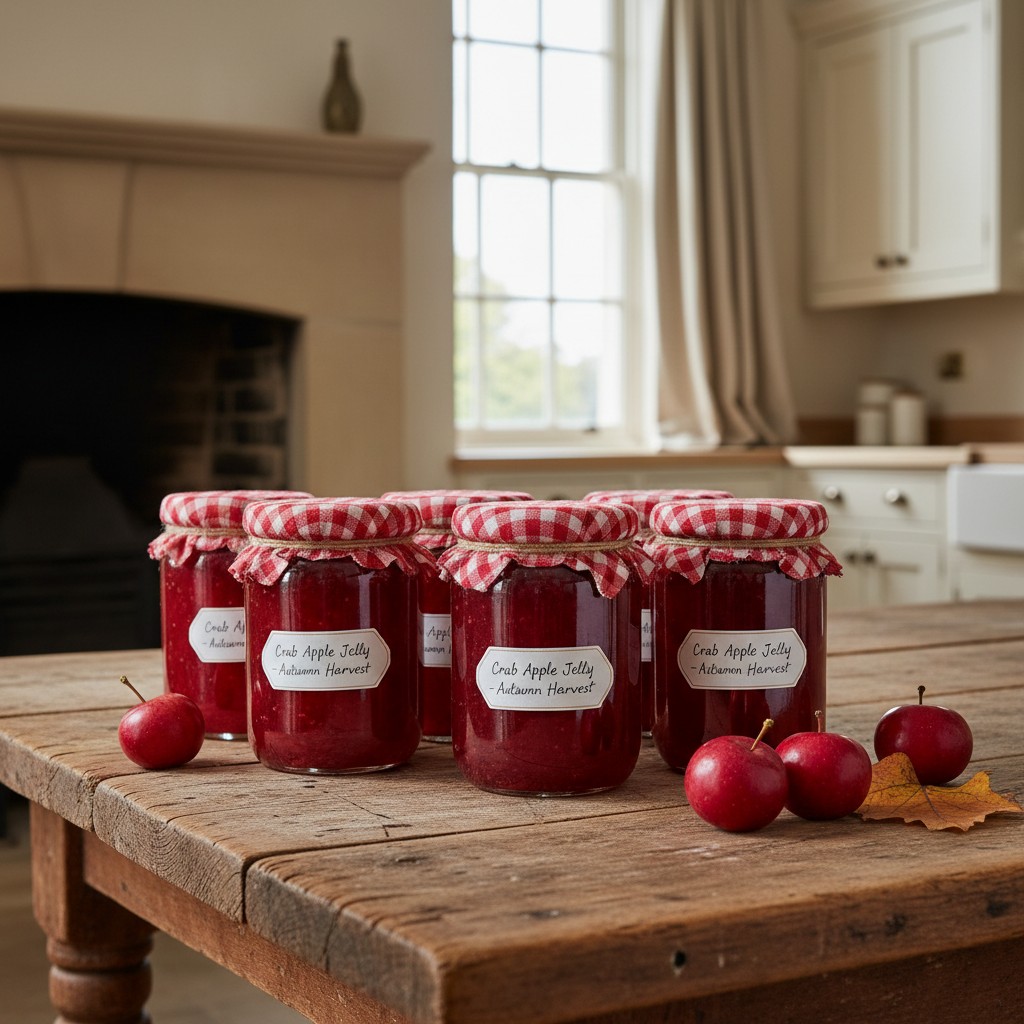
A Step-by-Step Guide to the Classic Delia Smith Crab Apple Jelly Recipe
There is a particular satisfaction in creating this Delia Smith Crab Apple Jelly Recipe. It feels like capturing the very essence of autumn in a jar. Crab apples, those small, often overlooked jewels of the hedgerow, are quite magical. They possess an incredibly high level of natural pectin, which is the secret ingredient for achieving a perfect, shimmering set without any fuss or commercial additives. This recipe isn't just about making a condiment; it's about connecting with a time-honoured tradition of preserving the season's bounty.
Many people are daunted by the prospect of jelly making, fearing a sticky mess or a failed set. But I want to reassure you that with a little care and attention to the method, it is one of the most rewarding kitchen tasks. The process is methodical: simmering the fruit to release its juice and pectin, patiently allowing it to drip through a jelly bag to ensure absolute clarity, and then boiling it with sugar until it reaches that magical setting point.
The result is a beautiful, translucent jelly with a glorious rosy hue and a unique, tart-sweet flavour that is simply without parallel. It is wonderful served with roast meats, particularly lamb and pork, or simply spread on hot, buttered toast. It is, in my view, an essential item for any well-stocked larder.
Why You'll Love This Recipe
- Crab apples are naturally rich in pectin, the gelling agent that ensures a firm, reliable set without needing commercial pectin.
- The two-stage cooking process—a gentle simmer followed by a rapid boil—extracts the maximum pectin and flavour before achieving a quick set, preserving the jelly's fresh taste and colour.
- Straining the juice without squeezing is the crucial step for achieving a crystal-clear, jewel-like jelly, which is the hallmark of a truly well-made preserve.
Ingredients
- 1.5kg (3 lb 5 oz) crab apples, any variety
- Water to cover
- Granulated sugar (approx. 450g per 600ml of juice)
Equipment Needed
Large preserving pan or heavy-based stockpot · Jelly bag and stand, or a large square of muslin and a colander · Large, clean bowl · Wooden spoon · Ladle · Measuring jug · Kitchen scales · Small saucers, chilled in the freezer · Sterilised glass jars with vinegar-proof lids · Jam funnel (optional but very helpful)
Step-by-Step Instructions
- First, prepare the apples. Wash them thoroughly under cold running water, removing any leaves or twigs. There is no need to peel or core them, as the pectin is concentrated in the cores and skins. Simply chop them roughly.
- Place the chopped apples in a large, heavy-based preserving pan and add just enough cold water to cover them. The water level should be just visible amongst the top layer of apples.
- Bring the pan to a simmer over a medium heat, then reduce the heat, cover, and let the apples cook gently for about 1 hour, or until they are completely soft and pulpy. Give them an occasional stir to prevent them from catching on the base of the pan.
- Now, set up your straining station. Scald a jelly bag or a large square of muslin with boiling water, then suspend it over a large, clean bowl. Carefully ladle the cooked apple pulp into the bag.
- Leave the pulp to drip overnight, or for at least 4 hours. It is absolutely vital that you resist the temptation to squeeze the bag, as this will make your jelly cloudy. Patience here is the key to clarity.
- The next day, discard the pulp in the jelly bag. Measure the collected juice and pour it into your cleaned preserving pan. For every 600ml (1 pint) of juice, you will need 450g (1 lb) of granulated sugar.
- Add the correct amount of sugar to the pan and place it over a low heat, stirring continuously until every last crystal of sugar has completely dissolved. You can check this by lifting the spoon and looking closely for any grains.
- Once the sugar is dissolved, increase the heat to high and bring the liquid to a 'rolling boil' – that's a boil that bubbles vigorously and cannot be stirred down. Boil rapidly for 8-10 minutes.
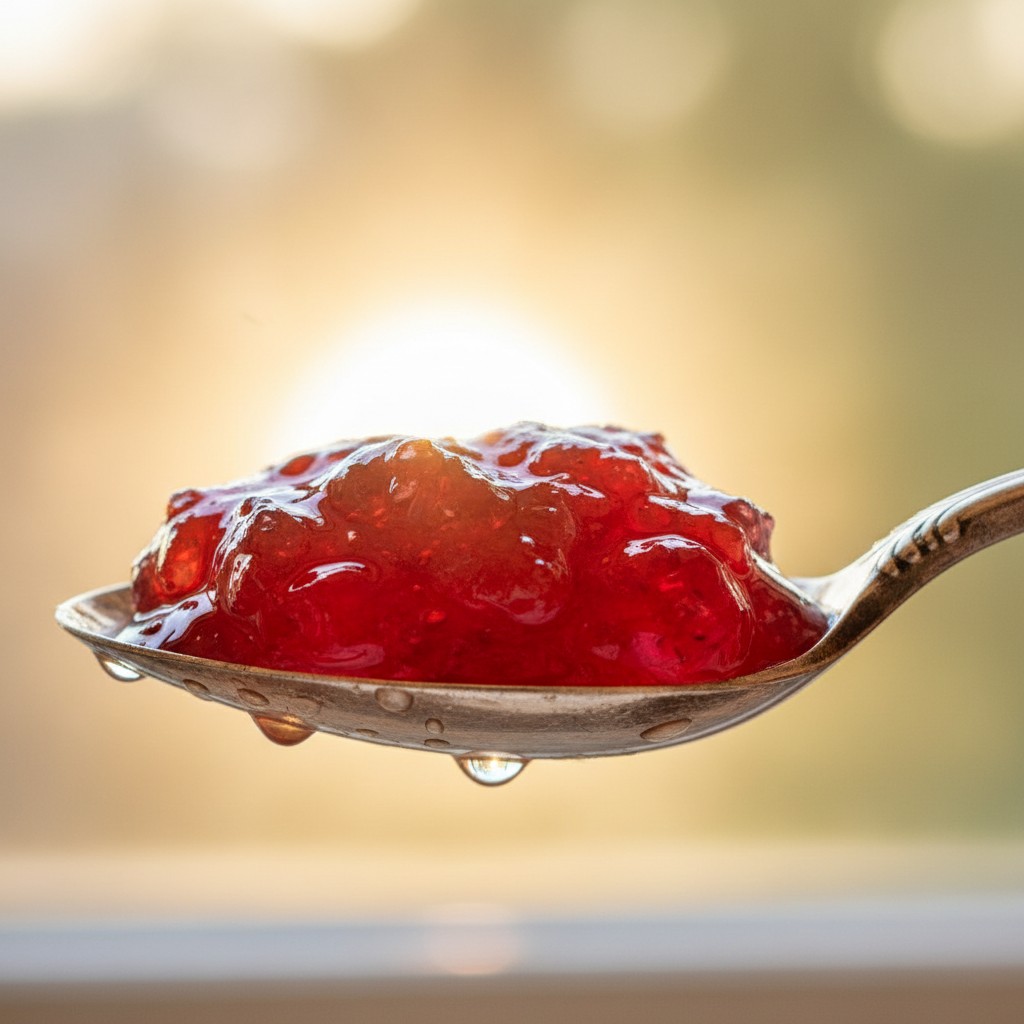
- Now, test for a set. Remove the pan from the heat. Spoon a small amount of the jelly onto a cold saucer (one you've had in the freezer is ideal). Let it cool for a minute, then push it with your finger. If it wrinkles and holds its shape, the setting point has been reached. If not, boil for another 2 minutes and test again.
- Once the setting point is reached, use a slotted spoon to skim off any scum from the surface. Let the jelly stand in the pan for 10-15 minutes to cool slightly; this ensures any fruit particles are evenly distributed.
- Carefully pour the hot jelly into warm, sterilised jars, filling them almost to the brim. Seal immediately with sterilised, vinegar-proof lids. Label the jars once they are completely cold.
Delia's Notes from the Kitchen
The moment you test for a set and see that little wrinkle form on the cold saucer is pure kitchen alchemy. Don't rush the process. Jelly making is a lesson in patience, from the slow drip of the juice to waiting for the sugar to dissolve completely. Follow the steps, trust the method, and you will be rewarded with jars of glistening treasure that will see you through the winter.
How to Store & Reheat
Store the sealed jars in a cool, dark, dry place, such as a larder or cupboard. The jelly will keep for at least a year. Once opened, store the jar in the refrigerator and consume within 6 weeks. Do not reheat.
Frequently Asked Questions
Why is my crab apple jelly cloudy?
Cloudiness is almost always caused by squeezing the jelly bag during the straining process. It forces small particles of fruit pulp through the muslin. Patience during the dripping stage is the only way to guarantee a crystal-clear result.
My jelly hasn't set. Can I fix it?
Yes, it can usually be rescued. Pour the unset jelly back into the pan, bring it back to a rolling boil, and boil for another 3-5 minutes before testing for a set again. A lack of set is due to either not boiling it for long enough or an incorrect ratio of sugar to juice.
How do I properly sterilise my jars?
The simplest method is to wash the jars and lids in hot, soapy water, rinse them well, and then place them on a baking tray in a preheated oven at 140°C (120°C Fan, Gas Mark 1) for at least 15 minutes. It's best to pot the jelly while the jars are still warm.
Can I use windfall crab apples?
Absolutely. Windfalls are perfect for this recipe. Just be sure to cut away any bruised or spoiled parts before you begin cooking.
Do I need to use a preserving pan?
A proper preserving pan with its wide top is best as it helps the liquid evaporate quickly, but it's not essential. You can use any large, heavy-based saucepan or stockpot, but ensure it is no more than half-full to prevent the boiling jelly from bubbling over.