The Definitive Cottage Pie
A true British classic, this recipe provides everything you need for a deeply savoury mince filling and a perfectly fluffy potato topping. It's comfort food at its most reliable and delicious.
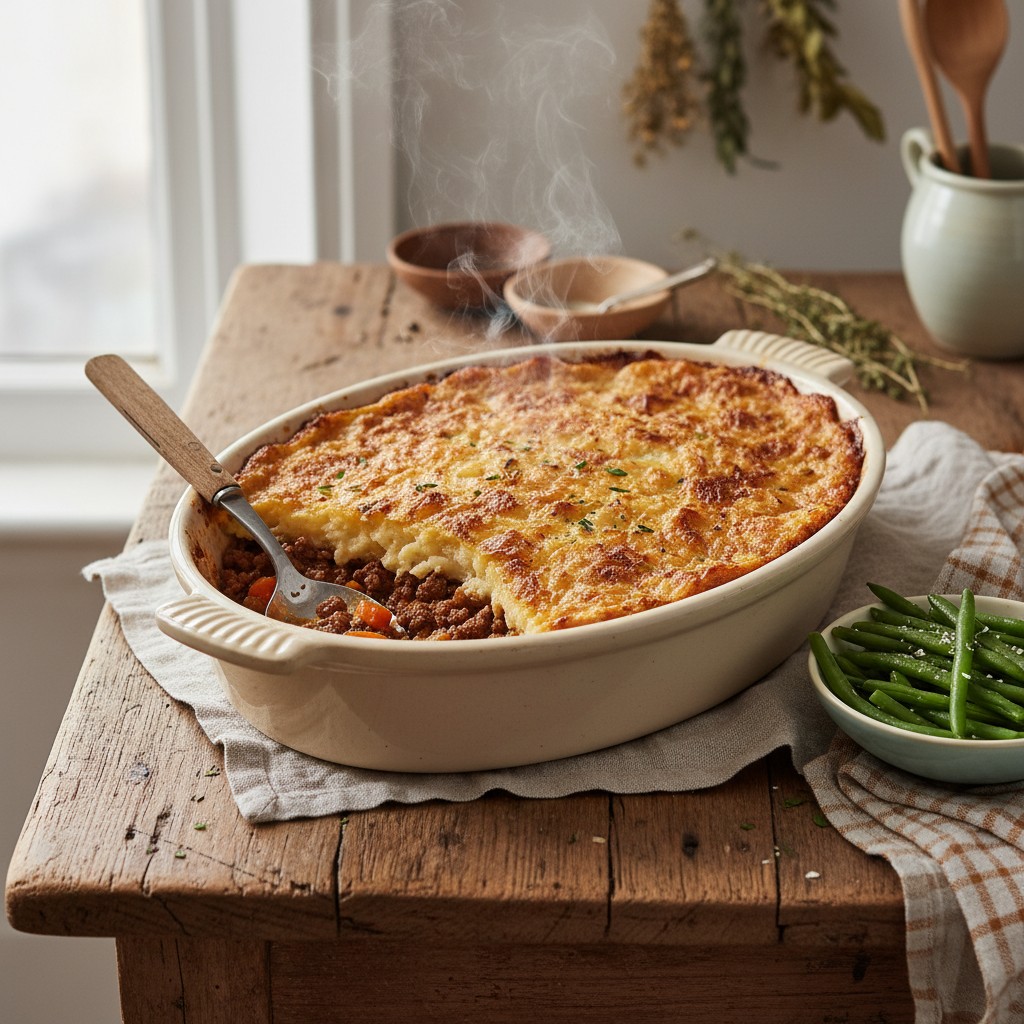
How to Achieve Perfection with My Classic Delia Smith Cottage Pie Recipe
There are few dishes as comforting and quintessentially British as this Delia Smith Cottage Pie Recipe. It's a cornerstone of home cooking, a dish that has warmed families for generations. The magic lies in its simplicity: a rich, deeply savoury minced beef filling, slow-simmered to develop flavour, all tucked beneath a comforting blanket of fluffy, buttery mashed potato that's baked until golden and just a little crisp at the edges.
However, simplicity should never be mistaken for a lack of technique. A truly great Cottage Pie doesn't just happen; it's assembled with care. It's about browning the meat properly to build a foundation of flavour, creating a gravy that is glossy and robust rather than watery, and ensuring the potato topping is light and creamy, not heavy or gluey.
This recipe is my definitive method, honed over many years to be as reliable and foolproof as possible. Follow it closely, and you will have a Cottage Pie on the table that is not just food, but a proper, heartwarming meal that speaks of home. It is, in my opinion, one of the most important recipes any home cook can master.
Why You'll Love This Recipe
- Browning the mince in batches is crucial. This sears the meat, creating a deep, savoury flavour base (the Maillard reaction) and prevents the mince from boiling and turning grey.
- Creating a proper gravy base with flour, tomato purée, and good-quality stock ensures the filling is rich and glossy, not thin or watery.
- Using floury potatoes like Maris Piper or King Edward and steaming them dry after boiling removes excess water, resulting in a perfectly fluffy, not gluey, mash.
Ingredients
- For the Filling:
- 1 tbsp olive oil
- 900g good-quality lean minced beef
- 2 medium onions, finely chopped
- 2 medium carrots, finely chopped
- 2 celery sticks, finely chopped
- 2 cloves garlic, crushed
- 2 tbsp plain flour
- 2 tbsp tomato purée
- 1 tbsp Worcestershire sauce
- 570ml hot beef stock (a good quality cube is fine)
- 2 bay leaves
- A sprig of fresh thyme
- Salt and freshly milled black pepper
- For the Topping:
- 1.2kg floury potatoes (Maris Piper or King Edward are ideal), peeled and evenly chunked
- 85g unsalted butter
- 50ml whole milk, warmed
- 50g mature Cheddar cheese, grated (optional)
- A grating of fresh nutmeg
Equipment Needed
Large heavy-based flameproof casserole dish or saucepan · Wooden spoon · Slotted spoon · Large saucepan for potatoes · Colander · Potato masher or ricer · 1.7-litre ovenproof pie dish · Baking tray
Step-by-Step Instructions
- First, prepare the filling. Heat the oil in a large, heavy-based flameproof casserole or saucepan over a medium-high heat. Add the mince in two batches, breaking it up with a wooden spoon and allowing it to brown properly before adding the next batch. Don't crowd the pan. Once browned, remove the mince with a slotted spoon and set it aside.
- Reduce the heat to medium, add the chopped onions, carrots, and celery to the same pan (there should be enough fat left from the mince). Cook for about 10 minutes, stirring occasionally, until softened and lightly golden.
- Add the crushed garlic and cook for another minute until fragrant. Then, return the browned mince to the pan.
- Stir in the plain flour and cook for a minute, stirring continuously. This will cook out the raw flour taste and help to thicken the gravy. Next, stir in the tomato purée and Worcestershire sauce.
- Gradually pour in the hot beef stock, stirring all the time to prevent lumps from forming. Bring the mixture to a gentle simmer, then add the bay leaves and thyme. Season with salt and pepper.
- Partially cover the pan with a lid, reduce the heat to its lowest setting, and let it simmer very gently for at least 45 minutes, or up to an hour. This slow cooking develops the flavour. After simmering, the sauce should be rich and thickened. Remove the bay leaves and thyme sprig.
- While the filling simmers, make the topping. Place the peeled potatoes in a large saucepan, cover with cold salted water, and bring to the boil. Cook for 15-20 minutes, or until completely tender when pierced with a knife.
- Drain the potatoes thoroughly in a colander, then return them to the hot, empty pan and place it back on a very low heat for a minute. This steams off any excess moisture, which is the secret to a fluffy mash. Remove from the heat.
- Add the butter, warmed milk, nutmeg, and a good seasoning of salt and pepper. Mash until completely smooth – a potato ricer gives the best results if you have one.
- Preheat your oven to 200°C (180°C Fan, Gas Mark 6). Spoon the meat filling into a 1.7-litre ovenproof dish and level the surface.
- Top with the mashed potato, starting from the edge and working your way into the middle. This ensures a good seal. Fluff the surface with a fork to create ridges that will catch the heat and become crisp.
- If using, sprinkle the grated Cheddar cheese over the top. Place the dish on a baking tray (to catch any spills) and bake for 25-30 minutes, until the topping is golden brown and the filling is bubbling up at the sides.
- Allow the pie to rest for 10 minutes before serving. This allows the filling to settle slightly.
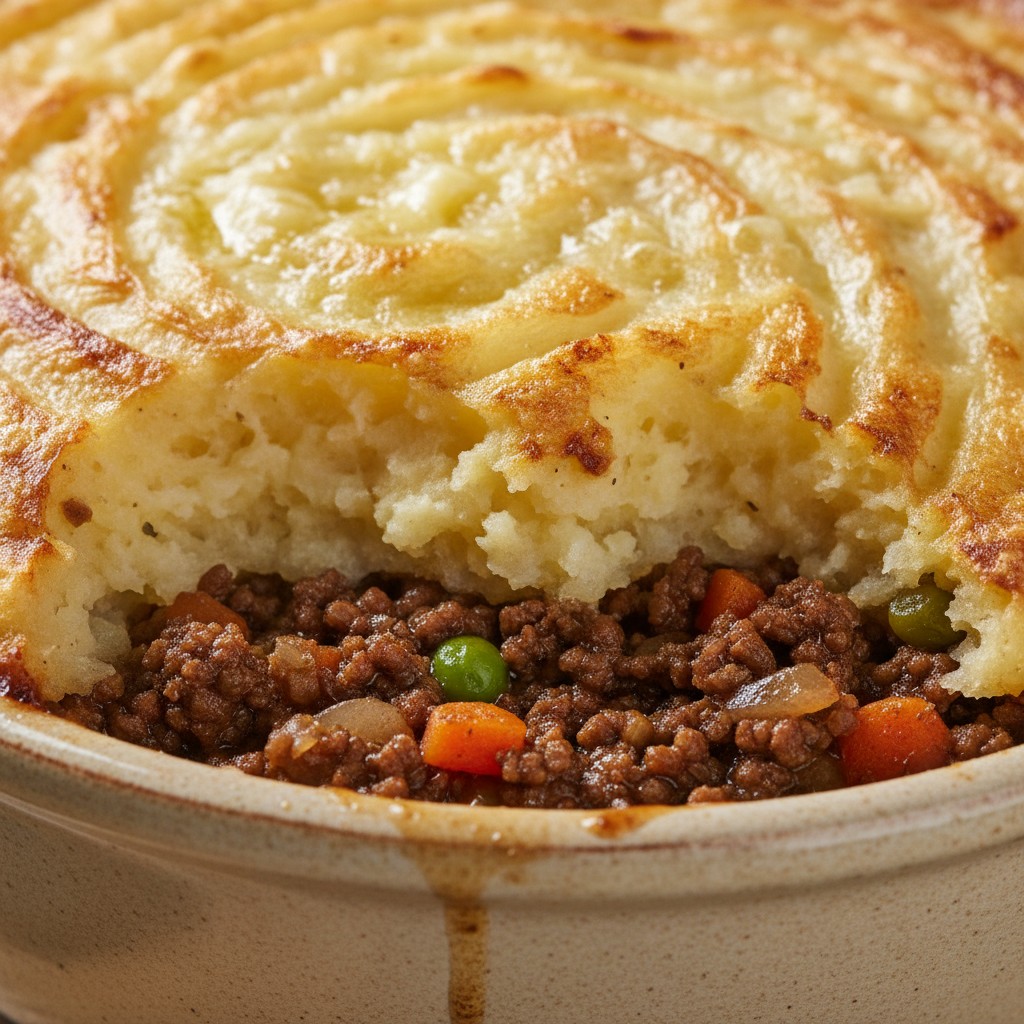
Delia's Notes from the Kitchen
A note on the potatoes: the type you use really does matter. A floury variety like King Edward or Maris Piper will give you that light, fluffy mash we're looking for. Waxy potatoes can become gluey when mashed, so do try to get the right sort. And please, don't be tempted to use a food processor for the mash – it will overwork the starch and result in a sticky paste. A simple masher or, for perfection, a potato ricer is all you need.
How to Store & Reheat
Allow the pie to cool completely, then cover tightly and store in the refrigerator for up to 3 days. To reheat, place in an oven preheated to 180°C (160°C Fan, Gas Mark 4) for 20-25 minutes, or until piping hot throughout. Reheating in the oven is preferable as it helps to re-crisp the potato topping. The pie also freezes beautifully for up to 3 months. Thaw fully in the refrigerator before reheating as above.
Frequently Asked Questions
What is the difference between Cottage Pie and Shepherd's Pie?
It's a very common question! The distinction is in the meat. Traditionally, Cottage Pie is made with minced beef, while Shepherd's Pie is made with minced lamb – as shepherds look after sheep.
Why is my filling watery?
A watery filling is usually caused by not simmering the sauce for long enough, or not using a thickener like flour. The gentle, long simmer is crucial for the sauce to reduce and the flavours to concentrate. Also, ensure you use hot stock, as this helps the flour to thicken the sauce correctly from the start.
Can I make this vegetarian?
Yes, you can make a wonderful vegetarian version. Substitute the minced beef with the same quantity of cooked green or brown lentils, or a good-quality vegetarian mince. You'll also need to use a rich vegetable stock and perhaps add a splash of soy sauce or mushroom ketchup for extra 'umami' depth.
How do I prevent the potato topping from sinking into the filling?
There are two key things. First, allow the meat filling to cool slightly before you top it with the potato. Second, spoon the mash around the edges of the dish first, then fill in the middle. This creates a seal that helps support the weight of the potato.
Can I prepare Cottage Pie in advance?
Absolutely. It's an excellent dish to make ahead. You can prepare both the filling and the mash, assemble the pie completely, then allow it to cool and store it in the refrigerator. It will need a slightly longer baking time from chilled, around 40-45 minutes.