My Classic Coq au Vin
There is something deeply satisfying about making a proper Coq au Vin. Follow my step-by-step guide to create this timeless French classic with a rich, velvety sauce.
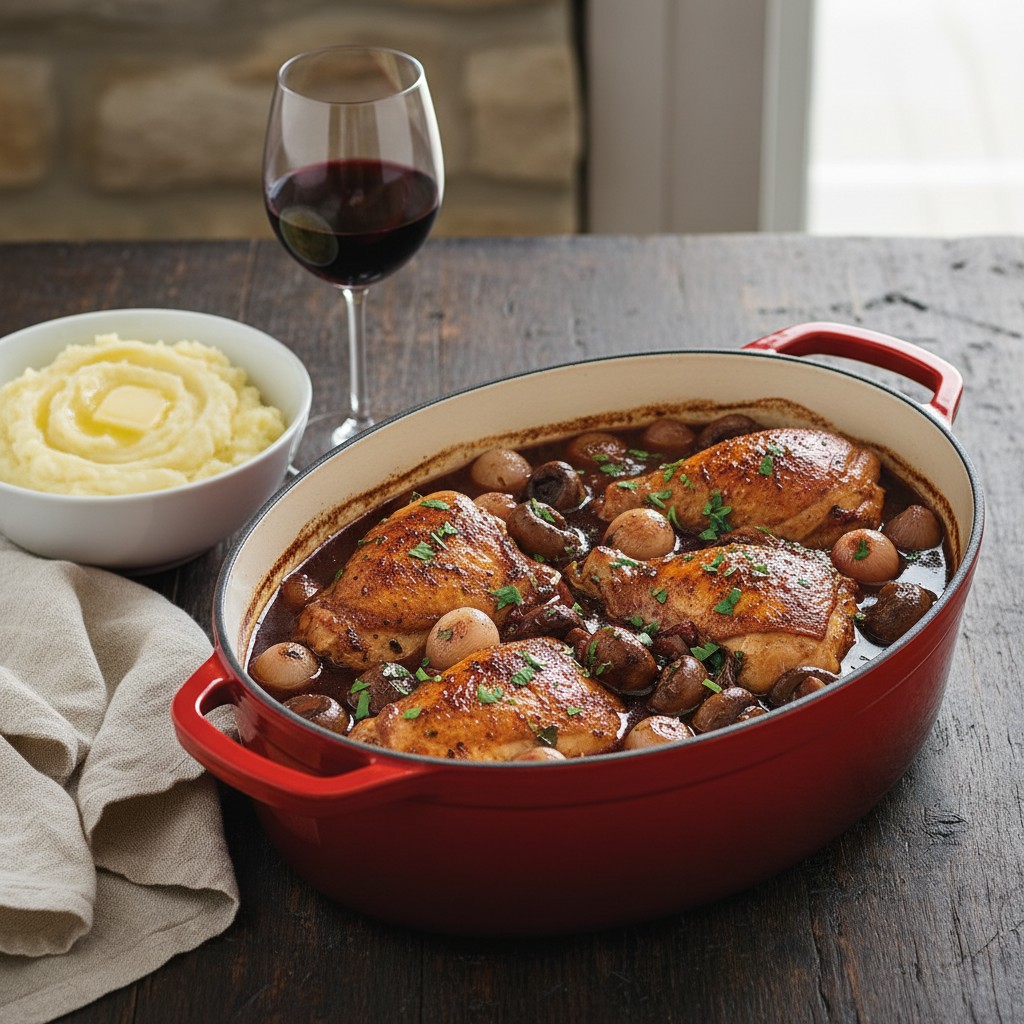
There are certain dishes that represent the very soul of a country's cooking, and for France, Coq au Vin is undoubtedly one of them. It may sound grand, but at its heart, it is simple, rustic farmhouse fare, born from the need to make a tough old bird delicious. It is a lesson in the magic of slow cooking, transforming humble ingredients into something truly magnificent.
Over the years, many have tried to hurry it along, but its true character is revealed only through patience. The key lies in a good, long marinade in red wine, which not only tenderises the chicken but infuses it with a flavour so deep and complex it feels as though it has been cooking for days. We use a decent, full-bodied red wine here – a Burgundy is traditional, but a good Merlot will do beautifully. Remember the golden rule: if you wouldn't drink it, don't cook with it.
This is a recipe to be trusted. Follow the stages precisely, don't be tempted to skip the browning, and you will be rewarded with a rich, glossy, deeply savoury stew that is the very definition of comfort and generosity. It is the perfect dish for a weekend gathering, as it's actually better made the day before, allowing the flavours to settle and deepen even further. So, let's begin.
Why You'll Love This Recipe
- Marinating the chicken in wine overnight is not just a suggestion; it's the foundation of the dish, tenderising the meat and infusing it with a deep, complex flavour from the inside out.
- We brown the chicken, bacon, and vegetables in stages. This crucial step, known as building layers of flavour, creates the Maillard reaction, which is responsible for the rich, savoury base of the sauce.
- Finishing the sauce with a 'beurre manié' (a simple paste of butter and flour) is a classic French technique that ensures a perfectly smooth, glossy, and thickened sauce without any risk of lumps.
Ingredients
- 1 large, free-range chicken (about 1.6-1.8kg), jointed into 8 pieces, or 1.5kg chicken thighs and drumsticks
- 1 bottle (750ml) of full-bodied red wine, such as Burgundy, Pinot Noir, or Merlot
- 200g smoked bacon lardons or streaky bacon, cut into chunks
- 250g button mushrooms, left whole or halved if large
- 200g pearl onions, peeled
- 2 tbsp plain flour, plus 1 tbsp for the beurre manié
- 2 tbsp olive oil or sunflower oil
- 50g unsalted butter
- 2 cloves of garlic, crushed
- 3 tbsp brandy (optional)
- 300ml good-quality chicken stock
- 1 bouquet garni (2 sprigs of thyme, 2 parsley stalks, 1 bay leaf, tied together)
- Salt and freshly milled black pepper
- A small handful of fresh parsley, chopped, to garnish
Equipment Needed
Large, non-reactive bowl for marinating · Large, heavy-based casserole dish or Dutch oven with a lid · Fine-mesh sieve · Slotted spoon · Medium frying pan · Kitchen paper · Small bowl for the beurre manié
Step-by-Step Instructions
- First, the marinade. Place the chicken pieces in a large, non-reactive bowl. Add the wine, bouquet garni, and crushed garlic. Ensure the chicken is submerged, cover the bowl, and leave it to marinate in the refrigerator overnight, or for at least 12 hours.
- The next day, remove the chicken from the marinade, reserving every drop of the liquid. Pat the chicken pieces completely dry with kitchen paper – this is vital for achieving a good, brown crust. Strain the marinade through a sieve into a jug and discard the solids.
- Place a large, heavy-based casserole dish or Dutch oven over a medium heat. Add the bacon lardons and cook until crisp and golden and they have rendered their fat. Remove the lardons with a slotted spoon and set aside.
- Season the flour with salt and pepper and toss the dry chicken pieces in it until lightly coated. Add the oil to the bacon fat in the casserole (if needed) and, when hot, brown the chicken pieces in batches. Do not crowd the pan. Brown them on all sides until golden, then remove and set aside with the bacon.
- Now, prepare the garnish. In a separate frying pan, melt 25g of the butter and sauté the pearl onions over a medium heat for about 10 minutes until lightly browned. Remove and set aside. In the same pan, add the remaining 25g of butter and cook the mushrooms until golden. Set these aside with the onions.
- Return to the casserole dish. If you are using the brandy, pour it into the hot pan, stand back, and carefully ignite it with a long match (or tip the pan towards a gas flame). Let the flames die down. This step is optional but adds a lovely depth.
- Pour the reserved marinade and the chicken stock into the casserole, scraping up any browned bits from the bottom of the pan with a wooden spoon. Bring to a simmer.
- Return the browned chicken pieces and the cooked bacon to the casserole. The liquid should almost cover the chicken. Bring back to a gentle simmer, then lower the heat, cover with a lid, and let it cook very gently for 1 to 1¼ hours, or until the chicken is tender and cooked through.
- While the chicken is cooking, prepare the 'beurre manié'. In a small bowl, mash the remaining 1 tbsp of flour with 1 tbsp of softened butter to form a smooth paste.
- Once the chicken is cooked, remove it from the casserole and keep it warm. Bring the sauce to a brisk simmer and whisk in the beurre manié, a little at a time, until the sauce has thickened and is smooth and glossy. Let it simmer for a further 2-3 minutes to cook out the flour taste.
- Return the chicken to the sauce, along with the reserved pearl onions and mushrooms. Stir everything together gently and allow to heat through for 5 minutes. Check the seasoning and add salt and pepper as needed.
- To serve, spoon the Coq au Vin into warmed bowls, sprinkle with fresh parsley, and serve immediately with your chosen accompaniments.
Delia's Notes from the Kitchen
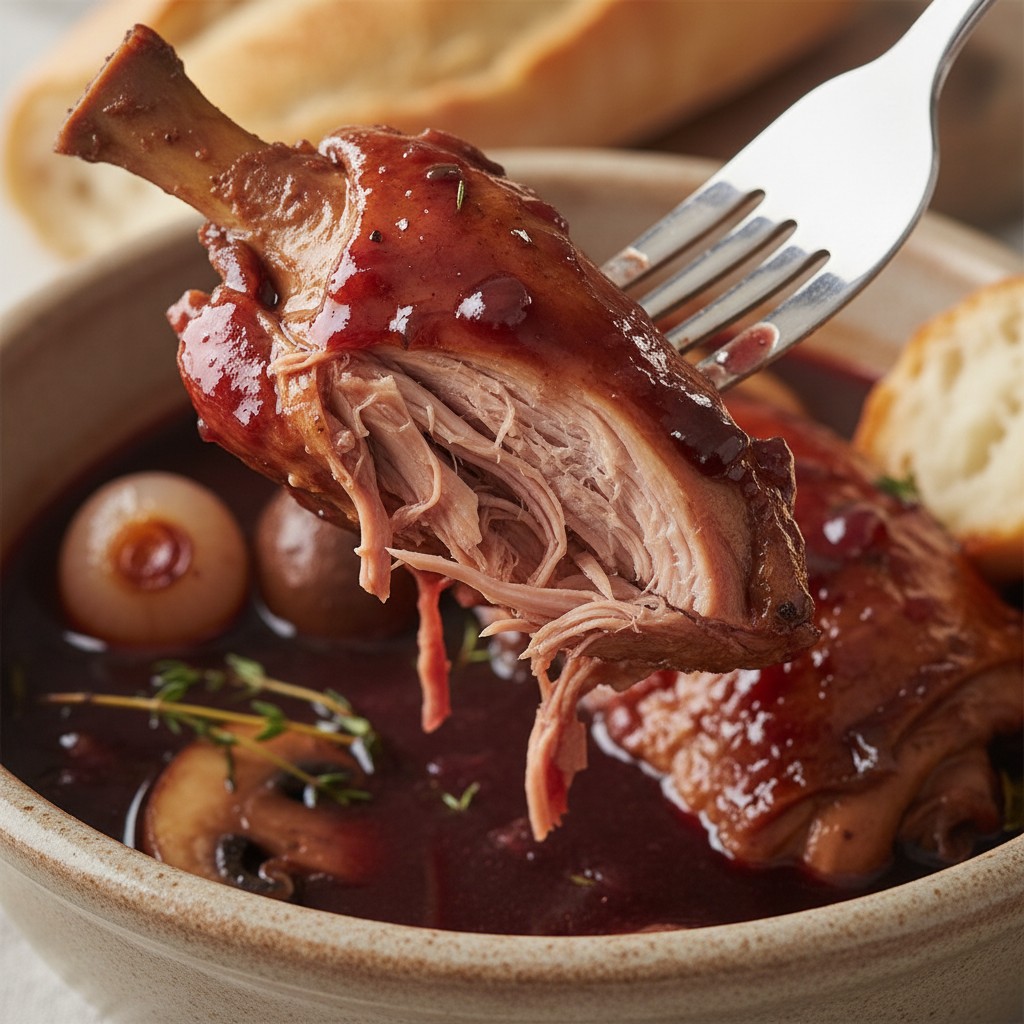
The success of this dish lies in patience and using good ingredients. Do not rush the browning stages; this is where the deep, savoury flavour is born. And please, use a wine you would be happy to drink – if it's not good enough for a glass, it's not good enough for the casserole. Making it a day in advance truly allows the flavours to marry and is my preferred way to serve it.
How to Store & Reheat
Coq au Vin improves in flavour and is excellent made a day ahead. Allow it to cool completely, then store in an airtight container in the refrigerator for up to 3 days. To reheat, place it in a saucepan over a low-medium heat, stirring occasionally until piping hot throughout. Avoid boiling, as this can toughen the chicken. You may need to add a small splash of water or stock if the sauce has thickened too much.
Frequently Asked Questions
Must I use a whole cockerel?
No, a traditional 'coq' is an older bird, which required long, slow cooking. Nowadays, a good-quality large free-range chicken, jointed, works beautifully and is what most of us use. Using bone-in pieces is essential for flavour.
Can I use white wine instead of red?
That would create a different, but also delicious, dish called 'Coq au Vin Blanc'. For this classic recipe with its characteristic deep colour and flavour, a robust red wine is absolutely essential.
How do I peel pearl onions easily?
The trick is to blanch them. Simply drop them into a pan of boiling water for one minute, then drain and plunge them into cold water. The skins will then slip off very easily with a gentle squeeze.
My sauce isn't thick enough. What did I do wrong?
Nothing at all, don't worry. This is easily rectified. You can either simmer the sauce for a little longer with the lid off to reduce it, or, if you need more thickening power, simply make a little more beurre manié and whisk it in. Always add it to a simmering, not boiling, sauce.
Is it really necessary to flambé with brandy?
While it adds a wonderful depth and burns off some of the harsher alcohol notes, it's a step you can omit if you're not comfortable. Always turn off the heat and stand well back if you do decide to flambé. The alcohol will cook off during the long simmer anyway, but the flambé adds a certain caramelised richness.