Classic Homemade Coleslaw
Forget those disappointing shop-bought tubs; this is the definitive homemade coleslaw. It's wonderfully crisp, creamy, and holds its own as the perfect accompaniment to almost anything.
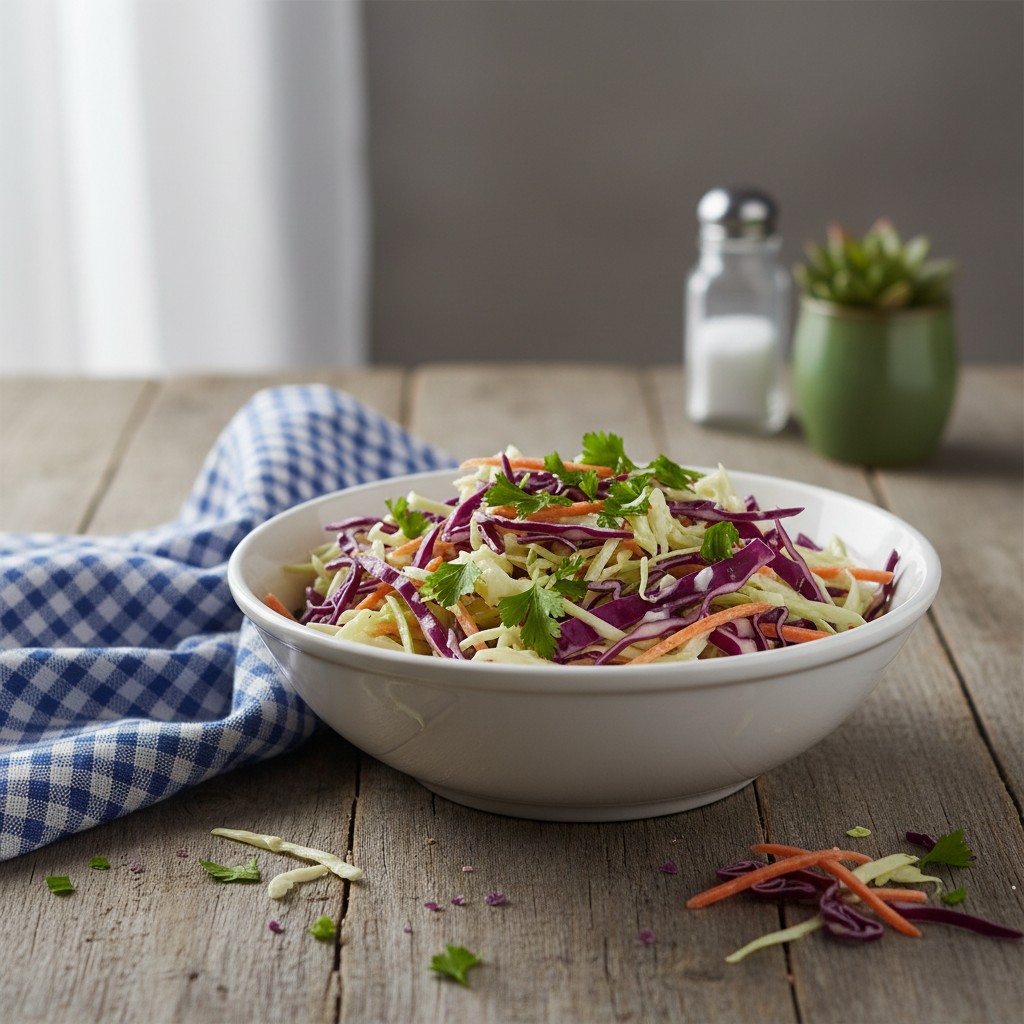
The Definitive Delia Smith Coleslaw Recipe: Perfectly Crisp and Creamy Every Time
My definitive Delia Smith Coleslaw Recipe is something I believe every cook should have in their repertoire. For far too long, coleslaw has been relegated to a sad, watery afterthought, bought in tubs and lacking any real character. But made properly at home, it is a thing of beauty: crunchy, vibrant, and with a perfectly balanced creamy dressing that complements, rather than smothers, the fresh vegetables.
The secret, as is so often the case in cooking, lies in a simple but crucial step of preparation. By taking the time to draw the excess water from the cabbage, you guarantee a slaw that will stay crisp and delightful for days, rather than turning into a soggy mess within hours. It’s a small investment of time for a truly superior result.
This recipe is the one I have relied on for years. It is straightforward, uses simple ingredients, and produces a coleslaw that is as wonderful piled high on a jacket potato as it is served alongside cold-cured ham or at a summer barbecue. It’s time to reclaim coleslaw, and this is how you do it.
Why You'll Love This Recipe
- Salting the cabbage is a non-negotiable step. It draws out excess moisture through osmosis, ensuring the final coleslaw is crisp and never watery.
- A balanced dressing using both good-quality mayonnaise and double cream provides the perfect combination of tangy and rich creaminess.
- Using freshly shredded vegetables, rather than pre-bagged, gives a far superior texture and a fresher, more vibrant flavour.
- A short resting period after mixing allows the flavours of the dressing to meld and permeate the vegetables beautifully.
Ingredients
- 1 small head of firm white cabbage, about 500g
- 2 medium carrots, peeled
- 1 small onion
- 1 teaspoon salt
- 150ml good-quality mayonnaise (full-fat is best)
- 50ml double cream or crème fraîche
- 1 teaspoon Dijon mustard
- 1 tablespoon white wine vinegar or lemon juice
- 1 teaspoon caster sugar
- Freshly milled black pepper
- A little chopped fresh parsley, to garnish (optional)
Equipment Needed
Large mixing bowl · Colander · Sharp knife · Chopping board · Coarse grater · Salad spinner (highly recommended) · Clean tea towel · Whisk
Step-by-Step Instructions
- First, prepare the vegetables. Remove the tough outer leaves of the cabbage, cut it into quarters, and remove the hard inner core. Then, using a very sharp knife, slice each quarter as thinly as you possibly can. Alternatively, you can use the shredding disc of a food processor. Grate the carrots on a coarse grater and chop the onion very, very finely.
- Now for the crucial step. Place the shredded cabbage and grated carrot into a large colander, sprinkle over the teaspoon of salt, and toss well with your hands to distribute it evenly. Place the colander over a bowl or in the sink and leave it to stand for at least one hour (or up to two). You will be surprised at how much water is drawn out.
- After an hour, rinse the vegetables thoroughly under cold running water to remove the excess salt. Then, and this is just as important, you must dry them. The best way is to use a salad spinner. If you don't have one, press the vegetables firmly against the sides of the colander to squeeze out as much water as possible, then tip them onto a clean tea towel, roll it up, and press firmly.
- While the vegetables are draining, make the dressing. In a large, clean bowl (the one you'll serve from), whisk together the mayonnaise, double cream (or crème fraîche), Dijon mustard, white wine vinegar or lemon juice, and caster sugar. Season with a good grinding of black pepper.
- Add the finely chopped onion and the thoroughly dried cabbage and carrot mixture to the bowl with the dressing. Use two large spoons to mix everything together, ensuring all the vegetables are evenly coated.
- Cover the bowl and chill in the refrigerator for at least 30 minutes before serving to allow the flavours to mingle. It will taste even better after a few hours. Garnish with a little chopped parsley just before serving, if you like.
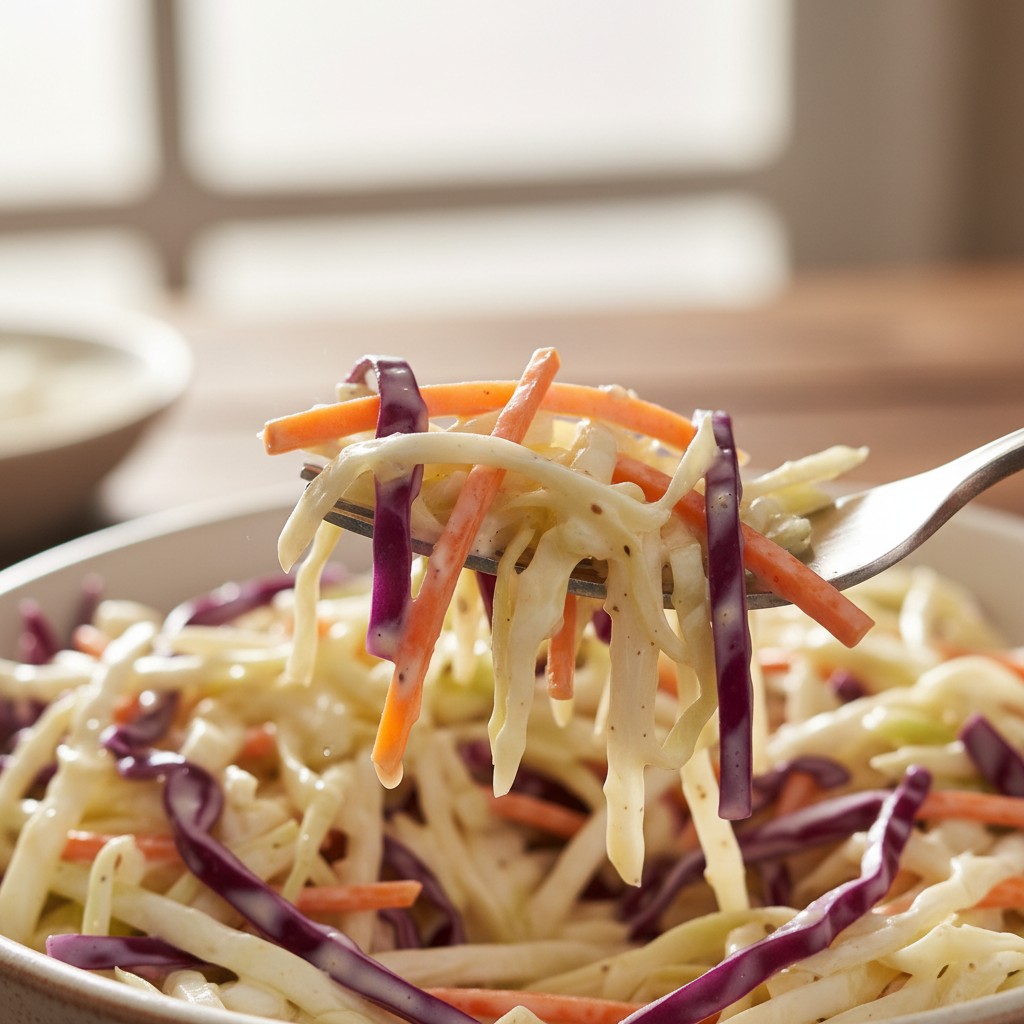
Delia's Notes from the Kitchen
The one step that transforms good coleslaw into great coleslaw is the drying of the vegetables after they have been salted and rinsed. A salad spinner is your greatest ally here. If you don't own one, it is well worth the small investment for this task alone. Squeezing by hand or in a tea towel works, but a spinner removes that last bit of residual water, which makes all the difference to the final crisp texture.
How to Store & Reheat
Store any leftover coleslaw in an airtight container in the refrigerator. Thanks to the salting process, it will remain pleasantly crisp for up to 3 days. The flavour will continue to develop, though the texture will soften slightly over time. Coleslaw should not be frozen.
Frequently Asked Questions
My coleslaw is always watery. What am I doing wrong?
You are likely skipping the salting step. Sprinkling salt on the shredded cabbage and letting it sit in a colander for an hour is vital. It draws out a remarkable amount of water, which is the primary cause of a watery, soggy coleslaw. Always remember to rinse and dry it thoroughly afterwards.
Can I use a food processor to shred the vegetables?
Yes, a food processor with a shredding attachment is a very quick way to prepare the cabbage and carrots. However, be careful not to 'over-process' them into a pulp. For the onion, I still recommend chopping it very finely by hand for the best texture.
Can I make the dressing ahead of time?
Certainly. The dressing can be whisked together and stored in a sealed jar in the refrigerator for up to 4-5 days. This can be a real time-saver. Just give it a good stir before you toss it with your freshly prepared vegetables.
What is the best mayonnaise to use?
I always recommend using a good-quality, full-fat mayonnaise. It provides the best flavour and creamy texture. Lighter versions can sometimes be a little too acidic and thin, which will affect the final consistency of your dressing.
How can I add a bit of variation?
This recipe is a wonderful base. For variation, you could add a finely chopped stick of celery for extra crunch, a grated apple for a touch of sweetness, or some toasted caraway or celery seeds to the dressing for a different flavour profile.