Camargue Red Rice Salad with Lemon and Herbs
Discover a truly satisfying salad made with nutty Camargue red rice and a bright, zesty dressing. It's a perfect, wholesome addition to any lunch or light supper.
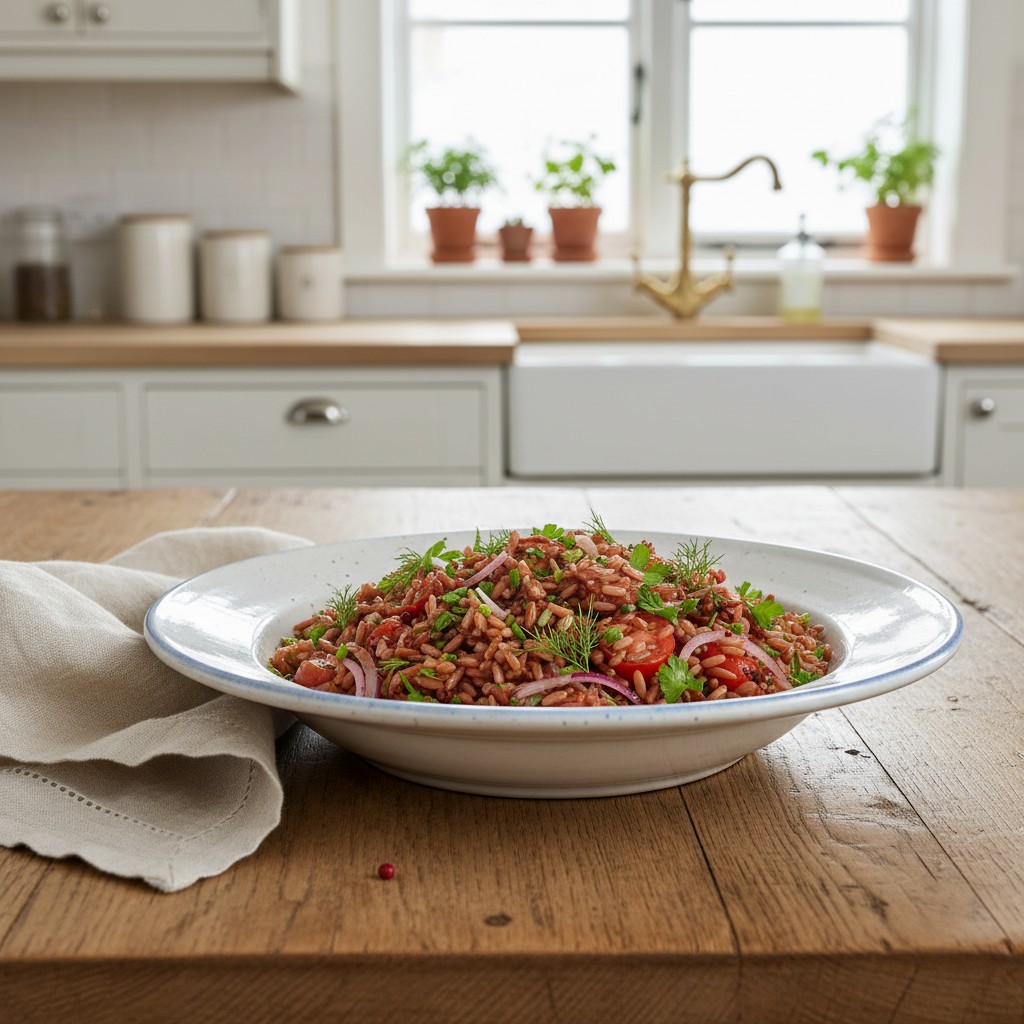
The Enduring Appeal of the Delia Smith Camargue Red Rice Salad Recipe
There are some ingredients that, once discovered, become firm friends in the kitchen, and this Delia Smith Camargue Red Rice Salad Recipe showcases one such star. Camargue red rice, with its distinctive nutty flavour and satisfyingly chewy texture, is a world away from its paler cousins. It holds its own beautifully in a salad, never turning mushy, but instead providing a robust and wholesome base.
A good salad should never be an afterthought. It ought to be a complete and satisfying part of a meal, and this one certainly is. We are going to dress the warm rice with a very simple but perfectly balanced vinaigrette, allowing the grains to absorb all that lovely flavour. It’s a technique I’ve relied on for years, and it makes all the difference.
Whether you serve it as a light lunch on its own, as part of a buffet, or alongside grilled fish or chicken, this salad is wonderfully versatile. The key, as with so many things, is in using good ingredients and following the method with a little care. So let's begin.
Why You'll Love This Recipe
- Dressing the rice while it's still warm allows the grains to absorb the vinaigrette more effectively, infusing them with flavour.
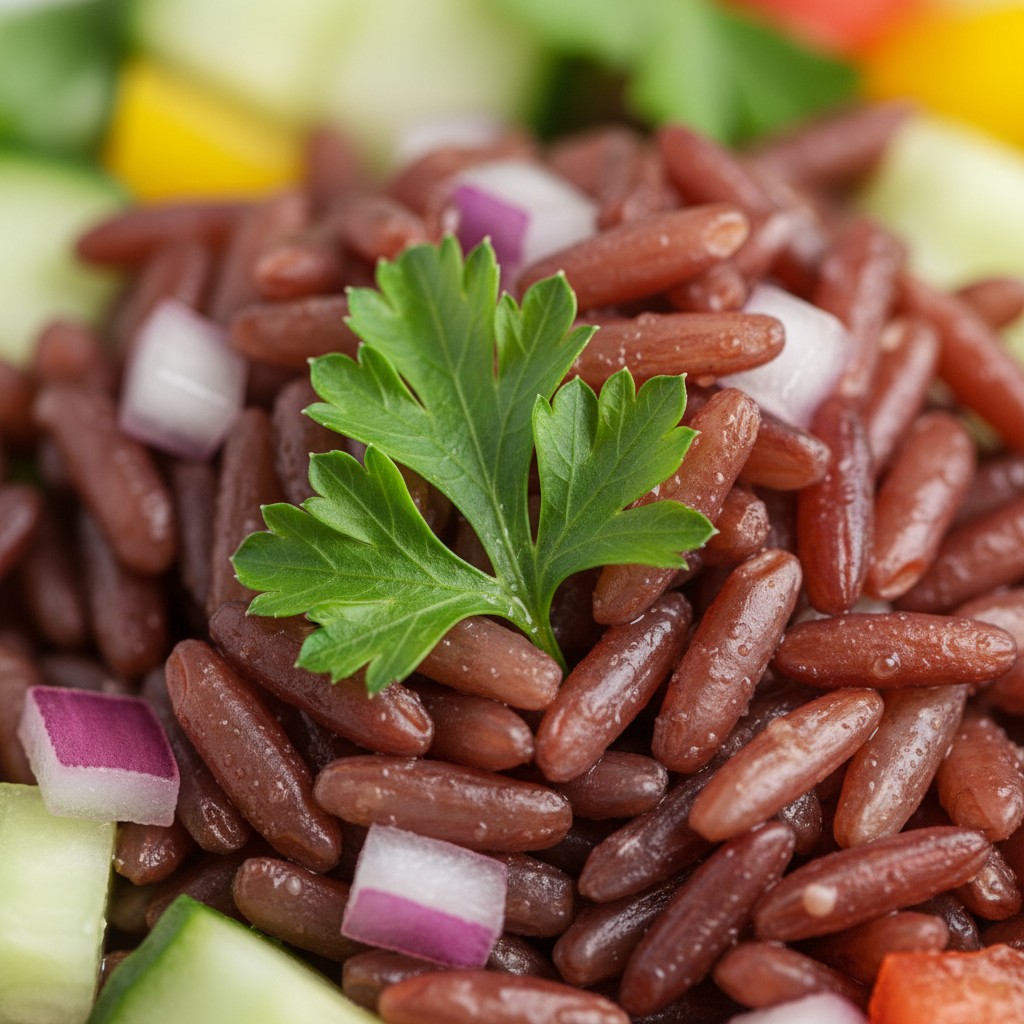
- Camargue red rice retains a firm, chewy texture after cooking, preventing a mushy salad and adding a wonderful bite.
- The simple lemon and herb dressing is bright and fresh, complementing the earthy, nutty flavour of the rice without overpowering it.
Ingredients
- 225g (8oz) Camargue red rice
- 1 small red onion, very finely chopped
- 3 tbsp chopped fresh flat-leaf parsley
- 1 tbsp chopped fresh chives
- 50g (2oz) toasted pine nuts
- Salt and freshly milled black pepper
- For the dressing:
- 6 tbsp extra virgin olive oil
- 2 tbsp fresh lemon juice
- 1 tsp Dijon mustard
- ½ tsp caster sugar
Equipment Needed
Medium saucepan with a lid · Sieve · Large mixing bowl · Small bowl or jam jar · Whisk · Sharp knife · Chopping board · Dry frying pan
Step-by-Step Instructions
- First, cook the rice. Place it in a medium saucepan and cover with plenty of cold water – about 1 litre (1¾ pints). Add a good pinch of salt, bring to the boil, then reduce the heat, cover with a lid, and let it simmer gently for 35-40 minutes, or until the rice is tender but still has a slight bite. It’s important not to overcook it.
- While the rice is cooking, you can prepare the dressing. In a small bowl or jam jar, combine the extra virgin olive oil, fresh lemon juice, Dijon mustard, and the caster sugar. Whisk or shake vigorously until the dressing is emulsified and slightly thickened. Season it with a little salt and freshly milled black pepper to taste.
- Prepare your other ingredients. Finely chop the red onion and the fresh herbs. To toast the pine nuts, place them in a dry frying pan over a medium heat for a minute or two until lightly golden – watch them carefully as they can burn very quickly.
- Once the rice is cooked, drain it thoroughly in a sieve. There's no need to rinse it. Tip the hot, drained rice into a large mixing bowl.
- Immediately pour over about two-thirds of the prepared dressing and toss everything together well. This is the crucial step: the warm grains will absorb the dressing beautifully. Allow the rice to cool for about 15-20 minutes, giving it an occasional stir.
- Once the rice has cooled slightly but is still lukewarm, stir in the finely chopped red onion, the fresh parsley and chives, and the toasted pine nuts. Add the remaining dressing if you feel it needs it, and check the seasoning, adding more salt and pepper as required.
- You can serve the salad warm, or allow it to cool completely to room temperature. It does not benefit from being served fridge-cold.
Delia's Notes from the Kitchen
The real secret here is balance. Taste the dressing before you add it, and taste the finished salad before you serve it. Your palate is the best judge. A final squeeze of lemon or an extra twist of the pepper mill can be all that's needed to elevate it from good to truly excellent.
How to Store & Reheat
Store any leftover salad in an airtight container in the refrigerator for up to 3 days. For the best flavour and texture, remove it from the fridge about 30 minutes before serving to allow it to come back to room temperature. I do not recommend reheating it.
Frequently Asked Questions
Can I use a different type of rice for this salad?
While Camargue red rice is specified for its unique nutty flavour and firm texture, you could substitute it with wild rice or a sturdy brown rice. Be aware that cooking times will vary, and the final texture will be different. Avoid using standard white rice, as it will become too soft.
My salad seems a bit dry. What should I do?
This can sometimes happen if the rice is particularly absorbent or if it has been sitting for a while. Simply whisk together a little extra extra virgin olive oil and lemon juice, and toss it through the salad. Always taste and adjust seasoning as you go.
Can I make this salad ahead of time?
Absolutely, it's an excellent recipe for making ahead. You can prepare it completely and store it in the fridge. Just remember to take it out about 30 minutes before serving to let it come to room temperature, as the flavours are much better when not fridge-cold. The herbs may lose a little vibrancy, but it will still be delicious.
Why do you dress the rice when it's hot?
This is a key technique for flavour. Warm grains of rice are more porous and will absorb the dressing much more effectively than cold rice. This infuses the flavour throughout the dish, rather than just coating the outside.
I don't have fresh herbs. Can I use dried?
For a salad like this, fresh herbs really are essential for their bright, clean flavour. Dried herbs have a very different, more concentrated and 'cooked' taste which won't work as well here. If you are in a real pinch, it is better to omit them than to substitute with dried.