A Proper Caesar Salad, Made from Scratch
There are countless versions of the Caesar salad, but this is how to make a truly authentic one. The secret lies entirely in the dressing, which we'll make properly from scratch.
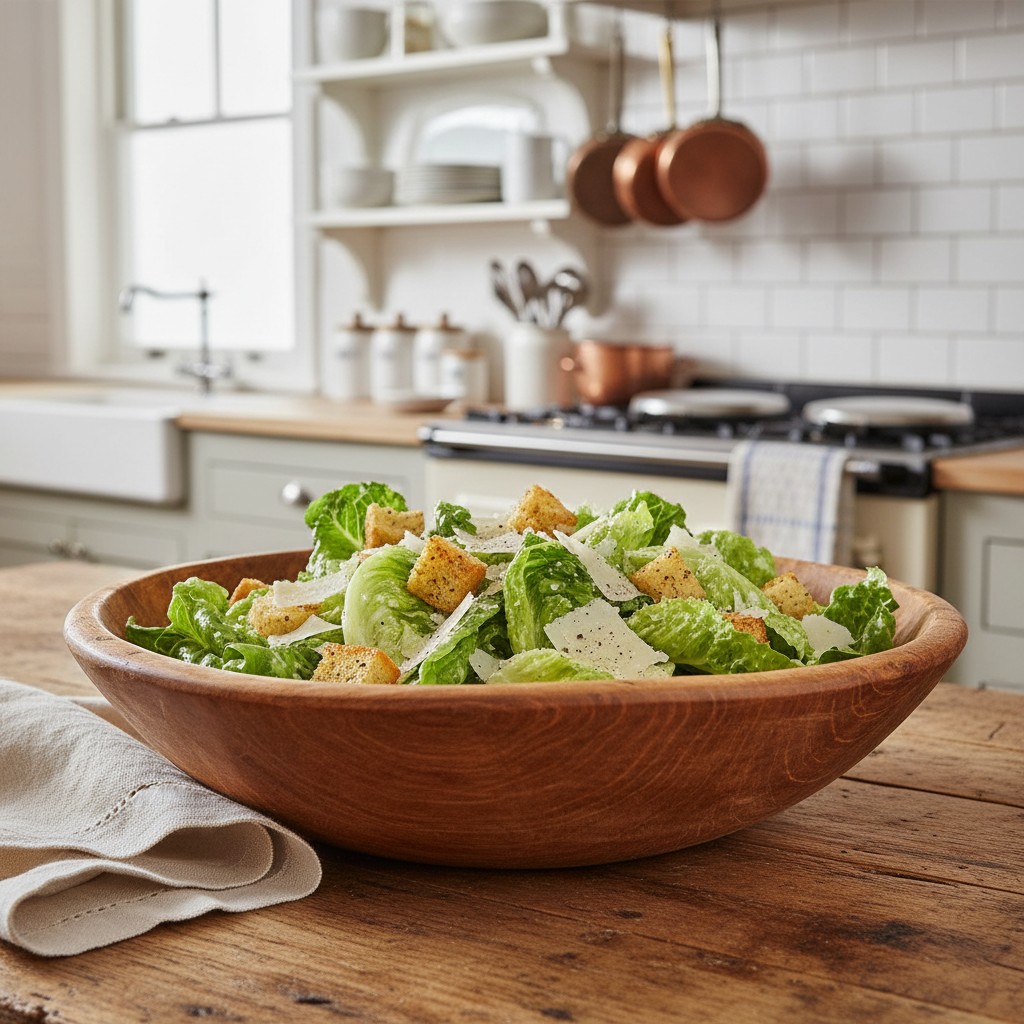
So many restaurants and recipe books offer their 'take' on a Caesar salad, but more often than not, they bear little resemblance to the original creation. The true character of this magnificent salad, first created in Tijuana, Mexico, by Caesar Cardini, is not in the chicken or bacon that is often added, but in the dressing. It is a lesson in the magic of emulsification, where a few simple ingredients are whisked together to create something creamy, pungent, and utterly sublime.
Making the dressing yourself is not a difficult task, but it does require attention to detail. It is a skill, and like any skill, it improves with practice. The reward is a dressing so superior to anything you can buy in a bottle that you will wonder why you ever settled for less. It is the heart and soul of the dish.
Here, we will go through the process step-by-step, from making our own crunchy, garlic-scented croutons to whisking the dressing into a perfect, creamy coating. This is the Caesar salad as it was meant to be: simple, elegant, and an absolute triumph of flavour and texture. Once you've mastered it, it will become a cornerstone of your kitchen repertoire.
Why You'll Love This Recipe
- Making the dressing from scratch ensures a creamy, perfectly emulsified texture that bottled versions simply cannot replicate.
- Using a coddled egg provides the traditional richness and body to the dressing while making it safer to consume.
- Homemade garlic croutons, baked until crisp, add a superior crunch and flavour that are absolutely essential to the salad's character.
- The method of crushing garlic and anchovies in a mortar and pestle creates a flavourful paste that integrates seamlessly into the dressing.
Ingredients
- 2 medium heads of Romaine lettuce
- 2 thick slices of day-old crusty white bread, crusts removed
- 3 tablespoons olive oil, plus extra for the dressing
- 2 large cloves of garlic, peeled
- 50g Parmesan cheese, freshly grated, plus extra for shavings to serve
- For the dressing:
- 1 large, very fresh egg
- 4-5 anchovy fillets in oil, drained
- Juice of 1 large lemon (about 3 tablespoons)
- 1 teaspoon Dijon mustard
- 150ml light olive oil (not extra virgin)
- A few shakes of Worcestershire sauce
- Freshly milled black pepper
- A pinch of salt
Equipment Needed
Large salad bowl · Salad spinner · Baking sheet · Mortar and pestle · Whisk · Small saucepan
Step-by-Step Instructions
- First, prepare the croutons. Preheat your oven to 200°C (180°C Fan, Gas Mark 6). Cut the bread into 1.5cm cubes. Place them in a bowl.
- Crush one of the garlic cloves with the flat side of a knife and add it to the bowl with the bread. Drizzle with the 3 tablespoons of olive oil and toss everything together well. Spread the croutons in a single layer on a baking sheet.
- Bake for 8-10 minutes, or until they are crisp and golden brown all over. Keep a close eye on them as they can burn quickly. Once done, remove them from the oven and let them cool completely.
- Next, prepare the lettuce. Separate the leaves, discard any tough outer ones, and wash them in cold water. The most important step here is to dry them thoroughly. A salad spinner is best for this, followed by a final pat with a clean tea towel. Any water left on the leaves will prevent the dressing from clinging. Tear the larger leaves into bite-sized pieces and place them in a large bowl in the refrigerator to crisp up.
- Now for the dressing. Begin by coddling the egg. Bring a small pan of water to a rolling boil. Gently lower the egg into the water and boil for exactly 1 minute. Remove it immediately and place it in a bowl of cold water to stop it from cooking further.
- To make the dressing, you will ideally need a mortar and pestle. Crush the remaining garlic clove with a pinch of salt to form a paste. Add the anchovy fillets and pound them into the garlic until you have a smooth, uniform paste.
- Transfer the paste to a medium bowl. Crack the coddled egg into the bowl (it will be very soft), and add the egg yolk along with any liquid white. Add the Dijon mustard and lemon juice. Whisk everything together vigorously until combined.
- Now, begin to add the 150ml of light olive oil. This is the crucial stage. Start by adding the oil literally one drop at a time, whisking constantly. As the mixture starts to thicken and emulsify, you can begin to pour the oil in a very thin, steady stream, still whisking all the while. If you add it too quickly, the dressing will split.
- Once all the oil is incorporated and you have a thick, creamy dressing, whisk in the grated Parmesan, the Worcestershire sauce, and a generous grinding of black pepper. Taste and add a little salt if needed, but remember the anchovies and Parmesan are already salty.
- To assemble the salad, pour about two-thirds of the dressing over the chilled lettuce leaves and toss gently with your hands until every leaf is lightly coated. Add the cooled croutons and half of the Parmesan shavings and toss again. Serve immediately on chilled plates, garnished with the remaining Parmesan shavings.
Delia's Notes from the Kitchen
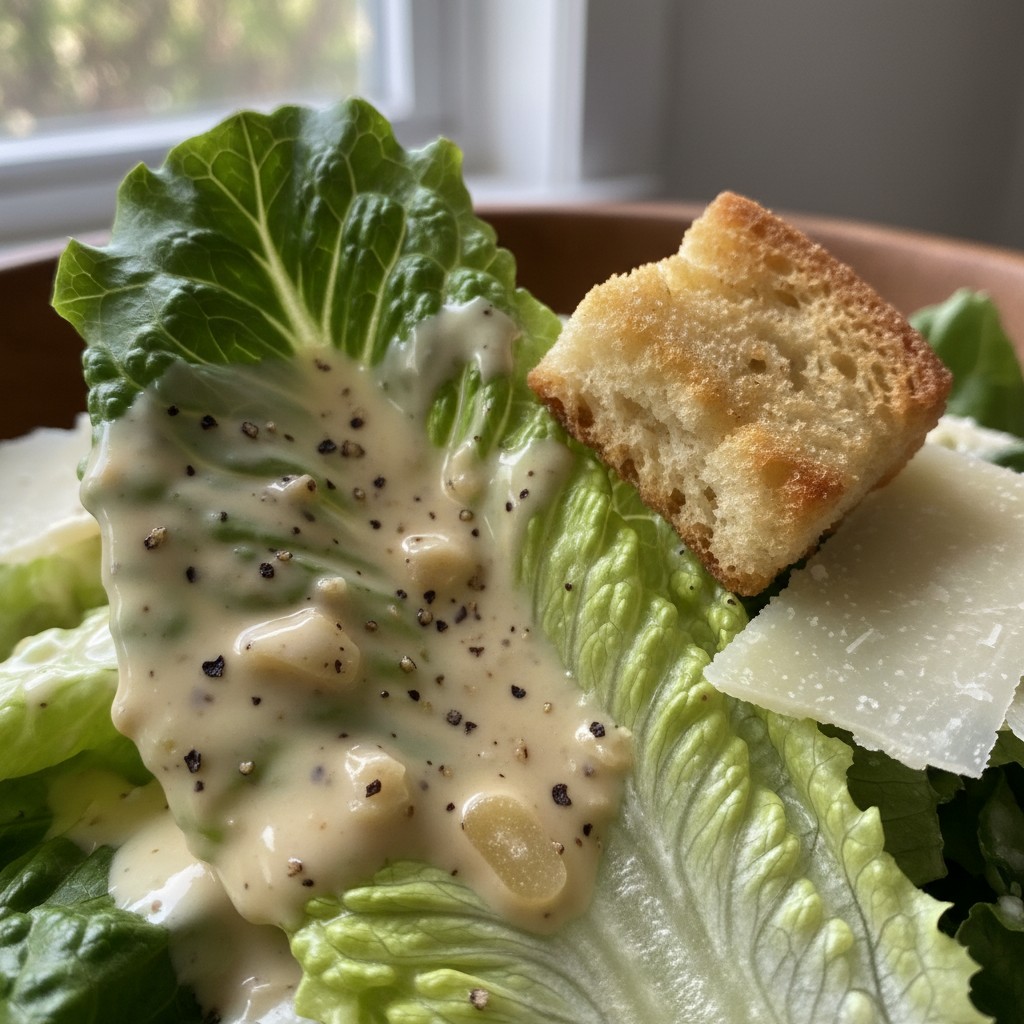
The two secrets to success here are non-negotiable: the lettuce leaves must be absolutely, completely dry, and the dressing must be freshly made. Do not be tempted to rush the addition of the oil; it is a moment for patience. The reward is a dressing with a texture and flavour that is simply world-class. Remember to toss the salad with your hands – it is gentler on the leaves and ensures each one is perfectly, but lightly, coated.
How to Store & Reheat
A Caesar salad must be assembled and eaten immediately, as the dressed leaves will wilt very quickly. However, you can prepare the components ahead of time. The dressing can be made up to 2 days in advance and stored in a sealed jar in the refrigerator (it may thicken, so let it sit at room temperature for 20 minutes and whisk again before use). The croutons can be stored in an airtight container at room temperature for up to 2 days.
Frequently Asked Questions
Are the anchovies absolutely essential?
For a truly authentic Caesar dressing, yes, they are. They provide a unique savoury depth (umami) that is not fishy when balanced correctly. If you are very much against them, you can omit them and add an extra teaspoon of Worcestershire sauce, but the flavour will be different.
My dressing split while adding the oil. Can it be saved?
Yes, it often can. Take a clean bowl and add a fresh egg yolk. Whisk it, and then very, very slowly, begin to add your split dressing to the new yolk, whisking constantly, just as you did with the oil. This will often bring it back together.
Why do I need to use a coddled egg?
Coddling the egg for one minute gently heats it, which reduces the risk associated with consuming raw eggs. It also helps to create a stable, creamy emulsion for the dressing. It is the traditional and safest method for a homemade Caesar dressing.
Can I use a different type of lettuce?
Romaine is the classic choice because its leaves are sturdy, crisp, and have a slight bitterness that stands up well to the rich dressing. In a pinch, Little Gem lettuce would be the next best choice. Avoid soft lettuces like butterhead or round lettuce, as they will become limp and soggy.
Can I make the dressing in a food processor?
You can, and it is quicker. Add all the dressing ingredients except for the oil to the processor and blend. Then, with the motor running, drizzle the oil in through the feed tube very slowly. However, I find the texture achieved by hand-whisking to be superior and more traditional.