My Classic Bread and Butter Pudding
There is perhaps no dessert more comforting than a properly made bread and butter pudding. My recipe ensures a beautifully set custard with a crisp, golden top.
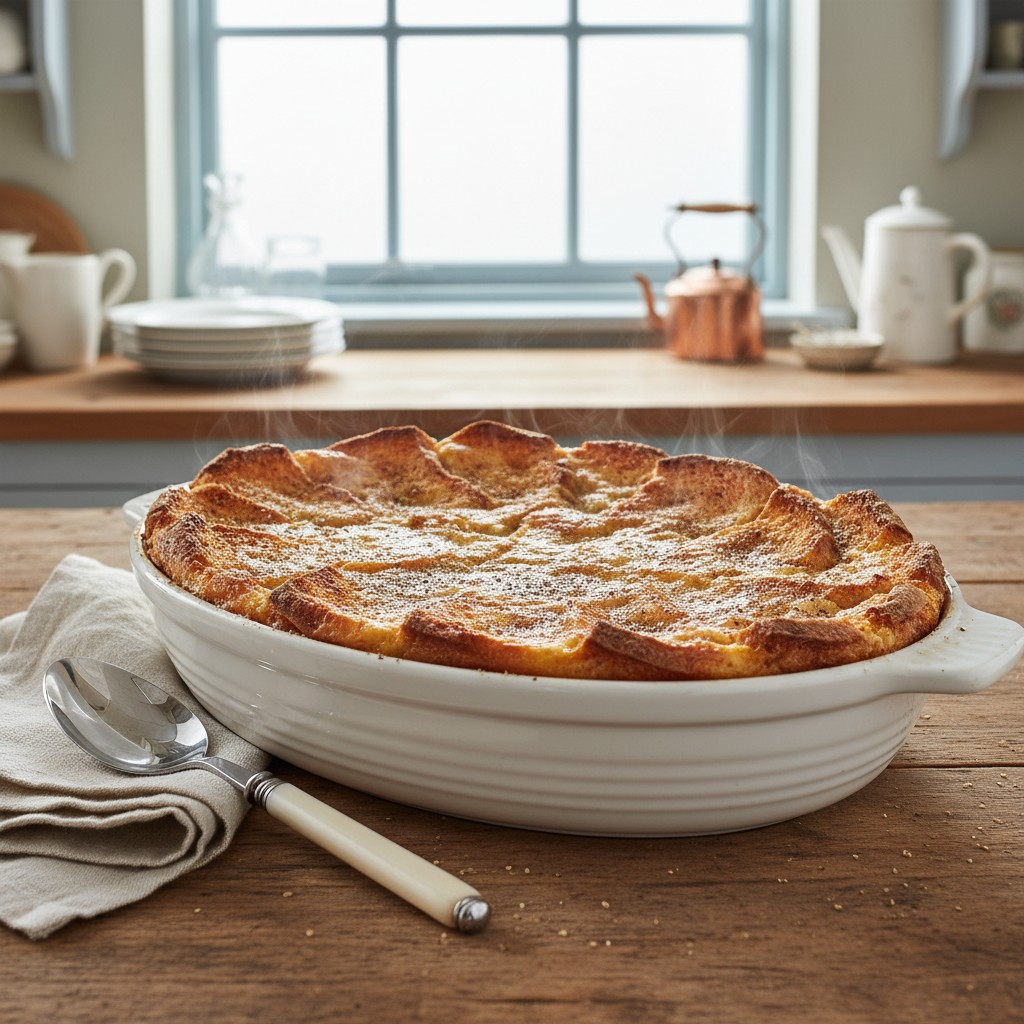
Of all the puddings in the great British repertoire, there is something uniquely comforting about a proper bread and butter pudding. It speaks of thriftiness, of turning something as humble as stale bread into a dish of sheer, unadulterated pleasure. So often, however, it can be a disappointment – either too dry or, worse, a scrambled, watery mess. But when it's right, it is truly sublime: a wobbly, vanilla-scented custard clinging to soft layers of bread, with plump jewels of fruit and a crisp, sugary top.
The magic lies in a few simple, non-negotiable details. The bread must be slightly stale, which allows it to act as the perfect sponge. The custard must be made with care, warming the milk and cream gently and pouring it over the eggs in a slow stream to prevent curdling. And most importantly, the entire assembly must be allowed to stand, to give the bread time to become thoroughly saturated before it even sees the heat of the oven.
This is more than just a recipe; it is a lesson in kitchen alchemy. By following these instructions with a little care and attention, you will not just make a dessert, you will master one of the cornerstones of British cookery. It is a recipe to be trusted, one that will never let you down and will bring warmth and joy to your table.
Why You'll Love This Recipe
- Using slightly stale bread is essential. It has less moisture, allowing it to soak up the maximum amount of custard without disintegrating, resulting in a perfect texture.
- Baking the pudding in a bain-marie (a water bath) provides gentle, even heat. This is the secret to a silky, smooth custard that sets beautifully without scrambling or curdling.
- The mandatory 30-minute resting period before baking is crucial. This allows the bread to become fully saturated with the custard, ensuring every inch of the pudding is moist and flavourful.
Ingredients
- 50g (2oz) butter, softened, plus extra for greasing
- 8 slices of medium-sliced white bread, slightly stale, crusts removed
- 75g (3oz) sultanas or raisins
- 2 large eggs
- 50g (2oz) caster sugar, plus 1 tbsp for the topping
- 350ml (12 fl oz) whole milk
- 150ml (5 fl oz) double cream
- 1 tsp vanilla extract
- Freshly grated nutmeg
Equipment Needed
1.2 litre (2 pint) shallow ovenproof dish · Shallow roasting tin (for the bain-marie) · Small saucepan · Whisk · Measuring jug · Mixing bowl
Step-by-Step Instructions
- First, generously butter a 1.2 litre (2 pint) shallow ovenproof dish.
- Spread the 50g of softened butter evenly over one side of each slice of bread. Then, cut each slice in half diagonally to create triangles.
- Arrange a layer of the bread triangles, buttered-side up, in the bottom of the dish, overlapping them slightly. Sprinkle over half of the sultanas.
- Arrange the remaining bread triangles on top, creating a neat, slightly fanned pattern. Sprinkle over the rest of the sultanas, tucking some between the bread slices.
- Now, make the custard. In a medium bowl, whisk the eggs and 50g of caster sugar together until just combined.
- Pour the milk and double cream into a small saucepan. Heat gently until it is hot and steaming, but do not let it boil. You should see small bubbles forming at the edge of the pan.
- Remove the milk from the heat. Pour it in a slow, steady stream over the egg and sugar mixture, whisking continuously as you pour. This is called tempering and prevents the eggs from scrambling. Stir in the vanilla extract.
- Carefully pour the custard over the bread, ensuring all the slices are covered. Gently press down on the bread with the back of a spoon to help it soak up the liquid.
- Leave the pudding to stand at room temperature for 30 minutes. This is a vital step, so do not be tempted to skip it.
- Pre-heat your oven to 180°C / 160°C Fan / Gas Mark 4. Find a roasting tin that is large enough to hold your pudding dish.
- After the standing time, sprinkle the top of the pudding with the extra tablespoon of caster sugar and a generous grating of fresh nutmeg.
- Place the dish in the centre of the roasting tin. Carefully pour hot water from a kettle into the roasting tin until it comes halfway up the sides of the pudding dish. This is your bain-marie.
- Bake for 40-45 minutes, or until the custard is just set and the top is golden brown and crisp. The centre should have a slight wobble when you gently shake the dish.
- Carefully remove from the oven and lift the pudding dish out of the water bath. Leave to stand for 5-10 minutes before serving.
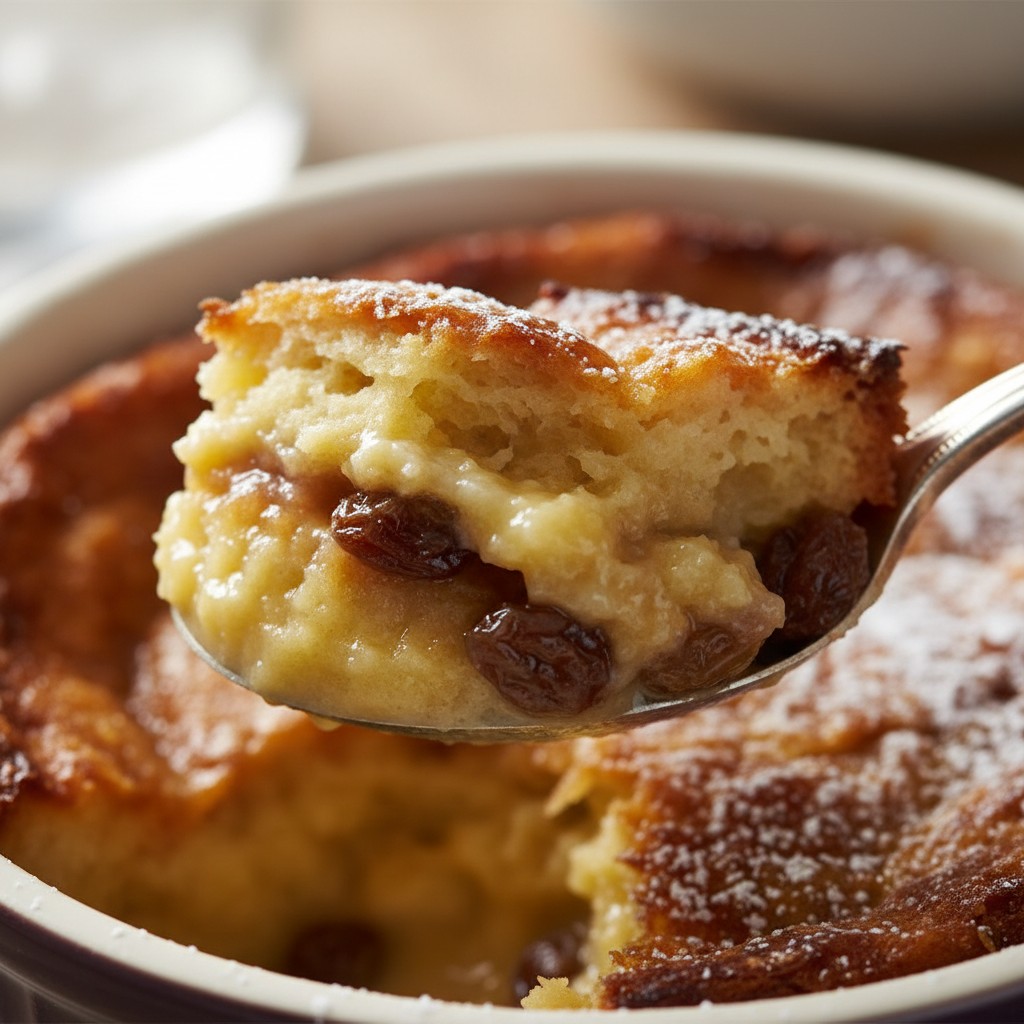
Delia's Notes from the Kitchen
The secret to a truly magnificent bread and butter pudding lies in patience. Don't be tempted to skip the 30-minute standing time; it is this period of rest that transforms simple ingredients into something quite sublime. The bread needs time to drink up that lovely custard, ensuring every mouthful is moist and flavourful. It is the most important step in the entire recipe.
How to Store & Reheat
Allow the pudding to cool completely before covering and storing in the refrigerator for up to two days. It is quite delicious eaten cold. To reheat, place individual portions in a microwave-safe bowl and heat for 30-60 seconds, or place the entire dish in a low oven (around 150°C) for 15-20 minutes until warmed through.
Frequently Asked Questions
Why did my custard turn out lumpy or scrambled?
This almost always happens for one of two reasons. Either the milk was too hot when poured into the eggs, or the pudding was baked at too high a temperature without the protection of a bain-marie. Gentle, even heat is the key to a silky custard.
Can I use fresh bread instead of stale?
You can, but the result will not be as good. Stale bread is drier and therefore more absorbent, soaking up the custard beautifully. Fresh bread can become soggy and fall apart, leading to a mushy texture.
What is a bain-marie and is it absolutely necessary?
A bain-marie, or water bath, is simply a hot water bath that surrounds the pudding dish during baking. It is absolutely essential for delicate custards like this one, as it insulates the dish from the direct heat of the oven, allowing it to cook gently and evenly.
How do I know for certain when the pudding is cooked?
The top will be golden and puffed up, and the custard around the edges will be set. The very centre should still have a slight 'wobble' when you gently shake the dish. It will continue to set as it stands after coming out of the oven.
Can I prepare this in advance?
Yes, you can assemble the pudding up to the point before baking. Cover it with cling film and keep it in the refrigerator for up to 4 hours. Allow it to come towards room temperature for 20 minutes before baking, perhaps adding a few extra minutes to the cooking time.