Classic Homemade Blackcurrant Jam
Capture the essence of a British summer with this intensely flavourful blackcurrant jam. A truly reliable recipe for achieving that perfect, glossy set every single time.
Mastering the Art of a Foolproof Delia Smith Blackcurrant Jam Recipe
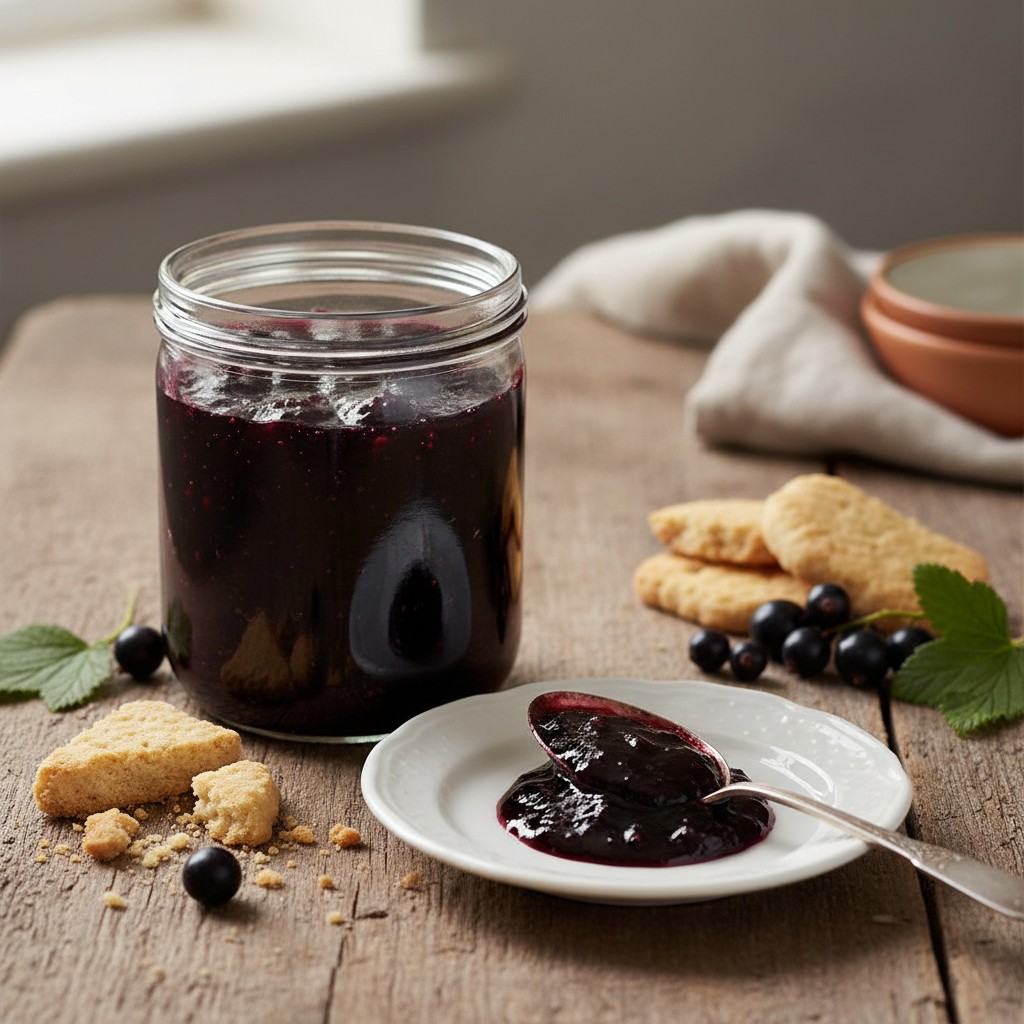
There is nothing quite like this Delia Smith Blackcurrant Jam Recipe to capture the very essence of high summer. The beauty of blackcurrants is that they are naturally high in pectin and acidity, which are the two vital components needed for a jam to set properly. This means we don't need to add any extra ingredients like lemon juice or commercial pectin; the fruit does all the hard work for us, making it one of the most reliable preserves a home cook can make.
Making your own jam is a deeply satisfying process, turning a glut of seasonal fruit into something that can be enjoyed for months to come. The aroma that fills the kitchen as the currants bubble away is one of life's simple pleasures. This recipe is designed to be straightforward and dependable, removing any guesswork and giving you the confidence to produce jars of glistening, perfectly set jam that will far surpass anything you can buy in a shop.
We will go through each stage with precision, from preparing the fruit and sterilising the jars correctly, to achieving that crucial 'rolling boil' and testing for the setting point. Follow these instructions carefully, and you will be rewarded with a pantry full of the most superb blackcurrant jam, ready for toast, scones, or even as a gift for someone special.
Why You'll Love This Recipe
- Blackcurrants are naturally rich in pectin, the gelling agent that makes jam set, ensuring a successful outcome without additional ingredients.
- Using preserving sugar, which has larger crystals that dissolve slowly, prevents the jam from becoming grainy and helps to create a clearer, brighter finish.
- The 'cold saucer test' is the most traditional and reliable method for checking the setting point, removing any doubt and preventing over-boiling.
- Sterilising the jars properly in the oven ensures they are completely free of bacteria, which is crucial for the long-term preservation of the jam.
Ingredients
- 1.5kg fresh blackcurrants, washed and stalks removed
- 900ml water
- 1.8kg preserving sugar
Equipment Needed
A large preserving pan or a very large, heavy-based saucepan (at least 6-litre capacity) · Long-handled wooden spoon · Jam jars with tight-fitting, screw-top lids (approx. 4 x 450g) · A small saucer, placed in the freezer before you start · A ladle · A jam funnel (optional, but highly recommended for neatness)
Step-by-Step Instructions
- First, you must prepare your jars. Wash them thoroughly in hot, soapy water, rinse well, and then place them upside down on a baking tray in a cool oven set to 140°C (120°C Fan, Gas Mark 1) to sterilise. They need to be in the oven for at least 20 minutes and should be hot when you pour in the jam.
- Place the prepared blackcurrants and the water into a preserving pan or a very large, heavy-based saucepan. Bring to a simmer over a medium heat and let the fruit cook gently for about 15-20 minutes, or until the skins are very soft and have started to break down.
- Now, add the preserving sugar to the pan. It is vital that you keep the heat low and stir continuously with a long-handled wooden spoon until every single crystal of sugar has dissolved. You can check this by lifting the spoon; if you see any crystals, continue to stir until they are gone. Do not be tempted to rush this stage, as undissolved sugar can cause the jam to crystallise later on.
- Once the sugar is completely dissolved, turn the heat up high and bring the mixture to a rapid, 'rolling' boil. This means a boil that cannot be stirred down. Start timing now and boil for 8-10 minutes.
- To test for a set, remove the pan from the heat. Take your chilled saucer from the freezer and drop a small teaspoon of the jam onto it. Leave it for a minute, then push it with your finger. If the surface wrinkles and holds its shape, the setting point has been reached. If it is still liquid, return the pan to the heat and boil for another 2 minutes before testing again.
- Once the setting point is reached, turn off the heat. Use a spoon to skim off any scum that has risen to the surface. Let the jam sit in the pan for about 15 minutes; this helps the fruit to distribute evenly throughout the jam rather than floating to the top of the jars.
- Carefully remove your hot jars from the oven. Using a jam funnel and a ladle, pour the hot jam into the sterilised jars, filling them almost to the very top. Seal immediately with sterilised, tight-fitting lids. Leave to cool completely, at which point you will hear the lids 'pop' as they form a vacuum seal.
- Label your jars with the name and date, and store in a cool, dark place.
Delia's Notes from the Kitchen
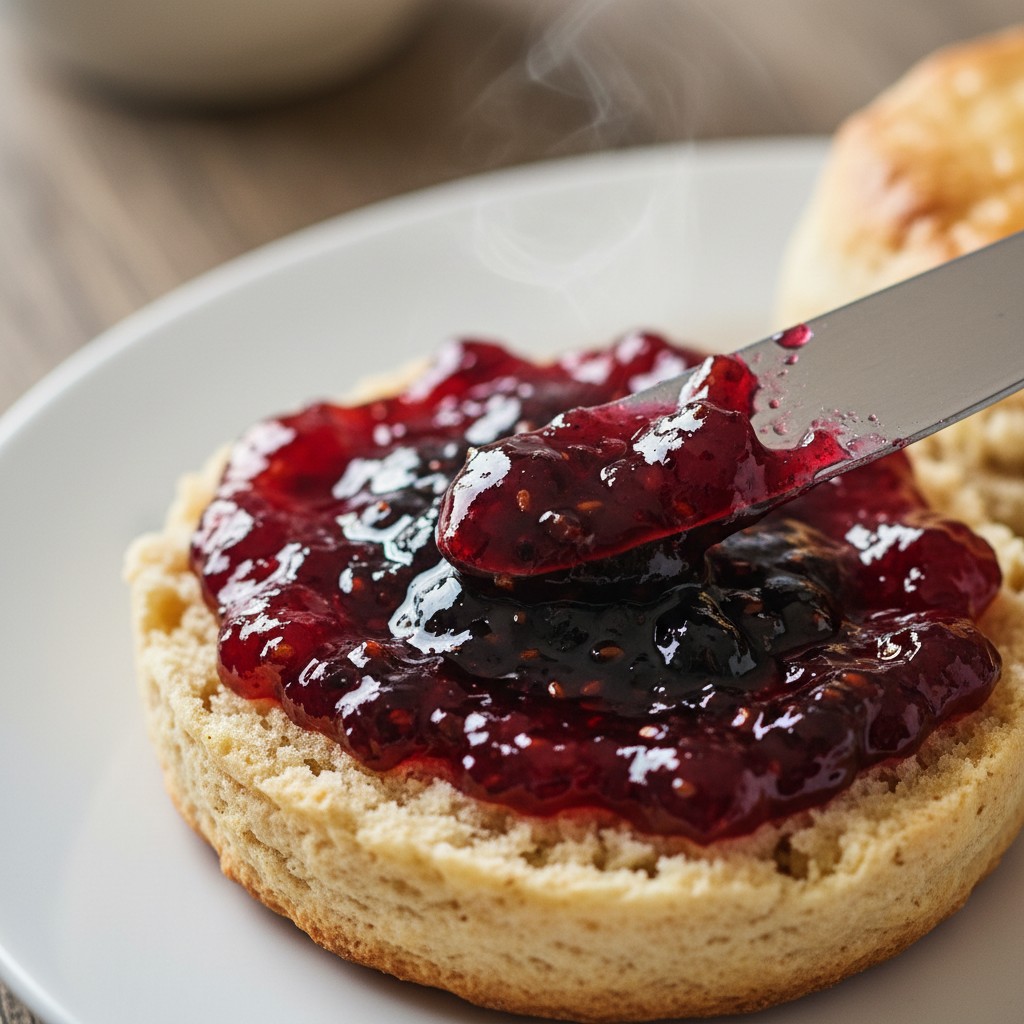
The most critical stage for a clear, perfectly textured jam is the very beginning. When you add the sugar, you must have the patience of a saint. Keep the heat low and stir, stir, stir until you are absolutely certain every last crystal has dissolved. If you rush this and boil the mixture with undissolved sugar, you will end up with a grainy jam. A smooth base is the foundation for success.
How to Store & Reheat
When sealed correctly and stored in a cool, dark, and dry place (like a pantry), the unopened jam will keep for at least a year. Once a jar is opened, it must be kept in the refrigerator and is best consumed within 6 weeks.
Frequently Asked Questions
My jam didn't set. What went wrong?
This is usually because the jam wasn't boiled for long enough at a high enough temperature. It needs to reach 105°C (220°F) and be at a 'rolling boil'. Always do the wrinkle test on a cold saucer to be certain before you decant it.
Can I use frozen blackcurrants for this recipe?
Yes, absolutely. There is no need to defrost them first. Simply place the frozen currants in the pan with the water and proceed with the recipe as written. You may need to cook them for a few minutes longer initially to ensure they are completely soft.
Why do my jars need to be hot when I pour the jam in?
Pouring hot jam into cold glass jars can cause them to crack due to thermal shock. Using hot, sterilised jars prevents this and also ensures that no new bacteria are introduced to your perfectly preserved jam.
Can I reduce the amount of sugar in the recipe?
I would strongly advise against it. The sugar is not just for sweetness; it is a crucial preserving agent that inhibits mould growth and helps the jam to set. Reducing the quantity will compromise the set and the shelf-life of your jam.
What is the 'scum' on top of the jam and do I have to remove it?
The scum is simply impurities and air bubbles that rise to the surface during boiling. It is perfectly harmless, but skimming it off results in a much clearer, more professional-looking jam. Some people stir in a tiny knob of butter at the end of boiling, which can help to dissolve it.