How to Cook a Perfect Beef Bourguignon
There are few dishes more comforting and rewarding than a classic Beef Bourguignon. This recipe will guide you through each step to achieve a rich, deeply flavoured stew that is truly worth the effort.
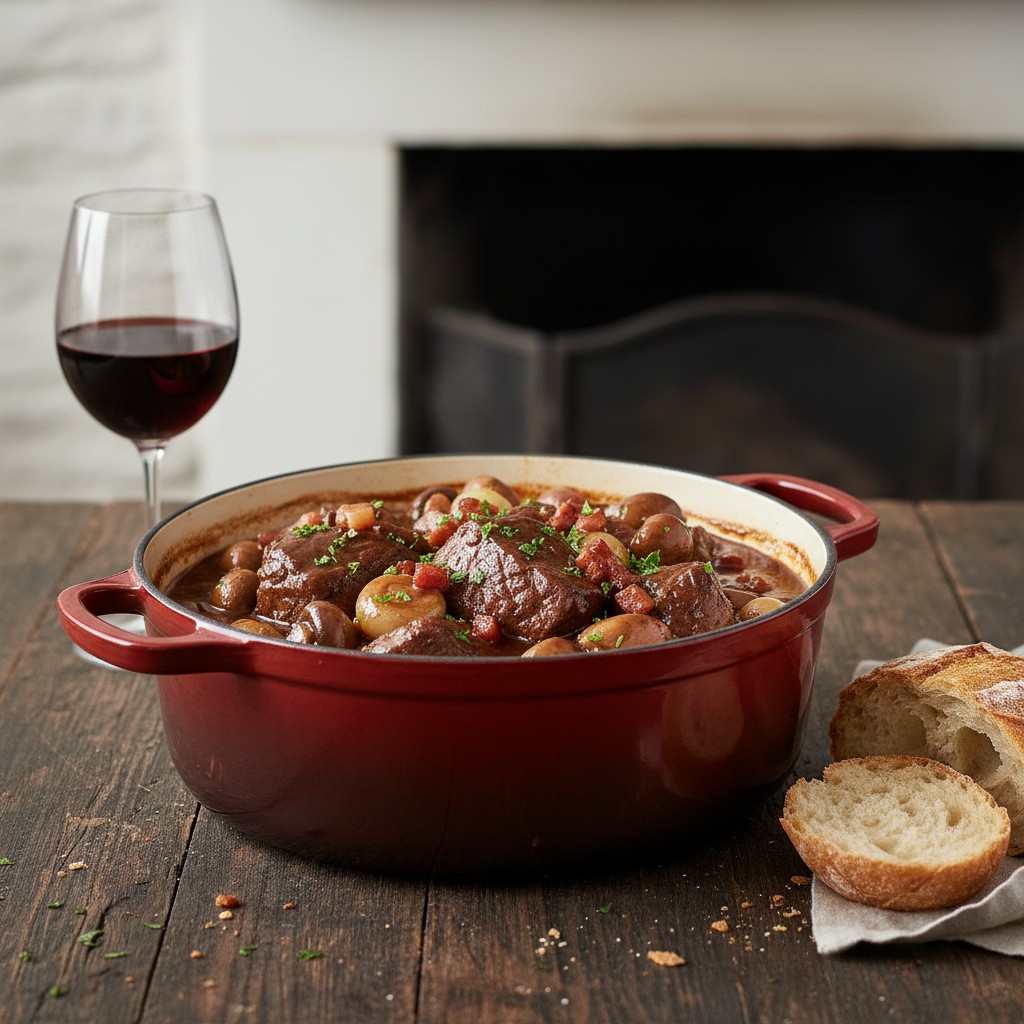
There is something profoundly satisfying about placing a casserole in the oven on a chilly afternoon, knowing that in a few hours, something truly magical will emerge. Beef Bourguignon is, for me, the absolute pinnacle of this kind of slow, gentle cooking. It isn't just a recipe; it's a lesson in flavour building, a testament to how simple, good-quality ingredients can be transformed into a dish of immense depth and character.
Originally a peasant dish from the Burgundy region of France, its genius lies in simmering tough, inexpensive cuts of beef in the local red wine until they become meltingly tender. Over time, it has evolved into a celebrated classic, but its heart remains the same: a rich, wine-infused gravy, succulent beef, and earthy vegetables. It’s a dish that commands respect but shouldn’t inspire fear. With a little patience and attention to detail, a truly superlative Bourguignon is well within your grasp.
My method is a traditional one, broken down into manageable stages. Please don’t be put off by the list of ingredients or the cooking time; much of it is simply allowing the casserole to burble away quietly in the oven, doing all the hard work for you. The result is a meal of such profound comfort and flavour that it will become a treasured part of your cooking repertoire for years to come.
Why You'll Love This Recipe
- Browning the beef in batches is essential. This creates the Maillard reaction, developing a deep, savoury crust that forms the flavour foundation of the entire stew.
- Using a full-bodied red wine, like a Burgundy or Pinot Noir, and a good quality beef stock provides a sauce with unparalleled depth and complexity. This is not the place for cheap cooking wine.
- A long, slow cook in a low oven breaks down the connective tissues in the braising steak, rendering it incredibly tender without drying it out. This gentle heat is the secret to a perfect texture.
Ingredients
- 1.2kg braising steak (chuck or shin), cut into 4-5cm cubes
- 175g smoked bacon lardons, or streaky bacon cut into strips
- 2 tbsp plain flour
- 1 tsp salt
- 1/2 tsp freshly milled black pepper
- 2 tbsp olive oil
- 2 large onions, peeled and roughly chopped
- 2 medium carrots, peeled and cut into 1cm rounds
- 2 cloves garlic, peeled and lightly crushed
- 750ml bottle of full-bodied red wine (a Burgundy, Pinot Noir, or good Merlot)
- 300ml beef stock, preferably homemade or good quality
- 1 bouquet garni (a bay leaf, a few sprigs of thyme and parsley stalks, tied together)
- 250g button mushrooms
- 25g butter
- 1 tbsp olive oil
- A handful of fresh parsley, chopped, to serve
Equipment Needed
Large heavy-based flameproof casserole dish with a lid · Large mixing bowl · Sharp knife · Chopping board · Slotted spoon · Wooden spoon · Frying pan
Step-by-Step Instructions
- First, pre-heat your oven to 160°C (140°C Fan, Gas Mark 3). Pat the beef cubes thoroughly dry with kitchen paper – this is a critical step for achieving a good sear. In a large bowl, mix the flour with the salt and pepper, then toss the beef cubes in the seasoned flour until they are lightly coated.
- Place a large, heavy-based, flameproof casserole dish over a medium-high heat. Add the bacon lardons and cook for 5-7 minutes until they are crisp and have rendered their fat. Remove the lardons with a slotted spoon and set aside, leaving the fat in the pan.
- Add one tablespoon of olive oil to the pan if needed. Now, working in batches so as not to overcrowd the pan, brown the beef cubes on all sides. This will take about 5-8 minutes per batch. Don't rush this stage. As each batch is browned, remove it and set aside with the bacon.
- Once all the beef is browned, lower the heat slightly and add the chopped onions and carrots to the casserole. Cook for about 10 minutes, stirring occasionally, until softened and lightly caramelised. Add the crushed garlic and cook for another minute until fragrant.
- Return the browned beef and bacon to the casserole. Pour in the red wine, scraping the base of the pan with a wooden spoon to release all the flavourful browned bits (this is called deglazing). Bring to a simmer and let it bubble for a minute or two to cook off some of the alcohol.
- Now add the beef stock and the bouquet garni. The liquid should almost cover the meat. Bring it back to a gentle simmer, then put a lid on, and transfer the casserole to the pre-heated oven. Cook for 2.5 to 3 hours.
- About 20 minutes before the cooking time is up, prepare the mushrooms. Heat the butter and the remaining tablespoon of olive oil in a frying pan. Add the whole button mushrooms and cook over a medium-high heat for about 8-10 minutes, until golden brown all over. Season with a little salt and pepper.
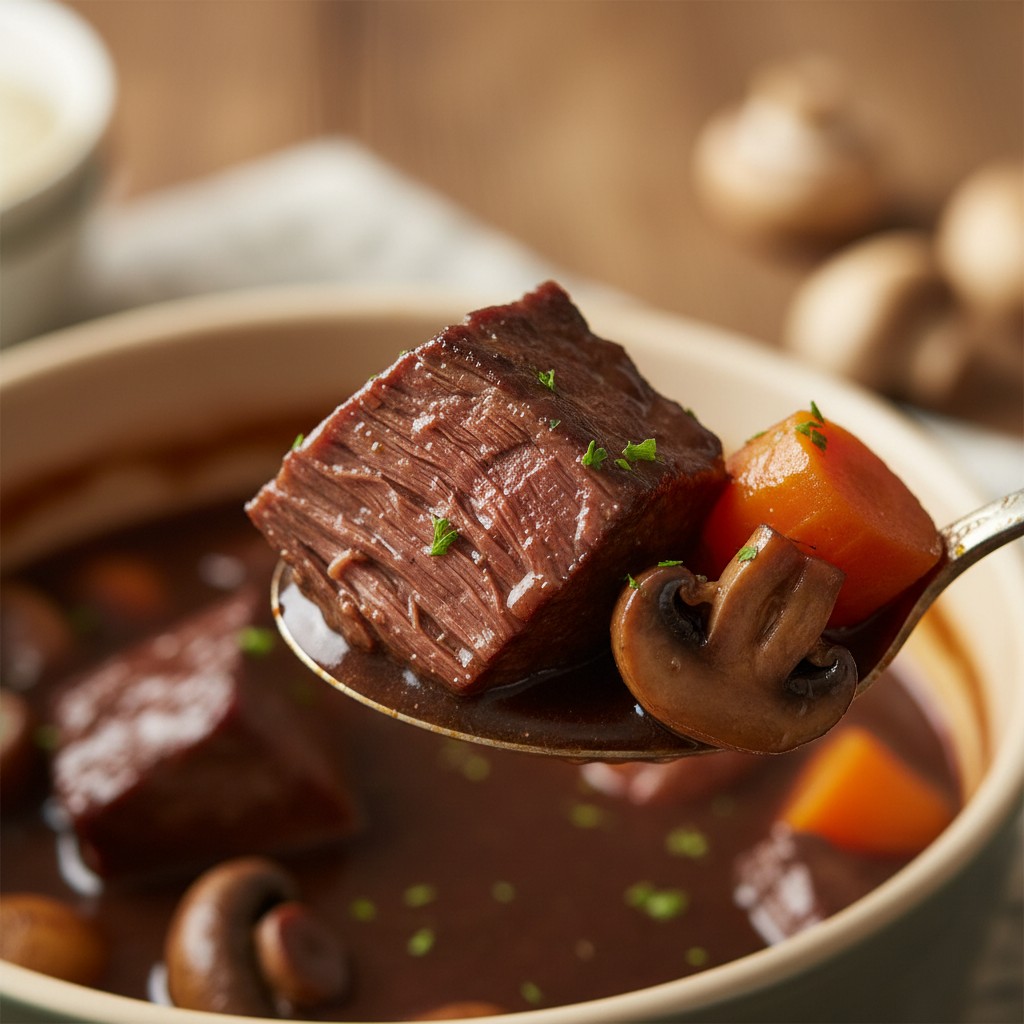
- After 3 hours, the beef should be meltingly tender. Carefully remove the casserole from the oven. Skim any excess fat from the surface of the stew. Fish out the bouquet garni. Stir in the cooked mushrooms and the reserved crispy bacon.
- Check the seasoning and adjust if necessary. If you find the sauce is a little thin for your liking, you can simmer it gently on the hob for a few minutes with the lid off to reduce it. Serve hot, scattered with fresh parsley.
Delia's Notes from the Kitchen
A final thought on success. The most important ingredient here is time. Rushing the browning of the meat or cutting the oven time short will compromise the final result. See it as an investment. The time you put in will be returned tenfold in the flavour and texture of the finished dish. Also, don't skip drying the beef; wet meat will steam, not sear, and you will lose that all-important flavour base.
How to Store & Reheat
Like many stews, Beef Bourguignon is even better the next day. Allow it to cool completely before storing in an airtight container in the refrigerator for up to 3 days. It also freezes exceptionally well for up to 3 months. To reheat, place it in a saucepan over a low heat, stirring occasionally, until piping hot. You may need to add a splash of stock or water if the sauce has thickened too much.
Frequently Asked Questions
Can I use a different red wine?
Yes, but the key is to use a wine you would happily drink. A Burgundy (Pinot Noir) is traditional, but a good quality Merlot or Cabernet Sauvignon will also work well. Avoid anything labelled 'cooking wine'.
My beef turned out tough. What went wrong?
This usually happens for two reasons: either the wrong cut of meat was used (you need a cut with fat and collagen like chuck), or it wasn't cooked for long enough at a low enough temperature. This dish requires patience; the long, slow cook is what makes the beef tender.
Can I make this in a slow cooker?
You can, but all the initial browning and sautéing steps must be done in a pan on the hob first to build flavour. Then, transfer everything to the slow cooker and cook on low for 6-8 hours. You may need to reduce the sauce on the hob at the end as slow cookers don't allow for evaporation.
How do I thicken the sauce if it's too thin?
The flour on the beef should thicken it sufficiently. If it's still too thin, you can either simmer it with the lid off for 15-20 minutes at the end, or make a 'beurre manié' by mashing equal parts soft butter and plain flour into a paste and whisking small bits into the simmering stew until it reaches your desired consistency.
Do I have to add the mushrooms and bacon at the end?
I strongly recommend it. If you add the mushrooms at the beginning, they can become waterlogged and lose their texture. Cooking the bacon separately and adding it back at the end ensures it stays crisp, providing a lovely textural contrast to the soft beef.