Classic French Béarnaise Sauce
Master the art of this classic French sauce, the perfect partner for a beautifully cooked steak. My method ensures a perfect, creamy emulsion every single time.
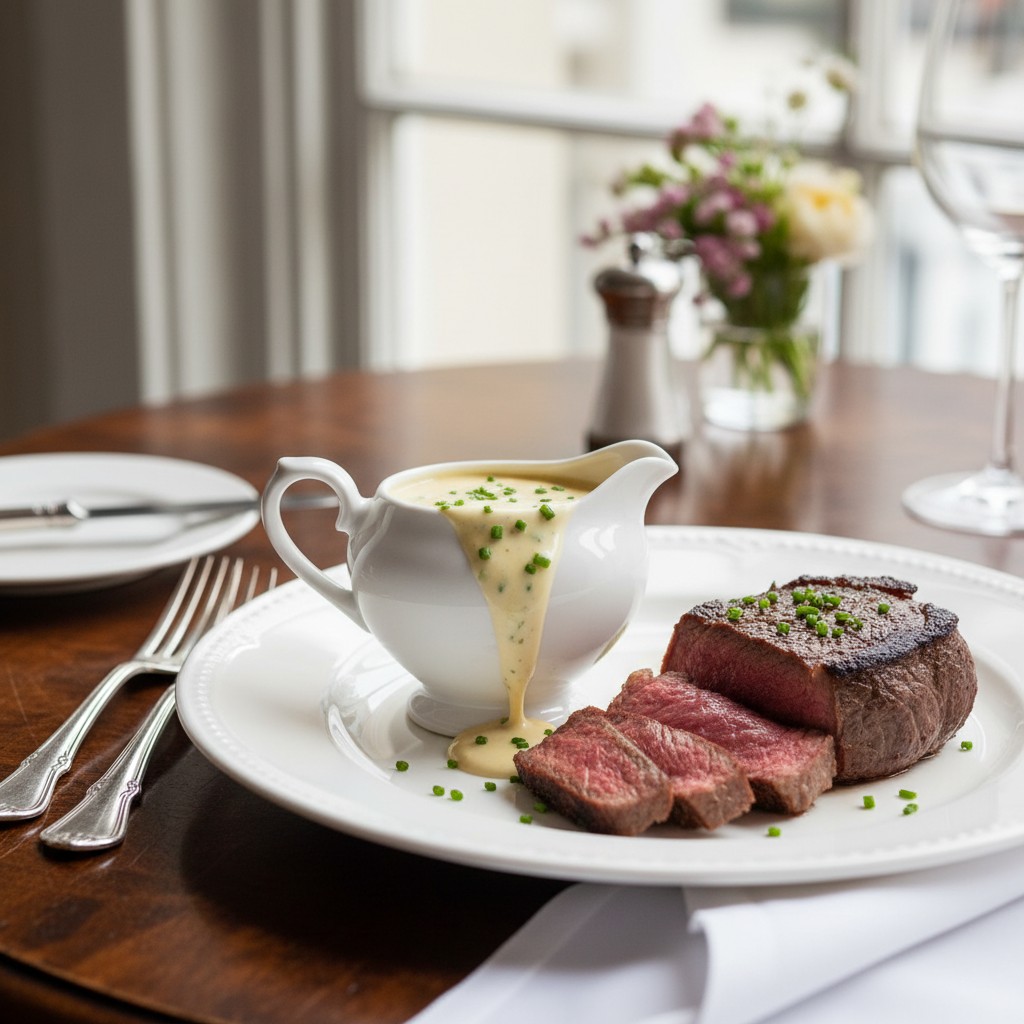
Mastering the Classic: Your Definitive Delia Smith Bearnaise Sauce Recipe
There is nothing quite so rewarding as mastering a classic, and this Delia Smith Bearnaise Sauce Recipe is truly one of the greats. So many people are put off, believing it to be temperamental and tricky, but I am here to tell you that with a little understanding of the technique, it is entirely achievable in your own kitchen. It is, in essence, a child of Hollandaise, but with its own distinct personality derived from a sharp, aromatic reduction of vinegar, shallots, and, crucially, fresh tarragon.
The magic lies in creating an emulsion, which is simply the process of persuading two ingredients that don't usually mix—in this case, butterfat and water—to come together in a stable, creamy union. The egg yolks are the mediator here, and with gentle heat and a steady hand, they perform this task beautifully. The result is a sauce of sublime richness and complexity, with the aniseed notes of tarragon cutting through the butter, making it the most wonderful accompaniment to a piece of grilled meat or fish.
So, please don't be daunted. We will go through this step-by-step, explaining the 'why' behind each stage. Once you have made it yourself, you will wonder why you ever bought it in a jar. This is proper cooking, and the results are more than worth the small effort required.
Why You'll Love This Recipe
- Using a bain-marie (a bowl over simmering water) provides gentle, indirect heat, which is the absolute key to preventing the egg yolks from scrambling.
- Clarifying the butter beforehand removes the milk solids and water, which can cause the sauce to split and results in a purer, richer flavour.
- My precise method for reducing the vinegar and shallots creates a concentrated flavour base, ensuring the finished sauce is perfectly balanced and not just buttery.
Ingredients
- 175g unsalted butter
- 2 tbsp white wine vinegar
- 2 tbsp dry white wine or vermouth (optional)
- 1 large shallot, very finely chopped
- 6 black peppercorns, lightly crushed
- 2 large sprigs of fresh tarragon, leaves and stalks separated
- 3 large free-range egg yolks
- 1 tbsp cold water
- 1 tbsp finely chopped fresh tarragon leaves
- 1 tsp finely chopped fresh chervil or parsley
- A squeeze of fresh lemon juice
- Salt and freshly ground white pepper
Equipment Needed
Small heavy-based saucepan · Heatproof bowl (glass or stainless steel) · Fine-mesh sieve · Balloon whisk · Measuring spoons and jug
Step-by-Step Instructions
- First, clarify the butter. Melt it gently in a small saucepan over a very low heat. As it melts, the milk solids will sink to the bottom and a foam will rise to the top. Skim off the foam with a spoon. Carefully pour the clear, golden butterfat into a jug, leaving the milky solids behind. Keep the clarified butter warm.
- Now, make the flavour base. In the same small saucepan (wiped clean), combine the white wine vinegar, wine or vermouth (if using), the finely chopped shallot, crushed peppercorns, and the reserved tarragon stalks. Bring to a simmer and let it bubble away until it has reduced by about two-thirds. You should be left with about 1 tablespoon of intensely flavoured liquid. Strain this reduction through a fine-mesh sieve into a small bowl, pressing down on the solids to extract all the liquid. Discard the solids.
- Prepare a bain-marie. Half-fill a medium saucepan with water and bring it to a gentle simmer. Find a heatproof bowl (glass or stainless steel) that fits snugly over the top of the pan without touching the water.
- Place the egg yolks, the strained reduction, and 1 tablespoon of cold water into the heatproof bowl. Whisk them together for a minute or so until they are pale and slightly foamy. Now place the bowl over the pan of simmering water.
- Whisk continuously until the mixture thickens to the consistency of a light custard – it should be thick enough to leave a trail when you lift the whisk. This will take about 3-4 minutes. Do not let it get too hot or it will scramble.
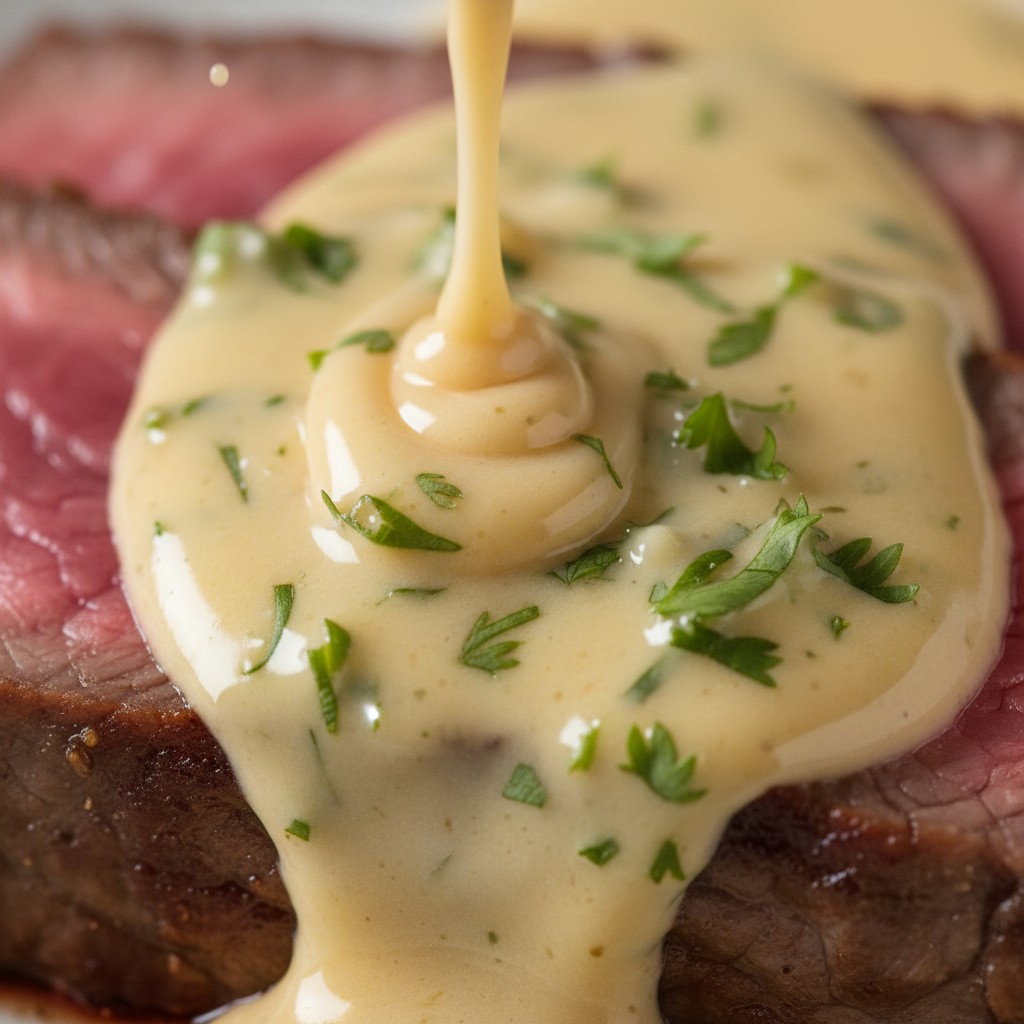
- Now, remove the bowl from the heat and place it on a damp cloth on your work surface to hold it steady. Begin to add the warm clarified butter, literally one drop at a time to begin with, whisking constantly. As the sauce starts to emulsify and thicken, you can begin to pour the butter in a very thin, steady stream. Continue whisking until all the butter is incorporated and you have a thick, glossy sauce.
- Finally, stir in the chopped fresh tarragon and chervil (or parsley). Season to taste with a little salt, a grinding of white pepper, and a squeeze of lemon juice to brighten the flavours. Serve immediately.
Delia's Notes from the Kitchen
The temperature is everything here. The water in your saucepan should be barely simmering, never boiling, as aggressive heat is the enemy of an egg-yolk emulsion. Also, when adding the butter, think 'thread' not 'stream'. The slower you go at the beginning, the more stable your sauce will be. A damp tea towel twisted into a circle makes a brilliant non-slip base for your bowl while you whisk.
How to Store & Reheat
Béarnaise is best served immediately as it does not store or reheat well. If you must store it, place it in an airtight container in the fridge for up to 24 hours. To revive it, place the cold, solidified sauce in a clean bowl and whisk in a teaspoon of warm water over a very gentle bain-marie until it loosens. Success is not guaranteed, as the emulsion is fragile.
Frequently Asked Questions
My sauce split! Can I fix it?
Yes, often you can. In a clean bowl, whisk a fresh egg yolk with a teaspoon of warm water. Then, very, very slowly, whisk the split, oily sauce into the new egg yolk, a tiny dribble at a time. With patience, it should come back together into a smooth emulsion.
Why do I need to use clarified butter?
Clarifying the butter removes the water and milk solids. These components can destabilise the emulsion and cause the sauce to split more easily. Using pure butterfat results in a richer, purer flavour and a more stable sauce.
Can I use a blender instead of whisking by hand?
You can, but you must be careful. Place the cooked egg yolk and reduction mixture in the blender. Turn it on, and then pour the warm clarified butter through the feeder cap in a very thin, steady stream until emulsified. It's faster but offers less control than the hand-whisked method.
What is the difference between Béarnaise and Hollandaise?
They are very similar. Both are warm egg yolk and butter emulsions. Hollandaise is the 'mother sauce', flavoured simply with lemon juice or white wine. Béarnaise is a 'daughter sauce', flavoured with a more complex reduction of vinegar, shallots, and tarragon.
My sauce is too thin. What went wrong?
If the sauce is thin and watery, it likely means the emulsion hasn't formed correctly. This can happen if you add the butter too quickly. You can try the rescue method with a new egg yolk. If it's simply a little looser than you'd like, it may just need a little more whisking over the gentle heat to thicken the yolks further, but be careful not to scramble them.