Classic White Sauce Lasagne al Forno
There is nothing quite like a properly made Lasagne al Forno, built on the foundation of a flawless white sauce. This recipe will teach you the time-honoured method for a dish that is pure comfort and joy.
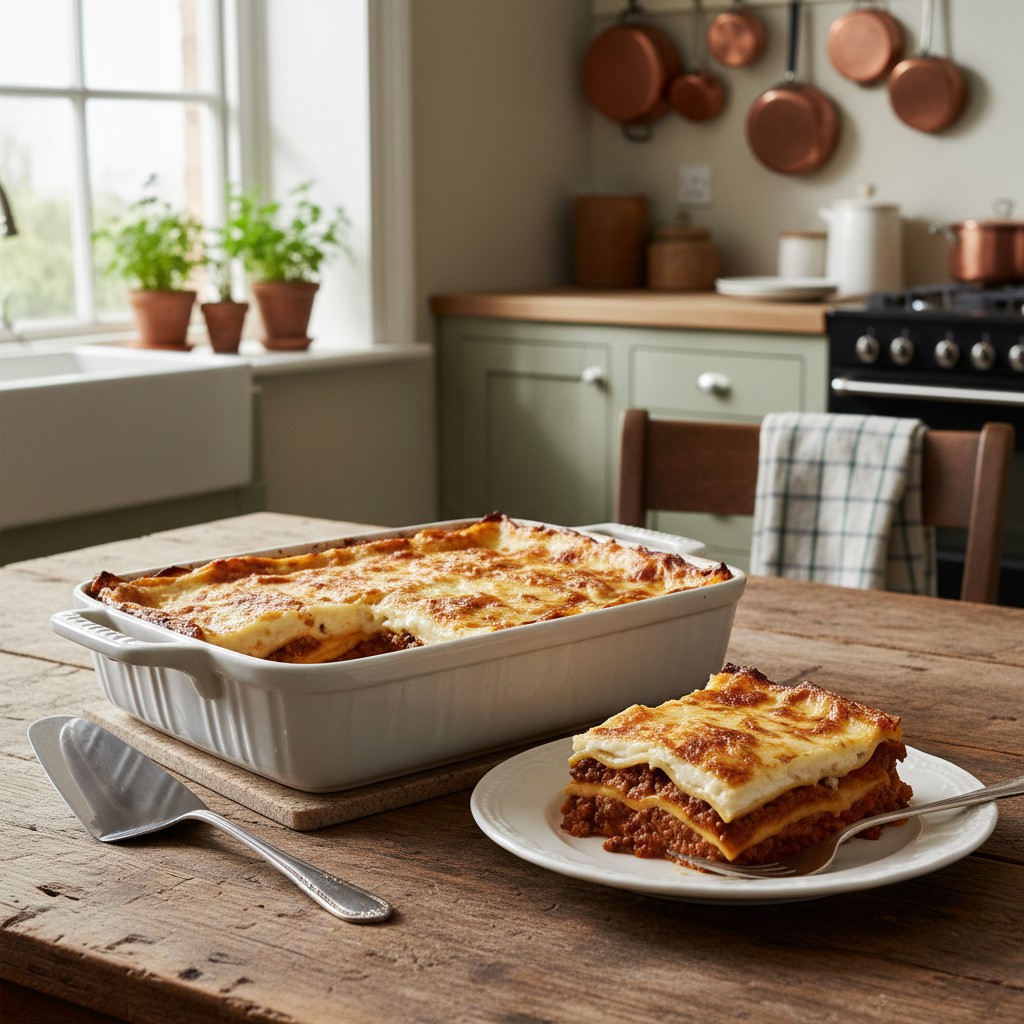
A truly magnificent Lasagne al Forno is one of the great triumphs of home cooking, yet it is so often a disappointment. The reason, more often than not, lies in the sauces. A proper lasagne is a symphony in two parts: a rich, deeply savoury meat ragù, and its essential partner, a creamy, luscious, and perfectly smooth white sauce – or Béchamel, to give it its proper name.
Many people are, I think, a little frightened of making a Béchamel sauce. They reach for a jar or a packet mix, fearing lumps and a floury taste. But I am here to tell you that with the right instruction and a little bit of patience, a flawless white sauce is not only achievable, but is actually one of the most satisfying and fundamental skills to master in the kitchen. It is the creamy, cheesy blanket that enrobes the pasta and meat, bringing the entire dish together in harmonious union.
This recipe is about teaching you the correct method, from the slow simmering of the ragù to the careful construction of the layers. It is not a quick meal, nor should it be. It is a labour of love that pays dividends in flavour and satisfaction, resulting in a lasagne with beautifully defined layers, a rich, complex taste, and a texture that is nothing short of sublime. This is the real thing, and once you've mastered it, you will never look back.
Why You'll Love This Recipe
- Making the Béchamel sauce from scratch with a butter and flour roux ensures a stable, lump-free sauce with a rich flavour that pre-made sauces simply cannot match.
- A slow-simmered, traditional ragù is essential. This develops a depth of flavour that forms the savoury foundation of the entire dish.
- Resting the lasagne after baking is a crucial, often-missed step. It allows the layers to set, making it easier to slice and serve neatly while the flavours meld and settle.
Ingredients
- For the Ragù:
- 1 tbsp olive oil
- 75g (3oz) unsmoked bacon, finely chopped
- 1 large onion, finely chopped
- 1 celery stick, finely chopped
- 1 carrot, finely chopped
- 450g (1lb) lean minced beef
- 150ml (¼ pint) dry red wine
- 400g can chopped tomatoes
- 2 tbsp tomato purée
- 250ml (9fl oz) beef stock
- 1 bay leaf
- Salt and freshly milled black pepper
- For the Béchamel Sauce:
- 50g (2oz) butter
- 50g (2oz) plain flour
- 750ml (1¼ pints) full-fat milk
- A good grating of fresh nutmeg
- 50g (2oz) Parmesan cheese, freshly grated
- Salt and freshly milled black pepper
- For Assembly:
- 250g (9oz) fresh or dried lasagne sheets
- 50g (2oz) Parmesan cheese, freshly grated, for the top
Equipment Needed
Large heavy-based saucepan or casserole dish · Medium heavy-based saucepan · Wooden spoon · Whisk · Rectangular ovenproof dish (approx. 20x30cm or 2-litre capacity) · Measuring jug · Kitchen scales · Grater
Step-by-Step Instructions
- First, make the ragù. Heat the olive oil in a large, heavy-based saucepan or casserole dish over a medium heat. Add the chopped bacon and fry for a couple of minutes until it starts to release its fat. Then add the onion, celery, and carrot. Cook gently for about 10 minutes, stirring occasionally, until the vegetables are soft and lightly golden.
- Increase the heat, add the minced beef to the pan, and cook, breaking it up with a wooden spoon, until it has browned all over. Pour in the red wine and let it bubble away until it has almost completely evaporated.
- Stir in the chopped tomatoes, tomato purée, beef stock, and the bay leaf. Season with salt and pepper, bring to a gentle simmer, then turn the heat down to its lowest setting. Cover the pan and let it cook very gently for at least 1 hour, or until the sauce is rich and thick. Remove the bay leaf before using.
- While the ragù simmers, prepare the Béchamel sauce. In a separate heavy-based saucepan, melt the butter over a low heat. Stir in the flour and cook gently for 1-2 minutes, stirring continuously, to make a paste (this is called a roux). Do not let it brown.
- Remove the pan from the heat. Gradually add the milk, a little at a time, whisking vigorously after each addition to create a smooth paste. Once about a third of the milk is incorporated and you have a thick, smooth sauce, you can add the rest of the milk more quickly, whisking all the time.
- Return the saucepan to a medium-low heat and bring it slowly to a simmer, stirring constantly with a wooden spoon, especially around the base and corners. Once it begins to bubble, turn the heat down and let it simmer for 5-8 minutes to cook out the floury taste. The sauce should be thick enough to coat the back of the spoon.
- Remove the sauce from the heat. Stir in the 50g of grated Parmesan, a good grating of nutmeg, and season to taste with salt and pepper. Place a piece of baking parchment or cling film directly on the surface of the sauce to prevent a skin from forming while you assemble the lasagne.
- Pre-heat your oven to 180°C (160°C Fan, Gas Mark 4). To assemble, lightly grease a rectangular ovenproof dish (approximately 20x30cm). Spread a thin layer of ragù over the base, followed by a thin layer of Béchamel.
- Arrange a single layer of lasagne sheets on top. You may need to break them to fit. Cover the pasta with a third of the remaining ragù, then a quarter of the remaining Béchamel. Repeat these layers twice more: pasta, ragù, Béchamel.
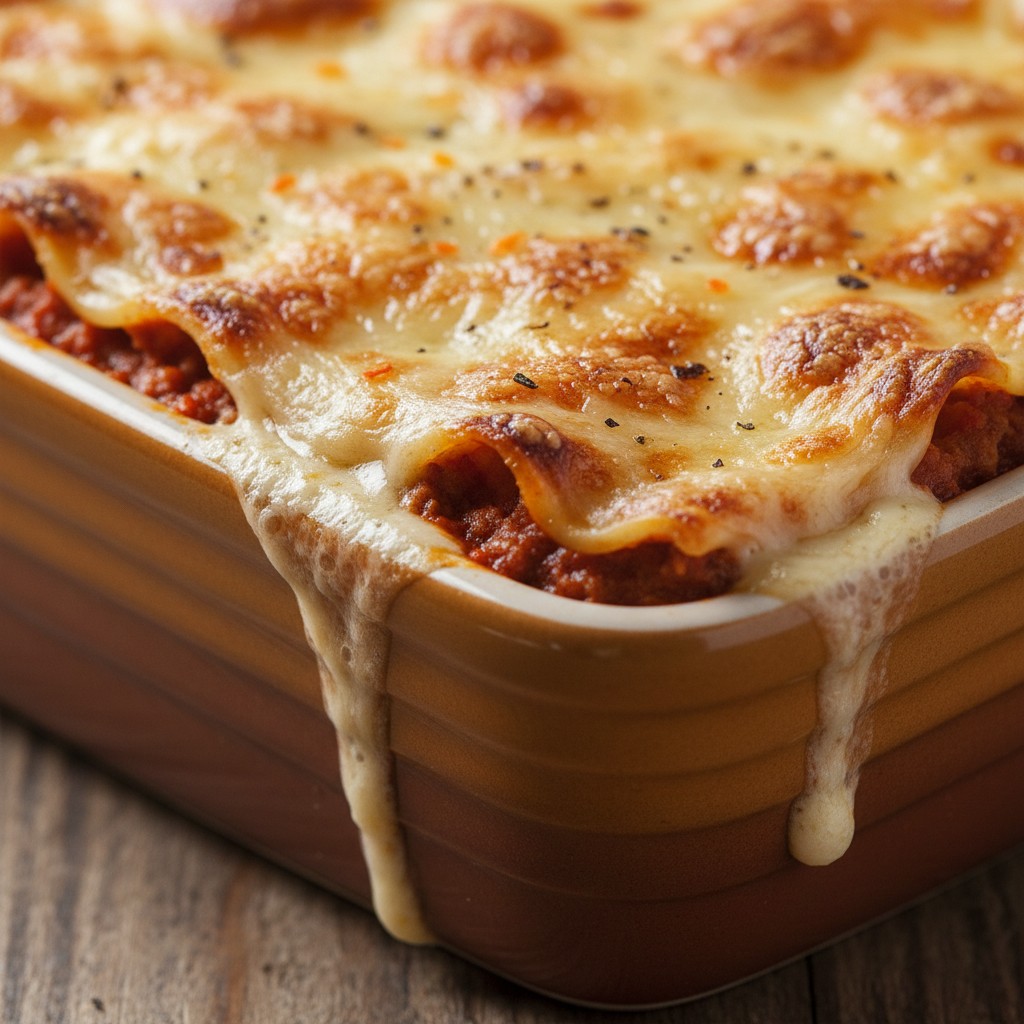
- Finish with a final layer of pasta sheets. Pour over the last of the Béchamel sauce, making sure to cover all the pasta right to the edges. Sprinkle the top evenly with the final 50g of grated Parmesan cheese.
- Bake in the pre-heated oven for 35-45 minutes, or until the top is golden brown and bubbling, and the pasta is cooked through. You can test this by inserting a skewer into the centre – it should meet no resistance.
- Crucially, allow the lasagne to rest for at least 10-15 minutes before serving. This allows the layers to set, making it much easier to cut and serve neat portions.
Delia's Notes from the Kitchen
The absolute key to a lump-free white sauce is patience and temperature control. When you first add the milk to the roux, it will seize up into a thick, rather unpromising-looking paste. Do not panic. This is exactly what should happen. Keep the pan off the heat and continue to whisk in the milk, a little at a time, until this paste slackens into a smooth, thick sauce. Only then should you return it to a gentle heat to cook through. This simple technique is the secret, and it will never fail you.
How to Store & Reheat
Allow the lasagne to cool completely, then cover the dish tightly with foil or cling film and store in the refrigerator for up to 3 days. To reheat, place the covered dish in an oven pre-heated to 180°C (160°C Fan, Gas Mark 4) for 20-30 minutes, or until piping hot throughout. Individual portions can also be reheated in a microwave. The lasagne also freezes exceptionally well; freeze in portions, defrost thoroughly in the refrigerator, and reheat as above.
Frequently Asked Questions
Why is my Béchamel sauce lumpy?
Lumps usually occur for two reasons: either the heat was too high, or the milk was added too quickly. To guarantee a smooth sauce, remove the pan from the heat when adding the first portion of milk. Whisk it into a thick, smooth paste before gradually adding more, whisking constantly.
Can I use 'no-boil' lasagne sheets?
Yes, absolutely. Most modern dried lasagne sheets are 'no-boil' and are designed to cook in the sauce. Just be sure your sauces are not overly thick and that the top layer of pasta is completely covered with Béchamel to prevent it from becoming dry and hard.
Can I make this vegetarian?
Certainly. To make a vegetarian version, replace the meat ragù with a sauce made from finely chopped mushrooms, lentils, and root vegetables. Sauté the vegetables as you would for the meat version and simmer with tomatoes and herbs to create a rich, savoury base.
My lasagne turned out watery. What went wrong?
A watery lasagne is usually caused by the sauces being too thin. Your ragù should be simmered until it's very thick, not soupy. Likewise, the Béchamel should be thick enough to coat the back of a spoon. Allowing the finished lasagne to rest before serving also helps it to set properly.
Is it really necessary to rest the lasagne after baking?
Yes, I believe it is essential. That 10-15 minute rest allows the molten sauces and pasta to firm up just enough. If you cut into it straight from the oven, it will likely collapse into a delicious but messy pile. Patience will reward you with neat, defined slices.