A Proper Ragu Bolognese
A true Ragu Bolognese is a labour of love, but one that rewards with unparalleled depth of flavour. Follow these steps for a perfect, authentic sauce every single time.
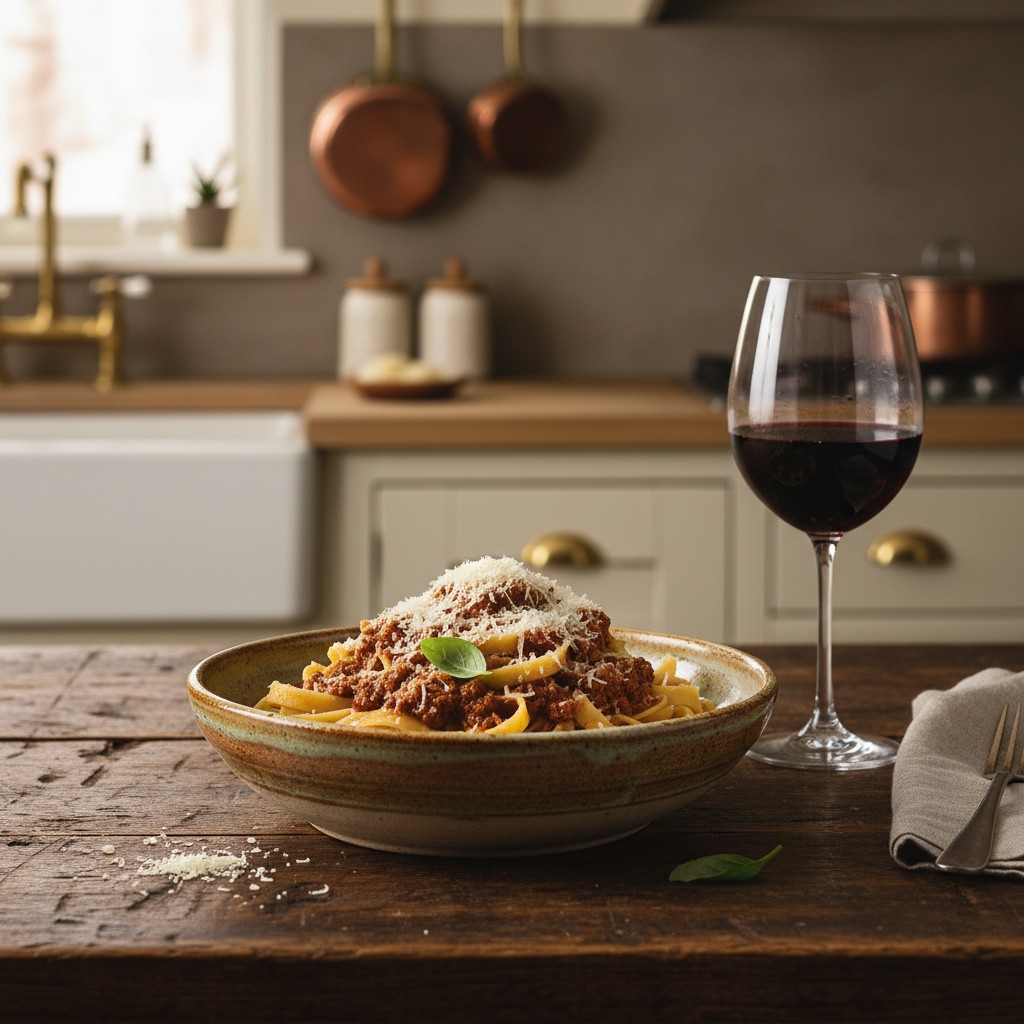
There is, I'm afraid, a great deal of misunderstanding surrounding what has become known in Britain as 'spag bol'. The real thing, a true ragu from Bologna, is a far more subtle, gentle, and altogether more serious affair. It is not a quick midweek supper but a lesson in patience, a slow-simmered sauce where meat, not tomato, is the star.
At the heart of any good ragu is the soffritto – a finely chopped mixture of onion, celery, and carrot, sweated down ever so slowly to form a sweet, aromatic base. This is the foundation upon which everything else is built, and it simply cannot be rushed. It is this attention to detail at the very beginning that makes all the difference in the end.
So, my advice is to set aside a quiet afternoon, put on the radio, and commit to the process. This recipe is not difficult, but it does demand your time. The reward, however, is a sauce of such profound depth and character that it will transform your understanding of what a bolognese can, and should, be.
Why You'll Love This Recipe
- The combination of beef and pork mince provides the perfect balance of rich flavour from the beef and tender, moist texture from the pork.
- Adding milk before the tomatoes is a traditional Bolognese technique. The lactic acid tenderises the meat, resulting in an exceptionally soft texture.
- A long, slow simmer of at least two to three hours is non-negotiable. This is what melds the flavours and transforms the sauce into something truly deep and complex.
Ingredients
- 1 tbsp olive oil
- 1 tbsp butter
- 125g pancetta, finely diced
- 1 large onion, very finely chopped
- 2 celery sticks, very finely chopped
- 2 medium carrots, very finely chopped
- 400g good-quality beef mince
- 400g good-quality pork mince
- 250ml full-fat milk
- 250ml dry white wine (or a light red)
- 2 tbsp double-concentrate tomato purée
- 400g tin of chopped tomatoes or passata
- 300ml beef or chicken stock
- 1 bay leaf
- A grating of fresh nutmeg
- Salt and freshly ground black pepper
- Fresh tagliatelle and freshly grated Parmesan cheese, to serve
Equipment Needed
Large, heavy-based casserole dish or Dutch oven with a lid · Wooden spoon · Sharp knife · Chopping board
Step-by-Step Instructions
- First, prepare the 'soffritto'. Place a large, heavy-based casserole dish or Dutch oven over a medium-low heat. Add the olive oil and butter. Once the butter has melted, add the diced pancetta and cook gently for 5-7 minutes until it has rendered its fat and is beginning to crisp.
- Add the finely chopped onion, celery, and carrot to the pan. Give everything a good stir, then turn the heat down to low, partially cover with a lid, and let the vegetables sweat for a good 15-20 minutes, stirring occasionally. They should be completely soft, translucent, and sweet-smelling, with no colour. Do not be tempted to rush this stage.
- Now, turn the heat up to medium-high. Add the beef and pork mince to the pan. Break it up with a wooden spoon and cook, stirring frequently, until the meat has browned all over. It's important to get a good colour on the meat, as this is where much of the flavour comes from. Season generously with salt and pepper.
- Pour in the wine. Let it bubble away fiercely, scraping up any browned bits from the bottom of the pan, until it has almost completely evaporated. This should take about 2-3 minutes.
- Next comes a crucial and traditional step. Pour in the milk, add a grating of nutmeg, and bring it to a simmer. Let it bubble gently until it, too, has almost completely evaporated and been absorbed by the meat. The sauce will look a little curdled at this point, but don't worry, this is normal.
- Stir in the tomato purée and cook for a minute, then add the tinned tomatoes (or passata) and the stock. Add the bay leaf. Bring the whole lot to a very gentle simmer.
- Once it is simmering, turn the heat down to the lowest possible setting. The sauce should barely 'plop' every few seconds. Partially cover with a lid, leaving a small gap for steam to escape. Now, leave it to cook for at least 2.5 to 3 hours. Check it every 30 minutes or so, giving it a stir to prevent it from catching on the bottom.
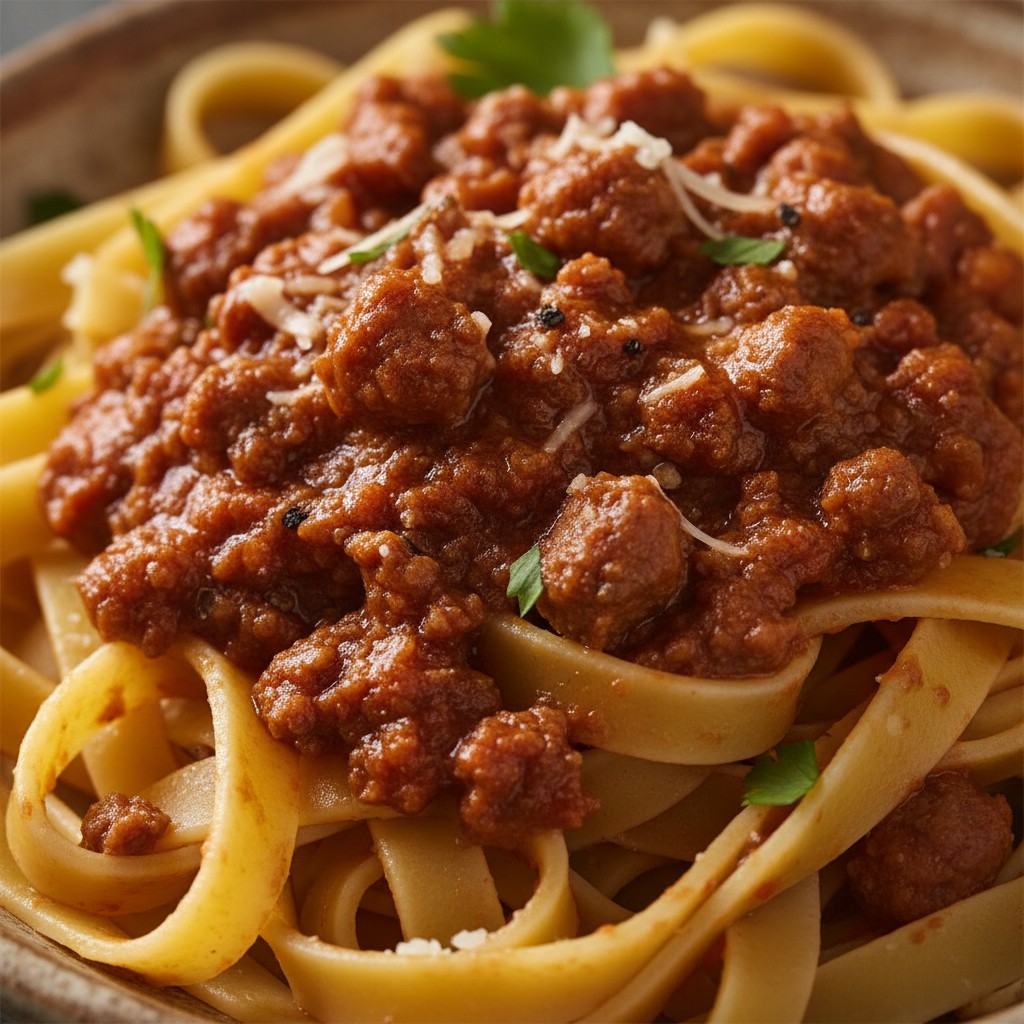
- After 3 hours, the ragu should be thick, dark, and intensely fragrant. The oil may have separated slightly around the edges, which is a good sign. Remove the bay leaf, taste the sauce, and adjust the seasoning with more salt and pepper if needed. If it's too thick, add a splash more stock or water. If it's too thin, simmer for a little longer with the lid off.
- Serve spooned over fresh tagliatelle (never spaghetti!), with a generous amount of freshly grated Parmesan cheese on top.
Delia's Notes from the Kitchen
The one ingredient that cannot be substituted in this recipe is time. Please, do not be tempted to rush it. The long, slow cooking is what marries the flavours and creates that deep, satisfying richness that is the hallmark of a proper ragu. Make it on a weekend when you are not in a hurry, and the results will be your reward. It is also a wonderful dish to make in a large batch, as it freezes perfectly.
How to Store & Reheat
Like many slow-cooked dishes, this ragu is even better the next day. Allow the sauce to cool completely before transferring it to an airtight container. It will keep in the refrigerator for up to 3 days. It also freezes beautifully for up to 3 months. To reheat, place the sauce in a saucepan over a low heat, adding a splash of water or stock if needed, and warm through gently until piping hot.
Frequently Asked Questions
Why do you add milk to a bolognese sauce?
This is a very traditional technique from Bologna. The lactic acid in the milk helps to tenderise the meat fibres, resulting in a much softer, more luscious texture in the final sauce. You must allow it to absorb fully before adding the tomatoes.
Can I use red wine instead of white wine?
Yes, absolutely. White wine is more traditional in some parts of Emilia-Romagna and creates a lighter sauce. Red wine will give a deeper colour and a richer, more robust flavour. Both are delicious.
Can I make this in a slow cooker?
You can, but you must complete the first three steps on the hob to build the flavour base. Brown the soffritto, pancetta, and mince as directed. Then, transfer everything to the slow cooker, add the remaining ingredients, and cook on low for 6-8 hours.
My sauce seems a bit thin. What did I do wrong?
It most likely just needs more time. A proper ragu is a thick, not-too-wet sauce. If yours is thin, simply remove the lid and continue to simmer gently, allowing the excess liquid to evaporate until it reaches the desired consistency.
Is it really necessary to cook it for 3 hours?
In a word, yes. Time is the key ingredient. The long, slow simmer is what transforms the individual components into a harmonious, deeply savoury sauce. It's the difference between a simple meat sauce and a true ragu.