A Proper Pasta Puttanesca
There is a particular kind of magic in creating a truly spectacular meal from the contents of a store cupboard. This is precisely that: a gutsy, satisfying bowl of pasta that's ready in under half an hour.
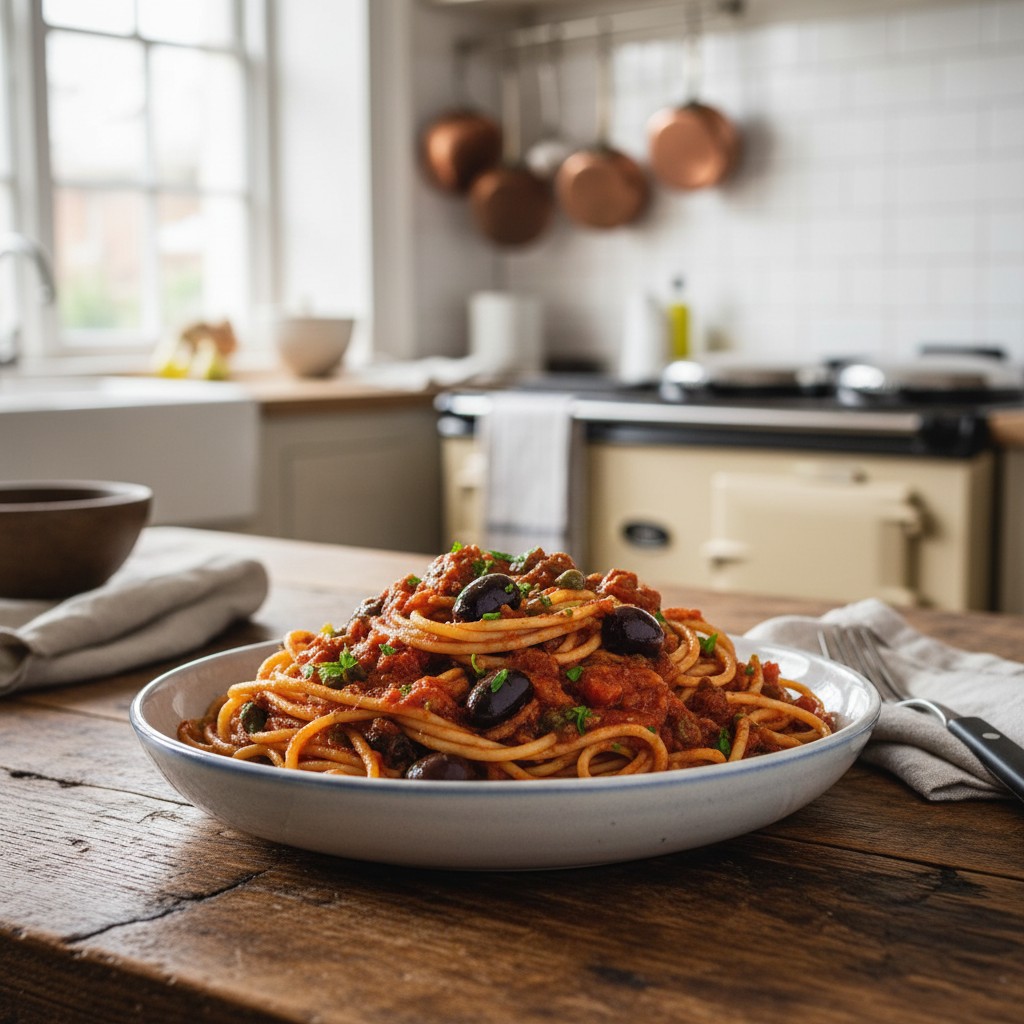
There are some recipes that feel like a conjuring trick, transforming the most humble of tins and jars into something utterly sublime. Pasta Puttanesca is, for me, the very definition of such a dish. It’s a riot of bold, punchy Mediterranean flavours – salty, spicy, and deeply savoury – that comes together in the time it takes to boil the pasta. It’s the perfect emergency supper, the meal you turn to when the fridge is bare but you refuse to compromise on a proper, satisfying dinner.
The name itself has a rather colourful, much-debated history, but what is certain is its place as a classic of the 'cucina povera', or 'poor kitchen', tradition in Southern Italy. This isn't about a lack of flavour, but rather a genius for creating it with simple, readily available ingredients. The combination of tomatoes, olives, capers, and anchovies is a masterclass in building layers of taste with the minimum of fuss.
My version sticks to the authentic spirit of the dish. It is not a subtle sauce; it is forthright and confident. The key is to use good quality ingredients – they are few, so each one must play its part – and to follow the method, which is designed to extract the maximum flavour from each component. This is how you learn to cook with confidence, by understanding how simple ingredients, treated correctly, can create something truly memorable.
Why You'll Love This Recipe
- Melting the anchovies into the oil at the beginning is crucial. This technique creates a deep, savoury umami base for the sauce, without any overtly 'fishy' taste.
- Using whole tinned plum tomatoes and crushing them yourself provides a better texture and a fresher, less acidic flavour than using ready-chopped tomatoes.
- Finishing the cooked pasta in the sauce for the final minute of cooking allows the spaghetti to absorb the flavours and become perfectly coated, ensuring every mouthful is delicious.
Ingredients
- 200g dried spaghetti or linguine
- 4 tablespoons extra virgin olive oil
- 2 large cloves of garlic, peeled and thinly sliced
- 1/4 - 1/2 teaspoon dried red chilli flakes, to your taste
- 6 anchovy fillets in oil, drained and roughly chopped
- 1 x 400g tin of whole plum tomatoes
- 75g black olives (Kalamata or Gaeta are best), pitted
- 1 heaped tablespoon capers in brine, rinsed and drained
- A small handful of fresh flat-leaf parsley, roughly chopped
- Sea salt and freshly ground black pepper
Equipment Needed
Large saucepan · Large, heavy-based frying pan or shallow casserole · Colander · Chopping board · Sharp knife · Wooden spoon
Step-by-Step Instructions
- First, put a large saucepan of well-salted water on to boil for the pasta.
- While the water is coming to the boil, you can begin the sauce. Heat the olive oil in a large, heavy-based frying pan or shallow casserole over a medium-low heat.
- Add the sliced garlic and chilli flakes. Allow them to sizzle gently for about a minute, stirring so the garlic doesn't brown – you just want to flavour the oil.
- Now add the chopped anchovy fillets. Using the back of a wooden spoon, mash and stir them into the oil until they have almost completely dissolved. This should take about 2 minutes.
- Next, tip the whole tin of tomatoes into the pan. Use your spoon to break them up against the side of the pan. Bring the sauce to a gentle simmer.
- Add the olives and capers to the sauce, season with a little black pepper (you won't need much salt because of the anchovies and capers), and let it simmer gently for 15-20 minutes, uncovered, until it has thickened slightly.
- While the sauce is simmering, cook the spaghetti in the boiling water according to the packet instructions, but for one minute less than the recommended time. It should be very 'al dente'.
- Just before the pasta is ready, scoop out a cupful of the pasta water and set it aside. Drain the pasta in a colander.
- Tip the drained pasta directly into the pan with the sauce. Add half the chopped parsley and toss everything together over the heat for one minute. If the sauce seems a little thick, add a splash of the reserved pasta water to loosen it to a coating consistency.
- Serve immediately in warm bowls, with the remaining fresh parsley scattered over the top.
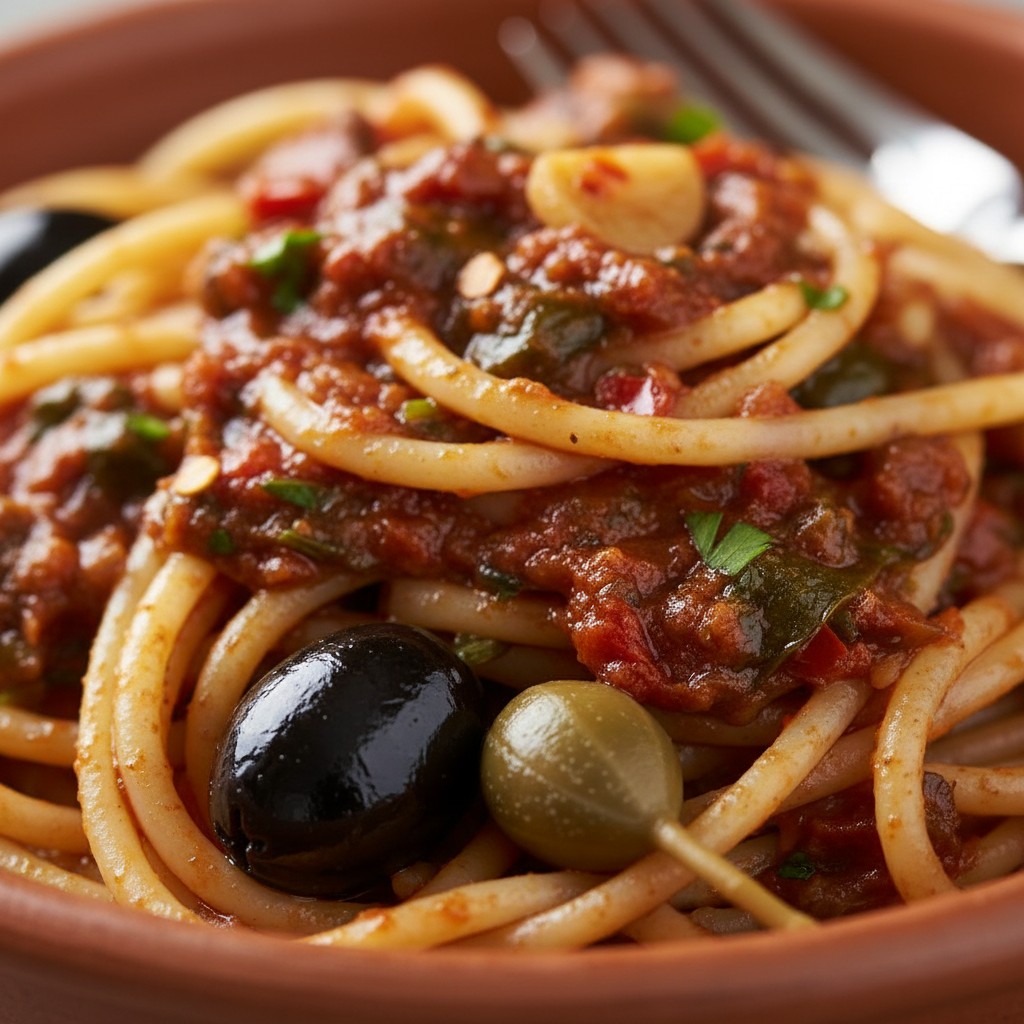
Delia's Notes from the Kitchen
A note on salt: Be very cautious when seasoning this sauce. The anchovies, capers, and olives all contribute a significant amount of salt. I find it rarely needs any extra salt at all, but you can taste it at the very end and adjust if you feel it's absolutely necessary. Remember also to salt your pasta water generously – it should taste like the sea. This seasons the pasta from within as it cooks.
How to Store & Reheat
Pasta Puttanesca is truly at its best the moment it is made. Leftover pasta can become soft and the sauce can be absorbed. If you must store it, place it in an airtight container in the fridge for up to one day. Reheat gently in a pan with a splash of water to loosen the sauce, but be aware the texture of the pasta will not be as good. The sauce itself, however, can be made ahead and stored in the fridge for 2-3 days.
Frequently Asked Questions
Do I really have to use anchovies? I don't like fishy flavours.
I must insist you do! The anchovies are the secret to the sauce's incredible depth. When melted into the oil at the start, they provide a savoury, umami flavour that is not at all 'fishy'. They are the soul of the dish, and without them, it simply wouldn't be a true Puttanesca.
Can I use fresh tomatoes instead of tinned?
You can, but the result will be a little different. You would need about 500g of very ripe fresh tomatoes, which you would need to peel, de-seed, and chop. The sauce may be a little fresher and lighter, and may need a longer cooking time to break down and thicken.
Is this recipe very spicy?
You are in complete control of the heat. My recipe suggests a range for the chilli flakes. If you are sensitive to spice, start with just a quarter of a teaspoon. If you love heat, use half a teaspoon or even a little more. You can always add more, but you cannot take it away.
What are the best olives to use?
Traditionally, dark, brine-cured olives like Gaeta from Italy are used. However, they can be hard to find. A good quality Greek Kalamata olive is an excellent and widely available substitute. The important thing is to use an olive with a robust flavour that can stand up to the other ingredients.
Why is my sauce too watery?
A watery sauce usually means it hasn't been simmered for long enough. Allow it to bubble away gently, uncovered, so the excess liquid can evaporate and the flavours can concentrate. Also, be sure not to add too much pasta water at the end – just a small splash if needed.