My Classic Lasagne Al Forno
There are few dishes more comforting than a properly made Lasagne al Forno. My recipe breaks down the process into simple, manageable steps for a truly authentic result.
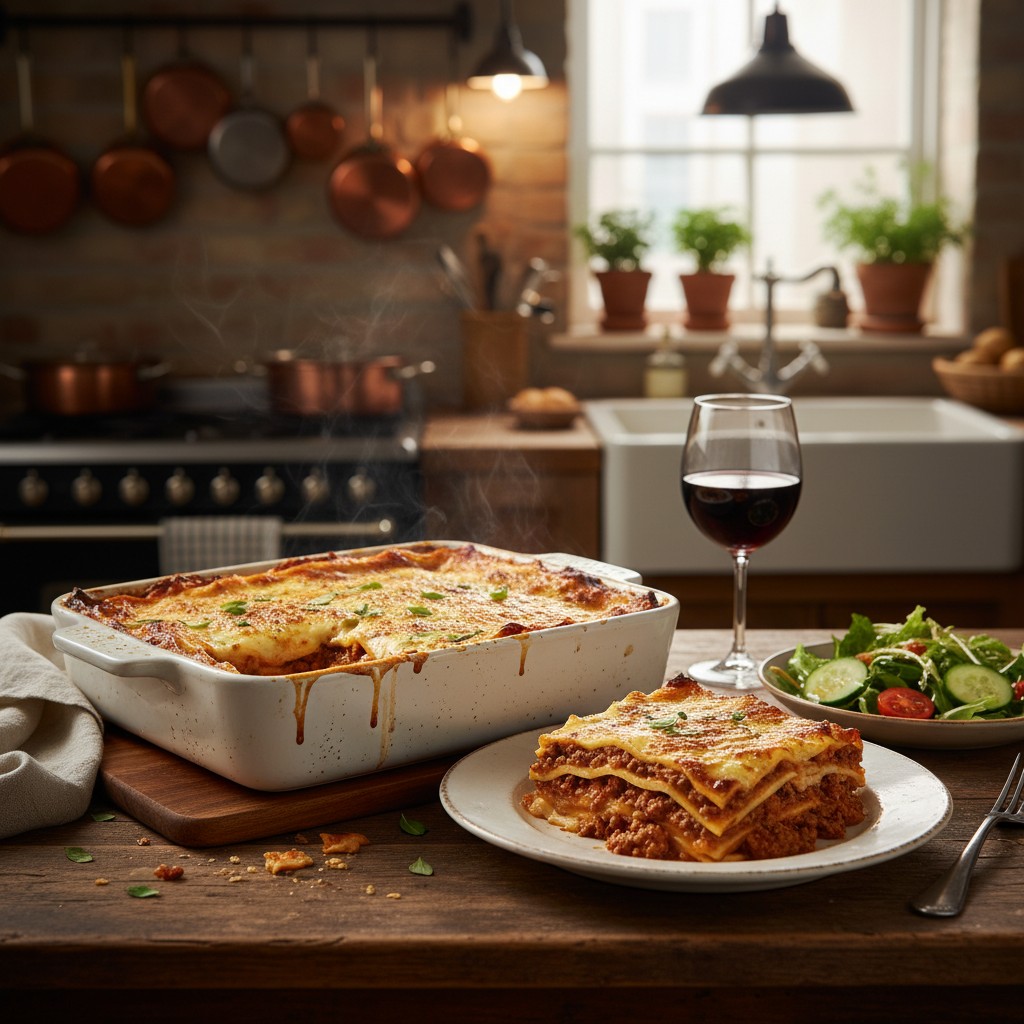
There is a great deal of satisfaction to be had from producing a truly first-class Lasagne al Forno from scratch. In a world of ready-meals and quick-fix jars, the act of slowly simmering a proper ragù and whisking a creamy béchamel feels like a small rebellion, and the results speak for themselves. This isn't a dish to be rushed; it is a weekend project, a labour of love that rewards you with one of the most comforting and delicious meals in the entire Italian repertoire.
At its heart, a great lasagne is a harmony of two sauces: a rich, deeply savoury meat sauce (the ragù) and a smooth, creamy cheese sauce (the béchamel). Getting these two components right is the absolute key to success. The ragù needs time for the flavours to meld and deepen, and the béchamel must be lump-free and seasoned with the gentle warmth of nutmeg. When they come together with layers of pasta and a final grating of Parmesan, something truly magical happens in the oven.
So, please don't be daunted by the number of steps. I have broken the process down into manageable stages. Follow them carefully, use the best ingredients you can afford – particularly good beef mince and genuine Parmigiano Reggiano – and you will have a dish that will bring immense joy to your table. This is how to cook, not just how to follow a recipe.
Why You'll Love This Recipe
- A slow-simmered ragù, cooked for at least two hours, develops a deep, complex flavour that simply cannot be rushed or replicated with a quick sauce.
- Making your own béchamel sauce from scratch is essential for a creamy, lump-free texture and avoids the artificial taste of pre-made sauces.
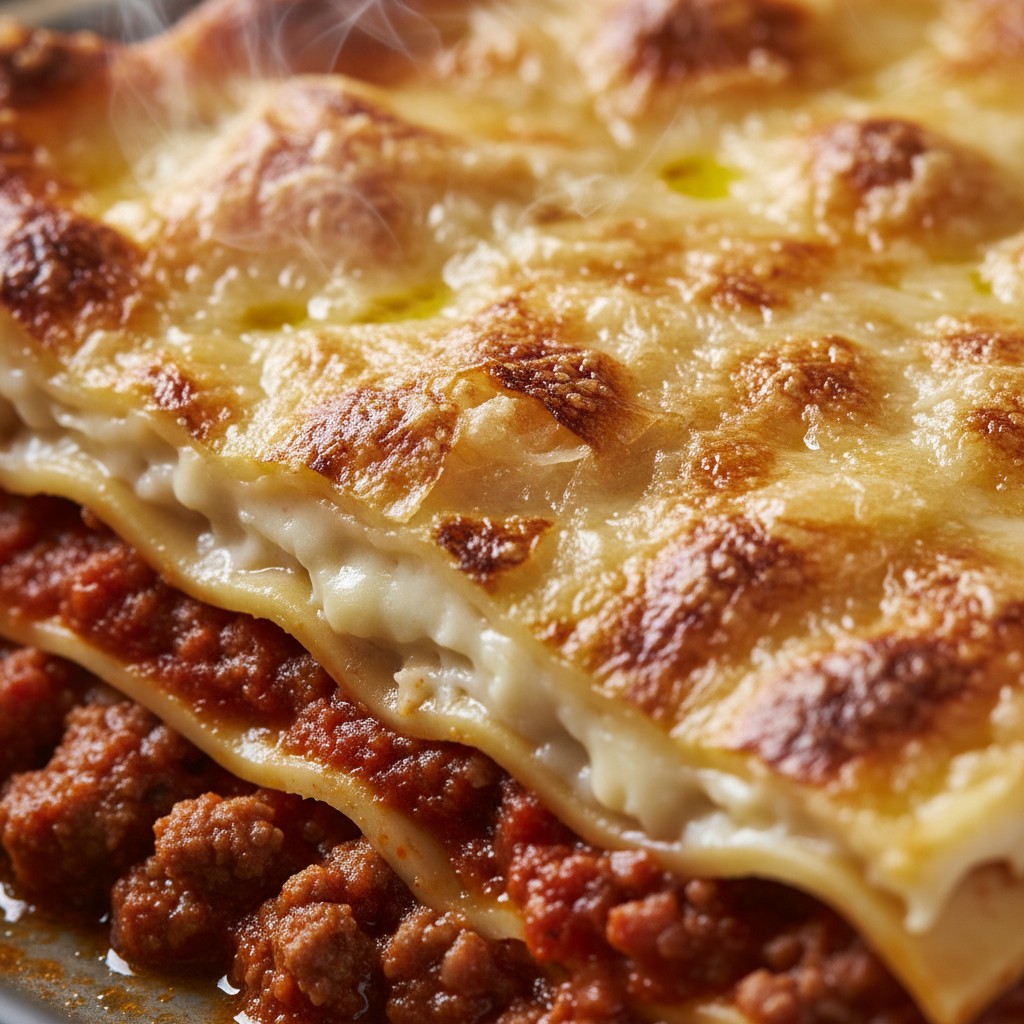
- The specific layering technique, ending with béchamel and Parmesan, ensures the top bakes to a perfect golden, bubbling crust while the inside remains moist and luscious.
Ingredients
- For the Ragù:
- 2 tbsp olive oil
- 1 large onion, finely chopped
- 2 medium carrots, finely chopped
- 2 celery sticks, finely chopped
- 450g good-quality beef mince
- 225g pork mince
- 150ml dry red wine
- 2 x 400g tins of chopped plum tomatoes
- 2 tbsp tomato purée
- 300ml beef or chicken stock
- 1 bay leaf
- Salt and freshly milled black pepper
- For the Béchamel Sauce:
- 75g unsalted butter
- 75g plain flour
- 1 litre whole milk
- A generous grating of fresh nutmeg
- 75g freshly grated Parmigiano Reggiano, plus extra for topping
- Salt and freshly milled black pepper
- For Assembling:
- Approx. 250-300g dried egg lasagne sheets (or fresh)
Equipment Needed
Large heavy-based saucepan or flameproof casserole dish · Wooden spoon · Medium saucepan · Balloon whisk · Rectangular ovenproof dish (approx. 30x20cm or 2.5 litre) · Baking tray · Cheese grater
Step-by-Step Instructions
- First, make the Ragù. Place a large, heavy-based saucepan or flameproof casserole over a medium heat and add the olive oil. Add the chopped onion, carrots and celery (this is the soffritto) and cook gently for about 10 minutes, stirring occasionally, until softened and lightly golden. Do not rush this stage.
- Increase the heat, add the beef and pork mince to the pan, and cook, breaking it up with a wooden spoon, until it has browned all over. There should be no pink bits left.
- Pour in the red wine and let it bubble away, scraping any browned bits from the bottom of the pan, until it has almost completely evaporated. This adds a real depth of flavour.
- Now, add the tinned tomatoes, tomato purée, and stock. Stir everything together very well, then add the bay leaf and season with salt and pepper. Bring to a gentle simmer.
- Once simmering, turn the heat down to its lowest possible setting, partially cover with a lid, and let it cook very, very gently for at least 2 hours. Stir it from time to time to prevent it from catching on the bottom. After 2 hours, the sauce should be rich, thick, and intensely flavourful. Remove the bay leaf and check the seasoning, adding more salt and pepper if needed. Set aside.
- Next, make the Béchamel Sauce. In a separate, medium-sized saucepan, melt the butter over a medium-low heat. Once melted, stir in the flour to form a paste (this is a roux). Cook for 1-2 minutes, stirring constantly – this cooks out the raw flour taste.
- Remove the pan from the heat and begin adding the milk, a small amount at a time. Whisk vigorously after each addition to ensure a smooth, lump-free sauce. It will seem thick and paste-like at first, but keep going. Once about a third of the milk is incorporated, you can start adding it in larger splashes until it's all in.
- Return the saucepan to a medium heat and bring the sauce to a simmer, whisking continuously, until it has thickened to the consistency of double cream. This will take about 5-8 minutes. Be patient and keep whisking.
- Remove from the heat and stir in the grated nutmeg and the 75g of Parmigiano Reggiano. Season with salt and pepper to your taste. To prevent a skin from forming, you can lay a piece of baking parchment directly on the surface of the sauce while you assemble the lasagne.
- Finally, to Assemble and Bake. Preheat your oven to 180°C (160°C Fan, Gas Mark 4). You will need a rectangular ovenproof dish, approximately 30cm x 20cm (around 2.5-litre capacity).
- Spread a thin layer of the ragù over the base of the dish. This prevents the first layer of pasta from sticking. Cover with a single layer of lasagne sheets, breaking them to fit if necessary. Don't overlap them too much.
- Spoon over about a third of the remaining ragù, followed by about a quarter of the béchamel sauce. Repeat these layers twice more: pasta, ragù, béchamel.
- Finish with a final layer of pasta sheets. Top this with all the remaining béchamel sauce, spreading it right to the edges to seal everything in. Sprinkle generously with the extra grated Parmigiano Reggiano.
- Place the dish on a baking tray (to catch any potential spills) and bake in the preheated oven for 30-40 minutes, or until golden brown, bubbling, and a knife inserted into the centre goes through easily.
- It is crucial to let the lasagne rest for at least 10-15 minutes before serving. This allows the layers to settle, making it much easier to cut into clean portions. Serve hot.
Delia's Notes from the Kitchen
The secret to a truly magnificent lasagne lies not in a long list of exotic ingredients, but in patience. Allowing the ragù to simmer gently for the full two hours is non-negotiable; it is where the deep, savoury flavour is truly born. Don't be tempted to cut this time short – your patience will be rewarded tenfold in the final dish.
How to Store & Reheat
To store, allow the lasagne to cool completely at room temperature. Cover the dish tightly with foil or a lid and refrigerate for up to 3 days. To reheat, leave it covered with foil and bake in an oven preheated to 180°C (160°C Fan) for 20-25 minutes, or until piping hot throughout. You can remove the foil for the last 5 minutes to crisp up the top. Lasagne also freezes beautifully, either baked or unbaked. Freeze in its dish, well-wrapped, for up to 3 months. Defrost fully in the refrigerator before baking as instructed.
Frequently Asked Questions
Do I really need to use both beef and pork mince?
While you can use all beef, the traditional combination with pork is highly recommended. Pork has a higher fat content, which adds moisture and a wonderful richness to the ragù that beef alone cannot quite replicate. It creates a more tender and flavourful sauce.
My béchamel sauce is lumpy. What did I do wrong?
Lumps usually form when the milk is added to the roux too quickly, or if the liquid is too cold and the roux is too hot. The key is to add the milk off the heat, a little at a time, and to whisk vigorously until each addition is fully incorporated before adding more. If you do end up with lumps, you can often whisk them out, or as a last resort, pass the sauce through a fine-meshed sieve.
Can I use 'no-boil' lasagne sheets?
Yes, you can. Most modern dried lasagne sheets do not require pre-cooking. They are designed to cook in the oven by absorbing liquid from the sauces. Just be sure your ragù and béchamel are not overly thick, as the pasta will need that moisture to soften properly during baking.
Why did my lasagne turn out watery?
There are a few possible reasons. The most common is that the ragù was not simmered for long enough to reduce and thicken properly. Another cause could be using vegetables with very high water content without cooking it out. Finally, it's very important to let the lasagne rest for at least 10-15 minutes after it comes out of the oven; this allows the layers to set and absorb any excess liquid.
Can I prepare the components in advance?
Absolutely, and I would encourage it. The ragù actually improves in flavour if made a day ahead and refrigerated. You can also make the béchamel in advance; just press a piece of baking parchment or cling film directly onto its surface to prevent a skin from forming and store it in the fridge. This makes assembly on the day much quicker.