How to Make Proper Chicken Stock
Master the art of making proper, flavourful chicken stock from scratch. This is a kitchen fundamental that will elevate your soups, sauces, and risottos to another level.
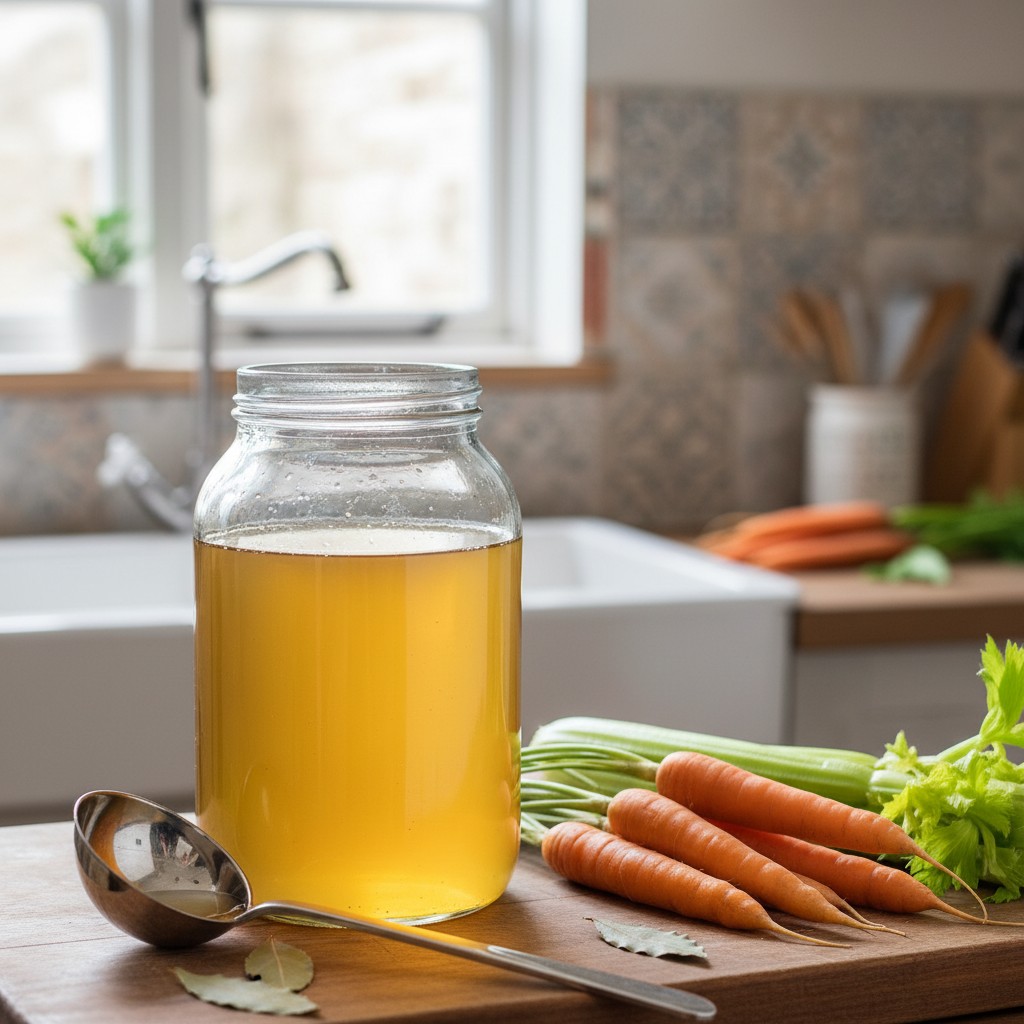
There is perhaps no greater building block in the kitchen than a really good, properly made chicken stock. It is the very backbone of countless soups, sauces, gravies and risottos, and the difference between using homemade stock and a shop-bought cube is, quite frankly, night and day. We seem to have fallen out of the habit of making it, which is a great shame as it's one of the most rewarding and simple things you can do.
Making stock is a gentle, calming process. It requires very little of you, other than a bit of patience, as it slowly simmers away, filling your kitchen with the most comforting of aromas. The process extracts all the flavour and goodness from the chicken bones, along with the aromatic vegetables, creating what I can only describe as 'liquid gold'.
This recipe will give you a pure, clear, and beautifully flavoured stock. It is a fundamental technique that, once mastered, will give you so much more confidence in your cooking. So please, don't throw away that chicken carcass after your Sunday roast – it has a second, very important job to do.
Why You'll Love This Recipe
- Starting with cold water and bringing it slowly to a simmer allows impurities to rise to the surface, where they can be easily skimmed off for a crystal-clear stock.
- Simmering, never boiling, is the absolute key. Boiling would emulsify the fats into the liquid, resulting in a cloudy, greasy stock. A gentle 'shiver' is all that's needed.
- Using an unpeeled onion adds a lovely golden colour to the finished stock, while the classic combination of carrot and celery (the 'mirepoix') provides a balanced, aromatic flavour base.
- We do not add salt. Stock is a base ingredient; it should be unseasoned so that you have complete control over the final dish you use it in.
Ingredients
- 1 large raw chicken carcass (about 1kg), or the carcass from a large roasted chicken
- 2 medium carrots, washed and roughly chopped
- 2 celery sticks, washed and roughly chopped
- 1 large onion, unpeeled and quartered
- 1 leek (the green part is fine), washed thoroughly and chopped
- A few fresh parsley stalks
- 1 bay leaf
- 10 black peppercorns
- 3 litres cold water, or enough to cover
Equipment Needed
Large stockpot (at least 5-litre capacity) · Large metal spoon or ladle for skimming · Fine-mesh sieve · Muslin cloth or cheesecloth · Large bowl or container for straining
Step-by-Step Instructions
- First, take your chicken carcass and place it in a large, deep stockpot or saucepan. If you're using a raw carcass, you can break it up a little to ensure it fits and is well submerged.
- Add all the chopped vegetables, the parsley stalks, bay leaf, and black peppercorns to the pot, arranging them around the carcass.
- Now, pour in the cold water. It is absolutely crucial that you start with cold water. Pour in enough to cover everything by about 5cm (2 inches).
- Place the pot over a medium-high heat and bring it very slowly up to simmering point. As it heats, you will see a layer of greyish scum forming on the surface. Using a large spoon or a ladle, carefully skim this off and discard it. This is the secret to a clear stock, so be diligent.
- Once the stock reaches a simmer, immediately turn the heat down to its lowest possible setting. The surface should barely tremble, with just a bubble or two breaking the surface every few seconds. Do not cover the pot.
- Let it simmer gently like this for at least 3 hours, and up to 4. There is no need to stir; simply leave it be.
- After simmering, turn off the heat and let the stock cool slightly for about 20 minutes. This allows the solids to settle.
- Line a large, fine-mesh sieve with a double layer of muslin or cheesecloth and place it over a large, clean bowl or another saucepan. Carefully ladle the stock through the sieve, leaving the final dregs in the bottom of the pot. Don't be tempted to press down on the solids in the sieve, as this can make the stock cloudy.
- Allow the strained stock to cool completely at room temperature before refrigerating. Once chilled, any fat will have solidified on the surface and can be easily lifted off and discarded (or saved for roasting potatoes!).
Delia's Notes from the Kitchen
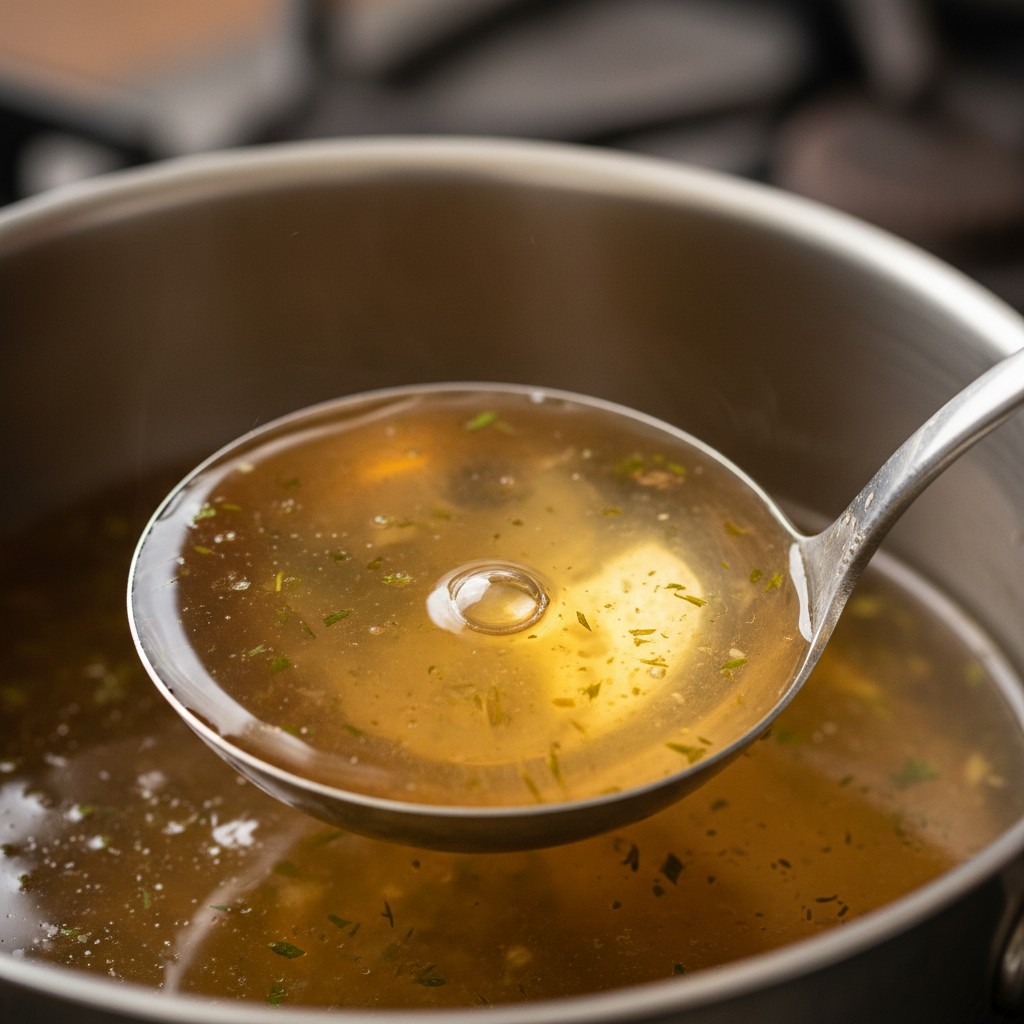
Once your stock is chilled in the fridge, you may find it has set to a jelly. Do not be alarmed! This is a very good sign. It means you have successfully extracted the natural gelatine from the bones, which will give your finished soups and sauces a wonderful, rich body and mouthfeel. This is the hallmark of a truly excellent homemade stock.
How to Store & Reheat
To store, cool the stock as quickly as possible, then pour it into containers. It will keep in the refrigerator for up to 4 days. For longer storage, freezing is best. I like to freeze it in various portion sizes – large 1-litre tubs for soup, and smaller 250ml portions in bags or even ice cube trays for when you just need a splash for a sauce. It will keep beautifully in the freezer for up to 6 months.
Frequently Asked Questions
Why is my stock cloudy?
Cloudiness is almost always caused by boiling the stock rather than simmering it. Boiling agitates the fats and proteins, emulsifying them into the liquid. To prevent this, maintain a very gentle 'shiver' and be sure to skim the surface thoroughly at the beginning.
Do I have to use a raw chicken carcass?
Not at all. A carcass from a roasted chicken makes an equally delicious, albeit slightly darker and more deeply flavoured, stock. It's an excellent way to use up every part of the bird.
Why don't you add salt to the stock?
Stock is a component, not a finished dish. As it's used in recipes where it might be reduced (like in a sauce), any salt would become intensely concentrated. It is always best to leave the stock unsalted and season the final dish to taste.
How long will the chicken stock last?
Properly cooled and stored in an airtight container, it will last for 3-4 days in the refrigerator. For longer-term storage, it freezes perfectly for up to 6 months.
Can I make this in a slow cooker?
Yes, a slow cooker is excellent for making stock. Simply place all the ingredients inside, cover with cold water, and cook on the 'low' setting for 8-10 hours. You won't get as much scum forming, but the result will still be very good.