My Classic Chicken with Cider and Cream
A truly comforting one-pot wonder, this chicken with cider and cream is a taste of the British countryside. Follow my simple steps for a dish that is both elegant and utterly reliable.
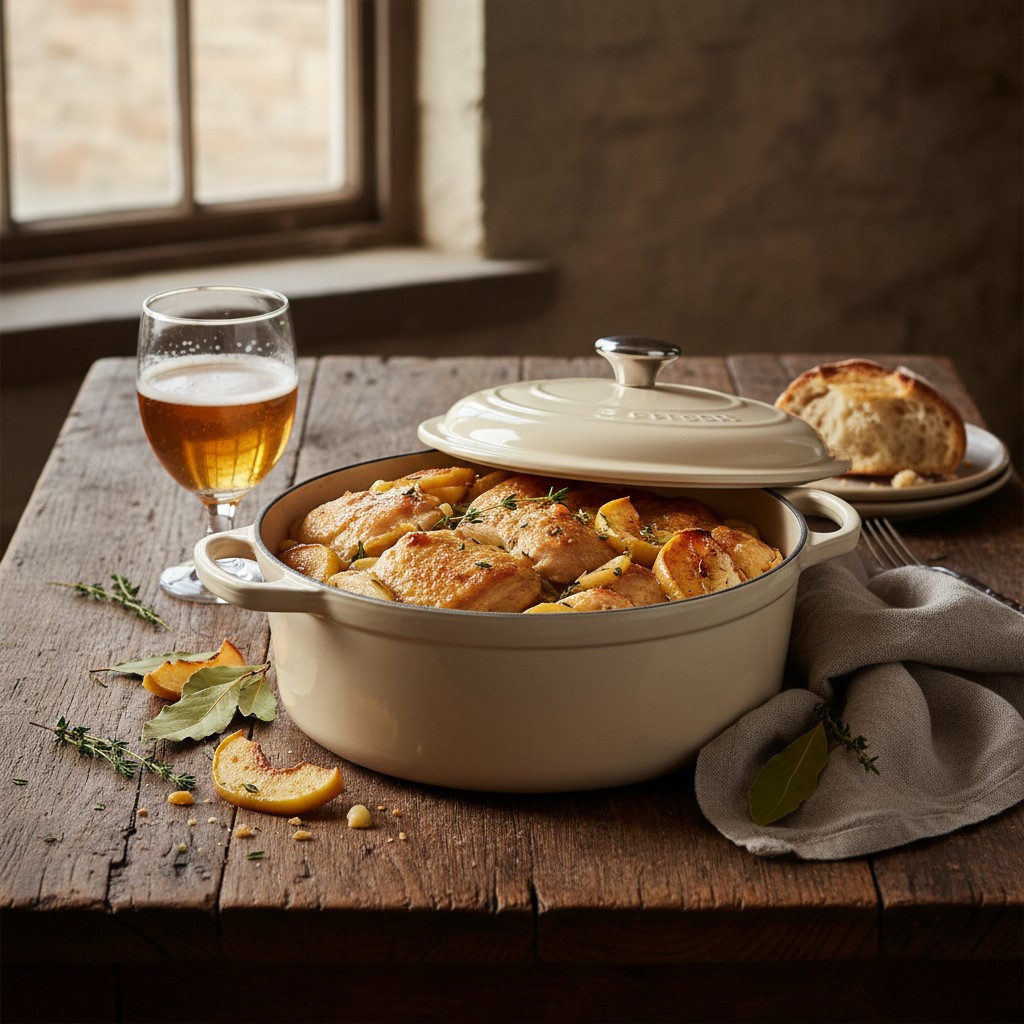
There are certain combinations in cooking that are simply meant to be, and for me, the marriage of chicken, cider, and apples is one of the happiest unions in the kitchen. It’s a dish with roots in Normandy, of course, but it feels so deeply at home in Britain, especially when made with our own wonderful ciders and sharp cooking apples. It speaks of orchards, autumn, and cosiness, a proper supper that warms you from the inside out.
What I love most about this dish is its straightforward, honest character. There are no complicated techniques here, just good ingredients and a method that builds flavour layer by layer in a single pot. The key is to take your time browning the chicken properly, to use a good, dry cider that will lend its character to the sauce, and to finish with a generous swirl of double cream for that essential, velvety richness. It’s the sort of cooking that feels both nurturing to prepare and a complete joy to eat.
This is a recipe I have returned to time and time again. It’s dependable enough for a simple family meal during the week, yet special enough to serve for a relaxed weekend lunch with friends. Once you’ve mastered this, you’ll have a stalwart dish in your repertoire that will never, ever let you down. So, let’s get started.
Why You'll Love This Recipe
- Browning the chicken properly in batches develops a deep, caramelised flavour base (the 'fond') which is crucial for a rich sauce.
- Using bone-in, skin-on chicken thighs ensures the meat remains incredibly moist and succulent during the hour-long simmer, while the skin adds flavour.
- Finishing the sauce with double cream off the heat adds a luxurious, velvety texture without the risk of it splitting, perfectly balancing the acidity of the cider.
Ingredients
- 8 bone-in, skin-on chicken thighs
- Salt and freshly milled black pepper
- 1 tablespoon plain flour
- 1 tablespoon olive oil
- 25g unsalted butter
- 2 medium onions, peeled and finely chopped
- 2 cloves garlic, peeled and crushed
- 300ml dry (or 'brut') cider
- 200ml good-quality chicken stock
- 1 large Bramley apple (or other sharp cooking apple), about 250g
- 150ml double cream
- 2 tablespoons freshly chopped flat-leaf parsley
Equipment Needed
A large, heavy-based flameproof casserole dish with a lid (approx. 3-litre capacity) · Kitchen paper · A plate or shallow dish for flouring · Slotted spoon · Wooden spoon · Chopping board and sharp knife
Step-by-Step Instructions
- First, prepare the chicken. Pat the chicken thighs dry with kitchen paper – this is very important for getting a good, crisp skin. Season the flour with a good grinding of salt and pepper, then lightly dust the chicken thighs in the seasoned flour, shaking off any excess.
- Now, place a large, heavy-based, flameproof casserole dish over a medium-high heat. Add the olive oil and butter. Once the butter is foaming, add the chicken thighs, skin-side down, in two batches. Don't overcrowd the pan. Brown them for about 4-5 minutes on each side until golden and crisp. Remove the chicken with a slotted spoon and set aside on a plate.
- Reduce the heat to medium-low. Add the chopped onions to the same casserole dish, scraping up any bits from the bottom. Cook gently for about 10 minutes, stirring occasionally, until they are soft, sweet, and translucent. Add the crushed garlic and cook for one minute more until fragrant.
- Now, turn the heat up and pour in the cider. As it bubbles, use a wooden spoon to scrape all the caramelised brown bits from the base of the pan – this is where so much flavour is. Allow the cider to bubble and reduce by about half.
- Return the browned chicken thighs to the casserole dish, arranging them in a single layer. Pour in the chicken stock. Bring the liquid to a gentle simmer, then reduce the heat to its lowest setting, cover with a tight-fitting lid, and let it cook very gently for 40 minutes.
- While the chicken is cooking, prepare the apple. Peel, core, and chop it into 2cm chunks. After the 40 minutes are up, add the apple chunks to the casserole, stirring them gently into the sauce around the chicken. Replace the lid and continue to cook for a final 15-20 minutes, or until the chicken is cooked through and the apple is tender but still holding its shape.
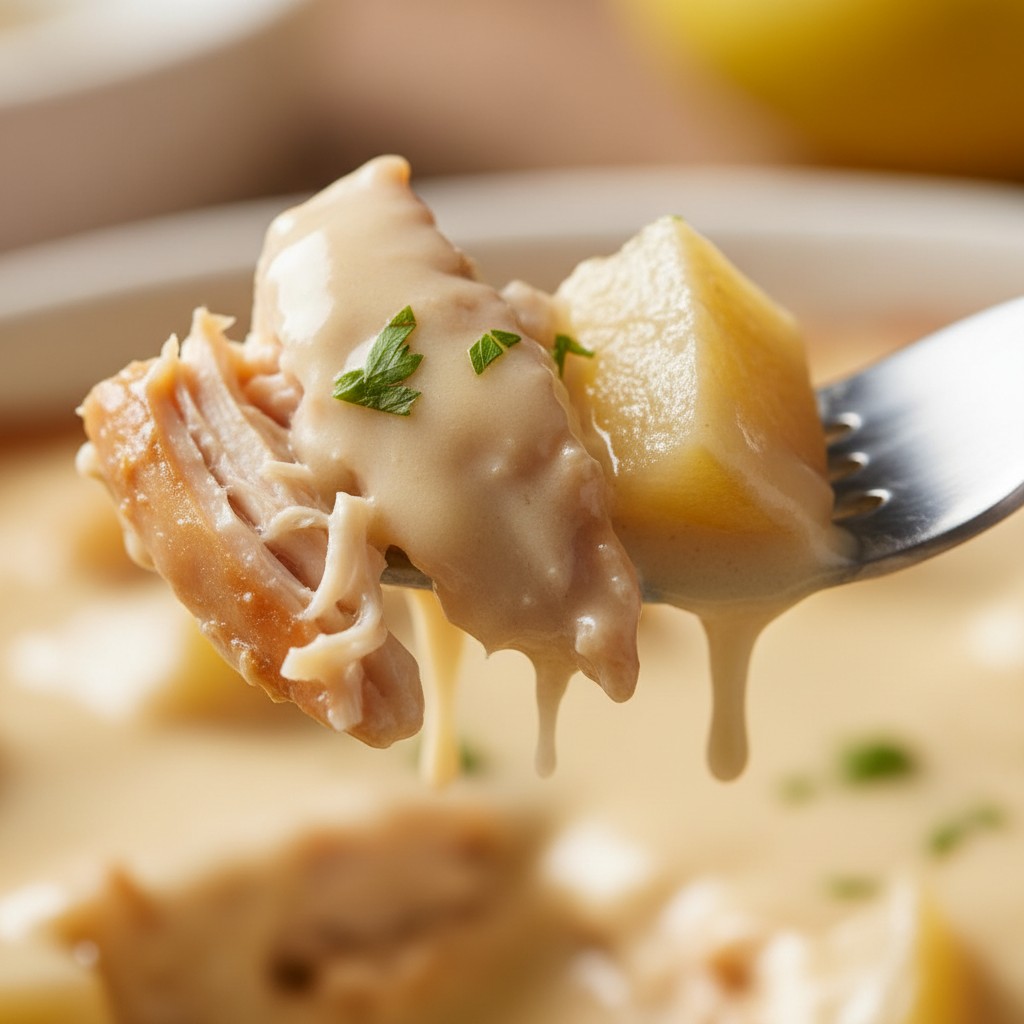
- To finish, remove the casserole from the heat. Pour in the double cream and stir in the chopped parsley. Stir gently to combine. Taste the sauce and adjust the seasoning with salt and pepper if needed. Serve immediately, straight from the pot.
Delia's Notes from the Kitchen
The real secret to this dish, as with so many stews and casseroles, lies in creating a good 'fond'. That's the cook's term for the browned, caramelised bits that get stuck to the bottom of the pan after you've seared the chicken. When you pour in the cider to deglaze the pan, make sure you scrape all these wonderful flavourful morsels up into the sauce with a wooden spoon. It is not an exaggeration to say that this simple action is what transforms a good dish into a truly great one.
How to Store & Reheat
Allow the casserole to cool completely before storing. It can be kept in an airtight container in the refrigerator for up to 2 days. To reheat, place it in a saucepan over a gentle heat, stirring now and then, until it is piping hot. It's best not to let it boil vigorously once the cream has been added.
Frequently Asked Questions
Can I make this ahead of time?
Yes, absolutely. You can cook the casserole up to the point before you add the cream and parsley. Cool, cover, and refrigerate. When you're ready to serve, reheat it gently on the hob until piping hot, then stir in the cream and parsley to finish.
My sauce seems a bit thin. How can I thicken it?
If your sauce is thinner than you'd like, you can mix one teaspoon of cornflour with two teaspoons of cold water to make a smooth paste. Stir this into the simmering casserole and let it bubble for a minute or two, which should thicken it up nicely.
Can I freeze this dish?
It's best not to freeze dishes containing cream as it can separate and become grainy upon reheating. However, you can make the casserole without the cream, freeze it for up to 3 months, then defrost thoroughly, reheat, and stir in the cream before serving.
What kind of cider is best to use?
A good quality, dry English or French cider (often labelled 'brut') is what you need. It provides the right balance of acidity and apple flavour without making the dish overly sweet. Steer clear of commercial sweet ciders which contain too much sugar.
Do I have to use bone-in, skin-on chicken?
I do highly recommend it. The bones add depth of flavour to the sauce, and the skin protects the meat, keeping it wonderfully moist. If you must use boneless and skinless pieces, be mindful that they will cook more quickly and may not be quite as succulent.