My Classic Cheese and Onion Quiche
This is a truly reliable recipe for a deeply savoury quiche, featuring a crisp, buttery pastry and a perfectly set custard. A lunchtime classic for a very, very good reason.
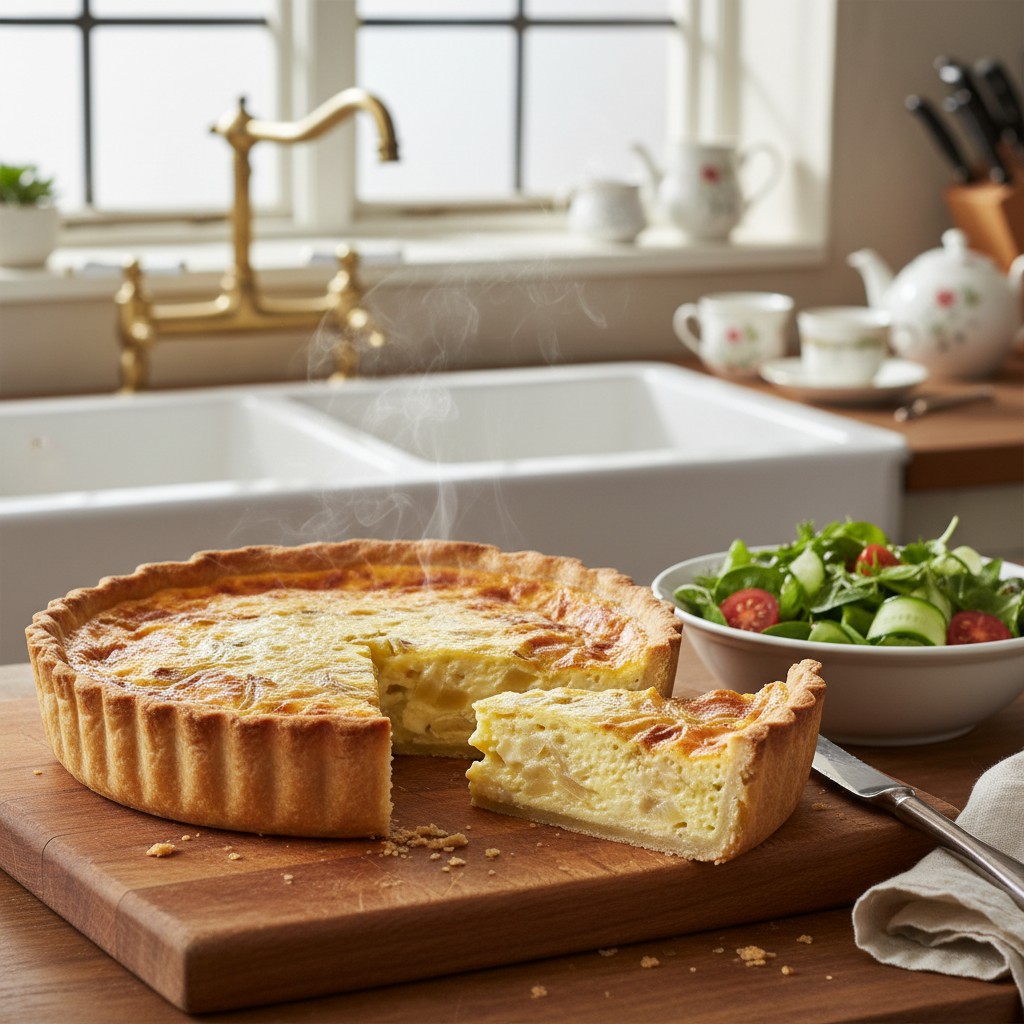
How to Achieve Perfection with a Classic Delia Smith Cheese And Onion Quiche Recipe
There are few things more satisfying to have in your repertoire than this Delia Smith Cheese And Onion Quiche Recipe. It is a cornerstone of British cooking, a dish that can be a simple, elegant lunch with a green salad or the star of a picnic or buffet. So often, quiches can be disappointing – let down by a soggy base or a watery, bland filling. This method, however, is one I have relied upon for years to produce a consistently excellent result.
The secret, as is so often the case in cooking, lies in paying attention to the details. We will make a proper shortcrust pastry, using cold butter and a light touch, and we will blind bake it to ensure it remains crisp and robust. For the filling, we will slowly cook the onions until they are soft and sweet, providing the perfect flavour base for a sharp, mature Cheddar cheese and a rich, creamy custard. It really is worth the effort to make it properly from scratch.
So, roll up your sleeves and have confidence. This is more than just a recipe; it's a lesson in pastry and custard-making that will serve you well in all sorts of other dishes. Let's begin.
Why You'll Love This Recipe
- Blind baking the pastry case is non-negotiable; it creates a waterproof seal and guarantees a crisp, non-soggy base every single time.
- Slowly cooking the onions over a low heat coaxes out their natural sweetness, which provides a beautiful, mellow counterpoint to the sharp, tangy Cheddar.
- Using a combination of double cream, whole eggs, and an extra yolk creates a custard that is luxuriously rich and sets beautifully without becoming rubbery.
- Resting the pastry in the refrigerator is a crucial step. It allows the gluten to relax, which prevents shrinkage during baking and results in a more tender crust.
Ingredients
- For the Pastry:
- 225g (8oz) plain flour
- A pinch of salt
- 110g (4oz) butter, cold and cut into small cubes (or a mixture of 55g butter and 55g lard)
- 2-3 tablespoons cold water
- For the Filling:
- 2 large onions (about 450g), peeled and thinly sliced
- 25g (1oz) butter
- 1 tablespoon olive oil
- 3 large free-range eggs, plus 1 extra egg yolk
- 200ml (7 fl oz) double cream
- 175g (6oz) strong, mature Cheddar cheese, grated
- A good grating of fresh nutmeg
- Salt and freshly milled black pepper
Equipment Needed
22-23cm loose-bottomed flan tin · Large mixing bowl · Heavy-based frying pan · Rolling pin · Baking parchment · Ceramic baking beans or uncooked rice · Baking sheet · Measuring jug · Whisk
Step-by-Step Instructions
- First, make the pastry. Sift the flour and salt from a height into a large, cool bowl. Add the cold, cubed butter. Using just your fingertips, rub the fat into the flour until the mixture resembles fine breadcrumbs. Add 2 tablespoons of cold water all at once and, using a knife, begin to mix it into a dough. If it's too dry, add the final tablespoon of water. Use your hands to bring it together into a smooth ball – but do not knead. Wrap the dough in clingfilm and let it rest in the refrigerator for 30 minutes.
- While the pastry chills, prepare the onions. Heat the butter and olive oil in a large, heavy-based frying pan over a low heat. Add the sliced onions and a pinch of salt. Cook them very gently for 20-25 minutes, stirring occasionally, until they are completely soft, sweet, and lightly golden. Do not allow them to brown. Once cooked, remove from the heat and allow to cool completely.
- Preheat your oven to 200°C (180°C Fan, Gas Mark 6). On a lightly floured surface, roll out the chilled pastry until it is large enough to line a 22-23cm loose-bottomed flan tin, about 3-4mm thick. Carefully line the tin, pressing the pastry into the corners. Trim the excess pastry from the rim. Prick the base all over with a fork.
- Line the pastry case with a sheet of crumpled baking parchment and fill with baking beans or uncooked rice. Place on a baking sheet and bake blind for 15 minutes. Remove the paper and beans, then return the pastry case to the oven for another 5-7 minutes until it is pale golden and cooked through. This is the key to avoiding a 'soggy bottom'. Remove from the oven and reduce the oven temperature to 180°C (160°C Fan, Gas Mark 4).
- Now, assemble the filling. In a large jug or bowl, whisk the eggs, extra yolk, and double cream together. Season well with salt, pepper, and a good grating of nutmeg. Spread the cooled, cooked onions evenly over the base of the pastry case. Sprinkle two-thirds of the grated cheese over the onions.
- Carefully pour the egg and cream mixture into the pastry case. Finally, sprinkle the remaining cheese over the top. Bake on the middle shelf of the preheated oven for 25-30 minutes, or until the filling is just set and the top is golden brown. It should have a slight wobble in the very centre when you gently shake the tin.
- Allow the quiche to cool in the tin for at least 10-15 minutes before carefully removing it. It is delicious served warm, but equally good at room temperature.
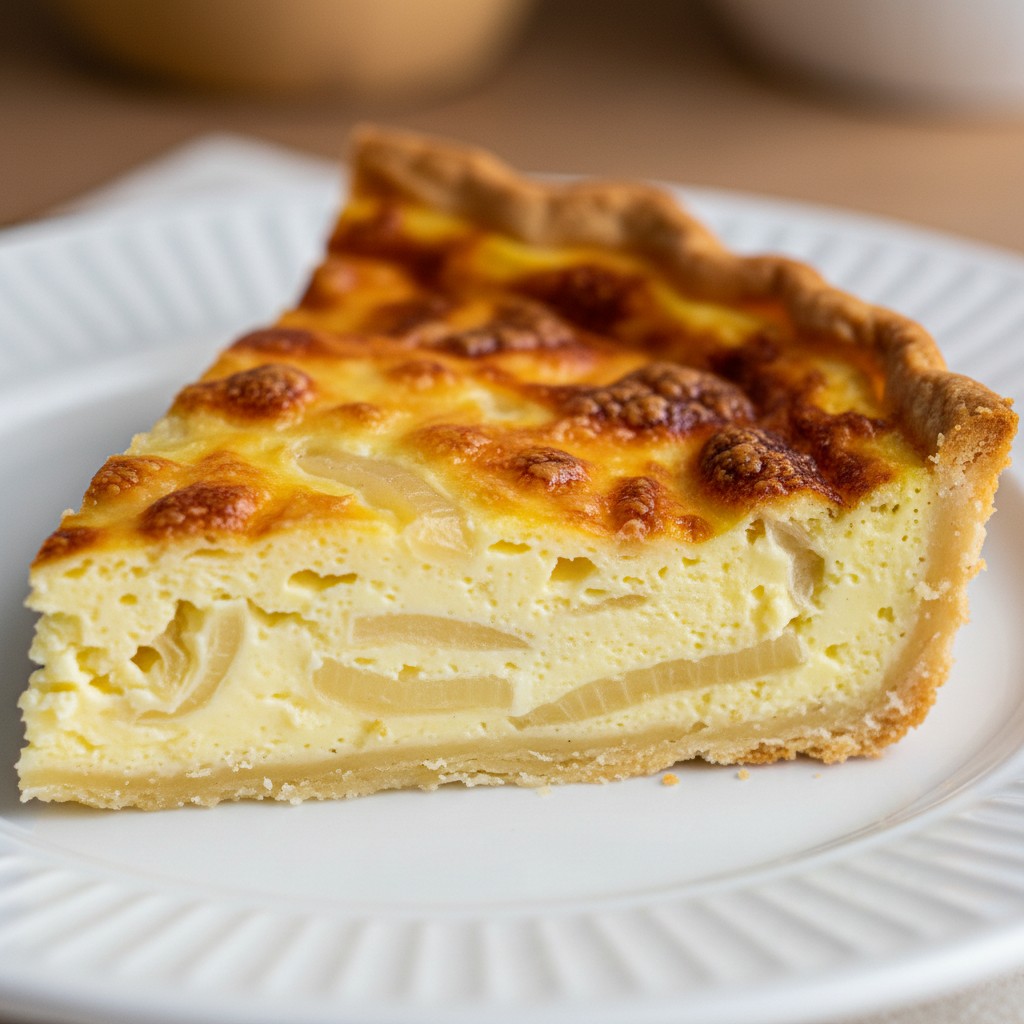
Delia's Notes from the Kitchen
A final thought on cheese. The quality of your cheese will make or break this quiche. Please don't be tempted to use a mild, characterless Cheddar. You need one with a proper, tangy bite that can stand up to the rich custard and sweet onions. A good, strong, mature farmhouse Cheddar is what you're after. It makes all the difference.
How to Store & Reheat
The quiche can be stored, once completely cool, in the refrigerator for up to 3 days. Cover it loosely with foil. To reheat, it's best to place slices on a baking tray and warm them in a moderate oven (160°C/140°C Fan) for about 15 minutes. Reheating in a microwave is not recommended as it will soften the pastry.
Frequently Asked Questions
Why is my quiche filling watery?
This is often caused by two things: either the filling was overcooked, which causes the eggs to curdle and weep, or you have used vegetables with high water content (like mushrooms) that weren't cooked down enough first. Following the gentle cooking time for the custard is key.
Can I use shop-bought pastry?
Of course. If you're short on time, a good quality all-butter shortcrust pastry is a perfectly acceptable substitute. You must still blind bake it as per the instructions to ensure a crisp base.
How do I avoid a 'soggy bottom'?
The secret is to blind bake the pastry case properly. Baking it first with baking beans, and then again without, cooks and dries out the pastry, creating a seal that the wet filling cannot penetrate. Don't skip this step!
Can I freeze this quiche?
Yes, you can. It's best to freeze it whole or in slices. Wrap it well in clingfilm and then foil. To reheat, place it straight from the freezer into a preheated oven at 180°C (160°C Fan) for 25-30 minutes, or until hot all the way through.
Why did my pastry shrink in the tin?
Pastry shrinks if the gluten has not been allowed to relax. This is why resting the dough in the refrigerator for at least 30 minutes after making it is so important. Also, avoid stretching the dough when you line the tin; let it fall into place gently.