Classic Broccoli and Stilton Quiche
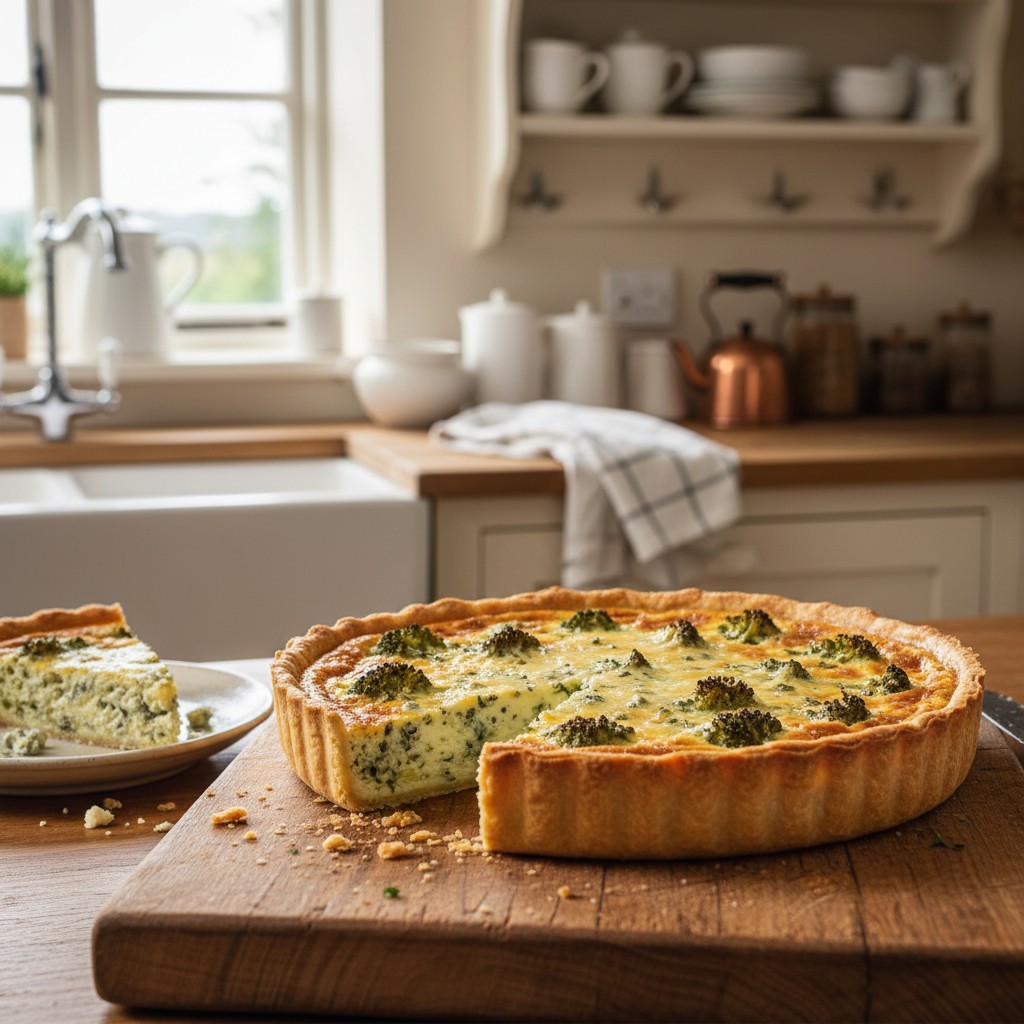
This is the quintessential recipe for a classic broccoli and Stilton quiche, complete with a crisp, buttery pastry and a perfectly set, creamy custard. A truly reliable and rewarding dish for any occasion.
The Definitive Guide to a Flawless Delia Smith Broccoli Quiche Recipe
There is something deeply satisfying about presenting a homemade quiche, and this Delia Smith Broccoli Quiche Recipe is, I believe, the most reliable you will find. The combination of earthy broccoli and the bold, tangy character of a good Stilton cheese, all encased in a properly made, crisp pastry case, is one of the great partnerships in the culinary world. It’s a dish that has rather sadly been let down over the years by soggy bottoms and bland fillings, but we’re not going to have any of that here.
This recipe is about teaching the correct method from the ground up. We will make our own shortcrust pastry – it is far simpler than you might think and infinitely superior to anything shop-bought. Then, we will blind bake it properly to ensure that infamous 'soggy bottom' is banished from your kitchen for good. The filling is a simple affair, a rich custard of eggs and cream that sets beautifully around the tender broccoli and pockets of molten cheese.
Whether you're serving it warm for a simple supper with a green salad, or cold as part of a picnic or buffet, this quiche is a true kitchen staple. It’s a testament to the fact that when you use good ingredients and the right technique, the results are always a quiet triumph. So, roll up your sleeves, and let’s learn how to make a quiche properly.
Why You'll Love This Recipe
- The combination of lard and butter in the pastry creates a base that is both flaky and crisp – the ultimate foundation for a quiche.
- Blind baking the pastry case with a cartouche and baking beans ensures it is fully cooked and sealed, preventing the liquid filling from making it soggy.
- Using a rich custard of double cream and whole milk with whole eggs provides a luxurious texture that sets perfectly without becoming rubbery.
- Pre-blanching the broccoli ensures it's tender but still has a slight bite, and it prevents excess water from seeping into the custard.
Ingredients
- For the Pastry:
- 225g plain flour, plus extra for dusting
- 50g lard, chilled and diced
- 50g unsalted butter, chilled and diced
- 1/2 tsp salt
- 2-3 tbsp very cold water
- For the Filling:
- 250g broccoli, cut into small, bite-sized florets
- 150g Stilton cheese, crumbled
- 3 large free-range eggs
- 150ml double cream
- 150ml whole milk
- A good grating of fresh nutmeg
- Salt and freshly milled black pepper
Equipment Needed
23cm loose-bottomed flan tin · Food processor (optional) · Rolling pin · Baking parchment · Ceramic baking beans or dried pulses · Mixing bowl · Whisk · Jug
Step-by-Step Instructions
- First, make the pastry. You can do this in a food processor by adding the flour, salt, lard, and butter and pulsing until the mixture resembles fine breadcrumbs. With the motor running, add the cold water, a tablespoon at a time, until the dough just comes together into a ball. Alternatively, do this by hand by rubbing the fats into the flour and salt, then using a knife to mix in the water.
- Tip the dough onto a lightly floured surface, knead it very briefly and gently, then form it into a flat disc. Wrap it in cling film and chill it in the refrigerator for at least 30 minutes. This is crucial as it allows the gluten to relax, which prevents the pastry from shrinking during baking.
- Preheat your oven to 200°C (180°C Fan, Gas Mark 6). Roll out the chilled pastry on a floured surface until it's about 3mm thick and large enough to line a 23cm loose-bottomed flan tin, about 3-4cm deep. Carefully lift the pastry into the tin, pressing it gently into the corners. Don't trim the excess pastry yet; it helps prevent shrinkage. Prick the base all over with a fork.
- Line the pastry case with a sheet of crumpled baking parchment and fill it with ceramic baking beans or dried pulses. Bake for 15 minutes. Then, carefully remove the paper and beans and return the tin to the oven for another 5-7 minutes, until the base is pale golden and feels dry to the touch. This is called 'baking blind'.
- While the pastry is baking, prepare the filling. Bring a small saucepan of salted water to the boil and blanch the broccoli florets for 2 minutes exactly. Drain them immediately and run them under cold water to stop the cooking process and retain their vibrant colour. Pat them thoroughly dry with kitchen paper – this is very important.
- Remove the pastry case from the oven. Using a small, sharp knife, trim the excess pastry from the rim for a neat finish. Reduce the oven temperature to 190°C (170°C Fan, Gas Mark 5).
- Arrange the blanched broccoli florets over the base of the pastry case, then scatter the crumbled Stilton cheese evenly on top.
- In a jug, whisk together the eggs, double cream, and milk. Season with the freshly grated nutmeg and a little salt and pepper. Be cautious with the salt, as the Stilton is already quite salty.
- Carefully pour the egg mixture into the pastry case over the broccoli and cheese. Pour slowly to allow the liquid to settle without dislodging the filling.
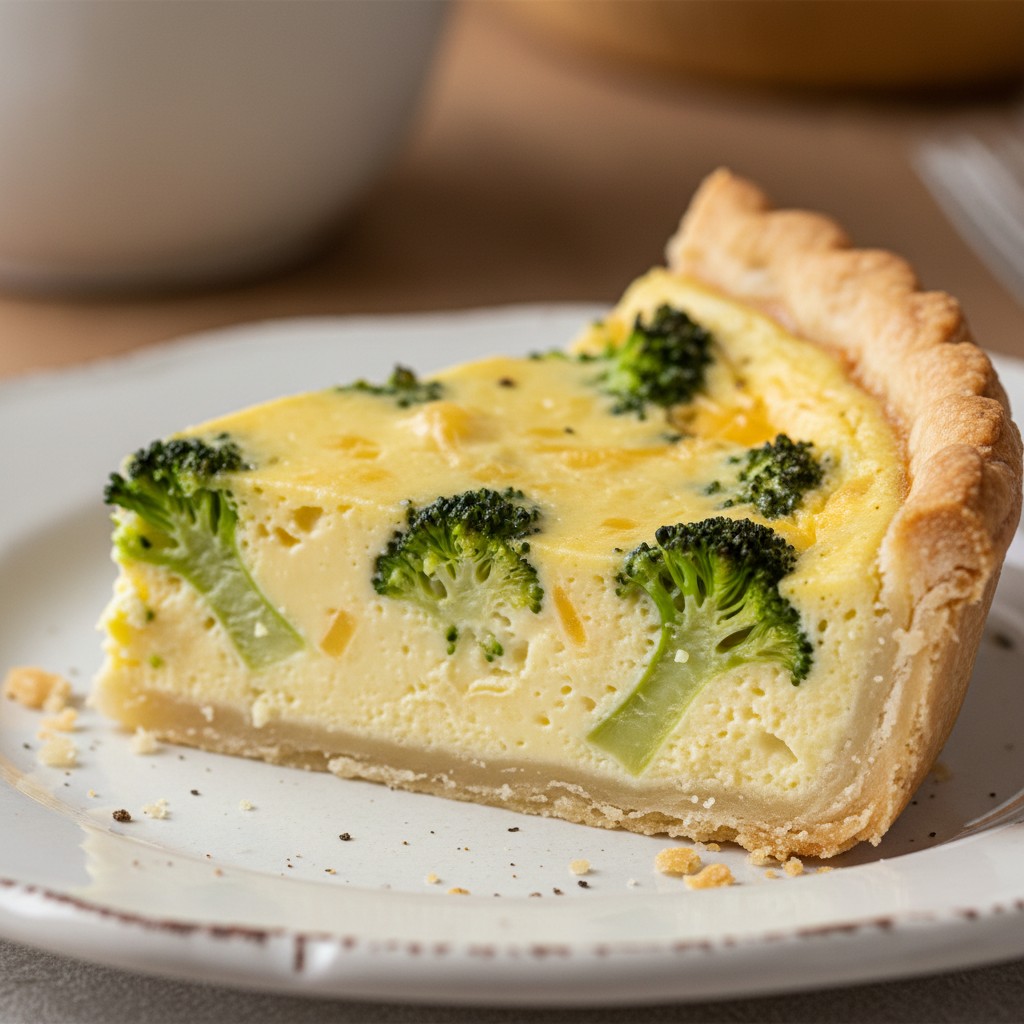
- Bake for 25-30 minutes, or until the custard is just set and the top is golden. It should have a slight wobble in the very centre when you gently shake the tin. Don't be tempted to overbake it.
- Let the quiche cool in the tin for about 10 minutes before carefully removing it. Serve warm or at room temperature.
Delia's Notes from the Kitchen
A true secret to success here is the temperature of your ingredients for the pastry. The butter and lard must be fridge-cold, and the water ice-cold. This prevents the fat from melting into the flour, instead creating little pockets of fat that will steam and expand during baking, giving you that wonderfully light, flaky texture we're looking for. Don't rush the chilling time, either; it is your greatest ally against shrinkage.
How to Store & Reheat
Store any leftover quiche, once completely cooled, covered in the refrigerator for up to 3 days. To reheat, place slices on a baking tray in an oven preheated to 160°C (140°C Fan) for 10-15 minutes until warmed through. I would strongly advise against using a microwave, as it will make the pastry soft.
Frequently Asked Questions
Why did my quiche have a 'soggy bottom'?
This is the most common quiche problem and it's almost always because the pastry case was not properly blind-baked. Following the two-stage blind baking process in the recipe is essential to create a sealed, crisp barrier against the wet filling.
Can I use frozen broccoli?
Yes, you can. However, you must thaw it completely and then squeeze out as much excess water as possible using your hands or by pressing it between sheets of kitchen paper. Any residual water will make your filling watery.
My custard was scrambled and watery. What went wrong?
This happens when the quiche is baked at too high a temperature or for too long. The proteins in the egg overcook and separate, forcing out water. Bake it until it's just set with a slight wobble in the centre; it will continue to cook as it rests.
Can I make the pastry ahead of time?
Absolutely. The pastry dough can be made and kept, well-wrapped, in the fridge for up to 2 days, or in the freezer for up to a month. You can also blind-bake the pastry case a day in advance, store it in an airtight container, and then simply add the filling and bake when ready.
Can I freeze the finished quiche?
Yes, quiche freezes surprisingly well. Let it cool completely, then wrap it tightly in a double layer of cling film and a layer of foil. It will keep for up to 3 months. Thaw it overnight in the refrigerator before reheating as per the instructions above.