Classic Beef Wellington
A truly magnificent dish for a special occasion. Follow my precise method for a Beef Wellington that is guaranteed to impress your guests every single time.
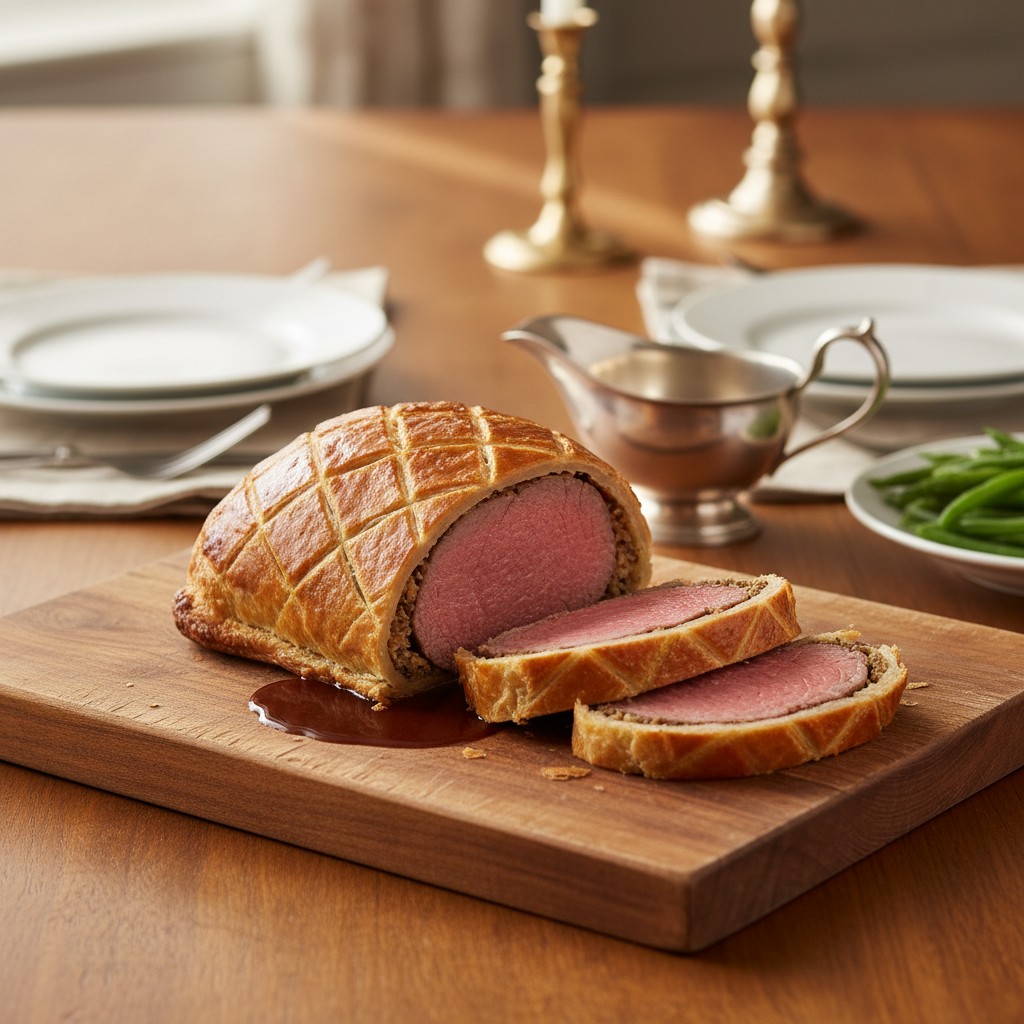
Mastering the Perfect Delia Smith Beef Wellington Recipe
There are few dishes that command such attention as a classic Beef Wellington. My Delia Smith Beef Wellington Recipe is designed to demystify this showstopper, giving you the confidence to produce a truly spectacular centrepiece for any celebration. It's about precision, timing, and using the very best ingredients you can find.
The magic lies in the combination of textures and flavours: a meltingly tender beef fillet, a rich mushroom duxelles, a savoury layer of pâté and Parma ham, all encased in a crisp, golden, all-butter puff pastry. It may seem daunting, but by following each stage carefully, success is not just possible, but assured. We are not taking shortcuts here; we are building layers of flavour methodically.
This is a recipe to be enjoyed not only in the eating but in the making. It requires a little patience, but the result is one of the most rewarding dishes in the entire culinary repertoire. So, roll up your sleeves, pre-heat your oven, and let's begin.
Why You'll Love This Recipe
- Searing the beef first creates a flavourful crust and prevents the meat from releasing too much moisture into the pastry.
- Chilling the wrapped fillet thoroughly before baking is the absolute key to ensuring the pastry remains crisp and doesn't become soggy.
- The Parma ham and pâté create a vital barrier, protecting the pastry from the mushroom duxelles and adding a wonderful depth of salty, savoury flavour.
Ingredients
- 1kg centre-cut beef fillet, trimmed
- 2 tbsp olive oil
- 1 tbsp English mustard
- 400g chestnut mushrooms
- 2 shallots, finely chopped
- 1 clove garlic, crushed
- 1 tbsp fresh thyme leaves
- 50ml dry sherry or Madeira
- 150g smooth chicken liver pâté
- 8-10 slices of Parma ham
- 500g all-butter puff pastry block
- A little plain flour, for dusting
- 1 large free-range egg, beaten
- Sea salt and freshly milled black pepper
Equipment Needed
A large, heavy-based frying pan · A large chopping board · Food processor (recommended) · Cling film · A large baking sheet · Baking parchment · A pastry brush · A rolling pin
Step-by-Step Instructions
- First, season the beef fillet generously with salt and pepper. Heat the olive oil in a large, heavy-based frying pan over a high heat until it's almost smoking. Carefully place the fillet in the pan and sear for 1-2 minutes on all sides, including the ends, until beautifully browned. Remove from the pan and place on a plate to cool completely. Once cool, brush it all over with the English mustard.
- To make the duxelles, wipe the mushrooms clean and chop them extremely finely (a food processor is best for this). Heat the same frying pan, add the shallots and garlic, and soften for a minute. Add the chopped mushrooms and cook over a medium-high heat for about 10-15 minutes, stirring frequently, until all the moisture has evaporated and the mixture is dry. Add the thyme and sherry, then cook for another 2-3 minutes until the liquid has gone. Season, then spread on a plate to cool completely.
- Lay a large sheet of cling film on your work surface. Arrange the slices of Parma ham on it in two rows, overlapping them slightly to create a large rectangle. Spread the pâté evenly over the ham, then top with the cooled mushroom duxelles, spreading it out to the same size as the ham.
- Place the cooled beef fillet at one end of the ham rectangle. Using the cling film to help you, carefully roll the ham and mushroom mixture tightly around the beef fillet to form a neat, compact log. Twist the ends of the cling film to secure it firmly. Place in the refrigerator to chill for at least 30 minutes (or up to an hour). This is a crucial step.
- Lightly flour your work surface and roll out the puff pastry to a rectangle large enough to envelop the beef, about 3-4mm thick. Unwrap the chilled beef log and place it in the centre of the pastry.
- Brush the edges of the pastry with the beaten egg. Fold the pastry over the beef, trimming any excess so the seam just overlaps. Press to seal. Fold the ends up like a parcel and trim them neatly, pressing firmly to seal all the edges so the beef is completely encased.
- Place the Wellington seam-side down on a baking sheet lined with baking parchment. If you have pastry trimmings, you can cut out leaf shapes to decorate the top, sticking them on with a little egg wash. Brush the entire Wellington with the remaining egg wash. Using the back of a knife, lightly score a diamond pattern into the pastry, being careful not to cut all the way through. Chill again for a final 30 minutes.
- Preheat your oven to 200°C (180°C Fan, Gas Mark 6). Bake the Wellington for 20-25 minutes for medium-rare, or 30 minutes for medium. The pastry should be golden, crisp and risen.
- Allow the Beef Wellington to rest on a board for 10-15 minutes before carving into thick, generous slices. This allows the juices to redistribute, ensuring the meat is moist and tender.
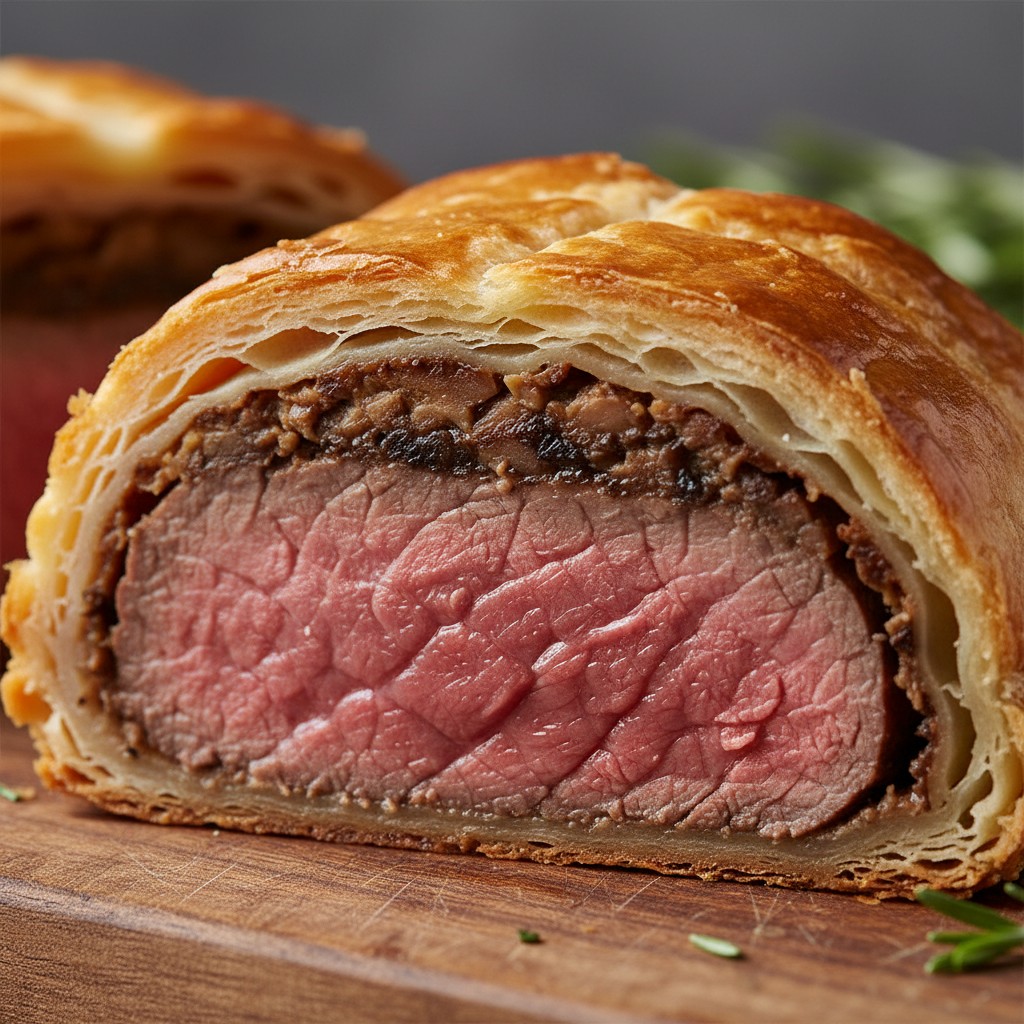
Delia's Notes from the Kitchen
The absolute secret to success here is patience. Do not rush the cooling or chilling stages. Every minute spent waiting is an investment in a crisp, golden crust. I also find that spreading the Parma ham on a large sheet of cling film first makes the rolling process much, much easier and helps you achieve that perfectly tight, uniform cylinder.
How to Store & Reheat
Beef Wellington is best eaten fresh. However, leftovers can be stored in the refrigerator, well-wrapped, for up to 2 days. To reheat, place slices on a baking tray in an oven preheated to 160°C for 10-15 minutes until warmed through. Avoid the microwave, as it will make the pastry soft.
Frequently Asked Questions
Can I make this ahead of time?
Yes, you can prepare the Wellington up to the point of being wrapped in pastry and chilled (Step 7). Keep it covered in the fridge for up to 24 hours. Then, simply egg wash and bake as directed when you're ready.
Why did my pastry go soggy on the bottom?
This is the most common pitfall. It's almost always due to two things: not cooking the moisture out of the mushroom duxelles completely, or not chilling the assembled Wellington for long enough before baking. The chilling step is absolutely crucial to firm everything up.
How do I know when the beef is cooked to my liking?
For precision, a meat thermometer is your best friend. For medium-rare, you are looking for an internal temperature of 50-52°C before resting. Remember, the meat will continue to cook as it rests.
Can I use a different cut of beef?
I really must insist on using a beef fillet (tenderloin). It's incredibly tender and has a uniform shape, which is essential for even cooking inside the pastry. Other cuts simply won't yield the same luxurious result.
My pastry cracked while baking. What went wrong?
This can happen if the pastry is stretched too thinly or if there wasn't a small steam vent. A tiny, discreet hole pricked in the top can help. Also, ensure the pastry is well-sealed with egg wash to prevent seams from bursting.